The EESC warns that a weak long-term EU budget would undermine competitiveness, cohesion, agriculture and democracy. The Committee calls for a stronger, fairer and future-proof multiannual financial framework (MFF) for 2028 to 2034.
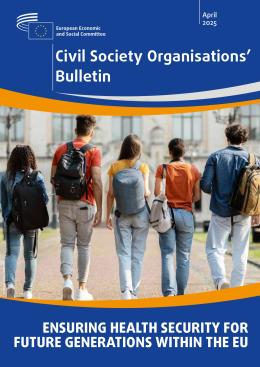
The topic of the conference was the mental and physical condition of young Europeans and the role of civil society organisations in supporting it. The event was organised as part of the Polish presidency of the EU Council on the initiative of the Minister for Civil Society, Adriana Porowska, and the Civil Society Organisations' Group of the EESC.
The objective of the public hearing is to examine how cohesion policy can more effectively address housing affordability challenges to advance its core goals of economic, social and territorial cohesion. The participants will explore how strategic housing investments can stimulate regional economic development, enhance competitiveness, improve labour market efficiency, and reduce territorial disparities. The aim is to provide concrete recommendations for improving the effectiveness of existing instruments for the remainder of the 2021-2027 period and developing a more comprehensive approach to affordable housing within the post-2027 cohesion policy framework.
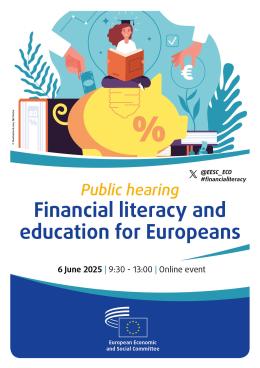
The EESC organises a public hearing on Financial literacy and education for Europeans. It will gather together institutions, industry and civil society stakeholders, and will discuss desirable policy actions and share good practices along the EU.
Ensuring health security for future generations within the EU
In this issue:
Members on ways to ensure (mental) health security
Guest articles by Lejla Šehić Relić (Centre for European Volunteering), Ian Mostert (Dutch Institute for Nature Education) and Christelle Savall (Young European Federalists)
Interview with rapporteur Miguel Ángel Cabra de Luna on how to address loneliness (EESC opinion SOC/813)
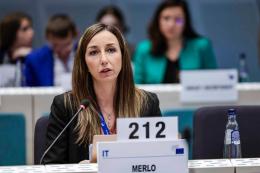
In this interview, Nicoletta MERLO (NAT member) talks to us about the creation of the EESC Youth Group - of which she's vice-president - and of the progress achieved so far, including the implementation of the Youth Test for EESC opinions.