The EESC proposed to make sure that the relevant European and national legislation is fully implemented and enforced so as to reduce precarious work and the prevalence of the associated mental health problems;
to adopt specific legislation on preventing psychosocial risks at EU level;
to combat identified work-related psychosocial risks at the source.
The EESC considers the Social Imbalance Procedure (SIP) an opportunity to enhance the coordination of national efforts to improve their social governance and reduce social inequalities within a country and between Member States
underlines that the SIP should be integrated into the European Semester, throughout its different phases
calls on the Commission and the Member States to consider making existing rules for funds allocation (including the ESIF, RRF and others) more flexible.
El Protocolo de Progreso Social, propuesto durante la Conferencia sobre el Futuro de Europa, da prioridad a los derechos de los trabajadores y a los derechos sociales y sindicales cuando entran en conflicto con las libertades económicas. Sin embargo, aunque todo el mundo está de acuerdo en que los derechos sociales y las libertades económicas pueden coexistir, el apoyo a la incorporación del Protocolo al Derecho primario de la UE dista mucho de ser unánime y existen opiniones divergentes entre los interlocutores sociales y en la comunidad académica, tal y como se confirmó en una audiencia del CESE
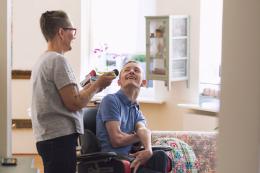
The European Economic and Social Committee (EESC) calls on the EU and Member States to implement more concrete measures to support the health, housing and financial needs of the growing number people taking on long-term caregiving responsibilities of a family member.
The transition towards a low-carbon economy is a fundamental priority. But the green transition will fail without social dialogue. This represented a general agreement among the discussions during the meeting, particularly if climate policies were not made also socially sustainable and did not take into account the needs and worries of working people, of citizens. Key points raised during the debates included the fact that real wages were decreasing with the soaring inflation, the complementarity of fighting climate change and protecting social rights, and the fundamental role of involving Trade Unions in the design and implementation of policies within the Green Deal.
Academia, local civil society organisations, representatives of regional and national authorities and members of the European Economic and Social Committee met at a conference in Dolni Vítkovice, a former industrial area for coal mining and steel production in Ostrava, on 11 October 2022. The conference on Reinventing the Moravian-Silesian Region in search of a socially just transition was organised by the EESC's Civil Society Organisations' Group as part of the Czech Presidency of the Council of the EU.
Lifelong learning will ensure jobs and decent living standards. However, in the absence of a standardised system across the EU, not all workers have opportunities to reskill and upskill during their careers, an EESC study finds
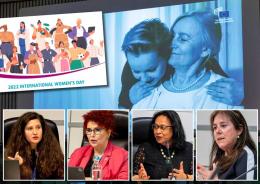
The conference on Women in the Labour Market organised by the EESC to mark International Women's Day, was held on 8 March under the shadow of the war. The participants paid tribute to the remarkable Ukrainian women for their strength, bravery and resilience. Attention was drawn to different aspects of gender equality such as the need to increase women's participation in the labour market, especially with regard to new digital and green jobs, to facilitate female entrepreneurship, to improve care services and work-life balance, and to tackle gender stereotypes and work-related harassment.
Social dialogue is an important tool for ensuring health and safety at work. However, in the face of changes brought to the world of work by the digital and green transition and the health crisis, social dialogue will have to be strengthened across Europe. It should be complemented by more robust rules on musculoskeletal disorders and psychosocial risks leading to major work-related illnesses such as heart conditions, stroke, cancer and depression