
European Economic
and Social Committee
Freedom of assembly
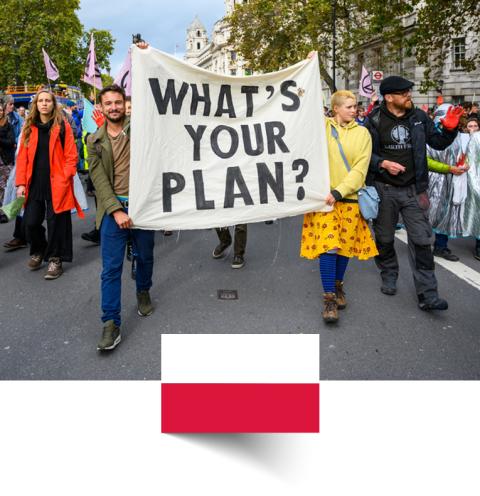
The CSOs explained that it sometimes took months to approve assemblies, and that the new “Law on Public Assemblies” favoured “cyclical assemblies” (regular events), such as marches for Independence Day. The restrictions on holding multiple protests within a certain distance of each other at the same time made it difficult to schedule spontaneous counter-protests. They also complained about the recent limits introduced on access to the Polish parliament, which seek to prevent protests. More than one hundred individuals had been banned from accessing parliament despite the fact that access to parliament was a constitutional right. In addition, a law was adopted specifically to prevent spontaneous protests in relation to the 24th Conference of the Parties (COP 24) of the United Nations Climate Change Conference in Katowice in 2018.
According to the CSOs, it was difficult to obtain permission to march in favour of politically controversial issues. In one case, an equality march had been banned due to the risk of violence by counter-protestors, but was allowed after appeal. The CSOs had also noted inconsistencies in the policing of assemblies. During Independence Day marches, there was almost no police presence, but in equality marches, police officers often outnumbered protestors. Police officers targeted several protesters for using fireworks during equality marches, but not during the independence marches.
According to the CSOs, many court cases had been brought against protesters – an estimated 1000 were pending. People had been taken to court for misdemeanours and, for example, charged with obstruction of legal assemblies. Although the court quickly dismissed such charges, the CSOs consider that they represented a form of intimidation. An example was given of a small group of women who were beaten up during a peaceful counter-protest, at which point the police did not intervene to protect them. Afterwards, the women were charged with disturbing a legal assembly, whereas their attackers were not charged.
The Polish authorities with whom the EESC delegation met, explained that public order personnel protected demonstrators, and ensured their right to freedom of assembly. They did not discriminate between different types of demonstrations and their staffing levels were consistent. Assembly bans could be appealed and may last up to 15 days. Counterdemonstrations could not take place within 100 metres of a legal assembly. The authorities would not comment on the reasons for the various pieces of legislation, nor would they comment on individual cases.
Downloads
Report
-
Report on the country visit in Poland, 3-5 December 2018