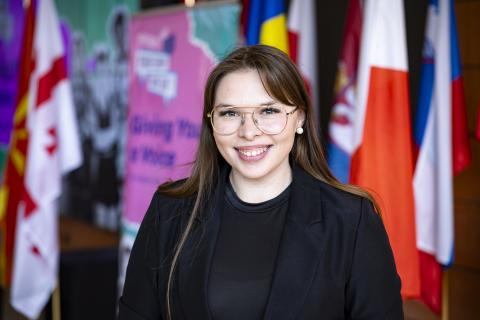
Young Moldovan Mădălina-Mihaela Antoci was one of the representatives of EU candidate countries at this year’s EESC annual youth event Your Europe Your Say! (YEYS). She also took part in the EESC’s Civil Society Week where she delivered an inspiring speech during the opening panel Still united in diversity. President ofErasmus Student Network Moldova and a board member of the country’s National Youth Council, Mădălina-Mihaela shared what the EU means for young Moldovans and told us about her mission to encourage young people from her country to study abroad and embrace a global mindset.
Young Moldovan Mădălina-Mihaela Antoci was one of the representatives of EU candidate countries at this year's EESC annual youth event Your Europe Your Say! (YEYS). She also took part in the EESC’s Civil Society Week where she delivered an inspiring speech during the opening panel Still united in diversity. President ofErasmus Student Network Moldova and a board member of the country’s National Youth Council, Mădălina-Mihaela shared what the EU means for young Moldovans and told us about her mission to encourage young people from her country to study abroad and embrace a global mindset.
Is the National Youth Council of Moldova engaging young people in discussions about EU integration? How do young Moldovans perceive the EU?
Absolutely! The National Youth Council of Moldovaensures that young voices are heard in Moldova’s EU integration process through consultations, advocacy campaigns and direct engagement with policymakers. For many young Moldovans, the EU represents progress, new horizons, and a future where their talents are recognised and valued. However, there are still gaps in awareness, and that’s where we step in – turning curiosity into active participation.
We are organising forums, debates and workshops on EU integration, policy and youth rights. We are calling for youth inclusion in national decision-making processes. We are launching campaigns to inform and educate young Moldovans about the benefits of EU membership.
Could you briefly introduce your work with the Erasmus Student Network (ESN) Moldova?
As President of ESN Moldova, I’m on a mission to connect young people to life-changing international opportunities. Our team works to promote mobility, create a welcoming environment for exchange students, and advocate international education. One of my key initiatives is Erasmus in Schools, where we inspire high school students to dream beyond borders and embrace a global mindset.
Could you share any figures on how many Moldovan students have benefited from the Erasmus+ academic programme so far, either in total or annually?
Right now, Moldova does not host incoming Erasmus+ students, but our young people are making waves abroad! Every year, between 500 and 700 Moldovan students study or do traineeships in top European institutions through Erasmus+. Since the programme’s launch, thousands have gained international experience, bringing back innovation, leadership and a fresh perspective. Through Erasmus in Schools, I strive to make mobility a reality for even more young Moldovans, proving that the world is theirs to explore.
In your view, what is the value of such academic exchange programmes for young people in a candidate country like Moldova?
Erasmus+ is not just a study programme – it’s a launchpad for Moldova’s future. It gives young people more than an education; it gives them adaptability, resilience and a European perspective. In a candidate country like Moldova, it’s about building a generation that sees beyond limitations, that innovates, collaborates, and is ready to lead our country into the European future.
What were your expectations for YEYS and Civil Society Week?
I expected powerful discussions, bold ideas and real commitments to youth inclusion in policymaking. These events are more than just meetings – they are platforms where young change-makers challenge the status quo and push for a stronger, more inclusive Europe. For Moldova, this is another step toward bridging the gap between the local reality on the ground and European ambitions, proving that our young people are not waiting for the future – we are creating it.
Mădălina Mihaela Antoci is a 21-year-old youth leader passionate about education, civic engagement and youth empowerment. She currently serves as the President of Erasmus Student Network Moldova and is a board member of the National Youth Council of Moldova.
A tireless advocate of the Erasmus+ academic programme, she has achieved remarkable success in encouraging young people to explore international opportunities while also emphasising the value of education at home. Through her efforts, she has inspired hundreds of students to engage in academic mobility and contribute actively to their local communities.
The European Citizens’ Initiative has proved to be an effective tool for increasing citizens’ participation in the political life of the EU. But it must be reinforced to counter the risk of the EU institutions becoming detached from ordinary Europeans.
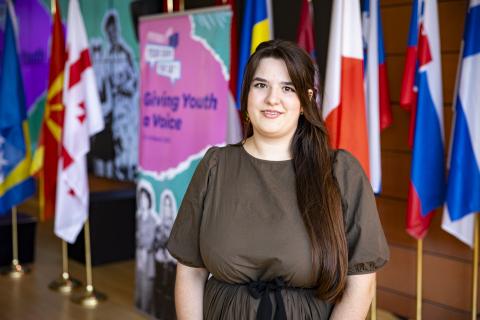
In a precarious world where long-standing beliefs are crumbling, and previously shared values no longer unite but divide us, young people must be given opportunities to engage meaningfully here and now to address the many pressing issues that continue to grow before our eyes. The YEYS 2025 discussions clearly showed that there is no one topic that can be called the 'youth topic' and that young people are rightfully concerned about many different problems – ranging from fighting corruption and promoting equality to tackling climate change, writes Czech student and YEYS participant Kristýna Bulvasová who represented YEYS at the EESC's Civil Society Week.
In a precarious world where long-standing beliefs are crumbling, and previously shared values no longer unite but divide us, young people must be given opportunities to engage meaningfully here and now to address the many pressing issues that continue to grow before our eyes. The YEYS 2025 discussions clearly showed that there is no one topic that can be called the 'youth topic' and that young people are rightfully concerned about many different problems – ranging from fighting corruption and promoting equality to tackling climate change, writes Czech student and YEYS participant Kristýna Bulvasová who represented YEYS at the EESC's Civil Society Week.
How many times have I, as a young Gen Z person, heard the words 'your generation is facing unprecedented issues', or 'it's up to your leadership to help solve the current challenges'. The stakes are high, but so are the challenges we face: unprecedented democratic backsliding, polarisation of our societies over matters that have previously been 'shared values', the destabilisation of long-standing beliefs and systems, along with increasing precariousness.
The high expectations place demands not only on young people but also on underfunded civil society organisations and their crucial role in guiding youth values, as well as on educational systems. Formal education should have the power to equip young people with the skills and tools they need to become the problem-solvers and leaders of today and tomorrow. I am afraid that many education systems are too rigid to stand up to the 21st century, with schools failing to offer education on climate change or comprehensive health matters – be it mental or reproductive. They also lack state-of-the-art-technology and proper access for vulnerable groups.
Even the question of who is considered vulnerable has become politicised – or worse, weaponised – placing additional strain on those who can least afford it and should not be left behind.
Our societies no longer agree on what vulnerability means or how to recognise it, something I experienced first-hand while leading a workshop at a school near the Czech-Slovak border, where I addressed the gender pay gap and other gender-related inequalities. Students and teachers reacted with utter disbelief, outright rejecting the idea that any inequalities exist in our society. This makes me believe that we need more discussions and capacity-building on existing vulnerabilities and inequality, regardless of age group.
Equal access to education and opportunities for youth – including disadvantaged women and girls, people with disabilities, young people with migration backgrounds – continues to be an elusive dream. If our shared goal is to provide young people with a strong foundation to fulfil their potential and dreams, we need to start taking action. Proposing a solution is not simple, but strengthening EU Member States' ties with civil societies – especially those in informal education – could help bridge gaps once a thorough geographical and social assessment identifes the most vulnerable areas. The subsequent reskilling of teachers and all youth workers in community-building practice might provide a framework for some of the targeted and systematic solutions.
Civil society has taken on the role of encouraging active civic participation, but youth engagement in decision-making and democratic governance remains low. There is a clear gap between young people's aspirations and the spaces and opportunities available to achieve them. Elections alone are not delivering the desired results, as fighting against political cultures and disinformation in some countries remains challenging. However, not voting does not mean lacking an opinion or issues to address. To encourage active citizenship, young people need not just positive experiences of democratic action but tangible results – without youthwashing, tokenism or selectiveness. I remain hopeful that EU Member States will be able to create these spaces and maybe move past the point where young people have to wait to be given opportunities to meaningfully engage and co-create. But this must not happen in three, five or 10 years. Change must happen now to prevent societal divides from widening further.
At YEYS 2025, I had the pleasure of participating in the drafting of one recommendation related particularly to climate change as I personally believe the triple planetary crisis is one of the biggest challenges for humanity. Development of a coherent climate change strategy for the EU was one of the five YEYS recommendations, alongside fighting corruption through transparency and youth participation, active citizenship, equality and the idea that 'youth deserves a seat'. Since it made the list of commonly endorsed recommendations, it is clear that young YEYSers see it as a crucial challenge to address. However, this reflects the perspective of an already somewhat empowered group of young people and cannot be considered representative of all EU Member States. Some might have thought that this particular recommendation would be the most important for the YEYS 2025 participants, yet it ranked last in the final vote. Let this serve as a reminder that there is no one topic that can be called the 'youth topic'. Young people are rightfully concerned about all current issues and the youth agenda is inherently broad and intersectional.
Some young people recognise the importance of environmental protection and sustainability, while others cannot afford to prioritise it as they are struggling to meet their basic needs. I have mentioned the triple planetary crisis as one of humanity's major challenges, but when we consider the need to address all major issues at once for effective solutions, the picture changes. The current geopolitical context and the EU’s fight for global competitiveness are diverting attention and slowing down transition processes. But at the end of the day, neither we nor future generations have a planet to B to solve these issues on, and we can no longer afford to exceed planetary boundaries.
Returning to the high stakes, young people in all their diversity should still be able to embrace their youth with all its privileges, challenges and beauty. However, a recent UN report shows a clear decline in life satisfaction and happiness among young adults over the past decade. Even with the serious challenges we face, I firmly believe that if we can inspire young people through tangible results from their actions, we stand a fair chance of addressing pressing issues and improving quality of life for all.
Kristýna Bulvasová is a member of the European Sustainable Development Youth Network. She has served as a Youth Delegate to the Congress of Local and Regional Authorities of the Council of Europe and as a Czech UN Youth Delegate. A former spokesperson of the Czech-German Youth Forum, she remains actively engaged in strengthening Czech-German cooperation. A youth activist focused on future-oriented education and sustainability, Kristýna currently leads the Czech NGO MOB – Young Citizens while completing her studies at Charles University in Prague and the University of Regensburg. Apart from taking an active part in YEYS, Kristýna was also a speaker at the EESC's Civil Society Week during the session on Foresight for inclusive just transition and green-blue growth. As a YEYS representiative, she will also address the EESC plenary in March.
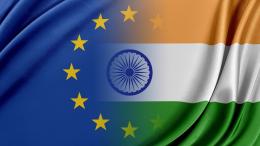
As the EU is looking to expand its circle of key partners – against a backdrop of uncertainty over transatlantic relations - India seems to be a perfect ally, being the largest formal democracy in the world, whose market and economic growth (including in green technology) represent a valuable opportunity for EU companies.
A pivotal reference for our exploratory opinion is the Draghi Report that lays out a comprehensive analysis of EU’s competitiveness and key challenges and opportunities for the EU to achieve a sustainable growth.
During the meeting, the EU DAG will receive an update from the European Commission's DG TRADE on EU-Vietnam FTA trade statistics and the implementation of the TSD chapter, as well as a report on the Joint Forum on Trade and Sustainable Development held in November 2024. Furthermore, EU DAG members will exchange with the European Parliament's standing rapporteur on Vietnam. Important features of the meeting will be the Commission’s assessment of the Vietnam Workers’ complaint to the Single Entry Point (SEP) and a discussion with the ILO.
High energy costs are putting a strain on both European citizens and industries. The gap in energy prices between the EU and its main global competitors continues to widen, increasing the risk that new investments will be directed outside Europe. Additionally, existing industries may relocate, potentially leading to a drain of critical industries from the EU.
The delegitimisation of Zelensky and the whitewashing of Putin to negotiate a ‘dirty peace’ in Ukraine, suspending military aid and intelligence sharing, have caught the EU wrong-footed.