
European Economic
and Social Committee
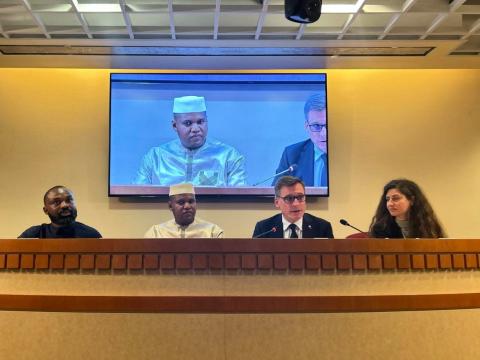
On the occasion of the 69th session of the United Nations Commission on the Status of Women (CSW69) in New York, the European Economic and Social Committee (EESC) and the African Union Economic, Social and Cultural Council (AU ECOSOCC) reaffirmed their unwavering commitment to advancing gender equality and women’s empowerment.
As the international community marks 30 years since the adoption of the Beijing Declaration and the Platform for Action, the EESC and AU ECOSOCC acknowledge both the progress achieved and the ongoing challenges that continue to hinder full gender equality.
Their second joint declaration highlights key priorities, including increasing women’s leadership through gender quotas, ending gender-based violence via international conventions, bridging the digital gender divide, and promoting women’s economic empowerment.
The declaration urges stronger policies on unpaid care work, women’s inclusion in peace efforts, and data-driven policy-making. It also emphasises global cooperation to dismantle systemic inequalities and uphold women’s rights. The EESC also calls on the EU to combat gender-based violence, ensure gender parity, and defend civil society’s role in advancing equality.
EESC president Oliver Röpke, said: ‘As we commemorate 30 years since the Beijing Declaration, we must turn words into action. Gender equality is not a privilege but a fundamental right, and its achievement is critical for sustainable and inclusive societies. The EESC stands firm in its commitment to breaking barriers, ensuring women’s full participation in decision-making and fostering economic empowerment. Now is the time for governments, institutions and civil society to act decisively – there is no equality without accountability.’
The Commission on the Status of Women is the main international and intergovernmental body fighting for gender equality. This was the second time that the EESC took part in the UN’s largest annual gathering on women’s empowerment. (tk)