
European Economic
and Social Committee
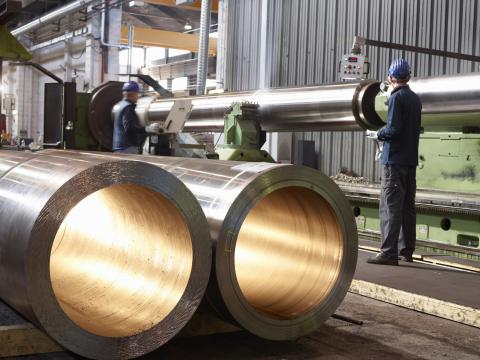
Europe’s steel industry faces serious challenges, with wide-reaching implications. Without swift action, factories could close, jobs be lost and the EU’s strategic autonomy in defence, clean energy and digital technologies threatened. The EESC calls on the European Commission to strengthen trade safeguards, reform energy policies and support low-carbon production.
In an opinion adopted at its September plenary session, the EESC urged the Commission to act quickly. Current EU safeguards against sudden steel import surges, set to expire in July 2026, are no longer effective. The Committee proposes strict import limits, higher tariffs on excess imports and a ‘melted and poured’ rule to verify the true country of origin and close trade loopholes.
‘The European steel and metal industries face an unprecedented, existential crisis that threatens not only industrial capacity, but also Europe’s strategic autonomy, green transition and economic security,’ said opinion co-rapporteur Michal Pintér. ‘Current safeguards and trade defence instruments are failing. The EU now needs bold, comprehensive and permanent trade measures.’
Beyond trade, the opinion highlights energy costs: European producers pay 2–3 times more for electricity than U.S. rivals, harming competitiveness and green investment. The EESC calls for power market reform, temporary relief for energy-intensive industries and better access to clean hydrogen.
Rapporteur, Anastasis Yiapanis, urged that competitiveness be linked to investment: ‘Urgent action is needed to restore EU steel’s competitiveness. The Commission should assess funding needs and increase support, including via carbon market revenues and the Industrial Decarbonisation Bank.’
The EESC emphasises the importance of recycling: scrap metal is cheaper and cleaner than new steel, yet large volumes leave Europe for markets with weaker standards. Tighter controls would retain this material and strengthen the circular economy.
The green transition must also be fair. The EESC proposes creating a dedicated fund for workers in energy-intensive industries, helping them retrain, learn new skills or move to other regions if needed.
Steel and metals remain key to Europe’s economy, employing nearly three million, however, since 2008, the sector has lost 95 000 jobs, including 18 000 in 2024. With global steel overcapacity set to exceed five times the EU’s annual output by 2027, the EESC’s message is clear: Europe must act now to secure the future of its steel industry. (gb)