Newsletter Info

EESC info

European Economic and Social Committee A bridge between Europe and organised civil society

OCTOBER 2025 | EN

GENERATE NEWSLETTER PDF

Available Languages:

  • EN
  • FR

For other languages, please click on the title of each article. Translation is provided by the European Commission's eTranslation service.

Editorial
LET'S PUT CIVIL SOCIETY AT THE HEART OF EUROPE

Editorial

Dear readers,

I am honoured to write to you as the newly elected President of the European Economic and Social Committee (EESC). I want to warmly thank each of you and convey my sincere appreciation for the vital contributions that civil society organisations make every day to our communities.

Read more in all languages

Dear readers,

I am honoured to write to you as the newly elected President of the European Economic and Social Committee (EESC). I want to warmly thank each of you and convey my sincere appreciation for the vital contributions that civil society organisations make every day to our communities.

As my work programme underlines, these contributions are needed now more than ever in the extraordinary and challenging times we are living through.

The prospect of war is again casting a shadow over Europe. Global instability is intensifying. The 2030 deadline for the UN Sustainable Development Goals is fast approaching with most off target. The climate crisis, biodiversity loss and water scarcity demand our urgent action.

Closer to home, over 20% of the EU population remains at risk of poverty and social exclusion. Demographic shifts, the complexity of achieving fair, green and digital transitions, and the pressing need for a skilled and protected workforce all require our attention. As the EU is increasingly relying on its own resources, the need for a strong economy is paramount. An economy that must compete on world markets and deliver jobs, innovation and prosperity.

In this context, it is understandable that the EU is evolving from a peace project into one that embraces defence. The EU will need a comprehensive approach to prepare citizens for this transformation. As this unfolds, it is critical that the EESC is a stronghold for democracy and civic engagement.

This is why, during my presidency, I will prioritise a people-centred work programme that puts civil society at the heart of Europe. My vision is of an EU of opportunities, security and resilience, and my work programme is organised around these pillars.

Achieving a Union of Opportunities means creating a Europe where everyone has a fair chance to thrive. This is about balancing economic growth, social inclusion and equal access to opportunities. 

To realise a Union of Security, this pillar underscores the EESC’s crucial role in defending democracy, civic space and media freedom, while addressing threats such as disinformation and reduced public trust.

The Union of Resilience pillar focuses on the EU’s ability to respond to climate, industrial, and demographic challenges through long-term, integrated strategies that balance sustainability, competitiveness and fairness.

Central to this overall vision is the fight against poverty. While economic growth and job creation are essential, they are not enough. In-work poverty, child poverty and poverty among older adults persists.

Although a welcome step in the right direction, the EU’s efforts in recent years to tackle poverty have at best arrested a catastrophic rise, with numbers in poverty remaining stubbornly high. Over 93.3 million (or over one-fifth) of the EU population in 2024 were at risk of poverty or social exclusion. Such poverty not only leads to widespread alienation but contributes to disillusionment with and undermines trust in the EU and its democratic values.

I believe we can end poverty – and I will seek inclusive, collaborative solutions to support those most in need. People cannot participate fully in society if they are excluded. Likewise, if their security is under threat or if space for civil society is shrinking.

This is why your work – our work – is so essential to delivering a Union of Opportunities, Security and Resilience. Together, let’s put civil society at the heart of Europe.

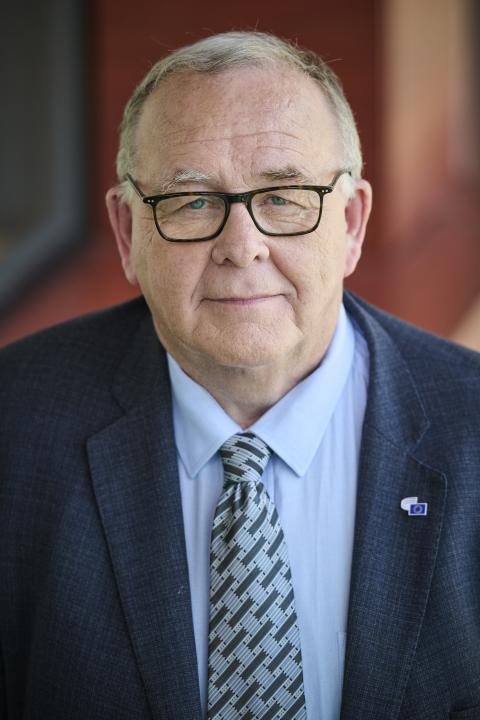
Séamus Boland

President of the European Economic and Social Committee

Diary Dates

10-21 November 2025

The EESC at UNFCCC COP30

13 November 2025

Building the workforce of tomorrow: inclusive participation and quality jobs for a competitive Europe

25 November 2025

Annual Conference on Fundamental Rights and the Rule of Law

27 November 2025

European Migration Forum

1 December 2025

European Consumer Day 2025 "Europe for sale? How global marketplaces are changing our society — and what must be done right now"

3-4 December 2025

EESC plenary session

One question to the new EESC Vice-President for Budget

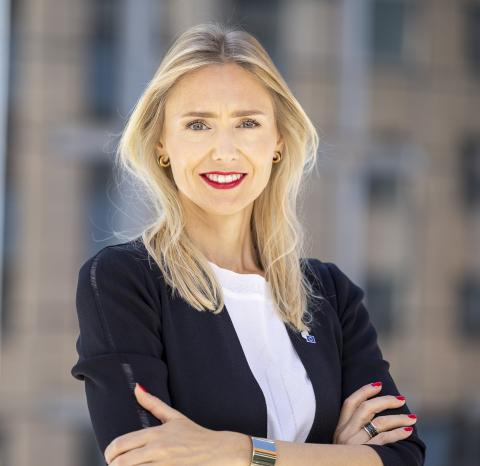
Alena Mastantuono is the EESC’s new Vice-President for Budget. Permanent delegate of the Czech Chamber of Commerce in Brussels and European Affairs Adviser, she has been an active member of the EESC’s Employers’ Group since 2020. We asked her about her priorities for her term in the vice-presidential post and the significance she intends to give to the issue of budget in the Committee’s work.

Read more in all languages

Alena Mastantuono is the EESC’s new Vice-President for Budget. Permanent delegate of the Czech Chamber of Commerce in Brussels and European Affairs Adviser, she has been an active member of the EESC’s Employers’ Group since 2020. We asked her about her priorities for her term in the vice-presidential post and the significance she intends to give to the issue of budget in the Committee’s work.

Fresh energy, real challenges: The new balancing act within the EESC

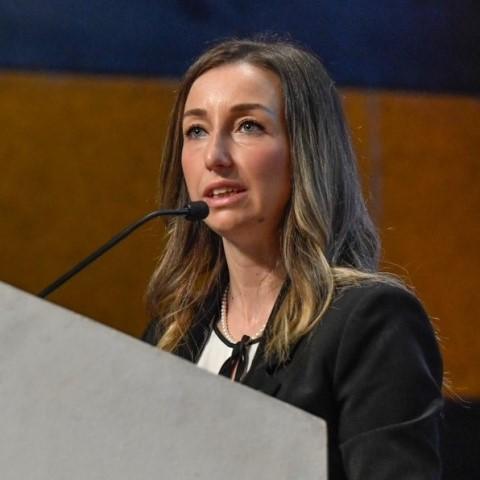
By Alena Mastantuono

Europe is at a turning point. As new members join the EESC, they inject much-needed energy and bold perspectives. Thanks to the hard work of our colleagues during the last term of office, our institution enters this new chapter ready, grounded in clear priorities and a disciplined 2025 budget.

Read more in all languages

By Alena Mastantuono

Europe is at a turning point. As new members join the EESC, they inject much-needed energy and bold perspectives. Thanks to the hard work of our colleagues during the last term of office, our institution enters this new chapter ready, grounded in clear priorities and a disciplined 2025 budget.

However, the world around us is anything but stable. Unpredictable geopolitics and political shifts across Europe are creating a landscape more uncertain than ever before. This instability puts a real strain on Europe’s economic resilience and global competitiveness, which consequently impacts its social dimension and well-being.

That is why civil society leaders look to us, their voice in Brussels, to defend their interests and provide strong, reliable advocacy. Our advisory role vis-à-vis the EU institutions is more critical than ever: we must make sure the realities citizens face are recognised at every level. Defending our industrial base, urgently simplifying heavy regulations and championing sustainable, long-term growth and prosperity must be our top priorities.

Coming from the employers family, we understand something that is all too often missed – the economy and society are inseparable. We know that, without a healthy economy, there is no social progress, and without social stability, economic gains are fragile. Every decision we take in the Committee must reflect this vital balance. I am committed to ensuring that the EESC’s leadership recognises business as a foundational partner in Europe’s prosperity.

The responsibility is immense. As vice-president of the EESC responsible for budget, my task, together with the members of the Commission for Financial and Budgetary Affairs (CAF), will be to ensure that we uphold strict financial discipline, ensure transparency and efficiency, and engage fully in the EU budgetary process. As we wrap up the 2024 discharge and prepare our 2026 budget for tough negotiations, we are also adapting to new travel rules and smarter resource planning – all to maximise our impact for Europe.

Ultimately, our biggest challenge is relevance. We must ensure the European Commission, the Council of the EU and the European Parliament see the EESC not as a procedural box to tick, but as an indispensable partner in shaping smarter, more effective EU laws for businesses and citizens alike.

Since 1958, the EESC has been the EU’s bridge to real-life experience. Now, more than ever, we must modernise our image, amplify our mission and deliver advice that is grounded, dynamic and heard.

In these unpredictable times, Europe needs our collective determination and effective advocacy like never before.

One question to the new EESC Vice-President for Communication

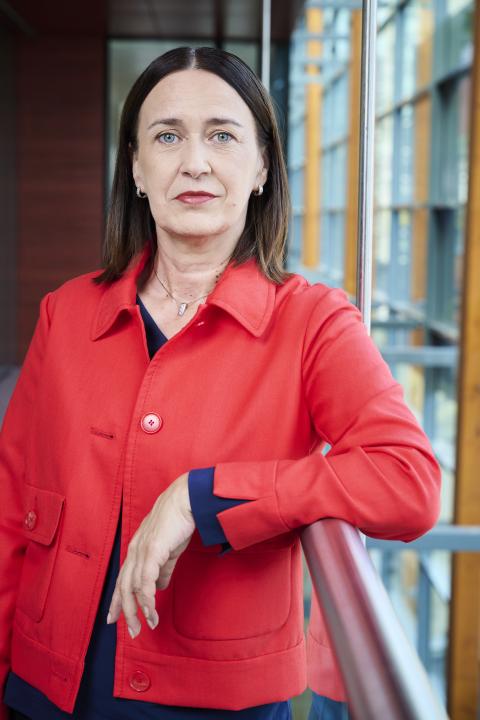
Marija Hanževački, a long-standing member of the European Economic and Social Committee’s (EESC) Workers’ Group, and General Secretary of Independent Trade Unions of Croatia, has dedicated her career to championing workers’ rights. Now, as she takes the helm at the EESC as Vice-President for Communication, we asked her about her priorities for the mandate ahead. She shared her vision for amplifying the voice of Europe’s civil society and strengthening the EESC’s message across the EU and beyond.

Read more in all languages

Marija Hanževački, a long-standing member of the European Economic and Social Committee’s (EESC) Workers’ Group, and General Secretary of Independent Trade Unions of Croatia, has dedicated her career to championing workers’ rights. Now, as she takes the helm at the EESC as Vice-President for Communication, we asked her about her priorities for the mandate ahead. She shared her vision for amplifying the voice of Europe’s civil society and strengthening the EESC’s message across the EU and beyond.

EESC: SPEAKING WITH CLARITY AND UNITY FOR EUROPEAN CIVIL SOCIETY

By Marija Hanževački

Today, we live in an increasingly difficult geopolitical context, both in Europe and globally. Wars, the rise of the extreme right, the spread of hate speech and growing polarisation have created an environment where civil society is under threat.

Read more in all languages

By Marija Hanževački

Today, we live in an increasingly difficult geopolitical context, both in Europe and globally. Wars, the rise of the extreme right, the spread of hate speech and growing polarisation have created an environment where civil society is under threat. 

Communication platforms owned by oligarchs have become powerful weapons, further enabling these threats to undermine democracy and the values we stand for. This makes transparent, accountable and effective communication even more urgent.

It is in this climate that I am taking up the baton as the new Vice-President for Communication at the European Economic and Social Committee (EESC). Building on the work of my predecessors, I will strive to ensure that the EESC's voice, which is the voice of organised civil society, is not only heard but also understood and acted upon.

I am acutely aware of the responsibility that comes with representing EU’s civil society and social partners – almost 90 million citizens across Europe. Together with the EESC’s Communication Commission, our mission will be to make sure that our messages are clear, strong, and truly reflect the diversity and expertise of our members. Communication, after all, is not just about visibility; it is about impact.

The EESC’s decision-making process, which brings together representatives from all three EESC groups – Employers’, Workers’ and the Civil Society Organisations’ Group – is a powerful example of how organised civil society can influence EU policy and the lives of citizens.

I hope this will be reflected in our communication: my commitment is to make sure the EESC speaks with one voice, a voice that fully reflects the breadth and depth of our members’ experience, while ensuring our priorities reach both the European institutions and the wider public. Together with the members of the Communication Commission, I am also committed to demonstrating the immense importance of civil society for European democracy.

In an age of information overload and fake news, it is essential to focus our efforts on what truly matters. For the EESC, this means highlighting our achievements, addressing our challenges and demonstrating the added value we bring to European civil society. The Committee’s work and results must be communicated in a way that resonates with people’s everyday lives.

Transparency will be at the heart of my approach: our communication will be consistent and open, and will demonstrate our expertise in advising EU institutions and connecting the diverse perspectives of the organisations we represent.

While our resources may be more limited than those of other institutions, we are determined to find new opportunities to collaborate with European bodies and to organise activities that strengthen and promote dialogue and engagement.

Events such as Civil Society Week, Your Europe, Your Say, the Connecting EU seminar, and the Civil Society Prize are more than just fixtures on our calendar: they are platforms for meaningful exchange and for celebrating the vital role of civil society in shaping EU policies. I intend to continue these successful initiatives and to encourage open discussion on the issues that matter most to our members and the wider public.

Our members remain our greatest ambassadors. It is vital to find new and better ways to support them through outreach activities, ensuring open, two-way communication so that we listen to those we represent, and they, in turn, hear directly from us.

Looking ahead, I am optimistic. We can make a difference, and I am eager to work with the EESC leadership, members and all of you to ensure that the EESC continues to speak with one voice – a voice that champions transparency, diversity and the values that underpin European democracy.

THE SURPRISE GUEST

Real dialogue is not about everyone agreeing; it is about staying at the table when we disagree… Our shared purpose to defend democracy, human rights, the rule of law, solidarity and civic participation is always stronger than what divides us, writes our surprise guest Piotr Sadowski. Mr Sadowski has just taken up the role of co-chair of the EESC Liaison Group, a platform connecting the EESC with civil society organisations to promote dialogue and cooperation on key European values, which he will steer together with the EESC president Seamus Boland.

Read more in all languages

Real dialogue is not about everyone agreeing; it is about staying at the table when we disagree… Our shared purpose to defend democracy, human rights, the rule of law, solidarity and civic participation is always stronger than what divides us, writes our surprise guest Piotr Sadowski. Mr Sadowski has just taken up the role of co-chair of the EESC Liaison Group, a platform connecting the EESC with civil society organisations to promote dialogue and cooperation on key European values, which he will steer together with the EESC president Seamus Boland.

Piotr Sadowski was elected co-chair of the EESC Liaison Group with European civil society organisations and networks in early October. He also serves as the secretary-general of Volonteurope, a Brussels-based European network dedicated to social justice through volunteering and active citizenship. He is vice-president of the Conference of INGOs at the Council of Europe and vice-president of the Lifelong Learning Platform. Throughout his career, he has championed European values and ensured that the voices of organised civil society are represented at both EU and Council of Europe level. A long-standing member of the European socialist and democratic movement, Mr Sadowski is a vocal supporter of progressive policies and an active advocate for LGBTQIA+ rights.

INCLUSION, SAFETY AND RESILIENCE IN CIVIL SOCIETY KEEP DEMOCRACY ALIVE

By Piotr Sadowski

When I was elected as co-chair of the EESC Liaison Group, I said that civil society is not a decorative element of democracy, but its beating heart. The Liaison Group was created in 2004 to connect European-level umbrella organisations and networks with the EESC, whose members come from national organisations. Twenty years later, that bridge is more essential than ever: it is what allows Europe’s citizens to shape the policies that affect their lives.

Read more in all languages

By Piotr Sadowski

When I was elected as co-chair of the EESC Liaison Group, I said that civil society is not a decorative element of democracy, but its beating heart. The Liaison Group was created in 2004 to connect European-level umbrella organisations and networks with the EESC, whose members come from national organisations. Twenty years later, that bridge is more essential than ever: it is what allows Europe’s citizens to shape the policies that affect their lives.

Diplomacy, bridge-building, dialogue and, above all, follow-up are the principles I live by because consultation without follow-up is theatre, and we have all seen that play out too many times. My ambition is to turn consultation into co-creation, where every idea has a life after the meeting ends, and every participant feels that their contribution truly matters.

That, for me, is what real dialogue means. It is not about everyone agreeing; it is about staying at the table when we don’t. Even when disagreements arise, civil dialogue demands empathy, creativity and persistence. Where we disagree, we try our utmost to find solutions because our shared purpose to defend democracy, human rights, the rule of law, solidarity and civic participation is always stronger than what divides us.

Looking ahead, my focus will rest on widening opportunities for participation, defending the safety of civic space and strengthening Europe’s resilience through foresight and cooperation. These are not separate strands but interwoven threads of the same democratic fabric, each dependent on the others for its vitality and success.

Opportunities, because inclusion is the lifeblood of democracy. We must open doors for smaller organisations, young people and under-represented groups, those often far from Brussels who deserve to be heard. Every time we bring a new voice into the conversation, democracy becomes stronger.

Safety, because democracy cannot exist without safe civic space. I have seen, in Serbia and elsewhere, what courage looks like. Their bravery reminds us of what is at stake and why solidarity must never be conditional or selective. Safety is also emotional: it is about the spaces we co-create, about environments of trust, openness and care. Vulnerability is not weakness, but courage.

Resilience, because the challenges ahead require preparedness, not just reaction. Civil society is Europe’s early-warning system, the first to sense when trust breaks down or exclusion hardens into anger.

I look forward to working with our new President of the EESC, Séamus Boland, and the respective presidents of the Employers’, Workers’ and Civil Society Organisations’ Groups, Sandra Parthie, Lucie Studničná and Cillian Lohan. I would also like to emphasise how important the EU Blue Deal is for me, professionally and personally. I see it as a defining example of how policy meets purpose. It proves that this house can lead not only on consultation, but also on proposing and gathering cross-sectoral support for indispensable, inclusive policies in areas that are vital to our safety, resilience and dignity, such as water justice.

Finally, one of my top priorities will be Civil Society Week: a visible, inclusive celebration of equality, solidarity, youth and foresight – a place where civil society feels at home and Europe feels alive.

Civil society is where democracy learns to dance again. Let’s keep the music playing.

TO THE POINT

The Commission should grant the social partners in the EU candidate countries observer status in the European social dialogue. This is a strategically important step in strengthening European values there, writes Kristina Aaltonen, rapporteur of the EESC opinion Strengthening European values in candidate countries by supporting the public service sector and empowering social partners and civil society organisations.

Read more in all languages

The Commission should grant the social partners in the EU candidate countries observer status in the European social dialogue. This is a strategically important step in strengthening European values there, writes Kristina Aaltonen, rapporteur of the EESC opinion Strengthening European values in candidate countries by supporting the public service sector and empowering social partners and civil society organisations.

Enlargement? The European Union can do more!

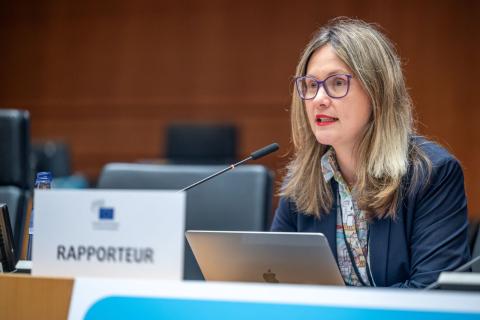
By Kristina Aaltonen

The implementation of EU laws and standards is central to the accession process. However, the sustainable democratic development of a country requires more than just compliance with EU law. Civil society plays a crucial role in deepening understanding and promoting the development of society in line with European values. A successful transformation into an EU Member State therefore demands initiatives that focus on citizens, civil society and social partners. 

Read more in all languages

By Kristina Aaltonen

The implementation of EU laws and standards is central to the accession process. However, the sustainable democratic development of a country requires more than just compliance with EU law. Civil society plays a crucial role in deepening understanding and promoting the development of society in line with European values. A successful transformation into an EU Member State therefore demands initiatives that focus on citizens, civil society and social partners. 

The public service sector plays a central role, as it profoundly affects citizens' everyday lives. Trust in public services and the political system is crucial. Education is an essential example of this. Education – both formal and informal – is one of the most critical pillars of a democratic society. It prepares the population to become democratic citizens, developing critical thinking, knowledge, skills, attitudes and values. To achieve this, professional autonomy and academic freedom are indispensable. Protecting the democratic role of education is an absolute necessity for safeguarding European values. Teachers, school leaders and local education authorities should have a voice, and play a central role for the transformation to actually happen.

Cooperation between civil society and public authorities is key to promoting transparency, accountability and public trust. By engaging in structured dialogue and contributing to policy processes, civil society organisations and social partners help strengthen democratic governance and reinforce resilience. This inclusive approach is essential for countering populism and safeguarding fundamental rights.

At the European Economic and Social Committee, we believe that supporting social partners and civil society organisations must be a strategic priority in the enlargement process. Strengthening civil society organisations' capacity through targeted EU programmes and funding, and encouraging partnerships and peer learning with counterparts in Member States, are crucial steps. Joint Consultative Committees (civil society platforms between the EESC and candidate countries) and other platforms, have already proven their value as spaces for dialogue and mutual learning. As discussions on the European Union's next multiannual financial framework have begun, we must ensure that funding instruments are used more strategically to further empower democratic actors in candidate countries.

EESC News

The European Economic and Social Committee elects Ireland's Séamus Boland to its top post

The EESC's new president vows to put civil society at the heart of Europe through a people-centred programme that balances economic growth and social inclusion

Read more in all languages

The EESC's new president vows to put civil society at the heart of Europe through a people-centred programme that balances economic growth and social inclusion.

The European Economic and Social Committee (EESC) has elected Ireland's Séamus Boland as its 35th president, making him the second Irish person to lead the EU body representing organised civil society in its 67-year history.

The new vice-presidents are Alena Mastantuono (Czech Republic) for the budget and Marija Hanževački (Croatia) for communication.

Central to the new president's vision is the fight against poverty. With over a fifth of the EU population at risk of poverty and social exclusion, and extreme poverty levels rising despite economic progress, the new president is committed to eradicating it.

Following his appointment, Mr Boland said: 'With so many instabilities impacting Europe, it is key that the EU embraces change. The EESC should play an essential role in shaping that change and in building this new Europe - one which is prepared, resilient and self-reliant. This is why, during my mandate as EESC President, I will prioritise a people-centred work programme that puts civil society at the heart of the EU. My vision is of an EU of opportunities, security and resilience, which together we can help deliver.'

The EESC appointed its new leadership on 22 October, during its 600th plenary session, marking the start of its 2025-2030 term of office, with 36% new members. The EESC begins its new term rejuvenated and with a higher proportion of women. The average age of members has fallen from 59 to 55. Women now make up 39% of the Committee, compared to 33% five years ago.

The new Bureau, led by Mr Boland and succeeding Oliver Röpke, will serve for two and a half years, until March 2028.

Mr Boland, CEO of Irish Rural Link, has long championed the inclusion of rural communities and other often overlooked groups, including minorities and young people.

Under the motto 'Civil Society at the Heart of Europe', he has set out an ambitious programme structured around three pillars: Opportunities, Security and Resilience. Apart from tackling poverty, he aims to defend democracy, strengthen civic participation, and ensure a fair and green transition that reaches all communities.

The elected vice-president for the budget, Ms Mastantuono, said: 'We must ensure the Commission, Council and Parliament see the EESC not as a procedural box to tick, but as an indispensable partner shaping smarter, more effective EU laws for businesses and citizens alike. We know that without a healthy economy, there is no social progress, and without social stability, economic gains are fragile. Every decision we take in the Committee must reflect this vital balance.'

The new vice-president in charge of communication, Ms Hanževački, said: 'In an era of information overload, rapid technological change, social and economic challenges, armed conflicts and fake news, listening to citizens’ voices has never been more important. We represent citizens who are part of social partner and civil society organisations. To make sure their perspectives truly shape our core mission - advising the EU institutions - we must communicate with clarity, consistency and transparency.' (ll)

#HousingCrisis – EESC backs European Affordable Housing Plan and calls for urgent action

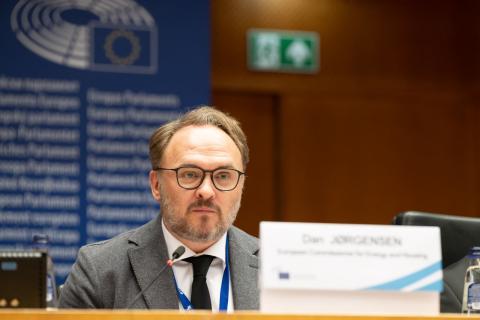
At its September plenary session, the European Economic and Social Committee (EESC) hosted a debate with the Commissioner for Energy and Housing, Dan Jørgensen, and called on the European Commission to take urgent action to address the ongoing housing crisis.

Read more in all languages

At its September plenary session, the European Economic and Social Committee (EESC) hosted a debate with the Commissioner for Energy and Housing, Dan Jørgensen, and called on the European Commission to take urgent action to address the ongoing housing crisis.

The EESC urged the Commission to draw up a European action plan on affordable housing. It has contributed a specific opinion on the subject and stands ready to organise the first ever EU housing summit together with the Commission, the European Parliament and the Committee of the Regions.

The outgoing EESC Vice-President for Communication, Laurenţiu Plosceanu, emphasised the Committee’s commitment to decent, affordable, sustainable housing for all, underscoring the contribution made by civil society to the upcoming European Affordable Housing Plan. 'Our message is clear: the EU needs an action plan to make the right to housing a reality and to anchor it in EU law,' he said.

Commissioner Jørgensen acknowledged the scale of the challenge, noting that many Europeans struggle to find affordable, dignified housing. He stressed that addressing the crisis is an opportunity to make a lasting difference: 'If we want a Europe that is fairer, more competitive and truly independent, we need housing that is decent, sustainable and affordable for every citizen.'

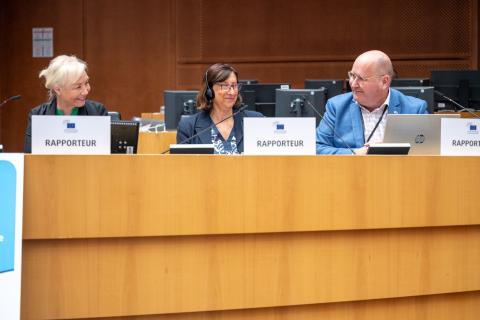
The EESC’s newly adopted opinion, drafted by John Comer and Thomas Kattnig, calls for the right to decent, sustainable, affordable housing to be formally enshrined in EU primary law.

‘Sustainability goes hand in hand with affordability. People cannot afford houses. A lot of Europeans living in cities are paying up to 40% of their salary for housing,’ said Mr Comer.

'The housing crisis goes right to the centre of society and can do a lot of damage to democracy,' said Mr Kattnig.

The EESC calls for a coordinated EU approach that respects subsidiarity, as housing policy remains primarily a Member State competence. It also calls for reforms to state aid rules to broaden access to social housing, noting that current definitions exclude middle-income households and key workers.

The EESC recommends coordinated action to regulate short-term rentals, including transparent data exchange, targeted local measures and strict oversight to prevent speculative investment and tax evasion. Civil society voices in the debate stressed the importance of sound fiscal policies, tailored solutions for different housing systems and innovative EU financing to support retrofitting and social housing. (mp)

EU must uphold its core values and strengthen its future to navigate this new era effectively

At its September plenary session, the EESC adopted a resolution on Defending the EU’s values and strengthening its future in the new geopolitical order, calling for a secure, resilient and strategically autonomous EU. 

Read more in all languages

At its September plenary session, the European Economic and Social Committee (EESC) adopted a resolution on Defending the EU’s values and strengthening its future in the new geopolitical order, calling for a secure, resilient and strategically autonomous EU. The text highlights the critical momentum for Europe’s strategic response to the current geopolitical challenges, underlining that civil society must keep its central role.

While presenting the resolution during the EESC plenary, EESC members and rapporteurs Elena-Alexandra Calistru, Antje Gerstein, Luca Jahier, Winand Quaedvlieg, Sophia Reisecker and Peter Schmidt raised the need to keep fighting for democracy, addressing the present challenges horizontally by involving civil society.

Main messages delivered in the resolution

Core values as pillars of strengths: The EU must continue its founding mission as a global anchor of peace, democracy and the rule of law. The appeal to defend democracy goes out to the EU institutions, governments and political parties as well as to companies, trade unions and civil society at large.

Balancing economic competitiveness and social progress: While the EU aims to improve the global competitiveness of its economy and provide regulatory simplicity and clarity, it should not leave behind social cohesion and social dialogue, ensuring that neither pure profit nor social expenditure can be the sole objective.

Commitment to multilateralism and inclusive dialogue: The EU’s power is built on cooperation and compromises, reflecting different interests. At global level, the EU needs to be part of multilateralism, while encouraging active participation from all stakeholders to maintain social cohesion and political balance (mt)

EESC backs EU Preparedness Union Strategy but warns: 'Fund it and leave no one behind'

With Russia’s war of aggression against Ukraine and mounting climate risks, Europe’s preparedness has shot to the top of EU and national agendas. 

Read more in all languages

With Russia’s war of aggression against Ukraine and mounting climate risks, Europe’s preparedness has shot to the top of EU and national agendas.

The European Economic and Social Committee (EESC) has welcomed the European Commission’s new Preparedness Union Strategy, calling it a long-overdue shift to an 'all-hazards, whole-of-government and whole-of-society' approach to crises ranging from wildfires and floods to cyberattacks and full-scale armed aggression. But the EESC warned that the plan must come with clear, long-term financing and a real role for organised civil society if it is to succeed.

In its opinion on the Strategy, adopted at its September plenary session following a debate with civil defence and humanitarian experts, the EESC stressed that solidarity, public trust and social unity are just as vital as new rules and tools.

'Preparing for crises means strengthening the ability of our democracies to face new global challenges without compromising their fundamental values. Only a Europe firmly anchored in peace, freedom and democratic participation can ensure lasting resilience and citizens’ trust,' stressed the rapporteurs of the opinion, Tomas Arvidsson, Giulia Barbucci and Ariane Rodert.

Jessika Bohr from the Swedish Ministry of Defence said: 'We find ourselves in a new security reality where the security situation in Europe is dire. The threats we face are complex, cross border and increasingly antagonistic. In this context, preparedness is not optional. It is essential.'

Magali Mourlon from the Red Cross EU Office, warned: 'Societal preparedness needs to take into account the fact that society is not homogeneous, and we must leave no one behind.'

'Societies are not made resilient by regulations alone. They are resilient when citizens, volunteers, youth workers, civil society organisations and communities are empowered and recognised as part of Europe's preparedness fabric,' said Piotr Sadowski, Secretary-General of Volonteurope.

In the opinion, the EESC backed 'preparedness by design' across EU policies, meaning that preparedness must be built into the fabric of laws. At the same time, the EU and national governments must also keep investing in social cohesion and progress, which are vital to prevent and resolve conflicts. The EESC also asked the Commission to clarify who does what at EU, national and local levels and to stick to a firm rollout timetable.

On financing, the EESC flagged a gap: the Strategy asks a lot of Member States without spelling out what funding is available. Stable, long-term financing is essential without undermining key EU policies such as agriculture, cohesion and the Solidarity Fund. (ll)

The New Pact for the Mediterranean is designed to improve young people’s future

The EESC adopted an opinion on the New Pact for the Mediterranean, a month ahead of its official launch by the European Commission. The Committee calls for bottom-up processes ensuring that the Pact has a direct, positive impact on all people, especially young people.

Read more in all languages

The European Economic and Social Committee (EESC) adopted an opinion on the New Pact for the Mediterranean, a month ahead of its official launch by the European Commission. The Committee calls for bottom-up processes ensuring that the Pact has a direct, positive impact on all people, especially young people.

The opinion was adopted at the EESC September plenary session, after the debate on the state of play of the new pact for the region, with the Director of the Commission’s Directorate-General for the Middle East, North Africa and the Gulf, Stefano Sannino.

Mr Sannino explained that the New Pact is based on three pillars: people; economic cooperation and security; resilience and migration management.

EESC member and rapporteur for the opinion, Thomas Wagnsonner, said: ‘We regard the New Pact as a development model with joint partnerships on equal footing and business opportunities that should lead to sustainable economic growth and innovation with high-quality jobs, especially for young people and women, in inclusive and socially stable societies in the Mediterranean region’.

Similarly, Lidija Pavić-Rogošić, EESC member and co-rapporteur, said: ‘For real impact, action is needed, including civic co-authorship, civic engagement and monitoring carried out with communities – where prosperity is human-centred, accountability is collective and solidarity is lived, not just words."

Young people at the heart of the New Pact

The Pact seeks to focus on people and develop a people-centred agenda so that it can bring tangible results for societies. Notably, almost half the population (47%) in the region are under 24 years old.

Pablo Pastor from the Anna Lindh Foundation and President of the Mediterranean Youth Council, a guest speaker at the EESC plenary debate, said: ‘We cannot afford to make the same mistakes as in the last thirty years. We cannot adopt a paternalistic view of the Mediterranean. We cannot sign agreements that are not respected’.

The Pact envisages the establishment of a Mediterranean university. Through education, training and upskilling, more and better working opportunities can be offered to the region's young people, creating the conditions for a prosperous future. (mt)

EESC marks end of term of office with messages of unity, democracy and hope

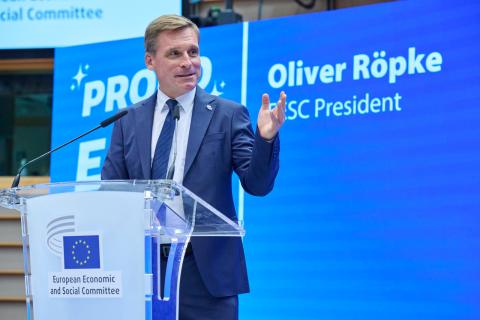
At its September plenary in Brussels, the EESC brought together EU leaders, civil society, youth representatives and international partners to mark the close of President Oliver Röpke’s 2023–2025 term of office.

Read more in all languages

At its September plenary in Brussels, the EESC brought together EU leaders, civil society, youth representatives and international partners to mark the close of President Oliver Röpke’s 2023–2025 term of office. The ceremony, held in the European Parliament hemicycle, celebrated recent achievements while reflecting on the challenges shaping Europe’s future.

European Commissioner Maroš Šefčovič underlined the Committee’s importance as the 'house of European civil society' and emphasised its role in European policymaking: 'You advocate for a competitive Europe based on the EU’s social model and supported by the green transition, showing how civil society helps bring all these elements together.’

Speakers at the ceremony warned of geopolitical uncertainty, polarisation and extremism, but also highlighted the EESC’s ability to unite voices in defence of democracy.

Youth participation featured prominently, with the Youth Test cited as a concrete achievement. European Youth Forum President Răres Voicu stressed the need to counter extremism, while youth delegates called for stronger ownership of the democratic process.

Enlargement was another key theme, with Albanian Prime Minister Edi Rama thanking the Committee for ensuring candidate countries felt like equals. ‘Europe’s strength lies in its people and in dialogue, not in arguing with its gods alone. Under your presidency, you converted me into a believer in social dialogue, and you ensured that our voices from the Western Balkans echoed here and were not just whispers. The EESC is the place where we Albanians, so often treated as second-class citizens of Europe, felt like equals. Europe thrives as a whole, and only as a whole,’ Mr Rama said.

Tributes were paid to President Röpke’s leadership on youth and enlargement, and to long-serving members. Concluding, he thanked EESC staff for their dedication and urged the Committee to continue reinforcing democracy, supporting enlargement and placing civil society at the heart of the European project. (tk)

2025 EU Organic Awards: Austria, Germany and Greece lead the way with best organic SME, retailer, and restaurant recognised by the EESC

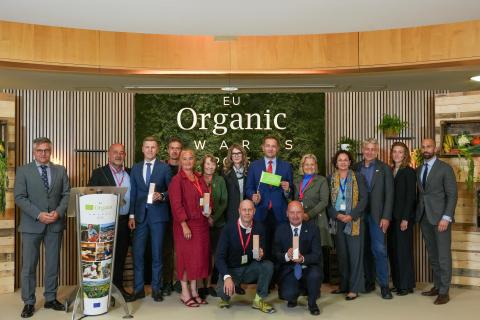
During EU Organic Day on 23 September, the EESC welcomed the winners of the fourth EU Organic Awards in three key categories: Best organic food processing SME, Best organic food retailer, and Best organic restaurant/food service.

Read more in all languages

During EU Organic Day on 23 September, the EESC welcomed the winners of the fourth EU Organic Awards in three key categories: Best organic food processing SME, Best organic food retailer, and Best organic restaurant/food service.

• Best organic food processing SME is Joseph Brotmanufaktur GmbH (Austria). Working with 24 smallholder families on 14 rare grain varieties, it preserves grain culture and promotes biodiversity, fair value chains, and sustainable food systems.

• Best organic restaurant/food caterer is Peskesi (Greece). Based in Heraklion, Crete, it runs its own organic farm and partners with 98% local producers under a 'Farm to Table' and 'Table to Farm' philosophy since 2014.

• Best organic food retailer is Radis&Bona eG (Germany), a Regensburg cooperative farm shop offering 100% organic products from within 80km since 2021. Its cooperative model strengthens regional farming, ensures fair prices, and promotes sustainability through short supply chains and community participation.

Over 100 applications from 13 countries were received, with 21 shortlisted. The EU Organic Awards feature six categories and seven awards recognising innovative, sustainable, and inspiring organic projects.

The remaining three categories are best organic city, region and farmer, where the winners are recognised by the European Committee of the Regions, COPA-COGECA, and IFOAM Organics Europe who organise the EU Organic Awards together with the European Commission and the EESC, with support from the European Parliament and the Council.

EESC member Stoyan Tchoukanov said: 'From large-scale organic bakeries to regional organic cooperative shops and farm restaurants, this year's winners again showcased excellent and innovative organic businesses in the EU. But in order to reach the 25% target by 2030, we need to step up further the consumption of organic products and integrate organic farming and other quality schemes into environmental, health, climate and rural development strategies.'

EU Organic Day, launched in 2021 by the European Parliament, the Council and the Commission, promotes organic farming. The EU supports the sector through EU Organic Day, the EU Organic Awards and EUR 14.7 billion via CAP Strategic Plans (2023-2027) to help farmers convert and maintain organic production. There are now 30% more organic farmers than in 2018, almost all Member States have organic strategies, and the EU is the world’s second-largest organic market. More actions in this factsheet (ks/fb)

EESC calls for fast EU crackdown on third-country e-commerce platforms

The EESC is pressing the EU to urgently tighten rules on third-country e-commerce platforms such as Temu and Shein, warning that their rapid expansion is undermining fair competition, consumer protection and regulatory compliance.

Read more in all languages

The European Economic and Social Committee (EESC) is pressing the EU to urgently tighten rules on third-country e-commerce platforms such as Temu and Shein, warning that their rapid expansion is undermining fair competition, consumer protection and regulatory compliance.

In an opinion adopted at its September plenary session, the EESC said the EU’s toolbox for safe and sustainable e-commerce, published in February 2025, was extremely useful but ‘lacked urgency’ and must be implemented without delay, backed by coordinated enforcement at EU, national and regional level.

The rapporteur for the opinion, Antje Gerstein, said: ‘Harmonised action is essential to hold third country platforms accountable for unfair competition, tax evasion and non-compliance with EU standards on product safety, waste, sustainability and consumer and workers’ rights. A truly level playing field is needed for fair competition for all market operators, including those from outside the EU’.

The EESC cited soaring volumes to illustrate the scale of the issue: between 2016 and 2022 the share of EU consumers buying from non-EU sellers rose by 36%; in 2024 the EU received 4.6 billion low-value parcels – about 12 million a day – with over 91% of items below EUR 150 coming from China. Every day, an estimated 400 000 Temu or Shein parcels arrive in Germany alone.

Random tests recently conducted by commerce or industry associations on the products of those platforms revealed that none of the tested products were fully compliant with EU law and many failed to meet safety, environmental and labour standards.

The EESC proposed 12 short-, medium- and long-term measures that will lead to fair competition and thus meet the requirements for a Social Market Economy:

  • short term: mandate an EU-based responsible operator; abolish the EUR 150 customs duty exemption; step up use of the Import One Stop Shop (IOSS) with real-time data-sharing; intensify copyright protection and prosecution for large-scale plagiarism; and pursue formal complaints regarding anti-competitive practices;
  • medium term: roll out a 'deemed importer' model across the EU; move towards a real, mandatory IOSS for platforms; coordinate VAT/customs audits; invest in staff, training and AI-supported tools for customs and market surveillance;
  • long term: accelerate e-commerce reforms in the EU Customs Code (well before 2028); build a unified digital customs/compliance monitoring system; harmonise platform liability across the EU. (ll)

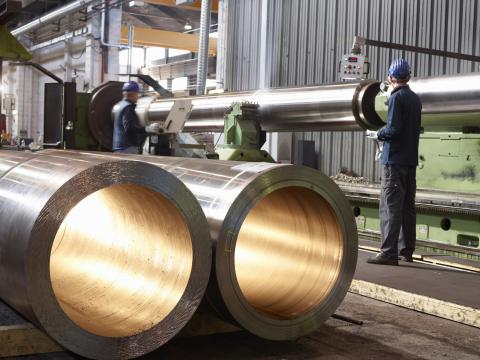
EESC warns Europe could lose its steel industry without urgent action

Europe’s steel industry faces serious challenges, with wide-reaching implications. Without swift action, factories could close, jobs be lost and the EU’s strategic autonomy in defence, clean energy and digital technologies threatened. The EESC calls on the European Commission to strengthen trade safeguards, reform energy policies and support low-carbon production.

Read more in all languages

Europe’s steel industry faces serious challenges, with wide-reaching implications. Without swift action, factories could close, jobs be lost and the EU’s strategic autonomy in defence, clean energy and digital technologies threatened. The EESC calls on the European Commission to strengthen trade safeguards, reform energy policies and support low-carbon production.

In an opinion adopted at its September plenary session, the EESC urged the Commission to act quickly. Current EU safeguards against sudden steel import surges, set to expire in July 2026, are no longer effective. The Committee proposes strict import limits, higher tariffs on excess imports and a ‘melted and poured’ rule to verify the true country of origin and close trade loopholes.

‘The European steel and metal industries face an unprecedented, existential crisis that threatens not only industrial capacity, but also Europe’s strategic autonomy, green transition and economic security,’ said opinion co-rapporteur Michal Pintér. ‘Current safeguards and trade defence instruments are failing. The EU now needs bold, comprehensive and permanent trade measures.’

Beyond trade, the opinion highlights energy costs: European producers pay 2–3 times more for electricity than U.S. rivals, harming competitiveness and green investment. The EESC calls for power market reform, temporary relief for energy-intensive industries and better access to clean hydrogen.

Rapporteur, Anastasis Yiapanis, urged that competitiveness be linked to investment: ‘Urgent action is needed to restore EU steel’s competitiveness. The Commission should assess funding needs and increase support, including via carbon market revenues and the Industrial Decarbonisation Bank.’

The EESC emphasises the importance of recycling: scrap metal is cheaper and cleaner than new steel, yet large volumes leave Europe for markets with weaker standards. Tighter controls would retain this material and strengthen the circular economy.

The green transition must also be fair. The EESC proposes creating a dedicated fund for workers in energy-intensive industries, helping them retrain, learn new skills or move to other regions if needed.

Steel and metals remain key to Europe’s economy, employing nearly three million, however, since 2008, the sector has lost 95 000 jobs, including 18 000 in 2024. With global steel overcapacity set to exceed five times the EU’s annual output by 2027, the EESC’s message is clear: Europe must act now to secure the future of its steel industry. (gb)

EESC reinforces call for water resilience with a set of new strong recommendations

Water must be a strategic priority for Europe, stressed the EESC at its September plenary session, where it adopted three new opinions on water policy. The plenary debate gathered together top EU and UN representatives, underscoring the EESC’s ongoing commitment to the EU Blue Deal, which it has championed for nearly four years.

Read more in all languages

Water must be a strategic priority for Europe, stressed the European Economic and Social Committee (EESC) at its September plenary, session where it adopted three new opinions on water policy. The plenary debate gathered  together top EU and UN representatives, underscoring the EESC’s ongoing commitment to the EU Blue Deal, which it has championed for nearly four years.

Outgoing EESC Vice-President for Communication, Laurenţiu Plosceanu, opened the debate, saying ‘The Blue Deal has been one of the most far-reaching initiatives to come out of our Committee. Civil society, businesses, citizens and social partners are ready to work together to ensure water resilience now and in the years to come’.

Two years after the EESC’s Declaration for an EU Blue Deal, progress is clear: the EU has a water Commissioner, and the Water Resilience Strategy meets many core demands. Yet challenges remain. The EESC calls for cross-sector policy integration, greater focus on water in the Clean Industrial Deal and a water test for all new and revised EU legislation.

Pedro Arrojo-Agudo, UN Special Rapporteur on the human rights to safe drinking water and sanitation, said that EU water sanitation strategies must reflect human rights, not mere statements of intent: ‘Are we short of resources for a suicidal arms race? Apparently not. But for the human right to water there is suddenly no funding. It is a question of priorities.’

Pernille Weiss-Ehler, a member of the Cabinet of Jessika Roswall, Commissioner for Environment, Water Resilience and a Competitive Circular Economy, said that the Water Resilience Strategy goes beyond words: ‘It has 30+ actions to fix the water cycle, build a water-smart economy and ensure clean, affordable water for all.’

The EESC's three opinions provide a coherent approach to water resilience. The opinion on European Water Resilience Strategy welcomes the Strategy but calls for stronger governance, dedicated funding, a 10% efficiency target in sectoral plans and mandatory national leakage plans.

The opinion on water resilience and the twin transition links water to digitalisation and decarbonisation, calling for efficient tech, resilient data centres, use of AI and action in water-scarce areas.

The opinion on blue diplomacy and water cooperation stresses the need to integrate water into EU foreign and development policy to tackle scarcity, transboundary tensions and climate migration.

The plenary session confirmed the EESC’s determination to keep water high on the EU agenda, translating the Blue Deal into action. Mr Plosceanu said that the Committee will pursue its active role in the Water Resilience Forum, the Smart Industrial Alliance and setting up a Water Stakeholder Platform, and called for action before the 2026 UN Water Conference. (gb)

Citizens’ Energy Package – EESC calls for real guarantees for a citizen-driven energy transition

At its September plenary, the EESC adopted an opinion urging the European Commission to ensure that the Citizens’ Energy Package truly puts people at the heart of the EU’s energy system.

Read more in all languages

At its September plenary, the European Economic and Social Committee (EESC) adopted an opinion urging the European Commission to ensure that the Citizens’ Energy Package truly puts people at the heart of the EU’s energy system. The EESC emphasises that the initiative must go beyond a checklist and become the foundation of a genuine social pact for a citizen-driven energy transition.

The Committee calls for clarity on key concepts such as energy communities and prosumerism, advocating a shift from viewing people as passive consumers to active co-creators of Europe’s energy future. In the opinion drafted by Corina Murafa Benga, the EESC proposes concrete measures, including regulatory sandboxes, dedicated funding streams and technical support to make energy communities and energy sharing a functional reality across the EU.

‘Current EU energy discourse frequently positions individuals as “consumers”, implicitly reinforcing market-centric models. We need a shift towards viewing people as “citizens” – members of a political community with energy rights,’ said Ms Murafa Benga. ‘There can be no citizenship without energy, and the EU must uphold the full implementation of European citizenship.’

Energy communities are highlighted as strategic actors in the transition, and the EESC urges the Commission to provide clear guidance on their establishment and operation, tax and tariff deductions, and support from distribution system operators (DSOs). The Committee also recommends that the European Investment Bank develop a facility for local and regional energy communities, and that funding prioritise youth engagement, energy literacy and green skills.

Addressing energy poverty is a key priority. The EESC calls for a unified definition and data-driven identification of affected households, starting at the local level, and insists that households be the reference point for energy poverty milestones. The Committee urges the EU to adopt specific measures, such as an EU-wide ban on household disconnections, moving away from the merit order system that links electricity prices to gas prices, and establishing a European energy ombudsman with local branches.

The EESC also stresses the importance of linking public funding for energy projects to the participation of local communities as shareholders, and other forms of benefit-sharing. (mp) 

One Health: Why Europe’s future depends on protecting people and the planet

EESC calls for integrated EU strategy linking environmental, food and health policies to safeguard citizens’ well-being.

Read more in all languages

EESC calls for integrated EU strategy linking environmental, food and health policies to safeguard citizens’ well-being

At its September plenary, the European Economic and Social Committee (EESC) adopted an own-initiative opinion on One Health, setting out a comprehensive vision for how Europe can protect human well-being in the face of mounting environmental and health threats.

The opinion builds on lessons from the COVID-19 pandemic and the ongoing 'triple planetary crisis' of climate change, biodiversity loss and pollution. Its central message is simple but urgent: the state of our environment directly shapes the health of citizens.

'Our focus is clear: a healthy planet means healthy people,' said Nicoletta Merlo, rapporteur for the opinion. 'If Europe is serious about tackling climate change, biodiversity loss and pollution, we must break down the silos. Environmental, agriculture, food, trade and health policies need to work together - and be backed by real funding.'

The One Health approach recognises that clean air, safe water, fertile soil and sustainable food systems are not abstract environmental goals - they are the very basis of healthy lives. The opinion warns against harmful substances in packaging and other materials, the impacts of rising temperatures, and pollution that can affect both physical and mental health.

Arnaud Schwartz, co-rapporteur, stressed the economic and social dimension: 'Prevention is better than cure - it’s the ultimate investment for humanity. Protect nature, monitor risks and stop crises before they start. That’s how we safeguard our future prosperity and resilience.'

To move from principles to action, the EESC urges the EU to adopt a strong One Health strategy and action plan, with real financial commitments. Concrete measures should include promoting sustainable, safe and nutritious food systems, protecting ecosystems, and investing in education and training so that communities - especially young people - understand the deep connections between human, animal and environmental health.

The opinion also seeks to build a new narrative that resonates with citizens: one that links everyday health and prosperity to the resilience of natural ecosystems. By doing so, the EESC aims to support the European Commission’s work on One Health while giving civil society a stronger voice in shaping the agenda (ks/fb)

EESC demands that AI and Big Data be used ethically and inclusively in rare disease care

The EESC has called for urgent action to ensure that artificial intelligence (AI) and Big Data are used ethically and inclusively in rare disease diagnosis and treatment. At its September 2025 plenary, the Committee adopted an opinion highlighting the need for digital innovation to improve patient outcomes while safeguarding rights and transparency. 

Read more in all languages

The EESC has called for urgent action to ensure that artificial intelligence (AI) and Big Data are used ethically and inclusively in rare disease diagnosis and treatment. At its September 2025 plenary, the Committee adopted an opinion highlighting the need for digital innovation to improve patient outcomes while safeguarding rights and transparency.

With over 7 000 rare diseases affecting 300 million people globally, including 30 million in the EU, AI-driven tools can accelerate diagnosis and enable personalised treatments. However, the EESC warns that these advances must be balanced with robust ethical and legal safeguards. The Committee urges all EU Member States to digitise health data, adopt high-quality registration standards, and ensure that AI healthcare models only access anonymised, encrypted patient data.

Persistent gender and ethnic disparities in rare disease diagnosis must be addressed. The EESC calls for gender-diverse training data, bias audits, and targeted funding to increase female participation in AI healthcare. Patients should have control over their health data, with ongoing consent and transparency about data use.

To prevent market dominance, the EU should support start-ups and SMEs developing AI for rare disease diagnostics. Public-private partnerships and fair data access are vital to keep innovations affordable and accessible. The EESC demands EU-wide ethical guidelines, physician oversight, and professional training to empower healthcare workers and patients. (lm)

Europe’s ambitious 2040 climate target should factor in EU enlargement, says the EESC

The negotiations on the EU 2040 climate target are deadlocked. The European Economic and Social Committee (EESC) is backing the proposed Climate Law Amendment and warning that the target must also reflect the EU’s likely future expansion.

Read more in all languages

In an opinion adopted at its September plenary, the EESC urged the Council and Parliament to seal the 90% target before COP30 in Brazil, warning that Europe risks losing credibility if it drags its feet.

Teppo Säkkinen, rapporteur for the opinion, said: 'As the fastest warming continent, decisive global climate action is in Europe’s own interest. If we want China, India and others to raise their ambition, we must show that we are serious ourselves.'

EU enlargement should be factored into the climate target, as by 2040 the EU is likely to have new members. The reconstruction of Ukraine could help achieve these goals, Mr Säkkinen said. 'Supporting climate action in Ukraine, Moldova and the Western Balkans will ease their path to EU membership and directly contribute to EU climate targets.'

The EESC recommends going beyond the Commission’s draft to include international credits from candidate countries starting in 2031. Other proposed amendments include:

  • Ensuring the high quality of international credits: Any credits must be of high integrity, and should be excluded from use in the EU Emissions Trading System (ETS). Reducing emissions in the EU should be the main priority of climate action.
  • Exporting clean technologies: Adding exports of clean technologies to the law’s economic objectives and establishing a Clean Industrial Scoreboard to track jobs, innovation and Europe’s place in the global green economy.
  • Food security and energy poverty: Inserting explicit requirements into the Climate Law to safeguard food production and reduce energy poverty to sustain rural communities and bring down power and heating bills for homes.

The Committee calls for broad stakeholder dialogue to shape the policies supporting the 2040 target: 'The transition must be grounded in real action to keep everyone on board from entrepreneurs to workers, farmers and families, or it won’t succeed.'

Beyond climate goals, the opinion links decarbonisation to defence, urging investment in dual-use innovations like decentralised clean power for military logistics and low-carbon materials for equipment and construction. Reducing fossil fuel dependency is also a matter of European security.

The opinion also applied the Youth Test, keeping the next generation central to Europe’s climate strategy, as climate action will shape young Europeans’ future quality of life. (ks/fb)

EESC urges caution in review of EU securitisation rules

The EESC has adopted an opinion on the European Commission’s proposals to amend the EU Securitisation Regulation and prudential rules for banks. While supporting efforts to revitalise the securitisation market and channel more finance into the real economy, the Committee warns against repeating past mistakes.

Read more in all languages

The EESC has adopted an opinion on the European Commission’s proposals to amend the EU Securitisation Regulation and prudential rules for banks. While supporting efforts to revitalise the securitisation market and channel more finance into the real economy, the Committee warns against repeating past mistakes and stresses the need for strong safeguards to protect households, small businesses and financial stability.

Securitisation can help free up bank capital to support Europe’s green, digital and social transitions. The EESC also backs greater transparency, including standardised ESG reporting in securitisation templates. However, it cautions that freed-up capital must be monitored to ensure it benefits the real economy rather than being returned to shareholders.

The Committee underlines that investor protection, prudential standards and supervision must not be weakened. It opposes loopholes or automatic exemptions for publicly guaranteed tranches, which could expose taxpayers to risk, and calls for consistent EU-level supervision, full transparency across transactions and closer cooperation between supervisors and tax authorities.

The EESC concludes that securitisation can contribute to Europe’s investment needs only if it remains transparent, properly regulated and aligned with the EU’s broader economic and social objectives. (tk)

News from the Groups

A strong economy is the foundation for fighting poverty

By Sandra Parthie, president of the EESC Employers' Group

Reducing poverty in Europe begins with investing directly in people’s potential. Today, over 94 million Europeans remain at risk of poverty or social exclusion. Children and young adults are particularly vulnerable, and their marginalisation represents not only a human tragedy but also a waste of talent.

Read more in all languages

By Sandra Parthie, president of the EESC Employers' Group

Reducing poverty in Europe begins with investing directly in people’s potential. Today, over 94 million Europeans — more than 21% of the population — remain at risk of poverty or social exclusion. Children and young adults are particularly vulnerable, and their marginalisation represents not only a human tragedy but also a waste of talent.

Indeed, fighting poverty cannot be disconnected from the engine that drives opportunity — economic growth. Anti-poverty policies must go hand in hand with strategies that foster competitiveness. A favourable business environment — one that encourages investment, job creation, and entrepreneurship — is the surest path to sustainable poverty reduction.

Employers are calling for measures that open up employment pathways and expand opportunities, rather than policies that rely solely on redistribution or short-term assistance. Tackling poverty requires creating conditions for people to participate in and benefit from the labour market.

Empowering entrepreneurship

Reducing barriers to entrepreneurship is vital for our economies. Entrepreneurs drive innovation, create jobs, improve household incomes, and frequently provide affordable goods and services in underserved communities. At the same time, however, their interests are often underrepresented and they face structural hurdles such as limited access to finance, excessive bureaucracy, and inadequate entrepreneurial education. This is especially true for young entrepreneurs, whose entrepreneurial ambitions are not sufficiently supported. Removing these barriers must be a priority if Europe is serious about upward mobility and long-term competitiveness.

The single market as a social tool

A functioning EU single market is one of the most powerful levers against poverty. Fully integrating the internal market could unlock over EUR 2.8 trillion in additional GDP by 2030. According to the IMF, even partial removal of internal barriers could lift EU GDP by around 7% without requiring additional budgetary resources. These gains would support both innovating and manufacturing regions, strengthening cohesion across the Union.

This is a transformative opportunity: poverty is best overcome not with ever-increasing subsidies, but by unlocking growth, innovation, and an entrepreneurial spirit within Europe’s social market economy.

Reducing poverty by empowering people to work, innovate, and succeed is both a moral imperative and an economic necessity. 

Poverty from a worker's perspective: A harsh reality. By the EESC's Workers' Group

By the EESC's Workers' Group

Poverty has become an undeniable reality in Europe, with over 1 in 5 households facing the risk of poverty or social exclusion. The EU's current policy agenda, driven by deregulation and competitiveness goals, starkly contrasts with citizens' pressing concerns. 

Read more in all languages

By the EESC's Workers' Group

Poverty has become an undeniable reality in Europe, with over 1 in 5 households facing the risk of poverty or social exclusion. The EU's current policy agenda, driven by deregulation and competitiveness goals, starkly contrasts with citizens' pressing concerns. A recent Eurobarometer survey underscores this disconnect, revealing that many working people are finding it increasingly difficult to afford basic necessities such as housing, heating, and food due to soaring living costs.

The quality of employment is a critical factor in determining people's living conditions. Having a job does not guarantee protection against poverty. In 2023, 8.3% of the EU-27 working-age population lived at risk of poverty, with incomes below the poverty threshold. Certain groups are disproportionately affected, such as workers with precarious contracts, and young people who are often trapped in low-paid jobs and vulnerable to exploitative practises.

The prevalence of in-work poverty highlights the need for better job quality, fair wages, and stronger social protections to ensure that employment provides a pathway out of poverty. Europe needs a proactive social agenda pushing for legislative initiatives, investments, and action programmes necessary to ensure quality jobs across all sectors and regions. This includes the implementation of key existing legislation such as the Minimum Wage Directive, which, if properly applied, will not only ensure that basic rates of pay meet the cost of living but also that more workers benefit from genuinely fair wages negotiated through collective bargaining.

The European Pillar of Social Rights (EPSR), established in 2017, seeks to uphold fairness, inclusivity, and equal opportunities across Europe. Effective implementation of its action plan is crucial for addressing poverty and enhancing living standards. To assess  progress, the EESC's Workers' Group commissioned a study evaluating the state of implementation of the EPSR and its Action Plan in 2024, focusing on directives central to the EPSR framework, such as the Transparent and Predictable Working Conditions Directive, the Work-Life Balance Directive, the Adequate Minimum Wages Directive, and the Gender Balance on Company Boards Directive. Its results show that some progress has been achieved, but much work remains ahead of us. 

The social economy: a driver for overcoming poverty and social exclusion

By the EESC's Civil Society Organisations' Group 

As the EU prepares to launch its long-awaited first Anti-Poverty Strategy, we talked to Alain Coheur, the new president of the EESC's Consultative Commission on Industrial Change (CCMI) and rapporteur for the EESC's 2024 opinion on Combatting poverty and social exclusion: harnessing the power of the social economy and socio-economic innovations

Read more in all languages

By the EESC's Civil Society Organisations' Group 

As the EU prepares to launch its long-awaited first Anti-Poverty Strategy, we talked to Alain Coheur, the new president of the EESC's Consultative Commission on Industrial Change (CCMI) and rapporteur for the EESC's 2024 opinion on Combatting poverty and social exclusion: harnessing the power of the social economy and socio-economic innovations.

What are the three main findings of the opinion?

The opinion identifies poverty as a multidimensional issue that affects housing, education, healthcare, access to energy and digital inclusion. Tackling this complexity requires coordination across the local, national, European and international levels. The social economy is a vital yet underused driver of change. Rooted in solidarity and democratic governance, social economy organisations foster inclusive ecosystems, social innovation and support for vulnerable groups. However, to unlock its potential we need to overcome barriers such as insufficient legal recognition, fragmented funding and limited institutional support. The absence of an integrated European strategy has further undermined collective anti-poverty efforts.

How could these issues be addressed? What are the three main recommendations?

To address these challenges, the opinion advocates a tripartite approach. Locally, social economy organisations must deliver tailored solutions through partnerships, ambassador roles and grassroots innovation. Nationally, governments should fulfil their duty to guarantee fundamental rights by creating supportive legal and fiscal frameworks. At European level, a unified strategy must integrate the social economy into broader transitions such as the social, digital and climate agendas. This requires both robust financial support that optimises the EU cohesion and resilience funds, and a European social economy fund. Aligning with global frameworks such as the UN Sustainable Development Goals (SDGs), global and thematic resolutions and OECD recommendations will amplify the social economy’s systemic impact and enable transformative change.

How can the new EU Anti-Poverty Strategy advance the fight against poverty, social exclusion and discrimination?

The EU Anti-Poverty Strategy offers a pivotal opportunity to address global objectives such as SDG 1 (End poverty in all its forms everywhere) and SDG 10 (Reduce inequality within and among countries), while preparing a vision for a post-2025 Europe centred on well-being. The policies must tackle economic, social and environmental disparities, and at the same time prioritise local initiatives, as communities are best placed to deliver effective solutions. National governments must ensure universal access to essential services such as housing, healthcare and education. The EU should lead by fostering cross-border collaboration and redefining prosperity through metrics of well-being and equity over GDP. Institutionalising the social economy as a cornerstone of this transition will ensure inclusive and just outcomes for all.

In focus: Poverty

Ending period poverty: a matter of public health and fundamental human rights

Irish MEP Maria Walsh is fighting to end period poverty. Her Plan for Periods is a call for action – a roadmap with concrete steps to make menstrual poverty a thing of the past across all 27 EU Member States. While some countries have taken positive steps, such as reducing ‘tampon tax’ or making period products available in schools, period poverty still isn’t at the top of the agenda for many governments. Yet ending it is not just about distributing pads and tampons, but about affording dignity and equality for millions of women and girls.

Read more in all languages

Irish MEP Maria Walsh is fighting to end period poverty. Her Plan for Periods is a call for action – a roadmap with concrete steps to make menstrual poverty a thing of the past across all 27 EU Member States. While some countries have taken positive steps, such as reducing ‘tampon tax’ or making period products available in schools, period poverty still isn’t at the top of the agenda for many governments. Yet ending it is not just about distributing pads and tampons, but about affording dignity and equality for millions of women and girls.

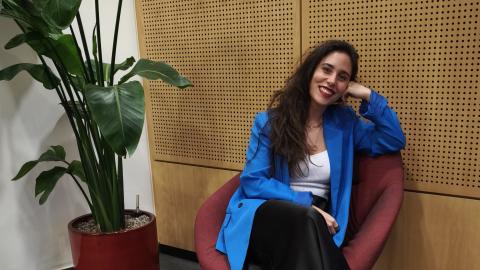
By Maria Walsh, MEP

When we speak about poverty, most people immediately think of food shortages, housing struggles or bills. Yet there is an element of poverty that is too often left out of the conversation: period poverty.

Period poverty refers to the inability to afford and access menstrual products. It has a higher prevalence among people with a low income, refugees, young people and people with disabilities.

Unfortunately, the harsh and deafening stigma surrounding menstruation exacerbates the problem, leaving many without the support they need and shrinking the space for action to be taken.

Menstrual health has been overlooked for far too long, having often been treated as a marginal concern. With menstrual poverty affecting an estimated 10% of the menstruating population in the EU, it is time to move beyond the narrative that this is solely a ‘women’s issue’ – it is a matter of public health and fundamental human rights.

I’m serving my second term as an MEP, and fundamental to both my mandates is ensuring that equality is not just talked about but met with reality across all sectors of society.

This is why I’ve proposed my Plan for Periods, a roadmap that sets out concrete steps to eliminate period poverty in the EU. Achieving this across all 27 Member States will ultimately require strong political commitment and coordination action.

This proposal seeks to end menstrual poverty, by taking into account policy and governance, access and affordability, education and awareness, research, and consultation with stakeholders. It is based on an intersectional and inclusive approach and sets out how the EU can lead in global action for menstrual health.

Some notable calls to action in my Plan for Periods include:

  • an EU Action Plan on Menstrual Health: creating a formal strategy integrating menstrual health into EU frameworks on gender equality, education, health and poverty reduction;
  • zero VAT on menstrual products: encouraging all Member States to fully remove VAT under the revision of the 2022 VAT Directive;
  • public awareness campaigns: launching menstrual awareness campaigns in the 24 EU languages;
  • research investment: it’s important to ensure funding for scientific research on menstruation, menstrual-related conditions (e.g. endometriosis), and product safety and innovation;
  • menstrual leave guidelines: encouraging Member States to develop voluntary frameworks for menstrual leave or flexible working arrangements;
  • including menstrual health in EU development aid and humanitarian policies.

I believe a proposal like this matters because menstruation is a biological fact of life for almost half the world’s population. And the reality is that when people cannot afford period products, the consequences ripple throughout all sectors of life. Young people skip school because they cannot manage their periods. Adults miss work. People’s reproductive health is impacted because they aren’t using safe products to manage their period.

So, addressing period poverty is not just about access to menstrual products, it is about ensuring dignity, equality, opportunity and prosperity.

I like to remind people that a Europe that strives for competitiveness cannot overlook the inequalities that hold people back. True competitiveness is only possible when we break down barriers, including period poverty, and build a Europe where everyone can participate fully and equally.

Indeed, there have been positive steps in recent years. Some EU Member States have removed or reduced ‘tampon tax’, acknowledging that menstrual products are not luxuries but essentials. In my Member State of Ireland, there is a commitment to make period products available in schools, following the lead of Scotland, which became the first country in the world to make period products free for all. Steps were taken in Spain in February 2023 regarding frameworks for menstrual leave, with the government passing a law which entitles women experiencing menstrual pain to paid time off work, provided that it is authorised by a doctor.

These policies are proof that change is possible.

But progress remains uneven. Many governments have yet to acknowledge period poverty as a policy priority. And across Europe, civil society organisations continue to shoulder much of the work without adequate support.

So ultimately, my proposal is a call to action. For too long, periods have been hidden in the shadows. But by speaking openly and by committing to action, we can change that. Ending period poverty is not just about distributing pads and tampons, it is about affording dignity and equality for every individual who menstruates.

Ending period poverty requires us to normalise the conversation. It requires policymakers to work hand in hand with educators, health professionals, NGOs and activists. It means the European Union needs to step up and show the way, making sure no one gets left out on the road to equality. I look forward to the European Commission’s Anti-Poverty Strategy, due to be published next year, to see what steps the Commission intends to take to combat period poverty.

First elected in 2019, and re-elected in 2024, Maria Walsh is serving her second term as a Fine Gael MEP in the European Parliament. She represents the Midlands-North-West constituency, which spans 15 counties across Ireland, and is a member of the EPP Group in the European Parliament. Ms Walsh sits on the European Parliament’s Committee on Agricultural and Rural Development (AGRI) and Committee on Women’s Rights and Gender Equality (FEMM) as a full member, and is also a member of the Committees on Civil Liberties, Justice and Home Affairs (LIBE) and on Regional Development (REGI). Her priorities include agriculture, regional development, women’s rights and mental health. She is a voice for farmers across the Midlands-North-West, for women and young girls and for all those who need mental health support and services.

On the eradication of poverty: promise or plan?

The European Anti-Poverty Network (EAPN) has long advocated for an EU Anti-Poverty Strategy. Now that its launch is approaching, EAPN’s Susana Anastácio shares the organisation’s vision of what an effective strategy should look like. 

Read more in all languages

The European Anti-Poverty Network (EAPN) has long advocated for an EU Anti-Poverty Strategy. Now that its launch is approaching, EAPN’s Susana Anastácio shares the organisation’s vision of what an effective strategy should look like. For if we truly want a Europe where everyone can live in dignity, promises will not be enough. What is needed is political courage, sufficient funding, and commitment at all levels.

By Susana Anastácio, EAPN

The European Anti-Poverty Network, together with its members, has been advocating for an EU Anti-Poverty Strategy (EU APS) for over 30 years. Since President Ursula von der Leyen announced this initiative in July 2024, we have intensified our efforts to share a clear vision of what an effective strategy should look like. As we approach 2026, the year of its expected release, we do so with both hope and caution. The promise is social justice, but the ground beneath our feet remains uneven.

In her 2025 State of the Union address, President von der Leyen raised the bar by committing to eradicate poverty by 2050. The EAPN has long argued that the goal must be eradication, not mere alleviation, and that this can only be achieved through the meaningful participation of people experiencing poverty at every stage: from design to implementation and evaluation. That is why we call for the creation of a PEP  (People Experiencing Poverty) Committee and a Civil Society Committee in the EU Anti-Poverty Strategy.

'Nothing about us without us.' Policies shaped behind closed doors cannot reflect the diversity of people’s realities. Only expertise by experience can bridge those gaps. But participation must be representative, sustainable, meaningful and fairly compensated, otherwise it risks becoming tokenistic.

The EAPN continues to create spaces where people experiencing poverty engage on an equal footing with policymakers, activists and experts. In September, we held the first PEP Consultation ahead of the EU Anti-Poverty Strategy, bringing together experts by experience from across Europe with representatives from the European Commission, including Executive Vice-President Roxana Mînzatu, to discuss concrete solutions to fight poverty in the EU.

On 5 November, we will hold an Anti-Poverty Day organised in collaboration with the European Parliament Intergroup on Fighting Against Poverty, where civil society organisations and people experiencing poverty will actively shape and lead parts of the agenda. It will be followed by the Annual PEP Meeting. This year, our approach is to equip people with the tools to participate through capacity-building workshops as well as meetings with key stakeholders. We all need support to participate meaningfully; people experiencing poverty are no different.

The insights gathered through these processes are not symbolic; they directly inform our policy priorities for the EU Anti-Poverty Strategy. The EAPN also sees the EU APS as a unique opportunity to reinforce existing commitments under the European Pillar of Social Rights Action Plan. We have defined five priorities: ensuring adequate income, inclusive labour markets, access to essential services, tackling homelessness and the intersectional aspects of poverty.

However, the added value of the EU APS lies in its ability to go beyond the EPSR principles by tackling the root causes of poverty and recognising its multidimensional nature. Poverty is rooted in systemic injustice, unequal power relations and an unfair distribution of wealth and resources, and it is reinforced by discrimination.

This is why the EAPN has worked to bring an anti-poverty perspective into EU Anti-Discrimination Strategies such as the Anti-Racism, LGBTIQ and Gender Equality Strategies, while insisting that an anti-discrimination lens must be embedded in the EU APS as a non-negotiable condition for its success.

Ending poverty requires real funding and coordinated action across EU, national and local levels. The next Multiannual Financial Framework (2028–2034) is therefore one of our main concerns. Without sufficient resources and clear prioritisation of poverty eradication, EU commitments risk remaining empty words. Particularly alarming is the absence of a structural and adequate budget to support the most marginalised communities.

At the same time, there are currently no mechanisms to ensure the adoption of national and local anti-poverty strategies (NAPS and LAPS). The EAPN and its members are bringing this issue to the forefront. The EU may set the direction, but many anti-poverty policies fall under national and local competences. For instance, the EU cannot directly redistribute income through unemployment benefits or pensions, but it can support coordination and set minimum standards.

Our current campaign for the International Day for the Eradication of Poverty focuses on the need for NAPS and LAPS, drawing on the work of our national members and their National Poverty Watch Reports. In 2026, we will launch the EU Poverty Watch Report with an overview of the current situation across Europe.

At the EAPN, we remain committed to keeping poverty and social exclusion at the top of the EU, national and local policy agendas. We believe in a Europe where everyone can live with dignity, but achieving this requires more than promises. It demands political courage, adequate resources and a shared commitment across all levels of governance.

Susana Anastácio is the Senior Communications Officer at the European Anti-Poverty Network (EAPN), where she leads strategic communications and digital engagement to raise awareness on poverty and social exclusion in Europe. She specialises in translating complex social issues into clear, impactful messages for diverse audiences.

The European Anti-Poverty Network (EAPN) is the largest European network of NGOs, grassroots groups and organisations dedicated to fighting poverty and social exclusion. Established in 1990, It brings together 31 national networks and 13 European organisations working toward a more socially inclusive Europe.

Eradicating child poverty: a human rights imperative

With child poverty on the rise in both the EU and its neighbouring countries, EU Member States remain a long way off meeting the target of lifting five million children out of poverty by 2030. Yet, with binding obligations and dedicated funding in the new EU budget, Europe still has the chance to put children’s rights at the heart of its social and economic model, writes Eurochild, Europe’s largest network of organisations and individuals working for and with children.

Read more in all languages

With child poverty on the rise both in the EU and its neighbouring countries, EU Member States remain a long way off meeting the target of lifting five million children out of poverty by 2030. Yet, with binding obligations and dedicated funding in the new EU budget, Europe still has the chance to put children’s rights at the heart of its social and economic model, writes Eurochild, Europe’s largest network of organisations and individuals working for and with children.

Ending child poverty is not an act of charity, but a moral and legal obligation rooted in human rights. Every child has the right to grow up free from poverty and with access to essential services recognised under the UN Convention on the Rights of the Child.

What the numbers say

The EU Member States are a long way off meeting their 2030 target of reducing the number of children in poverty by at least 5 million. Instead, child poverty is rising. In 2024, 24.2% of children were at risk of poverty and social exclusion. The situation is particularly stark in Bulgaria (35.1%), Spain (34.6%) and Romania (33.8%).

In the enlargement countries, the situation is equally concerning. In 2021, 50.1% of children in Albania were at risk of poverty and social exclusion, while child poverty in Ukraine reached 65.6% (UNICEF). Within the EU, the sharpest increases in child poverty since 2023 were seen in Finland (+3.5) and Croatia (+2).

How to tackle child poverty

Ending child poverty and social exclusion is a core priority for Eurochild. Based on the information provided by our members, included in our annual Flagship Report, our advocacy promotes systemic reforms that address structural inequalities. These reforms include:

  • strengthening social protection systems;
  • increasing public investment in early childhood services; and
  • guaranteeing universal access to quality education and healthcare.

We have consistently advocated the inclusion of information on child poverty and children’s social rights in the European Semester, which is now being implemented. We are also shaping the upcoming EU Anti-Poverty Strategy, the European Pillar of Social Rights and the EU Affordable Housing Strategy, ensuring that these frameworks are fully integrated into the 2028-2032 Multiannual Financial Framework.

Child poverty intersects with factors such as disability, gender, ethnic origin and migrant background. Eurochild advocates a rights-based and intersectional approach that prioritises the most disadvantaged children, focusing on tackling structural discrimination and breaking the cycles of exclusion to ensure equity in all aspects of childhood development.

Together with Save the Children Europe, Eurochild co-chairs the EU Alliance for Investing in Children, a coalition of over 20 European networks committed to ending child poverty. In June, we sent a joint letter to the presidents of the European Commission, the European Parliament and the European Council, calling for a strong social focus in the EU budget. Our demands are clear:

  1. Reinforce the European Child Guarantee. This historic initiative is delivering results. However, it must be strengthened and remain sharply focused on the children most at risk.
  2. Integrate the European Child Guarantee into a stronger EU social agenda. The forthcoming EU Anti-Poverty Strategy, the revision of the European Social Fund Regulation and the European Pillar of Social Rights Action Plan must put the fight against child poverty at the heart of Europe’s social ambitions. These frameworks require adequate financing and design to support comprehensive, rights-based and intersectional policies.
  3. Back ambitions with robust funding in the next Multiannual Financial Framework. Social investment must remain central to the EU’s post-2027 agenda. Europe must protect the social dimension that underpins its cohesion, its legitimacy and its unique strategic advantage. 

The upcoming EU budget: an opportunity to tackle child poverty

The new EU budget is an opportunity to make children’s rights a central part of Europe’s social and economic model. Despite progress through the European Child Guarantee and the European Social Fund Plus (ESF+), gaps persist. The National and Regional Partnership Plans, proposed by the European Commission to replace the ESF+, risk deprioritising child-focused investments.

Eurochild urges explicit commitments to eradicate child poverty, including earmarking for child poverty within the National and Regional Partnership Plans, matching at least the current 5% ESF+ requirement and scaled up for countries with higher child poverty rates.

We also call for stronger safeguards linked to international children’s rights standards, including the UNCRC and UNCRPD, as well as the inclusion of civil society organisations and children in programme design and monitoring. Linking these priorities to the European Semester would ensure accountability and progress tracking through measurable targets and annual reporting.

Without binding obligations, sufficient funding and participatory governance, the EU risks failing to deliver on its own promise: lifting 5 million children out of poverty by 2030 and eradicating poverty by 2050. Failing to act would not only harm Europe’s future cohesion, it would undermine children’s fundamental rights.

Eurochild is Europe's biggest network of national and international NGOs, child rights coalitions, research institutions and professionals advocating for children and wellbeing. It has 225 members in 41 countries. By influencing policies, exchanging good practices and research, and actively involving children in different aspects of their work, Eurochild aims to ensure that every child in Europe grows up happy, healthy and respected, and that children's rights are at the heart of European policies.

Between steadfast progress and faltering promises: energy poverty support in the EU

The number of Europeans unable to heat their homes may have fallen, but deeper structural barriers, such as the slow pace of renovation, patchy policies, and unequal access to financial support, continue to leave millions at risk. The true test lies in translating policy ambitions into meaningful action, ensuring that support reaches those who need it most, writes Samuele Livraghi, energy policy expert at the Institute for European Energy and Climate Policy (IEECP).

Read more in all languages

The number of Europeans unable to heat their homes may have fallen, but deeper structural barriers, such as the slow pace of renovation, patchy policies, and unequal access to financial support, continue to leave millions at risk. Ambitious legal and policy initiatives, such as the mandatory earmarking of funds to help people experiencing energy poverty, are already in place. Yet, the true test lies in translating this policy ambition into meaningful action, ensuring that support reaches those who need it most, writes Samuele Livraghi, energy policy expert at the Institute for European Energy and Climate Policy (IEECP).

By Samuele Livraghi, IEECP

At first glance, it may seem that the latest Eurostat figure on energy poverty in the EU marks some progress: in 2024, 9.2% of EU citizens were unable to adequately heat their homes, down from 10.6% in 2023. However, this apparent progress masks persistent vulnerabilities beyond this limited metric. In 2024, a combination of lower energy prices, moderated demand, information and awareness campaigns, grassroot action, and various efficiency investments has helped reduce the headline numbers.

Yet, deeper structural barriers remain, including slow building renovation rates (below 1%), fragmented policy implementation, and uneven access to co-financing opportunities and green loans. Analysts caution that between 8% and 16% of Europeans may still be facing energy poverty. To further complicate this picture, many households experiencing energy poverty are not strictly income-poor: middle-income households with inefficient dwellings or high energy costs may also slip through social safety nets.

Moreover, both geographic and demographic disparities remain stark. In rural areas, not only do households often spend 7% or more of their income on energy, but also most rural homes were built before the 1970s. Many still rely on high-carbon fuels, with around 40 million rural households remaining off the gas grid, facing higher heating costs, limited access to cleaner energy options, and underinvestment in housing quality.

Is the current policy push translating into action?

The recast of the Energy Efficiency Directive (EU)2023/1791 strengthens the legal imperative to empower and protect vulnerable people experiencing energy poverty. Article 8(3) now mandates that a defined share of energy savings must be earmarked – or ring-fenced – to benefit priority groups (widely understood as low-income households, energy-poor households, renters and social housing inhabitants).

The deadline to transpose the Directive is 10 October 2025. In the latest Member States’ reporting, the ring-fencing clause (Art. 8(3)) still occasionally appears as a token statement rather than being backed by a binding budget or a clear pipeline of projects, which slows down much needed interventions. Some Member States lack the data granularity to target households effectively, or instead target ‘vulnerable customers’ with generic energy subsidies, social tariffs, or tax reductions, rather than structural retrofits. Moreover, several evaluations flag up the fact that efficiency measures have disproportionately reached better-off households, even though poorer households have less capacity to co-finance renovation.

If fully implemented, ring-fencing could bring a much-needed breath of fresh air to vulnerable households, who are often on the margins of policy discussions and measures. Households experiencing energy poverty would benefit from a dedicated pool of funding, ensuring that a portion of savings is explicitly channelled to them. In practice, this could mean:

  • Deep renovation or partial retrofit of the worst-performing homes, reducing energy bills by 30–50%, as envisioned within the EU Renovation Wave.

  • Targeted technical assistance, bundled with finance (loans, grants, on-bill repayment), to ensure vulnerable households do not face upfront barriers.

  • Prioritised deployment of interventions (insulation, heat pumps, photovoltaics) in low-income and social housing sectors, as also supported by the Social Climate Fund and Energy Performance of Buildings Directive (recast).

  • Enhanced monitoring and evaluation, ensuring that outcomes (reduced arrears, improved indoor comfort and health gains) feed back into policy adjustments, as planned both in the National Energy and Climate Plans, and Social Climate Plans.

In 2024, eleven Member States had already established energy poverty observatories, a fundamental step towards diagnosing and contextualising the issue. To further activate these strategies, policymakers, experts and practitioners must acknowledge that people and communities are at the forefront of these challenges and need to be heard. This is possible when their adaptive capacity is understood and harnessed, enabling us to determine whether and how households can translate efficiency gains into real every-day comfort improvements and greater resilience.

Are current tools enough under current pressure?

EU policymakers have assembled an impressive toolkit that should directly support the alleviation of energy poverty: dedicated provisions in the Directives on energy efficiency, buildings and renewables; the Governance Regulation of the Energy Union; Recovery & Resilience funding; EU cohesion and structural funds; and the Social Climate Fund.

But is this enough? Seventy-five percent of EU buildings are classified as poor energy performers, and many require capital-intensive deep renovation. For many households, co-financing or prefinancing, as well as administrative costs of renovation, remain prohibitive. The shared burden of financing often lands on national, regional or local authorities whose budgets are stretched. Yet these authorities are largely excluded from the process of developing Social Climate Plans, despite legal obligations for them to be involved.

A narrative of hope and demand

Amid these systemic gaps, there is reason for hope. Across Europe, local NGOs, social housing associations, energy cooperatives, municipal retrofit programmes and citizen-led ‘energy poverty labs’ are proving that change from the ground up is possible. These are the stories that must be elevated and amplified. If European institutions, Member States and civil society commit to prioritising structural equity, energy poverty can be addressed not just as a statistic, but as a transformative pathway to enhance citizens’ livelihoods and secure a better future for all – one that includes energy justice.

Samuele Livraghi is an energy policy expert at the Institute for European Energy and Climate Policy (IEECP), an independent non-profit research hub that turns scientific knowledge into practical advice for policymakers and organisations working towards a sustainable energy future. Most of his research has focused on energy poverty, policy evaluation, and inclusivity, through projects such as ASSERT, LOCATEE, RENOVERTY, and ENSMOVPlus. These projects allowed him to further explore the intersections between policy, society, economy and climate, applying analytical skills to underpin his research. They also gave him the opportunity to observe how energy poverty manifests itself across Europe and to document the implications of climate reporting. 

When work is not enough for a decent life: ending in-work poverty in Europe

By Sotiria Theodoropoulou, ETUI

A job should be a reliable route to a decent life. Yet, across Europe, 1 out of 12 employed adults were classed as ‘working poor’ in 2024. EESC Info talked to European Trade Union Institute researcher Sotiria Theodoropoulou, who explained what it means to be working poor and how it differs from severe material and social deprivation. In Europe, the in-work poverty rate is highest in Luxembourg - a Member State with the highest GDP per capita.

Read more in all languages

By Sotiria Theodoropoulou, ETUI

A job should be a reliable route to a decent life. Yet, across Europe, 1 out of 12 employed adults were classed as ‘working poor’ in 2024. EESC Info talked to European Trade Union Institute researcher Sotiria Theodoropoulou, who explained what it means to be working poor and how it differs from severe material and social deprivation. In Europe, the in-work poverty rate is highest in Luxembourg - a Member State with the highest GDP per capita.

What is the definition of the working poor? How do we differentiate in-work poverty from other forms of poverty, such as material deprivation?

The working poor (or those that are in work and at risk of poverty) are adults who have a job (and are thus ‘in work’), but are still income-poor (thus at risk of poverty). Their household income, after adjusting for the number and ages of those who reside within it, is below 60% of the country’s average income.

Being in work and at risk of poverty is classed as when the household income is low compared to other residents in the same country, and does not necessarily mean a low standard of living. It is different from being at risk of poverty or social exclusion (AROPE). AROPE is broader and includes anyone who is income‑poor, severely materially and socially deprived, or living in a very low work intensity household (where working-age adults are employed for 20% or less of possible working time).

The concept of in-work poverty differs from that of severe material and social deprivation. The latter refers to the enforced lack of at least 7 out of a list of 13 necessary and desirable items that would suggest leading an adequate life. The working poor therefore do not necessarily face severe material and social deprivation. However, living in a very low work intensity household, where the adults of working age work for 20% or less of the potential working time, is a key driver of in-work poverty.

What are the latest figures on the working poor in the EU? Are the numbers growing or stagnating compared to 5 or 10 years ago?

Differences in in-work poverty rates across countries remain stark: in 2024, Luxembourg topped the table (13.4%), while Finland and Czechia were the lowest (2.8% and 3.7% respectively) (see figure 1). The EU‑27 rate was down from a 2016 peak of 9.8%, showing some progress, but also that resilience or the ability to cope with economic pressure remains uneven. Some countries have been able to withstand high costs of living better than others.

What population groups are particularly at risk? What are the consequences these workers face?

The in-work poverty risk clusters where household work intensity is low, contracts are non‑standard (fixed-term or part-time), skills are lower, or workers are migrants or single parents (see figure 2). Gendered care gaps and part‑time concentration add exposure for women in many Member States, underscoring that hours and household composition matter as much as hourly pay.

Figure 1. In-work poverty rates (%), EU-27 and Member States, 2024

Figure 1. In-work poverty rates (%), EU-27 and Member States, 2024

Source: EU-SILC database (ilc_iw01 series)

Figure 2. In-work poverty rates (%) by socio-demographic and labour market characteristics, EU-27, 2024

Figure 2. In-work poverty rates (%) by socio-demographic and labour market characteristics, EU-27, 2024

Source: EU-SILC database (ilc_iw01/02/03/04/05/06/07/16 series)

What are the EU and Member States doing to combat in-work poverty, and is it enough? What more should be done?

The policies that can help reduce and mitigate in-work poverty are:

  • adequate wage floors (a fair minimum wage for all workers) and wide bargaining coverage (where up to 80% of workers are covered by agreements that set their pay and working conditions);
  • equal‑pay transparency and enforcement;
  • fair contracts;
  • predictable hours and full access to social protection for non-standard workers;
  • universal, affordable childcare which allows more adults in a family to work or take more hours if they want; and
  • adequate minimum‑income support with earnings disregards, which means that families are allowed to keep some benefits when they start earning, so that the second earner in the household actually gains money by working more hours.

EU law and guidance now provide a toolbox: the Minimum Wage Directive, the Pay Transparency Directive, the Platform Work Directive , and the 2023 Recommendation on adequate minimum income.

With ETS2 (the second EU emissions trading system) starting in 2027, the Social Climate Fund (2026-2032) can lower unavoidable energy and transport costs that keep low‑wage households below the line. Supporting higher educational attainment and the integration of migrant workers into documented employment can also alleviate the in-work poverty risk.

Last but not least, progress needs to be monitored by looking at how many working people are still at risk of poverty (in‑work AROP), breaking down the data by type of job contract, gender, and how much people in a given household are working. This helps make sure policies reach those who need it most. The information, collected through the EU’s main survey on income and living conditions (EU-SILC), should be published regularly and openly so everyone can see and check it.

Sotiria Theodoropoulou is the head of research unit ‘European economic, employment and social policies’ at the European Trade Union Institute in Brussels. 

Editors

Ewa Haczyk-Plumley (editor-in-chief)
Laura Lui (ll)

Contributors to this issue

Chrysanthi Kokkini (ck)
Daniela Vincenti (dv)
Flavia-Estelle Bardicea (fb)
Giorgia Battiato (gb)
Jasmin Kloetzing (jk)
Katarzyna Karcz (kk)
Katerina Serifi (ks)
Laura Lui (ll)
Leonard Mallett (lm)
Marco Pezzani (mp)
Margarita Gavanas (mg)
Margarida Reis (mr)
Millie Tsoumani (at)
Pablo Ribera Paya (prp)
Samantha Falciatori (sf)
Thomas Kersten (tk)

Coordination

Giorgia Battiato (gb)
Leonard Mallett (lm)


Address

European Economic and Social Committee
Jacques Delors Building,
99 Rue Belliard,
B-1040 Brussels, Belgium
Tel. (+32 2) 546.94.76
Email: eescinfo@eesc.europa.eu

EESC info is published nine times a year during EESC plenary sessions. EESC info is available in 24 languages
EESC info is not an official record of the EESC’s proceedings; for this, please refer to the Official Journal of the European Union or to the Committee’s other publications.
Reproduction permitted if EESC info is mentioned as the source and a link  is sent to the editor.


Cover photo: © Andreas Haubjerg
 

October 2025
08/2025

Follow us

  • Facebook
  • Twitter
  • LinkedIn
  • Instagram