Adotados on 30/04/2025 - Bureau decision date: 11/07/2024
Referência
ECO/652-EESC-2024
Rapporteur
, Luca JAHIER (Civil Society Organisations - GR III/Italy)
Plenary session number
596
-
Information Report ECO/651 and Own-initiative opinion ECO/652 are a continuation of the European Semester Group's (ESG) work to consult annually national economic and social councils, social partners and civil society organisations from EU Member States on reform and investment proposals made in the context of the European Semester and their implementation in the Member States. The Information Report aims to collect the views of social partners and civil society organisations in the Member States on the reform and investment proposals and their implementation, in particular those indicated in the 2024 Country-Specific Recommendations. The Own-initiative opinion aims to complement the Information Report and to include the EESC's policy recommendations based on the results of the stakeholder consultation. It allows the EESC to formulate general and specific considerations, and to present the associated EESC's conclusions and policy proposals.
Download — Parecer do CESE: The EESC's recommendations on the reform and investment proposals formulated as part of the 2024-2025 European Semester cycle
Information Report ECO/651 and Own-initiative opinion ECO/652 are a continuation of the European Semester Group's (ESG) work to consult annually national economic and social councils, social partners and civil society organisations from EU Member States on reform and investment proposals made in the context of the European Semester and their implementation in the Member States. The Information Report aims to collect the views of social partners and civil society organisations in the Member States on the reform and investment proposals and their implementation, in particular those indicated in the 2024 Country-Specific Recommendations. The Own-initiative opinion aims to complement the Information Report and to include the EESC's policy recommendations based on the results of the stakeholder consultation. It allows the EESC to formulate general and specific considerations, and to present the associated EESC's conclusions and policy proposals.
Download — Information report: The point of view of organised civil society in the EU Member States on national reform and investment proposals and their implementation (2024-2025 European Semester cycle)
After the European elections, what agenda for the EU?
In this issue:
Our members share their expectations and proposals for the EU agenda 2024-2029
Guest articles by László Bercse (Vice-President, Inclusion Europe), Rareș Voicu (President, European Youth Forum) and Radu Caragea-Szucs (Vice-President, Funky Citizens)
Special interview with EESC Vice-President Aurel Laurenţiu Plosceanu on the European elections
Report on our recent conference on 'The State of Health in the EU'
Interview with rapporteur Stoyan Tchoukanov on the EESC opinion 'Promoting autonomous and sustainable food production: strategies for the Common Agricultural Policy post-2027'
Far-right parties are gaining significant traction in Europe, potentially becoming the third or fourth largest group in the European Parliament after the upcoming European elections. This shift presents a critical threat to the rights and freedoms of millions of workers across the continent based upon their voting behaviour on social policy.
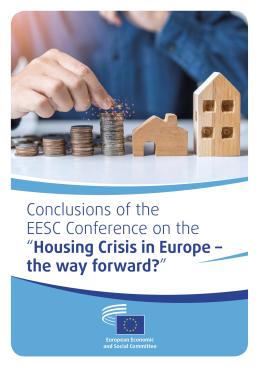
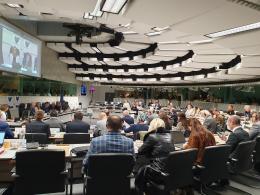
On 20 February 2024 in Brussels, the EESC organised a conference on the Housing Crisis in Europe. This publication sets out the participants' assessment of the current state of affairs and their recommendations on how to tackle the current housing crisis.
Addressing immediate and long-term challenges, properly implementing existing EU policies and strengthening EU values are some of the priorities proposed by civil society organisations for the new mandate, along with structured civil dialogue and a strong social agenda.
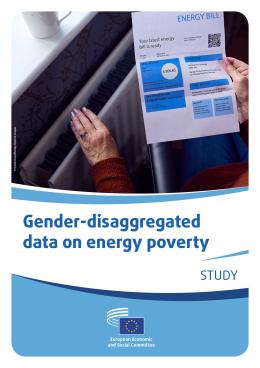
Recent economic shocks from the COVID-19 pandemic and the energy crisis in Europe following Russia’s invasion of Ukraine have brought energy poverty to the forefront of social and political debate. While EU policies increasingly address energy poverty, gender considerations remain overlooked. This study addresses this gap and aims to increase the understanding of the gender-energy poverty nexus, analysing existing literature and EU and national policies.
Lessons learned from the first years of the implementation of the programming period 2021-2027
Event type
Debate
Location
Online event
Belgium
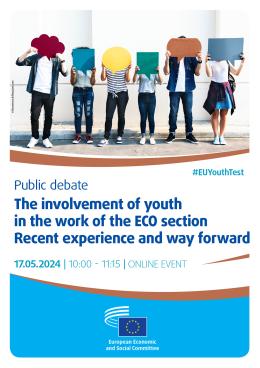
Public debate on 9th Cohesion report: Lessons learned from the first years of the implementation of the programming period 2021-2027, in the framework of the ECO section meeting.