A former Polish Minister for Social Policy and current President of the Polish Scouting and Guiding Association (ZHP), Mr Pater was elected to the post today by the plenary assembly of the European Economic and Social Committee (EESC), of which he has been a very active member since 2006.
The April plenary session of the European Economic and Social Committee (EESC) saw the election of the new vice-president in charge of communication for 2023‑2025.
The president vows to make the European Economic and Social Committee a true civil society gateway and open its doors to the EU accession countries. In the run-up to the 2024 European elections, the Committee will take on a more active role to stand up for democracy and strive for a more resilient, prosperous and inclusive Europe.
Speaking at an event marking 30 years of the single market, Mr Monti said this anniversary afforded an opportunity for EU institutions to call out the European Council and expose national governments' attempts to hide behind the imperfections of the single market while paying lip service to it.
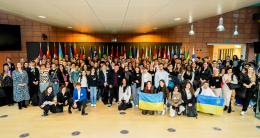
Em 23 e 24 de março, o Comité Económico e Social Europeu (CESE) acolheu a 14.ª edição do evento «A tua Europa, a tua voz!», que reuniu em Bruxelas 105 alunos de 35 escolas dos 27 Estados‑Membros da UE e dos sete países candidatos. Face a uma diversidade de desafios sociais e económicos, à contração do espaço cívico e às ameaças à paz e aos direitos fundamentais, a conferência deste ano centrou-se nos «Diálogos com a juventude sobre a democracia» e procurou assegurar que a voz dos jovens é tida em conta na conceção do futuro da Europa. As recomendações dos alunos serão apresentadas às instituições europeias e aos principais responsáveis políticos da UE em junho de 2023.
On 23 March, the European Economic and Social Committee (EESC) held a plenary debate and adopted a resolution entitled "United for Democracy" with concrete proposals to strengthen democracies and democratic values across the European Union. Policymakers, experts, and organised civil society representatives agreed that civic education, better funding to social partners and a focus on the local dimension, are key to democracy in Europe.
At its March plenary session, the European Economic and Social Committee (EESC) hosted Ambassador Lachezara Stoeva, president of the United Nations Economic and Social Council (ECOSOC). Ambassador Stoeva strongly supported the key role civil society must play in implementing the 2030 Agenda.
At its plenary session in March, the European Economic and Social Committee (EESC) held a debate with Italy's Minister of Labour and Social Policies, Marina Elvira Calderone, on making EU labour markets stronger and more inclusive. The EESC reiterated its support for the European Commission's proposal to strengthen national equality bodies, which are entrusted with promoting equality for all and combating discrimination in employment.
At the European Economic and Social Committee's March plenary, EESC President Christa Schweng and European Commissioner for Energy Kadri Simson reiterated the bloc's strong commitment to Europe's clean energy future.
As part of the European Year of Skills, the European Economic and Social Committee (EESC) held a conference on "Skills and talents as key drivers for personal fulfilment, economic growth and competitiveness" on 10 March to assess the needs and issue recommendations regarding skills development in the EU.