
European Economic
and Social Committee
Freedom of expression and freedom of the media
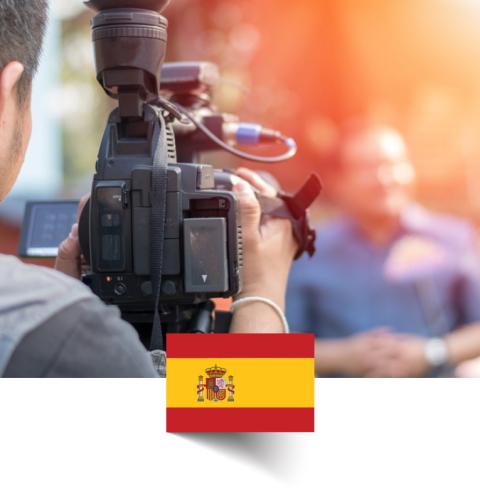
Participants explained that freedom of expression was a constitutional right in Spain. However, they also considered that this right had been violated in the past years as a result of the entry into force of the Law on citizens' security in 2015.
This law was considered by participants as violating international standards in the area of freedom of expression and freedom of the media. According to participants, since its entry into force, the administrative authorities have relied on that law to impose fines on journalists, in particular photographers and cameramen who recorded images of the police.
Participants also criticised the vagueness of some articles of the Criminal Code concerning freedom of the media and freedom of speech, which allowed for too wide an interpretation and an abusive use of the provisions by the police. Participants reported cases of journalists being fined for "lack of r espect and obstruction" or for "disobeying authority" during their work.
Participants also criticised the Law on citizens'security, which they felt criminalised certain forms of expression considered as an offence to religion, the royal family or the Spanish flag. They reported that a comedian had been tried in court for blowing his nose into the Spanish flag during a sketch and that rap singers had been jailed for song lyrics allegedly promoting terrorism.
Participants explained that in Spain, the right to access information is enshrined in the Spanish Constitution as an administrative right rather than a fundamental right, with a resulting lower level of protection. Concerning access to information, participants regretted that the Law on transparency (intended to allow journalists or individualsto request information from the government or the public administration) was not properly implemented. Participants said that journalists have had difficulty accessing information on salaries of public officials. Moreover, according to the participants, the Law on transparency was put on hold during the COVID-19 pandemic, preventing access to information on health measures.
Participants reported that violence against journalists was on the rise, mostly from police officers but sometimes also from demonstrators themselves. Participants also highlighted the alleged difficulty in clearly identifying police officers in the event of attacks or excessive use of force against journalists. Public authorities said that Spain had not been found in breach of the provisions of the European Convention on Human Rights regulating interactions between the State and journalists or protecting their independence against threats from the government since 1979. Public authorities also provided information about the range of agreements between the Ministry of the Interior and journalist associations in order to protect journalists from threats and situations of vulnerability.
Participants also expressed concerns regarding pluralism of information. They underlined the difficulty in getting information on the distribution of public funds for institutional advertising. They also regretted that Spain did not have an audiovisual council to guarantee the independence of the public media.
Participants said that some journalists had been prevented from participating in press conferences with government representatives, as well as with some political parties. They highlighted that certain local authorities had not accepted questions from some journalists at some press conferences. Participants also said that during the pandemic, the government prevented health professionals from giving statements to the media.
Participants explained that Spain did not have specific legislation on fake news, and that fact checking was done by journalists and media companies using a professional mechanism. As regards disinformation, participants said that progress was ongoing and that the Spanish Department of National Security had created working groups to draft a white paper on how to tackle disinformation campaigns.
Participants expressed their concerns regarding Spain's failure to transpose the EU Directive on the defence of whistle-blowers.
Another concern expressed by participants related to the regulation of the internet. Participants considered that Royal Decree-Law 14/2019 of October 31, adopting urgent measures for reasons of public security in matters of digital administration, public sector contracting and telecommunications, allowed the government to take control of the broadcasting network. According to participants, the decree-law stipulated that the network was increasingly administered by the State, with no obligation for a judicial ruling to limit access.