
European Economic
and Social Committee
Freedom of expression and freedom of the media
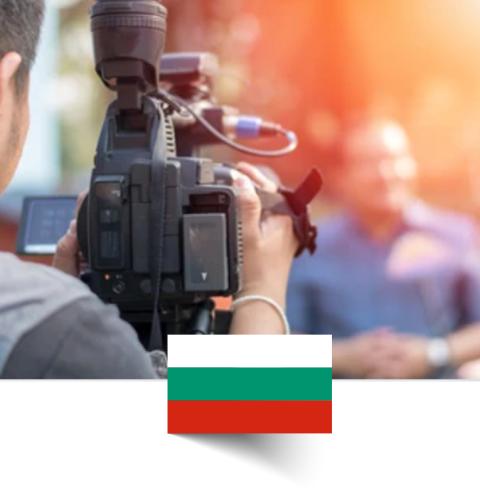
Bulgaria only ranked 111th in the World Press Freedom Index 2018 (Reporters Without Borders); this was not only the lowest ranking of an EU Member State, but also one of the worst among all European countries. Media representatives saw this as the result of a gradual downhill slide that began with Bulgaria’s accession to the EU; in 2006, one year before EU accession, Bulgaria ranked 36th in the same index. They felt that it was directly linked to the increase in corruption, noting that Bulgaria was one of the worst-ranked countries in the EU in terms of perception of corruption by Transparency International.
Media ownership was concentrated in the hands of a very small group of people, and it was reported that political figures (among others) exerted control over the media. Although these figures only officially owned a couple of newspapers, in practice they directly or indirectly controlled dozens of other private media outlets, as well as public media. Furthermore, it was noted that the media outlets in question generally adopted a very pro-government attitude, and were more disparaging of governmental opponents or other perceived critical voices.
The authorities also seemed to facilitate the concentration of media ownership, for example by adjusting certain legislation on media funding in favour of media oligarchs. Such legislation was generally approved virtually unanimously in parliament, while proposals for strengthening the independence of journalists were ignored, and it was the impression of the participants that politicians showed little interest in media freedom and pluralism.
Moreover, pressure and attacks on journalists were common in Bulgaria, both from public authorities and from private actors, such as media agencies. This pressure often came in the form of smear campaigns, run against independent journalists that covered sensitive topics, or termination of employment, if a writer’s stance was at odds with the media agency that employed them. For example, in the past few months the pressure against independent journalists had intensified: in September 2019, for example, a top legal radio journalist was almost taken off the air for attempting to cover the nomination of the new prosecutor-general in Bulgaria. Furthermore, media representatives reported that they had also experienced harassment from public authorities such as the Prosecutors’ Office, police, tax agencies and other financial investigative authorities. This pressure sometimes extended to their associates and family as well.
Regarding media funding, public radio and television were legally required to maintain a certain level of editorial independence. Nevertheless, the government provided their funding and could therefore exert editorial pressure. Local media were overwhelmingly dependent on the local authorities’ budget, and therefore even more susceptible to political influence. Concerns were raised that national media agencies were being selectively funded via EU funds, and that this process was non-transparent and potentially biased.
Government representatives did not provide any views on the situation of freedom of expression and freedom of the media.
Downloads
Report
-
Report on the country visit in Bulgaria, 10-11 October 2019