A few days before we mark International Women’s Day and as we anticipate the 69th session of the Commission on the Status of Women (UNCSW69) in New York, this is a good time to reflect on and evaluate achievements in gender equality. It is also the right time to look towards the future and continue paving the way forward.
A few days before we mark International Women’s Day and as we anticipate the 69th session of the Commission on the Status of Women (UNCSW69) in New York, this is a good time to reflect on and evaluate achievements in gender equality. It is also the right time to look towards the future and continue paving the way forward.
In terms of the legislative framework, we note improvements: more women are active in the labour market, earning better incomes, attaining higher levels of education, increasing their political representation, and holding more positions of power. However, progress has been slow and uneven across the Member States.
But as long as structural inequalities, gender stereotypes and backlashes against women’s rights persist, women will continue to be under-represented in the public sphere, in politics and in STEM education, they will be exposed to online and offline violence and they will lack access to resources and capital for entrepreneurship. They will also be more prone to suffering time and money poverty and the pay and retirement gaps will take too many years to close.
Moving forward is all about training, funding, and commitment. We need resources to boost women’s skills for the digital and green just transition, to fund national action plans to combat violence against women, and to provide training for all personnel working with survivors of violence.
We need to finance entrepreneurial projects and establish affordable, accessible, and high-quality child and elderly care services to lift the burden of unpaid care-giving responsibilities from women's shoulders. Additionally, we need a strong commitment to creating safe spaces, involving more women in local, national, and EU parliaments, and ensuring their active participation in non-violent conflict resolution and peace-building processes, while also promoting gender-inclusive approaches within these efforts.
On top of that, having a broad European strategy for Agenda 2030 would help us move much faster in making gender equality a key part of our policies. The Sustainable Development Goals should be tackled as a whole, not one by one.
In the EU, progress is 'good'. But 'good' is not good enough for the men, women and girls in the EU that are fighting for effective gender equality for the years to come. Our role as civil society is to step up the pressure on policy-makers to move things forward fast.
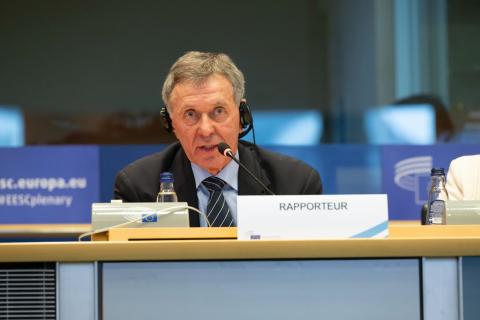
Ahead of International Women's Day on 8 March and the 69th session of the Commission on the Status of Women (UNCSW69) — the main global body promoting women's rights — EESC member Maria Nikolopoulou, rapporteur for the opinion entitled EESC contribution to the EU’s priorities at the UNCSW69, writes about the EU's progress on gender equality. While many improvements deserve recognition, women are still far from having the same rights as men. Many gaps remain to be closed, and many more battles must be won.
Ahead of International Women's Day on 8 March and the 69th session of the Commission on the Status of Women (UNCSW69) — the main global body promoting women's rights — EESC member Maria Nikolopoulou, rapporteur for the opinion entitled EESC contribution to the EU’s priorities at the UNCSW69, writes about the EU's progress in gender equality. While many improvements deserve recognition, women are still far from having the same rights as men. Many gaps remain to be closed, and many more battles must be won.
Compared to its global peers like the United States, the euro area is facing pressing challenges: low labour productivity, weakening competitiveness and slowing economic momentum. To reverse this trend, the European Economic and Social Committee (EESC) is calling for an urgent and coordinated strategy.
Compared to its global peers like the United States, the euro area is facing pressing challenges: low labour productivity, weakening competitiveness and slowing economic momentum. To reverse this trend, the European Economic and Social Committee (EESC) is calling for an urgent and coordinated strategy.
In its opinion Euro area economic policy 2025, the EESC outlines a plan to drive growth by deepening the internal market, cutting regulatory red tape and ensuring fiscal sustainability. At the same time, policies must address transformative trends like artificial intelligence (AI) and the pressures of an ageing population.
After external shocks like the COVID-19 pandemic and the energy crisis, the euro area is being confronted with major economic challenges. While stabilisation efforts have been made, issues such as domestic uncertainty, demographic shifts and rising fiscal pressures demand bold reforms.
The EESC puts forward a three-step approach to enhance productivity and competitiveness: deepening the internal market, coordinating industrial policy and cutting red tape. Fiscal sustainability is crucial, requiring a balanced framework, stronger EU collaboration and efforts to tap into untapped revenues. Investment remains a weak point, with a need for expanded venture capital and innovation-friendly policies.
Labour market resilience is also key, necessitating flexibility, fair wages, social security reforms and AI-driven skills development. The EESC stresses the need for shared accountability between the EU and its Member States, advocating enhanced policy coordination. With decisive action and strategic investments, the euro area can build a resilient, competitive and sustainable economy for the future (tk).
Teatro Thalia, Estrada das Laranjeiras 205, Lisboa 1600-134
Lisbon
Portugal
This conference in Lisbon is the fourth event on disinformation being hosted by the European Economic and Social Committee (EESC) as part of its ongoing project aiming to fight disinformation with the help of civil society.
The European Economic and Social Committee (EESC) is spearheading the debate around AI in the world of work, by holding two high-level events, taking part in the AI Action Summit and adopting key opinions on this burning issue.
House prices rose by 47% in the EU between 2010 and 2022. During the same period, rents were up by 18%. According to Eurostat, in 2023, more than 10% of households in cities and 7% of households in rural areas spent more than 40% of their disposable income on accommodation. To shine more light on how we can make housing more affordable and sustainable for all Europeans, the EESC commissioned a study which explores policy solutions to achieve this. In this interview, the study's co-authors, Agnieszka Maj, Economist, and Karolina Zubel, Director of Environment, Energy and Climate Change from the Center for Social and Economic Research (CASE), discuss its key findings.
House prices rose by 47% in the EU between 2010 and 2022. During the same period, rents were up by 18%. According to Eurostat, in 2023, more than 10% of households in cities and 7% of households in rural areas spent more than 40% of their disposable income on accommodation. To shine more light on how we can make housing more affordable and sustainable for all Europeans, the EESC commissioned a study which explores policy solutions to achieve this. In this interview, the study's co-authors, Agnieszka Maj, Economist, and Karolina Zubel, Director of Environment, Energy and Climate Change from the Center for Social and Economic Research (CASE), discuss its key findings.
What is this EESC study about and why is it relevant?
This study on affordable sustainable housing in the EU examines the need for affordable, sustainable housing in the EU, emphasising the role of digitalisation (AI, digital building permits, relevant databases) and social economy structures. Through case studies, it highlights innovative endeavours that improve the affordability, accessibility and sustainability of housing. The study provides actionable recommendations for 2030 and 2050, aligning with the EU’s goals of climate resilience, social equity and economic growth. It offers strategic insights for adapting housing policies to evolving challenges while fostering community well-being.
What are the study’s main findings?
Digitalisation presents a significant opportunity to improve efficiency in housing planning, construction and management, potentially reducing costs and enhancing sustainability. However, its current impact on cost savings is limited. The main barriers to the adoption of digital advancement include traditional stakeholder views, perceived low return on investment, high implementation costs, and lack of incentives, training and regulations. To unlock the full potential of digitalisation, further investment in digital infrastructure, for instance by making digital platforms interoperable, is essential.
The involvement of social economy entities (limited-profit housing associations, public benefit organisations, cooperatives) represents a promising policy innovation to address current housing challenges. These entities offer cost-effective, well-designed housing solutions that foster community cohesion and promote long-term housing stability. For instance, non-profit and limited-profit housing in Vienna, which accounts for 30% of the city’s total housing production, plays a crucial role in stabilising the housing market by exerting a price-dampening effect. This helps to keep rents affordable and prevents market distortions.
On the basis of the findings, what are your main recommendations for action and further research?
In the medium term, EU housing policies should prioritise the introduction of a ‘New European Deal for Affordable Sustainable Social Housing’ and a ‘Housing Directive’ for a unified approach across Member States. Countries should promote innovative models like cooperatives and limited-profit housing, provide flexible financial support to housing projects, and embrace digital tools to enhance housing solutions.
In the long term, housing policies should adopt a strategic, sustainable approach, emphasising local solutions and continuous monitoring. Digitalisation must be standardised through legislation, with circular economy practices like bank loans tied to building circularity, rental incentives based on energy efficiency, and grassroots financing initiatives. Additionally, the ‘social housing’ concept should expand to include middle-income families, similar to Vienna’s ‘societal housing” model, promoting social mix and preventing gentrification. It is also crucial to both focus on new construction and renovations, and repurpose unused buildings to effectively meet housing needs.
Future research should focus on inclusive approaches in urban planning, construction and housing provision to improve accessibility for all citizens. It should also investigate the impact of emerging technologies, such as AI and automation, on cost savings and efficiency in housing development and management. Furthermore, research should explore innovative housing models across EU Member States, identifying strategies that can enhance both affordability and sustainability.
The study was commissioned by the EESC at the request of the Civil Society Organisations’ Group.