The MFF for 2028–2034 is not a panacea for all of Europe’s investment needs. It should not be viewed in isolation, but rather in conjunction with the many other EU actions and initiatives with which it is closely linked.
The MFF for 2028–2034 is not a panacea for all of Europe’s investment needs. It should not be viewed in isolation, but rather in conjunction with the many other EU actions and initiatives with which it is closely linked.
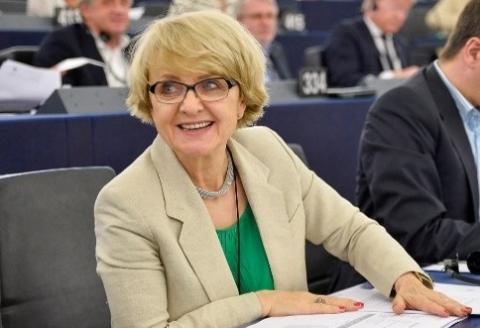
By Professor Danuta Hübner
The new MFF, although slightly larger than usual, will remain modest in size. Yet it has the potential to become a truly unprecedented European multiannual financial framework. Given the scale of Europe's investment needs, efforts have long been under way to identify and mobilise additional sources and models of financing. The well-known 1% taboo, the divide between net beneficiaries and net contributors, the controversy surrounding juste retour, national envelopes that allow for the avoidance of cross-border projects and European public goods, and the lack of a European capital market have all traditionally constrained Europe's investment ambitions. Today, however, there is an opportunity to transform the next MFF into a genuine financial lever. At the same time, there is a risk of reverting to national reflexes and short-term self-interest precisely when Europe needs to move in the opposite direction.
Europe needs private investment at a time when the European capital market remains a work in progress. This is why negotiating the new MFF provides an opportunity for it to become a lever for attracting private capital, and a catalyst for the crowding-in process. This would be an important step towards developing public-private financing models based on a new approach to risk-sharing between the public and private sectors. The budget also offers an opportunity to take a hard look at research and development financing at both national and European level, opening the door to a rebalancing of responsibilities between the two.
The MFF can serve not only as a strategically sound financial framework, but also as an ecosystem for new sources and models of financing and an opportunity to reduce the cost of capital, provided it acts as a lever for funds whose effectiveness relies on competitive calls. This is viewed as a challenge by those Member States that have so far benefited primarily from funding allocated through national envelopes. If public investment succeeds in catalysing private capital and public-private financing models become the norm, this could help ease pressure on public debt at a time of fiscal constraints.
This MFF provides an opportunity to harness the potential of regions and cities, thereby broadening Europe’s base of innovation and competitiveness. Ensuring that regions and cities are not sidelined is important not only for Central and Eastern European countries. Redirecting cohesion funding towards European public goods such as competitiveness and security need not undermine the core objective of cohesion policy. Indeed, for decades, convergence has been driven and supported by innovation
At the same time, a more coherent ecosystem is taking shape within the Single Market, accompanied by a new approach to competition policy that allows the emergence of large European firms capable of competing globally, alongside a more flexible application of state aid rules.
I also hope that we will seize this last opportunity to anchor European competitiveness firmly in sustainability, particularly through clean technologies and clean industry. Another important element of the emerging ecosystem is the recognition of investment in human capital as a key component of competitiveness. This shift is reflected in the new approach to the European Semester. Another important new element of the new ecosystem is the proposed regulation EU Inc., establishing a single harmonised set of corporate governance rules, which will replace the need to navigate multiple national systems and unlock the potential of the Single Market.
In my view, assessing the MFF in the context of the broader transformation of the ecosystem underpinning Europe’s long-term ambitions highlights the potentially groundbreaking nature of the new EU budget. The ability to begin repaying the debt incurred in response to the COVID-19 crisis from 2028 onwards will depend on Member States reaching agreement on new own resources. Failure to do so would place significant constraints on the EU budget and could weaken the political willingness to take on new debt.
It would be good to see a budget adopted on time, fit for the future and capable of delivering more and better Europe.
Danuta Hübner was a Member of the European Parliament until 2024. From 2014 -2019, she was Chair of the Committee on Constitutional Affairs. From 2009-2014, she served as Chair of the Committee on Regional Development in the European Parliament. From 2004-2009 she was a Member of the European Commission with responsibility for regional policy. During the period 2001-2004, she was involved in the negotiation process for Poland's membership of the EU and served as the Minister for European Affairs in the Polish Government, where she was often referred to as Madame Europe. She was the winner in 2002 of the European of the Year Award from The European Voice. In 2014 she was awarded the Officer of the Legion of Honour (Officier de la Légion d'honneur), the highest honour awarded by the French state, and in 1997 she was presented with the Grand Cross of the Order of Merit, the highest distinction awarded by Portugal.
The European Union has made significant progress on gender equality, but significant challenges remain. This is why the next Gender Equality Strategy must focus not only on ambition, but above all on implementation.
The European Union has made significant progress on gender equality, but significant challenges remain. This is why the next Gender Equality Strategy must focus not only on ambition, but above all on implementation.
By Juliane Marie Neiiendam
Women continue to face unequal opportunities in the labour market, continuing gender pay and pension gaps, underrepresentation in leadership, unequal caring responsibilities and unacceptable levels of gender-based violence. At the same time, gender equality is increasingly challenged, both within Europe and globally.
The European Economic and Social Committee (EESC) welcomes the Commission’s proposal for a new Gender Equality Strategy for 2026–2030 and supports its comprehensive approach. However, experience from the previous strategy shows that ambitious objectives are only the first step. The real challenge is translating them into concrete action across Member States.
For the Committee, implementation begins with making gender equality a horizontal principle across all relevant policies. It cannot be confined to one policy area but must be systematically integrated into employment, education, health, research, digitalisation, artificial intelligence, climate policy, transport, housing and economic governance. Policies that fail to consider their different impacts on women and men risk reinforcing existing inequalities.
The EESC therefore recommends stronger governance and accountability through better monitoring, appropriate indicators, gender-responsive budgeting, equality impact assessments and the systematic use of sex-disaggregated data. These practical tools help ensure that equality objectives are reflected in implementation rather than remaining political aspirations.
The EESC opinion‘Gender equality strategy 2026-2030’ underlines that gender equality is not only a matter of fundamental rights, but also of Europe’s economic resilience and competitiveness. At a time of demographic change and widespread labour shortages, Europe cannot afford to leave talent untapped. Increasing women’s labour market participation requires affordable childcare and long-term care, equal opportunities in education and employment, better work-life balance and the removal of barriers limiting women’s economic independence. These are investments that enable everyone to contribute according to their skills and potential, benefiting society, businesses and individuals alike.
The strategy must also recognise the diversity of women’s experiences. An intersectional approach is essential to address the different barriers faced by women depending on factors such as disability, age, migration background, ethnicity and socio-economic circumstances.
Equally important, achieving gender equality requires the active engagement of men and boys. The Committee highlights their role as partners in advancing equality, challenging stereotypes and promoting a more equal sharing of care responsibilities. Gender equality benefits society as a whole. More equal societies are stronger, more inclusive and better equipped to respond to Europe’s social and economic challenges.
Finally, the Committee stresses that gender equality is a fundamental value of the European Union and an essential pillar of democracy, social cohesion and fundamental rights. At a time when these values are increasingly being questioned, Europe must continue to demonstrate that promoting equality strengthens – not weakens – our societies. If the new strategy succeeds in translating ambition into action, it will not only expand opportunities for women and men across Europe – it will strengthen Europe’s economy, democracy and resilience. That is ultimately what the Committee’s recommendations seek to achieve.
Minutes of the NAT section meeting of 26 June 2026
EU enlargement is a key priority for the European Economic and Social Committee (EESC). The Committee considers enlargement to be a geostrategic investment in a strong, stable, secure and united Europe, grounded in shared democratic values.
On 16 July 2025, the European Commission presented its proposal for a Multiannual Financial Framework (MFF) of almost EUR 2 trillion (around 1.26% of the EU’s gross national income on average) for 2028-34, intended to support a more independent, prosperous, secure and resilient Europe. The proposed MFF would increase budget flexibility to allow a faster response to unexpected developments and emerging priorities. It would also simplify and better harmonise funding programmes so citizens and businesses can more easily identify and access opportunities. National and Regional Partnership Plans would be used to better reflect local needs by linking investment with reforms and strengthening cohesion outcomes. The framework aims to boost competitiveness by supporting supply-chain security, scaling innovation, and sustaining leadership in clean and smart technologies. It also proposes a balanced package of new own resources to help ensure sufficient revenue while limiting pressure on national public finances.
The next Multiannual Financial Framework: perspectives from national Economic and Social Councils