We asked Javier Garat Pérez, rapporteur of the EESC opinion Civil society's vision for a European Oceans Pact, about the EESC's most important recommendations on the European Commission's initiative which sets the comprehensive vision for all ocean-related policies. What specific action is to be taken to protect the oceans from devastation and pollution, and to preserve their biodiversity? What are the greatest threats to the well-being of the oceans and what solutions does the Committee propose?
We asked Javier Garat Pérez, rapporteur of the EESC opinion Civil society's vision for a European Oceans Pact, about the EESC's most important recommendations on the European Commission's initiative which sets the comprehensive vision for all ocean-related policies. What specific action is to be taken to protect the oceans from devastation and pollution, and to preserve their biodiversity? What are the greatest threats to the well-being of the oceans and what solutions does the Committee propose?
In response to President Ursula von der Leyen's European Oceans Pact initiative, the European Economic and Social Committee (EESC) has put forward key recommendations to promote a comprehensive and balanced approach to ocean governance. Its vision focuses on ensuring healthy and productive oceans, boosting the EU's blue economy, strengthening marine research and innovation, and safeguarding marine ecosystems for future generations.
In response to President Ursula von der Leyen's European Oceans Pact initiative, the European Economic and Social Committee (EESC) has put forward key recommendations to promote a comprehensive and balanced approach to ocean governance. Its vision focuses on ensuring healthy and productive oceans, boosting the EU's blue economy, strengthening marine research and innovation, and safeguarding marine ecosystems for future generations.
Unlocking the potential of the blue economy
The EESC underscores the importance of developing a robust and competitive blue economy. This involves simplifying regulatory frameworks, ensuring strategic autonomy, promoting innovation and advancing towards decarbonisation.
To secure a prosperous future for the maritime industry, we advocate urgent investment in e-fuels, offshore renewable energy and innovative marine technologies. Additionally, establishing a strong maritime cluster with clear sustainability goals will help maintain Europe’s leadership in marine industries. This is why it is imperative to set up an ‘Industrial Alliance for Blue Economy Value Chains’ and to strengthen the EU Maritime Security Strategy.
On top of this, we recommend that existing policies such as the Common Fisheries Policy should be evaluated. Sustainable fishing should receive continuous support, while seafood dependency should be reduced. Imports should be subject to the same social and environmental standards. The EESC also urges the European Commission to develop an EU action plan for ‘blue foods’ by 2026.
Enhancing marine knowledge, research, and innovation
The EESC is pushing for more funding in marine research and innovation, stressing the need for global scientific teamwork and better technology in the maritime sector. To make this happen, we suggest setting up blue economy hubs and launching an EU Ocean Observatory.
Boosting investment and financing for ocean sustainability
We are stressing the need to mobilise significant public and private funding to support SDG 14 (Life Below Water). To this end, dedicated budget lines for ocean-related projects should be created within EU funding programmes such as Horizon Europe. The European Maritime, Fisheries and Aquaculture Fund (EMFAF) should also receive stronger financial backing to support competitive and decarbonised sectors.
A socially inclusive and just transition
A resilient ocean economy must ensure fair treatment for maritime workers. The EESC recommends measures to address labour shortages, encourage generational renewal, and provide vocational reskilling opportunities. Comprehensive social support systems should be in place to protect workers, particularly those who cannot transition to new roles due to technological changes.
Ensuring healthy and resilient oceans
Our oceans are under many threats from climate change, pollution, plastics and human pressures. We are therefore calling for stronger marine restoration and protection efforts, and sustainable conservation aligned with global biodiversity commitments. Achieving 'Good Environmental Status' is also crucial for economic stability and climate resilience. Additionally, we should urgently invest in green infrastructure, pollution reduction and a European Climate Adaptation Plan, while reinforcing EU leadership in global marine governance.
Ensuring a comprehensive ocean governance framework
To boost economic prosperity while respecting our planet's limits, the EESC calls for regional cooperation with local communities to keep policies aligned. It is also pushing for better international agreements, stronger EU ocean diplomacy, and dedicated maritime-focused working groups within the EU institutions.
Finally, the EESC also recommends improving maritime spatial planning (MSP) to balance different interests, such as offshore energy expansion with fisheries and aquaculture. The goal is to promote coexistence and sustainability while making sure that traditional fishing communities are both preserved and involved in decision-making.
The 8th meeting of the CARIFORUM-EU Consultative Committee took place in Nassau, bringing together civil society representatives from the Caribbean and the European Union. The agenda covered key discussions on the 5-year review of the CARIFORUM-EU Economic Partnership Agreement (EPA), its impact on trade, SMEs, and labour standards, as well as the evolving situation in Haiti. Participants engaged in high-level dialogues, expert briefings, and the adoption of a Joint Statement, shaping the future of CARIFORUM-EU cooperation.
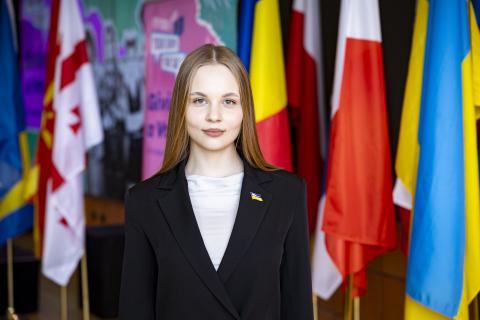
Your Europe, Your Say! 2025 (YEYS) brought together around 90 students from the EU, candidate countries and the UK. Valeriia Makarenko came all the way from war-torn Kharkiv in Ukraine to represent her country at the event. She told us why participating in YEYS was very important for young Ukrainians and shared her hopes that her generation, shaped by resilience and unity forged during the war, would lead Ukraine towards a brighter future.
Your Europe, Your Say! 2025 (YEYS) brought together around 90 students from the EU, candidate countries and the UK. Valeriia Makarenko came all the way from war-torn Kharkiv in Ukraine to represent her country at the event. She told us why participating in YEYS was very important for young Ukrainians and shared her hopes that her generation, shaped by resilience and unity forged during the war, would lead Ukraine towards a brighter future.
Why do you think it’s important for young people to attend EU events such as Your Europe, Your Say?
I believe that attending EU events like Your Europe, Your Say! is crucial for young people because it gives them a platform to voice their opinions, engage in meaningful discussions and actively shape the future of Europe. These events provide truly priceless opportunities to learn about decision-making processes, develop leadership skills and connect with peers from different countries. As for young Ukrainians, participation is even more significant as it allows us to share our authentic experiences, advocate Ukraine’s European integration and foster solidarity among European youth.
How do you think the war has impacted young people in Ukraine? Without a doubt, the full-scale war has significantly changed the lives of young people in Ukraine, affecting their education, mental health and overall sense of security. For instance, many have had to adapt to studying online or relocating, often in unstable conditions. However, the war has also fostered resilience – young Ukrainians have become not only symbols of power and strength, but also more engaged in volunteering, activism and rebuilding efforts, such as urban planning projects. Despite the difficulties, we remain determined to protect our identity and contribute to our country’s future.
What are your hopes for the future of young people in Ukraine? For sure, the question of the future is complicated for almost every Ukrainian teen. My community and I hope that all young people in Ukraine will have access to quality education, opportunities for professional growth and a secure future within a strong, independent Ukraine. I also hope that the international community continues to support Ukraine in rebuilding so that young people can thrive rather than just survive. Ukrainian youth is truly powerful, so it’s inspiring to see more and more young people participating in various projects in education, science, infrastructure restoration and other fields. Most importantly, I hope that our generation, shaped by resilience and unity, will lead Ukraine towards a brighter, more innovative and democratic future.
Your final thoughts on the event ?
I was really inspired. Even by chatting, listening and analysing what other participants were saying, I can tell that, yes, it’s a really powerful scene, and just by uniting, we can show what we’re really capable of. For example, some projects that we did really helped us to understand other countries better. I heard so many facts about different countries that I hadn’t heard before. I’m delighted, I was proud to be there.
Valeriia Makarenko is a 16-year-old student from Kharkiv, Ukraine. She attends the 10th grade at Kharkiv Lyceum #99.
Never before have we had such an educated generation with so much potential, yet also under so much pressure and facing so many doubts about what lies ahead, says youth expert and keynote speaker at YEYS 2025, Bruno António. He talked to EESC Info about how to amplify the voices of young people and why, at a time when discrimination and xenophobia are on the rise in Europe, it is crucial for future EU youth programmes to continue teaching them about the importance of democracy.
Never before have we had such an educated generation with so much potential, yet also under so much pressure and facing so many doubts about what lies ahead, says youth expert and keynote speaker at YEYS 2025, Bruno António. He talked to EESC Info about how to amplify the voices of young people and why, at a time when discrimination and xenophobia are on the rise in Europe, it is crucial for future EU youth programmes to continue teaching them about the importance of democracy.
Are young people today passive or active in political and community life? In what ways can young people be more engaged in policymaking?
Different studies show that young people care and actively participate. If we define political engagement as being aware of critical societal issues, it is evident that young people are taking action to drive change. What’s particularly interesting is how they choose to engage. Traditional ways of participation include voting, volunteering in NGOs or joining the youth wings of political parties. Today, these seem to be less popular among young people, who prefer to influence public policymaking by signing petitions or by participating in protests and other innovative ways. At DYPALL Network, we explore these engagement tools, which include consultancies, participation in local youth councils, and other local youth dialogue mechanisms. We see strong interest among young people to participate, but most mainstream mechanisms remain neither youth-friendly nor truly meaningful.
Recent European election results and national polls show that many young people have voted for right-wing parties. Why do you think this is so and do you see this as a worrying trend that could jeopardise European values such as equality and inclusion?
The rise in right-wing votes among young people is a worrying trend. We believe it stems from dissatisfaction with mainstream politics, a deep distrust of political institutions, a desire for a strong national identity, and fears about economic and social security. We have to be able to understand the root causes of these alarming voting tendencies. This generation has grown up in a time of constant crises and uncertainty about their future. Never before have we had such an educated generation with so much potential, yet also under so much pressure and facing so many doubts about what lies ahead. Social media algorithms amplify polarising content, shaping perspectives.
All this creates uncertainty about the future. Voting for populist parties may be both a form of protest and of general dissatisfaction on the one hand. But on the other, it can also reflect the desire for a strong voice in power that brings a sense of security. However, history has shown that when such populist right-wing parties gain power, young people often lose their hope and feel betrayed. Often this is too late when they realise that rights, freedoms and other important values to them are being taken away or put in question.
This trend is already jeopardising our European values, we can see this not only in political discourse but also in the daily lives of people in our communities, where acts of xenophobia or discrimination towards those who are different are becoming normalised. Therefore, it is essential that future EU youth programmes continue to support young people in understanding the importance of democracy, learning about it and experiencing it, while also helping them to develop the skills needed to build resilience against the threats posed by anti-democratic movements.
How aware are young Europeans of what the EU does for them? How can they be encouraged to take a greater interest in the EU? How would you assess the EU's communication efforts?
We can easily say that young people's awareness of what the EU does for them is definitely higher than in older generations. Youth programmes such as Erasmus+, ESC, and DiscoverEU contribute to building this sense of belonging to a European identity, and they should be reinforced and made available to all young people in Europe.
But are they truly aware of what Europe does for them? In our opinion, no. The EU's ability to demonstrate its impact on society —especially on young people—still needs to be more visible and better understood. The decisions made by EU institutions have a huge impact, and this should push young people to take a greater interest in EU affairs. How? Two ideas come to mind: EU institutions need to send an eye-opening message that what is decided at the EU level directly affects their lives. Also, they should expand programmes that offer young people more opportunities to learn about, experience and discover the EU. This can increase a sense of belonging, empathy, connection and friendship among Europeans.
Despite an enormous effort undertaken by different EU institutions to reach out to citizens, and despite significant improvements in various campaigns and tools, we cannot say that they are enough. In practice, they are often far from the realities of young people.
While the EU has made strides in social media presence and youth-targeted campaigns, its messaging still lacks relatability, especially for the diverse young people in our societies. The EU’s communication efforts need further development and structuring by incorporating new outreach methods, such as hiring youth NGOs as ambassadors of young people’s voices, developing decentralised platforms for outreach, and structuring storytelling campaigns that connect EU policies to relatable everyday experiences. In this context, it is essential to experiment with new communication approaches and to have young people directly involved in creating and implementing campaigns and other communication efforts.
How can we amplify the voices of young people?
By taking them seriously and recognising their value. Institutions have the power and capacity to amplify young people's voices, but what is sometimes missing is the willingness to provide the space, support, opportunities and tools to engage them meaningfully. Youth participation should not be treated as a checklist: inviting young people to public events, taking pictures for social media, and then neglecting their contributions. Youth participation needs to be impactful, meaning young people need to see the results of their engagement and the changes that follow.
Amplifying young voices requires institutional support, such as youth representation in decision-making bodies. It also requires building trust, which takes time, quality spaces and processes to work together. For this to happen, proper funding must be allocated, and institutions need the capacity to work better and engage young people in decision-making. This demands investment, genuine commitment and time.
Bruno António is Executive Director at DYPALL Network, a European platform of civil society organisations, local authorities, and research institutions for promoting youth participation in local decision-making. For the past 12 years, Bruno has been working as a youth expert and external consultant for several institutions, such as the European Commission and the Council of Europe. He previously served as Secretary-General of Youth for Exchange and Understanding, as well as Executive Director at ECOS – Cooperativa de Educação, Cooperação e Desenvolvimento. He has a degree in Social Education from the University of the Algarve in Faro, Portugal.
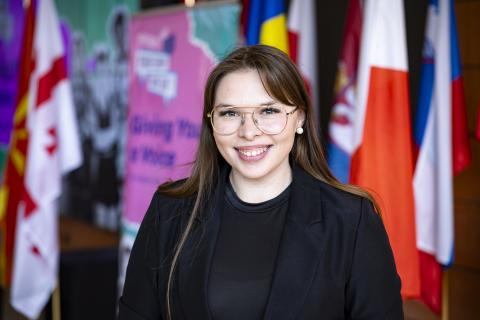
Young Moldovan Mădălina-Mihaela Antoci was one of the representatives of EU candidate countries at this year’s EESC annual youth event Your Europe Your Say! (YEYS). She also took part in the EESC’s Civil Society Week where she delivered an inspiring speech during the opening panel Still united in diversity. President ofErasmus Student Network Moldova and a board member of the country’s National Youth Council, Mădălina-Mihaela shared what the EU means for young Moldovans and told us about her mission to encourage young people from her country to study abroad and embrace a global mindset.
Young Moldovan Mădălina-Mihaela Antoci was one of the representatives of EU candidate countries at this year's EESC annual youth event Your Europe Your Say! (YEYS). She also took part in the EESC’s Civil Society Week where she delivered an inspiring speech during the opening panel Still united in diversity. President ofErasmus Student Network Moldova and a board member of the country’s National Youth Council, Mădălina-Mihaela shared what the EU means for young Moldovans and told us about her mission to encourage young people from her country to study abroad and embrace a global mindset.
Is the National Youth Council of Moldova engaging young people in discussions about EU integration? How do young Moldovans perceive the EU?
Absolutely! The National Youth Council of Moldovaensures that young voices are heard in Moldova’s EU integration process through consultations, advocacy campaigns and direct engagement with policymakers. For many young Moldovans, the EU represents progress, new horizons, and a future where their talents are recognised and valued. However, there are still gaps in awareness, and that’s where we step in – turning curiosity into active participation.
We are organising forums, debates and workshops on EU integration, policy and youth rights. We are calling for youth inclusion in national decision-making processes. We are launching campaigns to inform and educate young Moldovans about the benefits of EU membership.
Could you briefly introduce your work with the Erasmus Student Network (ESN) Moldova?
As President of ESN Moldova, I’m on a mission to connect young people to life-changing international opportunities. Our team works to promote mobility, create a welcoming environment for exchange students, and advocate international education. One of my key initiatives is Erasmus in Schools, where we inspire high school students to dream beyond borders and embrace a global mindset.
Could you share any figures on how many Moldovan students have benefited from the Erasmus+ academic programme so far, either in total or annually?
Right now, Moldova does not host incoming Erasmus+ students, but our young people are making waves abroad! Every year, between 500 and 700 Moldovan students study or do traineeships in top European institutions through Erasmus+. Since the programme’s launch, thousands have gained international experience, bringing back innovation, leadership and a fresh perspective. Through Erasmus in Schools, I strive to make mobility a reality for even more young Moldovans, proving that the world is theirs to explore.
In your view, what is the value of such academic exchange programmes for young people in a candidate country like Moldova?
Erasmus+ is not just a study programme – it’s a launchpad for Moldova’s future. It gives young people more than an education; it gives them adaptability, resilience and a European perspective. In a candidate country like Moldova, it’s about building a generation that sees beyond limitations, that innovates, collaborates, and is ready to lead our country into the European future.
What were your expectations for YEYS and Civil Society Week?
I expected powerful discussions, bold ideas and real commitments to youth inclusion in policymaking. These events are more than just meetings – they are platforms where young change-makers challenge the status quo and push for a stronger, more inclusive Europe. For Moldova, this is another step toward bridging the gap between the local reality on the ground and European ambitions, proving that our young people are not waiting for the future – we are creating it.
Mădălina Mihaela Antoci is a 21-year-old youth leader passionate about education, civic engagement and youth empowerment. She currently serves as the President of Erasmus Student Network Moldova and is a board member of the National Youth Council of Moldova.
A tireless advocate of the Erasmus+ academic programme, she has achieved remarkable success in encouraging young people to explore international opportunities while also emphasising the value of education at home. Through her efforts, she has inspired hundreds of students to engage in academic mobility and contribute actively to their local communities.