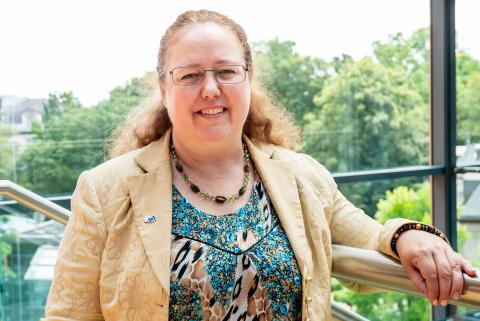
In their book 'Kinder – Minderheit ohne Schutz' (Children – A minority without protection), nominated for the 2025 German Non-Fiction Prize, Aladin El‑Mafaalani, Sebastian Kurtenbach and Klaus Peter Strohmeier explore the widening gap between an ageing society and younger generations. Children’s and young people's interests, they argue, carry little political weight and remain inadequately protected. Klaus Peter Strohmeier sets out the case for granting children minority protection status in an interview with EESC Info.
In their book 'Kinder – Minderheit ohne Schutz' (Children – A minority without protection), nominated for the 2025 German Non-Fiction Prize, Aladin El‑Mafaalani, Sebastian Kurtenbach and Klaus Peter Strohmeier explore the widening gap between an ageing society and younger generations. Children’s and young people's interests, they argue, carry little political weight and remain inadequately protected. Klaus Peter Strohmeier sets out the case for granting children minority protection status in an interview with EESC Info.
Your book argues that children constitute a 'minority without protection' in an ageing society. Can you give some specific examples of how the current political and economic structures systematically disadvantage children?
In our society, we witness a structural disregard for children and their families on a daily basis. Modern society is functionally differentiated and individualised. In an adult world geared towards efficiency and functionality, children are viewed as ‘disruptive factors’.
This has created a demographic and democratic imbalance. Children are a demographic minority without political representation. They themselves have no right to vote, and their parents constitute only a minority among those eligible to vote. Some of them, moreover, have no citizenship and none of the rights that come with it. With half of the electorate being over 53, politics is primarily geared towards the status quo and the interests of older people.
This imbalance also has fiscal implications. A growing proportion of Germany’s federal budget is spent on subsidising pensions, which in turn diverts necessary investment funds away from future-oriented sectors such as education, climate protection and infrastructure.
The interests of children and young people carry no political weight. During the coronavirus pandemic, for example, children were hit hardest with the school closures, even though they had the lowest risk to their health. The introduction of compulsory military service is also currently being negotiated in Germany without consulting young people.
You argue that parents cannot be trusted proxies for children, much like men historically failed to champion women's rights. Given that the electorate is aging rapidly, what concrete steps would you propose to ensure democracy truly includes the youth?
We propose a three-step approach that goes beyond simply lowering the voting age, with the aim of effectively involving children and young people in our ageing democracy.
The first step is the establishment of ‘Future Councils’. These would have to be attached to every parliament and consulted prior to political decisions to promote future-oriented policies. A further step is the introduction of a so-called ‘generational clause’, whereby every fundamental political decision must be transparently assessed for its consequences for future generations. A final step is to strengthen local participation. Children and young people should be consulted in their immediate environments, such as their neighbourhoods or schools, and be given genuine opportunities to be heard and to have a say.
You propose introducing formal minority protection status for children. Beyond symbolic recognition, what legal or institutional mechanisms would this entail? How would such protections change decision-making in areas like budget allocation, urban planning, or education policy?
A legal minority protection status for children would go beyond symbolic recognition and the appointment of powerless 'Children's Advocates'. The explicit inclusion of children’s rights in the basic law, for example, would provide judges and politicians with clear legal guidance when weighing up different interests, much like the enshrined equality of women.
In terms of participation in legal proceedings, minority rights could create a legally binding substantive dimension that makes the protection of educational opportunities and natural resources enforceable.
Protection for minorities would also make it possible to exert a binding influence on the allocation of resources. Through this, resources relevant to the future, such as investment in education, would have to be treated as a priority, rather than being lost in the battle for resources with the older generations.
Introducing minority protections would be a structural reform, but we have seen that social change also requires a shift in attitudes. What do you see as the most effective ways to build intergenerational solidarity?
Children need adults who care about them; the more, the better. Solidarity between generations cannot grow solely through legislation; it emerges and flourishes through interaction and social relationships. The key here is to mobilise existing potential and create new opportunities.
One idea would be to engage the baby boomer generation. This generation had an exceptionally high birth rate, which could make several experienced adults available as a ‘resource’ for each child. The baby boomer generation possesses enormous social and professional skills, as well as education, good health and time. They can be recruited as personal mentors or mentors for children in childcare centres and schools. Government agencies could, for example, provide targeted information on volunteering opportunities upon retirement and create incentives such as tax-free fees or vouchers. By placing the needs of children at the centre in this way, demographic ageing can become an opportunity.
Another possibility would be the large-scale expansion of community centres in neighbourhoods. Through this, schools and nurseries can become multifunctional hubs within the neighbourhood and the local community, where young and old, children, parents, grandparents and neighbours can meet and support one another. Former professionals from trades or the cultural sector could use their skills to get involved in schools and childcare centres. Children need adults to thrive and develop healthily. The more of them there are, the better it is for the children and for our society.
Klaus Peter Strohmeier, born in 1948, is a sociologist and Professor Emeritus of Sociology at the Ruhr University Bochum. He is one of the co-authors of 'Kinder – Minderheit ohne Schutz' (Children – A minority without protection).
Like every year, EESC members visited secondary schools participating in Your Europe, Your Say! (YEYS) to help students and teachers prepare for the event. In mid-March EESC member Michael McLoughlin went to Ukraine to meet the students and teachers from Lyceum 49 in Kyiv. Although half of the visit took place in the school basement as bombs and missiles rained on the Ukrainian capital, the spirit of young Ukrainians remained undeterred.
Like every year, EESC members visited secondary schools participating in Your Europe, Your Say! (YEYS) to help students and teachers prepare for the event. In mid-March EESC member Michael McLoughlin went to Ukraine to meet the students and teachers from Lyceum 49 in Kyiv. Although half of the visit took place in the school basement as bombs and missiles rained on the Ukrainian capital, the spirit of young Ukrainians remained undeterred.
By Michael McLoughlin
Lyceum 49 is a school in central Kyiv very much focussed on the French language and an obvious candidate for participation in Your Europe Your Say. However, it’s possible staff and students had more on their mind than the European Economic and Social Committee on the morning of 16 March. As it happened this morning marked the first missile and drone attacks on Kyiv in about six months following many weekend alerts. Material actually fell on Maidan Square in the centre of the city.
The school visit literally began during one of the many air alerts that morning, with students running between the shelter and the classroom. The students, however, were unflappable and actually in good spirits. Starting out in the basement shelter we discussed the possible opportunities for young people in Ukraine in the future, a recurring theme. Naturally the level of political, financial and defence support for Ukraine was a point of interest.
After a while we were able to move back to a normal classroom environment, which happened to be adorned with plenty of UK-related material on the walls – it was the day before Saint Patrick’s Day! This actually helped make some visual points about free movement and Schengen. Students naturally wanted to know my views on Ukraine and Kyiv, which were at their best in the spring sunshine.
With air raid alerts and attacks in the city centre, it was not a normal day in Ukraine, but unfortunately it wasn’t abnormal either. However, it was a testament to all involved and the spirit of ‘business as usual’ that we had a successful visit and afterwards the city got on with life in the streets, coffee shops and with traders and buskers getting on with life in the same spirit. I would particularly like to thank Alyona Morozova and Oleksandra Balytska for their help and assistance, both of whom, of course, went on to join us for the event in Brussels!
The European Economic and Social Committee (EESC) welcomes the European Commission’s 'Union of Equality: LGBTIQ+ Equality Strategy 2026–2030' as a vital step towards ensuring that everyone in the European Union can live freely, safely and with dignity. At a time when fundamental rights and democratic values are under increasing pressure, reaffirming this commitment is more important than ever.
The European Economic and Social Committee (EESC) welcomes the European Commission’s 'Union of Equality: LGBTIQ+ Equality Strategy 2026–2030' as a vital step towards ensuring that everyone in the European Union can live freely, safely and with dignity. At a time when fundamental rights and democratic values are under increasing pressure, reaffirming this commitment is more important than ever.
Despite progress in recent years, discrimination, violence and exclusion remain a daily reality for many LGBTIQ+ people across Europe, particularly for trans, non-binary and intersex persons, and in environments where civic space is shrinking.
Against this backdrop, in its opinion on the Commission's strategy, the EESC stresses that the key challenge is no longer only setting ambitious goals, but ensuring effective implementation. Rights must be meaningful in practice, not only on paper.
European courts are playing an increasingly important role. Their rulings clarify rights and make them directly applicable across Member States. In doing so, they create a concrete push for implementation and help ensure that fundamental rights are not only written in law but respected in people’s daily lives.
The EESC calls for stronger monitoring, enforcement and accountability, and reiterates the importance of adopting the long-awaited Horizontal Equal Treatment Directive to close existing legal gaps. It also stresses the need to safeguard civic space and respond firmly to discriminatory practices, including by countering misinformation and strengthening awareness of intersectional discrimination.
Our opinion highlights the essential role of social partners in promoting inclusive workplaces. Through social dialogue and collective bargaining, they can help translate legal protections into concrete improvements in working conditions. The EESC calls for practical support, training and guidance—developed together with civil society—to advance fair recruitment, career progression and safe working environments, and to support gender transition at work.
The EESC underlines the need for inclusive and competent healthcare, including mental health support and gender-affirming care, as well as a binding ban on conversion practices.
The EESC supports that legal gender recognition should be based on self-determination, in line with fundamental rights. It also calls for stronger EU support for safe and inclusive schools, including comprehensive sexuality education and teacher training, to ensure that all young people can learn in an environment free from fear and discrimination.
More broadly, the opinion underlines the link between equality and social conditions. Many LGBTIQ+ people face higher risks of poverty, housing insecurity and exclusion, particularly those experiencing multiple forms of discrimination. Addressing these inequalities is essential to achieving real and lasting inclusion.
Looking ahead, the EESC addresses emerging challenges, including artificial intelligence and online hate, to ensure that new technologies do not reinforce or create new forms of discrimination. It also promotes inclusion in culture, sport and public life, recognising the importance of visibility, participation and dignity in all areas of society.
Ultimately, the EESC calls for a renewed and collective effort to turn commitments into tangible change. A true Union of Equality requires not only political will, but sustained action ─ ensuring that LGBTIQ+ people across Europe can fully enjoy their rights in everyday life.
Despite recent progress, discrimination, violence and exclusion remain a daily reality for many LGBTIQ+ people in Europe. It is no longer enough to set ambitious goals; we must ensure they are properly implemented. Rights must be meaningful in practice, not only on paper, writes Juliane Marie Neiiendam, rapporteur of the EESC opinion Union of Equality: LGBTIQ+ Equality Strategy 2026-2030
Despite recent progress, discrimination, violence and exclusion remain a daily reality for many LGBTIQ+ people in Europe. It is no longer enough to set ambitious goals; we must ensure they are properly implemented. Rights must be meaningful in practice, not only on paper, writes Juliane Marie Neiiendam, rapporteur of the EESC opinion Union of Equality: LGBTIQ+ Equality Strategy 2026-2030
The EU needs a long-term vision that takes greater account of geographic specificities. Sustainable water management and food security must become top priorities, with food security and biodiversity going hand in hand.
The EU needs a long-term vision that takes greater account of geographic specificities. Sustainable water management and food security must become top priorities, with food security and biodiversity going hand in hand.
By the EESC Civil Society Organisations' Group
These are some of the main messages from a conference organised by the Civil Society Organisations’ Group of the European Economic and Social Committee (EESC) on 22 April 2026 in Larnaca. They must be considered in light of global uncertainties and growing risks to food supply chains, as well as the upcoming EU strategy for islands and coastal communities.
The conference, held under the patronage of the Cyprus Presidency of the Council of the European Union, focused on climate adaptation, food security and biodiversity, particularly from the island dimension. It also emphasised the importance of civil society, and in particular the EESC, in informing EU policies that are more efficient and that can be successfully implemented.
In his opening remarks, Cillian Lohan, President of the EESC’s Civil Society Organisations’ Group, outlined the objectives of the conference: ‘Our conference is not only about identifying challenges – which islands like Cyprus are often the first, fastest and most affected by – but also about exchanging solutions, learning from each other and strengthening cooperation between local, national and European actors.’
Mr Lohan highlighted the importance of communities’ ability to adapt, transform and thrive, even under pressure, in other words – resilience, explaining that ‘policies alone are not enough to build resilience. People – farmers, researchers, local authorities, cooperatives, consumers and civil society organisations – need to be empowered to work together.’
The issue of resilience was also addressed by Annita Demetriou, President of the Cypriot House of Representatives: ‘Resilience depends not only on the design of policies, but also on their effective implementation and the cooperation of all stakeholders. For real impact, we need synergies between different sectors and institutions.’ The genuine involvement of all stakeholders, including civil society organisations, would be crucial for the success of policies.
Ms Demetriou spoke about the legislative and parliamentary efforts of the Republic of Cyprus in this sense, emphasising that climate change, water scarcity, food insecurity and biodiversity loss are closely intertwined global challenges that no single country could tackle alone. She concluded by calling for greater European solidarity and the full integration of the ‘island dimension’ into EU policies, encouraging participants: ‘We must transform our shared challenges into concrete opportunities for sustainability, resilience and long-term prosperity.’
Ms Demetriou invited the Cypriot members of the Civil Society Organisations’ Group to present the outcomes of the conference to the House of Representatives’ Agriculture Committee.
Andreas Gregoriou, Permanent Secretary of the Cypriot Ministry of Agriculture, Rural Development and Environment, said: ‘Water resilience is no longer just an environmental concern – it is a strategic priority for Europe’s climate adaptation, food security and economic stability. From the perspective of Cyprus, strengthened EU policies must also reflect the specific realities of island and water-scarce regions, while promoting sustainable resource management and biodiversity. Building resilient agri-food systems is essential not only for sustainability, but for ensuring long-term security and stability across the European Union.’
The event brought together around 100 representatives from institutions and civil society from across the 27 EU Member States. Participants stressed that cohesion, competitiveness and sustainability policies in particular need to take greater account of geographic specificities. Resilient communities require healthy ecosystems, fair incomes for producers, resilient local supply chains and responsible consumption. Future policies should value quality and sustainability of food supply, not just productivity.
The findings of the conference will feed into the work of the EESC’s Civil Society Organisations’ Group, whose work programme focuses, among other things, on the promotion of the sustainable agenda and building resilient communities. The event’s conclusions and recommendations will be published on the EESC website soon.
At the March Plenary, the European Economic and Social Committee (EESC) adopted an opinion on the European Commission's Battery Booster Strategy. While supporting the initiative's mission to strengthen the European battery value chain, the EESC calls for clearer prioritization, stronger implementation tools, a broader scope beyond electric vehicle batteries, and higher environmental and social standards.
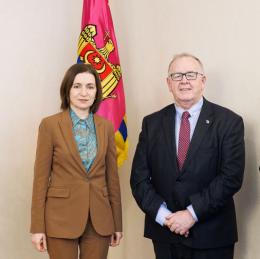
On a mission to Moldova, European Economic and Social Committee (EESC) President Séamus Boland met with Moldova’s political leadership, civil society organisations and young people to reaffirm the EESC’s strong support for the country’s European path.