In its 13th meeting, the EU DAG for Vietnam was updated on the current situation in Vietnam following the administrative restructuring. Information was also given on various EU-funded projects in the country. The main discussion covered the state of play of the implementation of the TSD Chapter. Moreover, the DAG discussed the state of labour rights and assessment of the new Trade Union Law in the region.
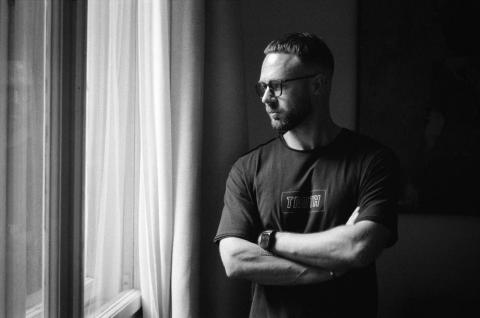
On 18 June, the European Economic and Social Committee (EESC) is holding a plenary debate with Sviatlana Tsikhanouskaya,leader of the Belarusian democratic forces. The debate will also welcome Belarusian filmmaker, activist and journalist Andrey Gnyot, who has lived in exile since 2023 following his arrest in Serbia, where he spent a year in extradition detention. We bring you Mr Gnyot’s personal testimony about the climate of fear and repression in Belarus and his ongoing struggle to obtain international protection in the EU.
On 18 June, the European Economic and Social Committee (EESC) is holding a plenary debate with Sviatlana Tsikhanouskaya,leader of the Belarusian democratic forces. The debate will also welcome Belarusian filmmaker, activist and journalist Andrey Gnyot, who has lived in exile since 2023 following his arrest in Serbia, where he spent a year in extradition detention. We bring you Mr Gnyot’s personal testimony about the climate of fear and repression in Belarus and his ongoing struggle to obtain international protection in the EU.
‘We talk on the phone, for example on WhatsApp or Viber, but we never mention him by name. We speak in vague terms. My mother says, “That’s enough, child, later, later, don’t.” Everyone speaks like that. Even when you leave the country, when you talk about him (meaning Lukashenko – author’s note) or about what’s going on, you whisper. Subconsciously, you lower your tone – God forbid someone should hear you.’
Maria (I was forced to change her name for safety reasons) spoke to me in a quiet voice. That’s how everyone who stayed in Belarus speaks nowadays. It is the only way to survive, a reflex that has become automatic. It is fuelled by a total, paralysing fear. Maria was arrested for the second time in her life in December 2024, right at the border, when she was returning home to Belarus from the EU. She simply wanted to see me. We met only once, in a typical loud German beer hall, so that we could disappear into the drunk, cheerful crowd, among beer and pork knuckles. That was enough for KGB officers to remove Maria from the bus at the border and accuse her of extremism. On her phone, they discovered a subscription to an Instagram channel labelled ‘extremist’ by the regime – a subscription that appeared there from who knows where. Maria was sent behind bars. She was very lucky – she spent only one day in a cold cell without food, water or bedding. A judge from a small provincial town did not want to spoil his Christmas and New Year dealing with such a dubious case and released her before the 15-day term had expired. A deep sense of guilt settled in me, although I know that it is Lukashenko and his regime who are to blame.
‘I clearly remember a person, a girl, when I was taken at the border. They also took her phone – she was led away for interrogation, and we sat in the back seat with her mother, talking. And when they didn’t return my documents or my phone, when I realised that they were going to take me, I asked... I said, please, you know, they probably won’t let me go. I said, could you give me your phone, so I can call my mum? And she said: “I don't need any trouble.” And that was it. That is, a person who had also been through the same interrogations – that was her reaction.
Now it’s simply our mad ability to survive under the most horrific conditions, just like in the past we survived and endured the Nazis on our territory. That is exactly how we live now, as if he has occupied our country and we just need to lie low and hide, to pretend that we do not exist. To go out and protest... We have more prisons than theatres. It will simply be one more place in a cell – occupied by you.’
I was in prison, and I know: there are no protests in prison. A protest in prison is a riot. A riot will be suppressed, with blood and victims; no one and nothing will get beyond the prison fence. The inmates will be returned to their places, the rioters will be punished in the harshest way. Another fence will appear in the prison, more guards will be added, and next time they will shoot to kill right away. The prison governor will never shut down their own prison or release the innocent. That can only be done by a third force, from beyond the prison fence. Belarus in 2025 is an occupied territory, a prison-concentration camp with external governance and external funding. Can prisoners protest openly there?
‘You know, when we went out to protest, we could tell by the eyes who was one of us, right? And that still exists. That is, you understand who you can talk to and who you can’t. But we haven’t surrendered. We have gone underground. We simply do not know what to do. We are just surviving now. We are just breathing. As if the body has temporarily shut down its vital functions.
But it is very important for us to know what’s happening over there (in Europe – author’s note). We follow, we watch. A voice from the “mainland” is very important to us. So that we are not forgotten. Because here we are cut off from the whole world. We feel as if we live on another planet. We try, we scream with a voiceless cry. So that we are heard, so that we are helped. Because the regime no longer considers us human. We feel that inaction will come back as a great misfortune for everyone. And not only for us.’
I met Maria in Berlin after a year spent under arrest in Serbia. We hadn’t seen each other in 15 years, and we might never have met again if I had been extradited. I lost my health, my family, my successful career, but not hope – I stayed alive, and that means I can continue to fight for the freedom of my country. That was the main feeling I had when I found myself free on 31 October 2024.
I admit, my struggle has not stopped for a single day. ‘The status of an asylum seeker (and the “Geneva passport”) would constitute a completely different legal track to the one including the Section 22.2 visa and it is thus legally and structurally not possible to combine them,’ stated the official letter from the German Foreign Ministry. When I received this e-mail on 17 January 2025, it was like a cold shower. Three days later, I applied for international protection in Warsaw, and a few months later I received a notification that the Polish authorities had made a preliminary decision, ‘which may not meet my expectations’ (quote). Lawyers warned me with concern that if I were deported to Germany under the Dublin Regulation – and that is exactly what was discussed in the letter from the authorities – it was highly likely I would be placed in a refugee camp for up to two years. Another official notification, received by mail at the end of May 2025, stated that my case would be under review for up to 15 months.
On 4 March 2025, Belarusian emigrant Stanislav Brykin died by suicide in the Pabradė refugee camp in Lithuania after being deported from Germany under the Dublin Regulation, according to an article published by NGO Human Rights Without Frontiers. Such news keeps me awake at night, although that may also be a result of my acquired traumas – clinical depression and PTSD. I cannot get rid of them; neither the circumstances nor the limitations of ‘refugee’ medical insurance allow it. I could solve this problem quickly and by myself, but since October 2023 I have been deprived of a source of income. Even now, the law prohibits me from working. In Warsaw, I have no family, no loved ones, no friends. A modest one-room apartment on the outskirts of Minsk in occupied Belarus would barely cover my debts, but it is subject to a ban on sales anyway; all of us Belarusians are hostages of the regime.
Yesterday I received my allowance (about EUR 170), which is paid once a month to migrants like me. This morning, I paid almost EUR 100 in fees at the Belgian embassy.
I found myself free on 31 October 2024. Since then, every day I try to understand what that means.
The European Economic and Social Committee (EESC) held a conference underscoring the importance of community engagement in the fight against disinformation. By fostering media literacy, encouraging critical thinking, promoting active communication and leveraging AI as an ally, societies can become resilient to false information and toxic propaganda.
The European Economic and Social Committee (EESC) held a conference underscoring the importance of community engagement in the fight against disinformation. By fostering media literacy, encouraging critical thinking, promoting active communication and leveraging AI as an ally, societies can become resilient to false information and toxic propaganda.
The conference Citizens can defeat disinformation held in Lisbon on 22 May 2025 was the fourth in the EESC’s ongoing project to combat disinformation with the help of civil society. It was organised in cooperation with the Portuguese Economic and Social Council and with the support of the European Commission Representation and the European Parliament Office in Lisbon.
Stressing the crucial role of citizens in this fight,EESC president Oliver Röpke said: ‘To counter disinformation, we must empower citizens and civil society, not only as watchdogs, but also as active participants in democratic resilience.’
As disinformation plays with emotions, it is important to pause and distance oneself before engaging. Participants noted that when something speaks to the audience’s heart, it is important to question the intention and source of the information. Only by not engaging can we reduce the visibility and virality of this content.
As reiterated by the president of the Portuguese Economic and Social Council, Luís Pais Antunes, not only are misinformation and a lack of information challenges for our modern societies, but so too is an excess of information.
The conference signalled the importance of joining forces, stressing that only by acting together, engaging civil society in a systematic way, putting forward action plans for media literacy and ensuring robust legislation can disinformation be defeated, giving way to trustful, fact-based information.
‘Media literacy needs to be taught in schools. This is where the state plays a key role. Democracy means credibility,’ said Aimilios Perdikaris, chair of the Board and General Manager at Athens Macedonian News Agency.
‘Democracy cannot survive without free information and without free, impartial and critical media,’ said Carlos Abreau Amorim, Portugal’s Deputy Minister for Parliamentary Affairs, adding that the Portuguese government would strengthen journalistic ethics, since ‘a lack of credibility in journalism is the greatest ally of disinformation.’
Referring to AI as a massive challenge in the fight against disinformation, Niko Efstathiou, journalist fellow at the Reuters Institute for the Study of Journalism in Oxford, said that AI can create convincing, deepfake news to spread campaigns to the most vulnerable populations. However, AI can also be incredibly useful in scanning through content, so as to detect misinformation in real time. (at)
Discrimination is far from over for Europe’s LGBTIQ community. While there are significant variations across Member States, 37% of all LGBTIQ respondents to a recent EU-wide survey felt discriminated against due to their identity. Despite gradual progress on equality-related issues over the years, there is still much work to be done.
Discrimination is far from over for Europe’s LGBTIQ community. While there are significant variations across Member States, 37% of all LGBTIQ respondents to a recent EU-wide survey felt discriminated against due to their identity. Despite gradual progress on equality-related issues over the years, there is still much work to be done.
The EESC is at the forefront of such efforts. It has actively supported the European Commission’s LGBTIQ Equality Strategy 2020-2025, which aims to reduce discrimination and ensure the safety and fundamental rights of LGBTIQ individuals throughout the EU. Even before the strategy was issued, in 2012 the EESC called for the extension of the Equal Treatment and Employment Directive to protect transgender, non-binary, intersex and queer people against discrimination in the workplace and beyond.
The Committee adopted an opinion on the strategy in 2021, urging Member States to develop and execute national action plans. Furthermore, under the umbrella of the strategy, the Committee has adopted a series of related opinions in defence of LGBTIQ rights including:
No place for hate: a Europe united against hatred (2024) – in the opinion, the EESC recommends increased support for civil society organisations (CSOs), improved coordination to combat disinformation, and inclusion of hate speech and hate crime in the EU crime list. It also calls for a network of national law enforcement contact points and full implementation of the 2008 Framework Decision on racism and xenophobia.
Measures to fight stigma against HIV (2023) – The EESC proposes awareness campaigns, workplace equality for people with HIV and better access to pre-exposure prophylaxis (PrEP). It emphasises the role of community-led organisations in prevention and accountability.
Initiative to extend the list of EU crimes to all forms of hate crime and hate speech (2022) – The EESC advocates a unified EU legislative framework, consistent definitions across Member States and stronger roles for CSOs. It also highlights the need for law enforcement training, targeted public space actions and collaboration with social media platforms to combat online hate.
The full list of opinions related to the LGBTIQ Equality Strategy 2020-2025 is available here.
The EESC has set up an Ad hoc Group on Equality (AHGE or Equality Group), which has been in place since 2020, tasked with promoting a cross-cutting culture of equality within the Committee, including all aspects of this principle. It also regularly organises hearings, conferences and forums to discuss and promote LGBTIQ rights. (lm)
At its April plenary session, the EESC adopted the opinion The road to the next Multiannual Financial Framework in which that would provide the EU with the financial resources needed to achieve its political priorities.
At its April plenary session, the EESC adopted the opinion The road to the next Multiannual Financial Framework in which that would provide the EU with the financial resources needed to achieve its political priorities.
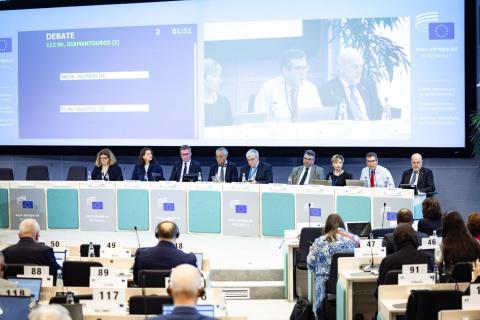
In the opinion,drawn up by Elena-Alexandra Calistru, Konstantinos Diamantouros and Stefano Palmieri, the Committee stresses that the next Multiannual Financial Framework (MFF) must be strong and ambitious, and must be seen as an investment in delivering EU priorities and European public goods.
More specifically, the EESC is in favour of a significant, real-term increase in the MFF in order to address the huge challenges facing the EU. This means that the mechanism for adjusting the MFF in line with inflation, which has traditionally capped the annual increase in contributions to the budget at 2%, should change in order to preserve the real spending power of the MFF.
Speaking during the plenary debate, EESC president Oliver Röpke said that ‘In times of transition and uncertainty, Europe needs a future-proof budget that empowers us to act, protect and transform. We need an MFF that is an investment tool for European public goods. We need to mobilise investment to foster our green, blue, digital and social transitions’.
He continued by pointing out that ‘Simplification and accessibility of EU funding is crucial. The next MFF must streamline funding instruments, harmonise rules and reduce bureaucracy to deliver real results on the ground’. (mp)
The European Economic and Social Committee (EESC) held its 10th Western Balkans Civil Society Forum in Budva, Montenegro, gathering over 100 participantsto discuss how to accelerate socio-economic convergence with the EU to improve living standards across the region.
The European Economic and Social Committee (EESC) held its 10th Western Balkans Civil Society Forum in Budva, Montenegro, gathering over 100 participantsto discuss how to accelerate socio-economic convergence with the EU to improve living standards across the region.
Nik Gjeloshaj, Deputy Prime Minister of Montenegro for Economic Policy and Minister for Economic Development, said: ‘We are confident that we will be able to close two chapters at the intergovernmental conference during the Polish presidency in June, and that additional chapters will be ready for closure by the end of this year.’
Oliver Röpke, President of the European Economic and Social Committee (EESC), underlined: ‘This forum sends a strong signal – the future of the Western Balkans lies in the European Union, and civil society must be at the heart of that journey. The European Economic and Social Committee will continue to stand firmly beside our partners in the region, every step of the way.'
Amer Kapetanović, Secretary-General of the Regional Cooperation Council, stressed: ‘Regional cooperation is no longer a nice-to-have, it’s a need-to-do. The Common Regional Market is coming into focus, with the potential to accelerate convergence and unlock up to 10% GDP growth through practical reforms and solutions. More than 500 civil society organisations have been directly involved in shaping it, because meaningful change only happens when people are part of the process.’
Andi Dobrushi, Regional Director of the Open Society Foundations – Western Balkans, explained: ‘This Forum is about more than policy – it is about the people whose relentless work has carried the region forward through decades of transformation. At OSF-WB, we support a broad range of actors who bring both grassroots legitimacy and policy insights to the table.’
H.E. Johann Sattler, Head of the Delegation of the European Union to Montenegro, said: ‘Together, we can ensure that this once-in-a-generation opportunity for the Western Balkans is not missed.’ (at)
The European Economic and Social Committee (EESC) has adopted an opinion on the European Commission’s mid-term review of cohesion policy 2021-2027. In a debate with Commission Vice-President Raffaele Fitto, the EESC stressed that, while the EU must adapt to new priorities, cohesion policy must continue to focus on reducing regional inequalities.
The European Economic and Social Committee (EESC) has adopted an opinion on the European Commission’s mid-term review of cohesion policy 2021-2027. In a debate with Commission Vice-President Raffaele Fitto, the EESC stressed that, while the EU must adapt to new priorities, cohesion policy must continue to focus on reducing regional inequalities.
Cohesion policy, the EU’s main tool for promoting economic, social and territorial unity, is being reassessed to address major changes across Europe.
‘Cohesion policy has been vital in responding to both long-term structural challenges and urgent crises’, said EESC President Oliver Röpke, ‘but as we adapt to new priorities, we must keep its core mission at the forefront: supporting the most vulnerable regions and reducing inequalities. This is not just a question of solidarity, but of strengthening the Union’s long-term social and economic fabric’.
‘With the proposal on the mid-term review package, we are giving Member States and regions the opportunity to invest in new, specific areas – a voluntary choice that introduces flexibility without compromising the core principles of cohesion policy’, added Commission Vice-President Fitto.
The EESC supports aligning cohesion policy with new priorities – such as competitiveness, defence, housing, energy and water resilience – but insists these should enhance, not replace, the focus on solidarity.
A key concern is how to finance these ambitions. ‘Without a reformed and reliable funding model, the Union could find itself ill-equipped to respond to future crises or to invest adequately in long-term priorities’, explained EESC rapporteur David Sventek.
The EESC recommends:
keeping cohesion’s core mission of reducing inequalities
using a balanced mix of grants and financial tools
ensuring fair access to funding, especially for disadvantaged regions
coordinating the review with the EU’s overall budget
reforming the funding system to make it more stable
prioritising climate, digitalisation and infrastructure investment
As the EU looks beyond 2027, the EESC calls for a fair, flexible and future-ready cohesion policy for all regions. (tk)
The European Economic and Social Committee (EESC) has launched work on a major package of recommendations to tackle the cost-of-living crisis, starting with four new opinions adopted at its April plenary session. This is the first block in a series of eight opinions focused on a specific aspect of the crisis — from economic fallout to social cohesion, employment, sustainability, and more.
The European Economic and Social Committee (EESC) has launched work on a major package of recommendations to tackle the cost-of-living crisis, starting with four new opinions adopted at its April plenary session. This is the first block in a series of eight opinions focused on a specific aspect of the crisis — from economic fallout to social cohesion, employment, sustainability, and more.
The goal? To propose a coordinated, cross-cutting strategy that goes beyond short-term fixes and helps build real, lasting resilience across the EU. The process will conclude in July 2025 with an umbrella opinion summarising all of the proposals in one policy message.
First set of recommendations:
The opinion ‘Measures for a resilient, cohesive and inclusive European economy’ calls for a shift from crisis response to long-term resilience, urging coordinated EU action to address inflation’s lasting impact, especially on vulnerable groups. Key proposals include a resilience monitoring system, investment in infrastructure and skills, stronger labour standards and aligning competitiveness with social and environmental goals.
The opinion ‘Phasing out fossil fuel subsidies while ensuring European competitiveness’ urges a socially fair phase-out of fossil fuel subsidies, starting with the most harmful. It calls for clear EU guidance, better reporting and strong job protection. The opinion also recommends ending support for new fossil fuel infrastructure, revising tax and State aid rules, and boosting clean energy investment and international cooperation.
The opinion ‘How single market dysfunctionalities contribute to the rising cost of living’ pushes for action to address dysfunctions in the single market that drive up prices. It targets barriers and advocates for stronger enforcement of EU law, completion of the Capital Markets Union, better labour mobility, improved infrastructure and access to healthcare. Housing market rules should also be assessed for their impact on affordability.
The opinion ‘Price hikes in transport, energy and housing: the role of quality public services in tackling the high cost of living’ underscores the importance of services of general interest in easing crisis impacts. It calls for greater public investment in social infrastructure, housing and transport; reform of State aid rules; and the repurposing of fossil fuel subsidies to fund greener solutions. It stresses the need for decisive action against energy and transport poverty, and calls for faster progress on renewables, grid expansion and permitting. (tk)