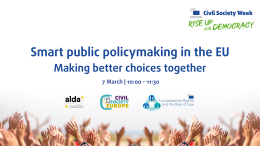
Due to globalisation and digitalisation, countries have lost power in relation to international markets and businesses. This strongly limits governments' capabilities at all levels, particularly local level, to deliver policies and measures that address the societal challenges and inequalities that people are facing.
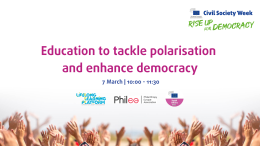
"What nutrition … [is] to physiological life, education is to social life. This education consists primarily in transmission through communication. Communication is a process of sharing experience till it becomes a common possession." This quote is taken from Democracy and Education by John Dewey.
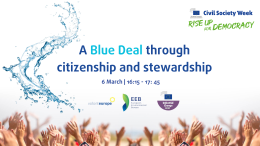
Water is a substance that is present in our everyday lives; it is something that everyone can relate to. It is the most precious resource on earth, vital for human life and the natural environment. Water is a source of inspiration for many, so the challenges relating to it drive people to take action in their communities and across borders.
Civil society, including philanthropy, is the cornerstone of our democratic and pluralistic societies. It contributes to solving societal issues in many ways. However, old and new barriers prevent the sector from unleashing its full potential.