While industry never planned to leave Europe, the reality is that since the 2024 European elections, EU institutions have come to a clear conclusion: without a strong industry, Europe cannot secure strategic autonomy or achieve the essential competitiveness of its economy. A strong industrial base is imperative not only for quality jobs for Europeans, but also for progress, innovation and high-value-added services.
While industry never planned to leave Europe, the reality is that since the 2024 European elections, EU institutions have come to a clear conclusion: without a strong industry, Europe cannot secure strategic autonomy or achieve the essential competitiveness of its economy. A strong industrial base is imperative not only for quality jobs for Europeans, but also for progress, innovation and high-value-added services.
In response to the cost-of-living crisis, the EESC has launched an initiative – an ‘umbrella opinion’ – addressing the crisis across different policy areas and offering targeted recommendations to EU and national policymakers. As part of this, the EESC’s Commission for the Study of Industrial Change (CCMI) has zeroed in on reindustrialisation as a key approach for helping to counter the impact of the cost-of-living crisis on European citizens and businesses.
The main conclusions of the opinion are as follows.
While we welcome the Commission’s initiative to launch a ‘competitiveness compass’, we call for the inclusion of clear benchmarks and performance indicators to ensure that these efforts don’t just exist on paper, but are brought to life.
In the field of energy (which currently acts as a disincentive to European industry and the broader economy), we call for rapid measures, both short- and long-term, to ensure secure, stable and predictable energy at prices that allow businesses to be competitive and that do not burden households.
Strategic autonomy must be at the heart of the reindustrialisation process and must benefit not only the companies directly involved, but also the entire value chain. European industry is facing a shortage of skilled workers, which is why we call for reduced red tape and streamlined EU legislation for granting work permits. We do not want to ‘import’ cheap labour, but rather attract skilled workers who will enrich European society.
The aim of industrial policy must be to restore the EU’s attractiveness and make it once again a favourable environment for industrial investment, leveraging legal certainty, the skills of its workers and, of course, the benefits of the single market.
Social dialogue must be fully integrated into the reindustrialisation process, as it affects not only large companies, but SMEs as well, which make up the vast majority of European businesses.
There is one issue, however, that is particularly sensitive in some social and political groups: simplifying bureaucracy. In the words of the president of the EESC Employers’ Group, Stefano Mallia, ‘simplification does not mean deregulation. It is not about dismantling the Green Deal or essential social safeguards ... It is about removing bureaucracy that benefits no one.’
As always, the devil is in the details; but far from being discouraged, we must deepen the reindustrialisation process, which will involve investment across the entire chain, from public investment in infrastructure to business investment in industry, promoting high-quality jobs, encouraging lifelong professional retraining, maintaining the social standards that are at the heart of the EU acquis, and promoting business innovation as a means of continuous improvement and the development of high-value-added services.
This is no easy task, but I firmly believe that a strong industry, established throughout the EU, can be one of the main drivers for improving the competitive position of the European economy and substantially improving the situations of Europeans and their families.
How can the EU ensure that its industrial strategy brings tangible benefits for both businesses and citizens? EESC member Andres Barceló Delgado, rapporteur of the opinion on reindustralising Europe, gives the answers.
How can the EU ensure that its industrial strategy brings tangible benefits for both businesses and citizens? EESC member Andres Barceló Delgado, rapporteur of the opinion on reindustralising Europe, gives the answers.
The fragmentation of global supply chains directly impacts businesses and households through escalating costs and growing economic uncertainty.
Fragmented supply chains directly raise costs through increased tariffs, logistical disruptions and limited access to essential raw materials and intermediate goods. These issues affect sectors crucial for daily life, including pharmaceuticals, electronics and food production. Consumers ultimately bear these additional expenses, facing reduced purchasing power and restricted access to vital products. Moreover, these disruptions disproportionately affect lower-income households, exacerbating economic inequalities and social vulnerabilities across Europe.
It is essential to diversify supply chains to enhance economic resilience and maintain open trade channels. We must forge deeper economic partnerships with diverse global partners, particularly those aligned with Europe’s commitment to sustainable and equitable trade practices. Strengthening such relationships will reduce Europe’s vulnerability to single-source dependencies and external economic shocks.
Technological innovation must be the engine and the goal of all these efforts. Investing in advanced digital solutions, such as artificial intelligence and blockchain, can optimise supply chain efficiency, improve transparency and reduce operational costs. These technologies not only facilitate smoother trade operations but also bolster the competitive position of European industries globally.
Pursuing these objectives does not and must not mean renouncing sustainability. Aligning supply-chain strategies with sustainability objectives, such as supporting the circular economy and promoting local production networks, can further enhance long-term resilience and reduce environmental and social impacts.
Finally, regulatory simplification is essential. We need clear, effective rules that maintain robust protections for consumers, workers and the environment, and also enable European businesses, especially SMEs, to adapt swiftly and remain competitive amid global disruptions.
Disruptions in international trade networks contribute to the ongoing cost-of-living crisis affecting millions across Europe. Dimitris Dimitriadis, rapporteur of the opinion Fragmentation of supply chains and impact on the cost of living, lists the efforts that should be made to repair the broken supply flow. The opinion is part of a broader packageof EESC opinions that collectively address multiple facets of the cost-of-living crisis, offering comprehensive recommendations to European policymakers and civil society.
Disruptions in international trade networks contribute to the ongoing cost-of-living crisis affecting millions across Europe. Dimitris Dimitriadis, rapporteur of the opinion Fragmentation of supply chains and impact on the cost of living, lists the efforts that should be made to repair the broken supply flow. The opinion is part of a broader packageof EESC opinions that collectively address multiple facets of the cost-of-living crisis, offering comprehensive recommendations to European policymakers and civil society.
From the Sahel to Syria, from Gaza to Ukraine, the European Union is encircled by crises that continue to drive mass displacement. These are not distant emergencies and protracted crises – they are Europe’s front yard. For EU policymakers, the takeaway is clear: delivering aid to find solutions for populations on the move and investing in regions facing extreme fragility risks is not just a moral duty, it is a strategic imperative. And the next Multiannual Financial Framework (MFF) must reflect that.
From the Sahel to Syria, from Gaza to Ukraine, the European Union is encircled by crises that continue to drive mass displacement. These are not distant emergencies and protracted crises – they are Europe’s front yard. For EU policymakers, the takeaway is clear: delivering aid to find solutions for populations on the move and investing in regions facing extreme fragility risks is not just a moral duty, it is a strategic imperative. And the next Multiannual Financial Framework (MFF) must reflect that.
No less than 26 countries affected by these crises surrounding Europe are currently under acute strain – grappling with war, economic collapse, climate shocks and other aspects of fragility. Nearly half the world’s refugees live in or near these conflict and volatile zones. Nationals from these countries now account for one-third of asylum claims in the EU – and that’s without counting the 4.3 million Ukrainian refugees already residing in the Union.
Migration pressures are growing, and Europe’s response must evolve. The projected drop in global official development assistance – from €200 billion in 2024 to under €150 billion by 2026 – is, in this respect, a short-sighted decision. While security and business competitiveness rightly receive increased budgets, underinvesting in stability and resilience beyond EU borders is a political gamble Europe cannot afford. While some argue that assisting displaced communities and their hosts is a matter of values and solidarity, it is also fundamentally about Europe’s long-term stability and prosperity.
Managing population movements must begin long before people reach European borders. Deterrence at borders – whether through fences or legal hurdles – does not stop those fleeing bombs, persecution or desperation. If Europe wants migration that is orderly, predictable and manageable, it must engage upstream – addressing root causes such as poverty and armed violence; supporting and protecting internally displaced persons in their own country before they feel forced to cross a border; and, finding solutions for refugees in countries immediately neighbouring these hot spots.
This is not about idealism; it is about realpolitik. Aid policy should serve the Union’s geopolitical goals – reducing instability, strengthening economic and trade partnerships – and ultimately, preserving EU credibility on the global stage. Being a thought leader for which solidarity still means something, while ensuring benefits for its own people, is what sets it apart from other nations.
The EU’s swift and well-funded response to the war in Ukraine and the mass displacement it triggered – both internally and across its border – showed that the Union has learned key lessons from the 2015 Syria crisis. But the current scale, proximity and complexity of the belt of crises now unfolding around Europe demand an equally strategic and sustained response. Mounting security concerns and economic pressures make this even more urgent. EU Member States must meet the moment by equipping the Union with the necessary financial means to deliver on its ambitious but unavoidable goals. That begins with agreeing to an overall budget that exceeds the current 1% of Gross National Income (GNI), so that the EU can act decisively and sustainably in response to today’s realities.
This is why calculated, forward-looking decisions on the next MFF are so critical. UNHCR recommends concrete measures to ensure that investment to address forcible displacement is fully aligned with EU priorities:
Secure a minimum of €2.3 billion annually for humanitarian aid so that when crises emerge, one can immediately respond and stop the suffering.
Ring-fence at least 10% of the next international partnerships instrument for displacement and migration to stabilise people on the move closer to their home, especially in Mediterranean countries, before people feel forced to embark on dangerous journeys across the sea.
This is not only about spending more, but about spending with foresight – allocating resources in ways that reduce downstream costs of having to deal with a power vacuum, missed economic investment opportunities and increased populations on the move.
With adequate resources, third countries that host displaced people will meet their needs – offering solutions pending a return home. External aid geared towards refugees has often been an opportunity to develop public services and to create jobs for underserved local populations in host countries. Europe’s whole-of-route approach requires investments as early as possible – in countries of origin and of transit. The goal is not just to reduce movements for the sake of it, but to find durable solutions for those on the move. This will directly serve European interests of curbing irregular – or what most refer to as illegal – arrivals at its border. But it will also reduce the risk of people to fall prey to traffickers or embark on perilous journeys.
An integrated, well-resourced EU approach to forced displacement is not about philanthropy, it is about making an investment for Europe’s own future. When crises go unaddressed, they do not ‘just’ create human suffering. They destabilise regions and undermine trade and other partnerships. Having people compelled to move to Europe for their own safety are foreseeable outcomes of us having neglected situations earlier on.
At UNHCR, we have embraced the EU’s current pivot toward making aid more transactional and mobilising private capital for development through the Global Gateway initiative. We have long recognised that public finance must be used to mobilise private capital in providing sustainable responses to forced displacement. The Global Gateway can be transformative if displaced people and host communities are built into its design, not added as an afterthought.
The international system is evolving, and the housekeeping starts at home. With the Humanitarian Reset and UN80 on the horizon, we have a real opportunity to reform how aid is delivered against its promise – making it more efficient and effective at the same time. The EU is right to push for more accountability and better results. But without proper financial support, we will for sure fail on both counts.
The choices made in the next MFF will shape the Union’s ability to manage its borders humanely, safeguard its internal cohesion and be a partner of choice for third countries. External aid must remain a strategic priority. It is the foundation for a more stable and prosperous Europe.
UNHCR’s latest recommendations for the next MFF are available here.
An integrated, well-funded EU approach to forced displacement is not an act of philanthropy – it is an investment in Europe’s own future. With complex crises unfolding at its borders, Europe will need to come up with a bold and strategic response. As talks on the next EU budget begin, the choices made in the next multiannual financial framework (MFF) will shape the Union’s ability to manage its borders humanely, safeguard its internal cohesion and be a partner of choice for third countries, writes our surprise guest Jean-Nicolas Beuze, the UNHCR country representative to the EU.
An integrated, well-funded EU approach to forced displacement is not an act of philanthropy – it is an investment in Europe’s own future. With complex crises unfolding at its borders, Europe will need to come up with a bold and strategic response. As talks on the next EU budget begin, the choices made in the next multiannual financial framework (MFF) will shape the Union’s ability to manage its borders humanely, safeguard its internal cohesion and be a partner of choice for third countries, writes our surprise guest Jean-Nicolas Beuze, the UNHCR country representative to the EU.
Jean-Nicolas Beuze is the UNHCR country representative to the EU, Belgium, Ireland, Luxembourg, The Netherlands and Portugal, having previously served as country representative in Iraq, Yemen and Canada. He has over 27 years of experience working for the UN in the field and at the headquarters in the areas of human rights, peacekeeping and child protection.
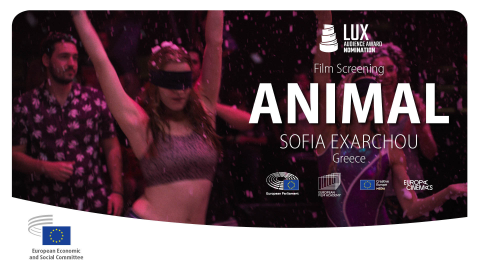
Directed by Sofia Exarchou, this powerful drama is a Greek, Austrian, Romanian, Cypriot and Bulgarian co-production that has captivated audiences and critics alike. Animal has received international acclaim, including awards at prestigious festivals such as Locarno and Sarajevo, for its raw portrayal of contemporary social and economic realities.
Set in a Greek resort town during the off-season, Animal follows Kalia, a middle-aged woman working in the entertainment team of an all-inclusive hotel. As the season wears on, and tensions simmer beneath the surface, the film explores the complexities of labour, identity and human endurance in a world driven by spectacle and survival.
This screening is part of the EESC’s ongoing series, in partnership with the European Parliament’s LUX Audience Film Award, promoting cultural diversity and sparking dialogue on pressing social issues. (ps)
The Brussels 20 km race is one of the city’s most anticipated annual events, uniting people of all ages and abilities. In its 45th edition, this event showcased the vibrant diversity of Brussels as thousands came together to challenge themselves and celebrate healthy living.
The Brussels 20 km race is one of the city’s most anticipated annual events, uniting people of all ages and abilities. In its 45th edition, this event showcased the vibrant diversity of Brussels as thousands came together to challenge themselves and celebrate healthy living.
On 25 May 2025, a record-breaking 48 928 participants from 80 countries and of 140 nationalities took part in the race. Joggers, walkers and athletes with disabilities covered the 20-kilometre route through central Brussels, with a nearly equal gender split.
EESC Vice-President Laurențiu Plosceanu gave the starting signal to the crowd, which included Belgian Queen Mathilde. The EESC has maintained a strong presence at the race since 2018, with its vice-president representing the Committee each year.
Patrick Nimubona from Burundi won the men’s race, finishing in 59 minutes and 26 seconds. Britain’s Naomi Taschimowitz was the fastest woman, completing the course in 1 hour and 9 minutes.
The 46th edition of the Brussels 20 km race is scheduled for Sunday 31 May 2026. (ehp)
Held on Saturday 10 May 2025, the EU Open Day at the EESC was a celebration of 75 years of peace and cooperation in Europe, inspired by the visionary Schuman Declaration.
Held on Saturday 10 May 2025, the EU Open Day at the EESC was a celebration of 75 years of peace and cooperation in Europe, inspired by the visionary Schuman Declaration.
Thousands of visitors from around the world came to learn about the EESC’s role in shaping EU policy. Visitors had the opportunity to explore stands hosted by the EESC’s three groups, six sections and the CCMI. Volunteers and members engaged directly with guests, answering questions and explaining the Committee’s work. Speed voting sessions and a simulated plenary meeting, including interpretation and electronic voting, offered an immersive look at EU-level decision-making.
There were many other fun activities too! From digital quizzes and a wheel of fortune to live music, a caricaturist and a kids’ corner with hat-making and face painting, there was something for everyone. Our photo booth and EU-themed postcard station were also a hit.
The EU Open Day 2025 at the EESC was a true celebration of unity, bringing together people from around the world to mark this special milestone.
Click here to see photos from the EU Open Day 2025.
Click here to see the video from the EU Open Day 2025.
Discrimination is far from over for Europe’s LGBTIQ community. While there are significant variations across Member States, 37% of all LGBTIQ respondents to a recent EU-wide survey felt discriminated against due to their identity. Despite gradual progress on equality-related issues over the years, there is still much work to be done.
Discrimination is far from over for Europe’s LGBTIQ community. While there are significant variations across Member States, 37% of all LGBTIQ respondents to a recent EU-wide survey felt discriminated against due to their identity. Despite gradual progress on equality-related issues over the years, there is still much work to be done.
The EESC is at the forefront of such efforts. It has actively supported the European Commission’s LGBTIQ Equality Strategy 2020-2025, which aims to reduce discrimination and ensure the safety and fundamental rights of LGBTIQ individuals throughout the EU. Even before the strategy was issued, in 2012 the EESC called for the extension of the Equal Treatment and Employment Directive to protect transgender, non-binary, intersex and queer people against discrimination in the workplace and beyond.
The Committee adopted an opinion on the strategy in 2021, urging Member States to develop and execute national action plans. Furthermore, under the umbrella of the strategy, the Committee has adopted a series of related opinions in defence of LGBTIQ rights including:
No place for hate: a Europe united against hatred (2024) – in the opinion, the EESC recommends increased support for civil society organisations (CSOs), improved coordination to combat disinformation, and inclusion of hate speech and hate crime in the EU crime list. It also calls for a network of national law enforcement contact points and full implementation of the 2008 Framework Decision on racism and xenophobia.
Measures to fight stigma against HIV (2023) – The EESC proposes awareness campaigns, workplace equality for people with HIV and better access to pre-exposure prophylaxis (PrEP). It emphasises the role of community-led organisations in prevention and accountability.
Initiative to extend the list of EU crimes to all forms of hate crime and hate speech (2022) – The EESC advocates a unified EU legislative framework, consistent definitions across Member States and stronger roles for CSOs. It also highlights the need for law enforcement training, targeted public space actions and collaboration with social media platforms to combat online hate.
The full list of opinions related to the LGBTIQ Equality Strategy 2020-2025 is available here.
The EESC has set up an Ad hoc Group on Equality (AHGE or Equality Group), which has been in place since 2020, tasked with promoting a cross-cutting culture of equality within the Committee, including all aspects of this principle. It also regularly organises hearings, conferences and forums to discuss and promote LGBTIQ rights. (lm)