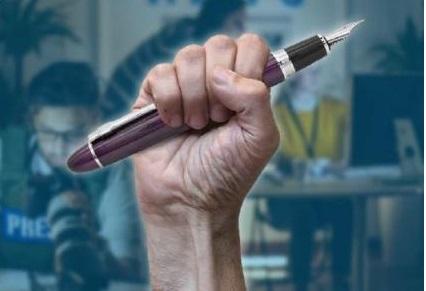
The European Economic and Social Committee (EESC) has called for urgent action to strengthen labour rights for journalists and media professionals across Europe, emphasising that decent working conditions are vital to protect the independence of journalism and ensure the general public has access to reliable, pluralist information.
The European Economic and Social Committee (EESC) has called for urgent action to strengthen labour rights for journalists and media professionals across Europe, emphasising that decent working conditions are vital to protect the independence of journalism and ensure the general public has access to reliable, pluralist information.
In an opinion based on extensive research and stakeholder input, adopted at its December plenary, the EESC recommended improving working conditions, supporting media pluralism, and protecting journalists from economic and physical threats. The opinion has since been welcomed by the European Federation of Journalists (EFJ).
'Today, the working environment for journalists is increasingly hostile: lies and rumours - as well as job insecurity and poor working conditions for information workers - undermine not only the quality of information but freedom itself', said rapporteur José Antonio Moreno Díaz in a video message.
In the same message, co-rapporteur Christian Moos emphasised that 'Europe is at a crossroads: either we take decisive action to protect journalists, or we risk weakening one of the pillars of our democracy'.
The EESC called for full application of the European Media Freedom Act (EMFA) and urged the European Commission to ensure that Member States complied with it. Independent support for media outlets, including VAT reductions, was needed to counteract the dominance of large online platforms and sustain the European media sector.
The Committee stressed the importance of social dialogue and collective bargaining for all journalists, including freelancers, and called for governments to implement minimum wage directives and guidelines for collective agreements. Action against bogus self-employment and full application of EU occupational safety and health directives are also being called for, alongside increased funding for quality jobs in the media sector.
Journalists face insecurity, stress, burnout and harassment, with freelancers particularly vulnerable to this, due to declining collective agreements and inadequate social protection. The EESC calls for deeper engagement with journalists’ organisations to build structures that safeguard safety and well-being, and supports the adoption of a directive on psychosocial risks at the workplace.
EU AI legislation should be monitored to balance innovation with protection for journalists, and AI literacy should be encouraged, the EESC said, highlighting the threat of disinformation and challenges to work-life balance. The Committee expressed concern about media ownership concentration and the vulnerability of public service media, calling for strict enforcement of the EMFA and sustainable support for independent journalism initiatives. (lm)
In an online world where generative AI can fabricate a headline, an image and a source in seconds, 'breaking news' may soon give way to 'fact-checked news'. At a time when lies travel faster than facts, fact-checking is quickly becoming one of journalism's most powerful tools. The European Digital Media Observatory (EDMO) tracks Europe's most persistent false narratives through its monthly disinformation briefs. We spoke with EDMO coordinator Tommaso Canetta about how fact-checking is evolving — and what it takes to push back against disinformation in the age of AI.
In an online world where generative AI can fabricate a headline, an image and a source in seconds, 'breaking news' may soon give way to 'fact-checked news'. At a time when lies travel faster than facts, fact-checking is quickly becoming one of journalism's most powerful tools. The European Digital Media Observatory (EDMO) tracks Europe's most persistent false narratives through its monthly disinformation briefs. We spoke with EDMO coordinator Tommaso Canetta about how fact-checking is evolving — and what it takes to push back against disinformation in the age of AI.
Could you tell us a little bit more about the monthly briefs of the EDMO fact-checking network? How do you collect information and decide what to include in the briefs? Who are your fact-checkers?
Every month, we send a questionnaire to the fact-checking organisations that are members of the EDMO fact-checking network (55 organisations covering all EU Member States plus Norway). The questionnaire includes both quantitative and qualitative questions about the disinformation detected during the previous month. We then analyse all the responses and include the most relevant information emerging from this analysis in the briefs.
Your October brief stated that AI-generated disinformation hit a new record amid the crumbling of information integrity. What is an 'AI slop' and how is it used to produce fake news or political discreditation? Can you give us some recent and blatant examples?
'AI slop' can be defined as low- to mid-quality content created using AI tools. The deluge of AI-generated content circulating on social media platforms during crises, before, during or after elections, and more generally around sensitive topics, can significantly distort public perception.
Recent examples include the many false videos and images allegedly showing Venezuelans celebrating in the streets following the abduction of Maduro by the United States. Another example is the circulation, in November, of AI-generated videos depicting Ukrainian soldiers surrendering. In the political sphere more broadly, deepfakes of politicians saying things they never said are increasingly being created and disseminated to discredit them (for example, this one in Hungary).
Are there some recurrent topics or issues where disinformation and false narratives have thrived lately? Could you name a few based on your research for the briefs?
The war in Ukraine, migration, climate change, the EU, the Israel–Hamas war in Gaza and its consequences, pandemics and vaccines, and LGBTQ+ communities have all been recurring targets of disinformation narratives and campaigns in recent months (as reflected in the briefs monitoring these topics).
Moreover, national politics are frequently targeted by disinformation, although the specific dynamics naturally vary from country to country. In addition, virtually all newsworthy crises tend to become disinformation targets, at least for as long as traditional media coverage gives prominence to them (e.g. Hurricane Melissa, the theft at the Louvre, Charlie Kirk's death, the 12-day Israel–Iran war, the presidential elections in Romania, etc.).
In a recent report by the Reuters Institute for the Study of Journalism, experts forecast that verification will take centre stage in the years to come, with 'breaking verification' replacing 'breaking news'. What is your take on the evolution of fact-checking journalism and its importance in the future?
My view is that its importance will only continue to grow. We are rapidly moving toward a situation in which the main source of information for entire generations - social media - is being flooded with unreliable content, while many users are increasingly unable to distinguish what is real from what is AI-generated.
Disinformation, FIMI (foreign information and manipulation interference), scams, non-consensual AI-generated pornography (including of minors), and other illegal or harmful content and operations will thrive. These are fuelled by platforms' algorithms and business models, by unscrupulous actors exploiting the system for profit, and by adversarial/extremist forces (domestic or foreign) that benefit from polarisation and the societal crises of European states.
If democracies want to survive, they will need to address this issue decisively, and fact-checking is a fundamental tool in this effort. Even if it becomes impossible to verify all false content in the future, there should at least be a strong effort to verify what is true. Traditional sources of information could even benefit from such a shift.
Can people be taught how to detect disinformation? How can we spot a fake when we read, see or hear one? Will this even be possible given the rapid rise of AI technology, or will we again need AI to detect fakes created by AI?
A great deal can be taught. Awareness of disinformation and its main characteristics is a powerful first line of defence, and media literacy is of the utmost importance. However, education alone is not sufficient. We certainly need tools, including AI-powered ones, but currently these tools are not always reliable. Their development requires effort and investment, as bad actors are usually one step ahead. Moreover, beyond the identification of disinformation narratives, it is vital to detect and track their dissemination dynamics, including the actors, the targets and cross-platform distribution. For this type of analysis, improved AI tools can provide valuable insights for timely responses. We also need stronger regulation of the digital space and of AI. EU initiatives such as the Digital Services Act and the AI Act are a good starting point, but much more is needed, notably in terms of enforcement.
In addition, we need a strong traditional media sector capable of providing reliable, high-quality information, and more fact-checking at all levels. Above all, however, democratic governments must step up politically, boldly addressing these challenges and ensuring that the public is properly informed.
Tommaso Canetta is a journalist and a fact-checker, deputy director of Pagella Politica/Facta news, coordinator of the fact-checking activities of EDMO and Italian Digital Media Observatory (IDMO), and member of the Governance Body of the European Fact-Checking Standards Network (EFCSN) as well as of the Taskforce of the Code of Practice on Disinformation.
EDMO is an EU-funded network that brings together researchers, fact-checkers and media literacy experts to detect, analyse and counter disinformation across Europe.Its fact-checking network is made up of 15 hubs across the EU and the EEA.
Europe’s hospitals faced nearly 300 cybersecurity incidents in 2024, making healthcare the most targeted essential sector. Widely attributed to Russian-linked groups, major incidents cost around EUR 300 000 each — but the damage goes far beyond financial losses. The European Commission’s 2025 Action Plan on the Cybersecurity of Hospitals and Healthcare Providers is a critical step towards protecting EU healthcare from hybrid threats. Samuel Goodger and Elizabeth Kuiper of the European Policy Centre outline the priorities for ensuring the plan’s successful implementation.
Europe’s hospitals faced nearly 300 cybersecurity incidents in 2024, making healthcare the most targeted essential sector. Widely attributed to Russian-linked groups, major incidents cost around EUR 300 000 each — but the damage goes far beyond financial losses. The European Commission’s 2025 Action Plan on the Cybersecurity of Hospitals and Healthcare Providers is a critical step towards protecting EU healthcare from hybrid threats. Samuel Goodger and Elizabeth Kuiper of the European Policy Centre outline the priorities for ensuring the plan’s successful implementation.
The growing number of cyberattacks against the EU’s health infrastructure form part of broader hybrid warfare intended to intimidate, destabilise and test European resolve, chiefly led by Russia. As digital health and artificial intelligence reshape healthcare provision, the cyberattack surface expands in tandem. Since 2023, pro-Russia hacker groups – such as Killnet and Anonymous Sudan – have launched coordinated attacks on hospitals and health authorities in Denmark, the Netherlands, Spain and Sweden. In 2024 alone, at least 289 cybersecurity incidents affected EU healthcare providers – more than in any other essential sector.
The cost of inaction is staggering. Major incidents cost an average of EUR 300 000 each, meaning the cumulative burden on health systems may reach billions.
Disinformation, for instance shared on social media, can also multiply attacks’ impact. When hospitals are targeted, false claims about patient data breaches can amplify public anxiety, erode trust in healthcare institutions and compound the already-concerning effects of low health literacy.
Why healthcare?
Several factors make health systems attractive targets. Personal health records enable identity theft or extortion. Fragmented IT environments – legacy systems alongside modern infrastructure – contribute to vulnerabilities. Supply-chain dependencies create additional entry points, as one system’s breach can cascade into others.
Cybersecurity preparedness in healthcare varies dramatically across the EU. While some Member States have mature ecosystems – such as the Dutch Z-CERT, which provides sector-specific threat intelligence and incident response – others lack health-specific expertise. This fragmentation creates vulnerabilities that hostile actors can exploit. Limited cross-border threat-intelligence sharing allows attackers to reuse the same vulnerabilities across countries.
Workforce shortages also exacerbate such gaps: in 2024, the EU lacked an estimated 300 000 cybersecurity professionals. The problem is particularly acute in healthcare, where roughly two-thirds of cybersecurity roles are filled by non-specialist IT professionals.
AI - A pivotal opportunity
In these circumstances, the Commission’s January 2025 Action Plan on the Cybersecurity of Hospitals and Healthcare Providers is a critical step forward. Building on substantial existing legislation – such as NIS2, GDPR and the European Health Data Space Regulation – the Plan charts a path to protect EU health systems through four pillars: Prevent, Detect, Respond and Recover, and Deter.
Today’s AI-based tools offer significant defensive potential: continuous surveillance, subtle compromise detection, alert prioritisation and automated early threat containment. However, adversaries also benefit from such evolutions – for instance by manipulating AI models with adversarial inputs or data poisoning. Ensuring system integrity therefore requires continuous monitoring and secure development pipelines. Validation by human analysts remains crucial for accountability.
AI also significantly strengthens disinformation actors. By analysing stolen data, attackers can generate phishing emails tailored to individuals’ specific roles. During incidents, coordinated disinformation can erode public confidence precisely when trust is most fragile.
Recommendations
Prior to further action by the Commission to implement the action plan, we identify six priorities:
First, leverage AI for threat detection and response. Health systems should pilot specialised AI for automated vulnerability management and behavioural analysis. Closed but explainable AI systems are preferable, to reduce data leakage risks.
Second, enhance cross-border threat intelligence. The Commission must establish vulnerability watch systems contextualised in clinical workflows. International cooperation should be strengthened through the International Counter Ransomware Initiative and G7.
Third, strengthen joint procurement for supply-chain security. Establishing common procurement mechanisms at EU level would aggregate demand and facilitate oversight of secure-by-design requirements.
Fourth, address the workforce capacity crisis. Healthcare workers themselves are both the first line of defence and a key vulnerability. Cyber hygiene training must include counter-disinformation skills and recognition of AI-enhanced social engineering attacks.
Fifth, target disinformation risks. The Commission should develop healthcare-specific AI literacy initiatives explaining decision-making processes and privacy implications. Citizens must be empowered to distinguish genuine communications from manipulated content.
Sixth, ensure adequate funding is available. In addition to redirecting existing resources, public investments should qualify under the Stability and Growth Pact’s escape clause. The EU should explore creating a dedicated EUR 10 billion Resilience Fund for sectors most exposed to cyber threats.
Ensuring the cyber resilience of EU health systems requires a shift towards a collaborative, proactive approach. This means moving beyond fragmentation and favouring integrated, innovative collective action. By capitalising on AI, deepening cross-border cooperation, investing in workforce development and empowering patients, the EU can transform the healthcare sector from a vulnerable target to resilient infrastructure.
The European Policy Centre (EPC) is an independent, not-for-profit think tank dedicated to fostering European integration through analysis and debate, supporting and challenging decision makers at all levels to make informed decisions based on evidence and analysis, and providing a platform to engage partners, stakeholders and individuals in EU policy making and in the debate about the future of Europe.
The EESC is calling for immediate structural measures in space investment and recommends increasing this to at least 0.2% of the EU’s GDP by 2030. Europe’s investment in space is currently significantly smaller than that of its main competitors.
The EESC is calling for immediate structural measures in space investment and recommends increasing this to at least 0.2% of the EU’s GDP by 2030.
In the opinion drawn up by Angelo Pagliara and adopted during its December plenary session, the Committee points out that this boost would allow Europe to gradually close the gap with the US and China, making the EU a world leader in the space sector.
Europe’s investment in space is significantly smaller than that of its main competitors. The EU currently allocates only 0.07% of its GDP to space activities, compared to an average of 0.25% in the US, and higher levels still in China, India and Japan.
‘This structural imbalance undermines Europe’s ability to foster autonomous innovation, maintain strategic critical infrastructure and combat dependency on technologies, data and services from third countries,’ said Mr Pagliara, adding ‘We need to increase European public investment in the space sector’.
The EESC opinion assesses the European Commission’s EU Space Act and endorses its intention to enhance the space single market.
In order to make space activities sustainable, safe and resilient, the EU needs an immediate structural boost to its public investment in space activities. This means that the Union must take urgent action and adopt ambitious industrial policies, otherwise the objectives of the Commission’s proposal will not be met.
At the same time, the EESC underlines that it is important to have a clear regulatory framework in place to attract private investment. This must go hand in hand with an industrial and technological strategy that maximises economic and social returns for Europeans, defines tools to reduce dependency on critical supplies from outside Europe and supports the development of European launch capabilities. (mp)
In an opinion adopted at the December plenary session, the Committee says that nuclear energy plays and will continue to play a crucial role in decarbonising the European Union. This is particularly true given that the EU needs to consolidate its strategic autonomy in the fields of energy and technology.
In an opinion adopted at the December plenary session, the Committee says that nuclear energy plays and will continue to play a crucial role in decarbonising the European Union. This is particularly true given that the EU needs to consolidate its strategic autonomy in the fields of energy and technology.
The EESC opinion, drawn up by rapporteur Dumitru Fornea and co-rapporteur Alena Mastantuono, assesses the European Commission’s 8th Nuclear Illustrative Programme (PINC), published in June 2025.
According to the Committee, nuclear energy is a key element in diversifying the EU’s energy supply because it delivers safe, reliable, low-carbon electricity. This ensures that the grid remains stable most of the time, regardless of the weather or time of day, with less pressure on systemic costs.
Nuclear energy can therefore play an important role in supporting the EU’s overall industrial transition as it bolsters resilience against supply disruptions while complementing renewables and reducing dependence on imported fuels. 'The European nuclear industry sustains more than 1.1 million jobs in the EU and is a significant economic sector with a major footprint in terms of jobs, supply chain capacity and advanced R&D. It is a net-zero value chain based almost entirely in the EU’ said Mr Fornea. 'If we want to effectively move away from coal, we need accessible clean energy and funding for nuclear.'
In the opinion, the EESC regrets that the PINC does not propose any specific enablers, nor a real action plan, for the planned investment and urges the European Commission to include regulatory and financial measures. 'We call on the Commission to put forward concrete measures to make the investment planned under the PINC possible', said Ms Mastantuono. 'This is more necessary than ever given the geopolitical turmoil which is forcing the Union to develop EU-based capacities. For this reason, the nuclear value chain should be supported in terms of skills, research and the fuel supply chain.'
Dialogue with civil society remains pivotal in building trust, ownership and societal acceptance, and could be more prominently addressed in the PINC. On this matter, the EESC’s view is that decisions on new projects in the nuclear sector, including the development of new technologies, should be taken after broad and transparent dialogue with civil society on the technical, economic, social and environmental aspects. (mp)
The EESC’s EU Consumer Day 2025 highlighted the urgent need to protect EU markets from a tsunami of cheap imports shipped by third-country e-commerce platforms such as Temu and Shein. Speakers warned that these imports threatened to wipe out compliant European businesses, drain public budgets and undermine product safety, labour standards and environmental rules.
The EESC’s EU Consumer Day 2025 highlighted the urgent need to protect EU markets from a tsunami of cheap imports shipped by third-country e-commerce platforms such as Temu and Shein. Speakers warned that these imports threatened to wipe out compliant European businesses, drain public budgets and undermine product safety, labour standards and environmental rules.
As many as 12 million parcels valued at under EUR 150 are being shipped every day by third country e-commerce platforms to European consumers. These numbers continue to snowball, with customs and market-surveillance authorities increasingly unable to cope.
In 2024 alone, 4.6 billion such parcels entered the EU - a figure expected to reach six billion in 2025, with over 90% originating from China. This was highlighted at the EESC’s EU Consumer Day 2025, held on 1 December under the title Europe for sale? How global marketplaces are changing our society – and what must be done right now.
The annual event brought together EU institutions, national authorities and civil society organisations, who jointly called for immediate short-term and medium-term measures to halt illegal imports and restore fair competition, stressing this was a shared European challenge.
Opening the event, EESC President Séamus Boland warned: 'This year we have witnessed an exponential increase in low-price goods shipped from outside the EU. We call for urgent action, including EU customs reform and stronger enforcement of existing rules'.
European Commissioner Michael McGrath underlined the Commission’s determination to act: 'We do have a robust legal framework that requires full compliance, and we have a clear vision of forthcoming measures that aim to strengthen both existing protections but also future enforcement'. He announced major initiatives for 2026, including a revamped Consumer Protection Cooperation Regulation and a new Digital Fairness Act.
MEP Anna Cavazzini said the European Parliament wanted to see stronger action from the Commission, echoing its latest resolution calling for an EU-wide market ban on products that systematically and seriously breach EU law.
Consumer organisations presented alarming evidence of product-safety failures, with up to 96% of tested products from major platforms found to be non-compliant or unsafe. Beyond safety risks, evidence from Member States shows the wider economic damage caused by third-country platforms.
The keynote speaker Simo Hiilamo, Finnish Commerce Federation, presented the study entitled The impacts of non-EU distance selling on businesses and society, which revealed staggering losses for Finland's economy. The country could have generated three times more tax revenue if just 30% of online purchases had taken place domestically.
Lost tax revenue undermines healthcare, education and public infrastructure, directly weakening the European social model.
Concluding the event, EESC member Emilie Prouzet stated: 'Europe is not for sale. We have the facts, the toolbox and the mobilisation. Now we need resolve'. (ll)