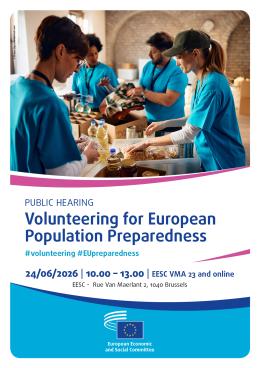
Volunteering plays a central role in building resilient and inclusive societies that are better prepared for existing and future challenges. This public hearing will gather institutional actors, civil society organisations, social partners, and experts to reflect on the role that volunteering can play in the “whole-of-society” approach to preparedness (called for by the European Commission). Discussions will feed into the related EESC Opinion (SOC/864).
The European Economic and Social Committee (EESC) has adopted two new opinions warning that Europe’s defence ambitions risk falling short unless its industrial base becomes more integrated, better funded and easier to coordinate across Member States.
The European Economic and Social Committee (EESC) has adopted a new opinion calling on the EU to accelerate biotechnology development, warning that Europe risks falling behind global competitors while patients face delays in accessing new treatments.
For decades, water policy has sat quietly in the background of European governance — technical, fragmented, often overlooked. That era is over. Today, water resilience is rapidly emerging as one of the most strategic challenges facing the continent, shaped by the accelerating pressures of climate change, biodiversity loss, pollution and unsustainable consumption. In a recent opinion adopted by the European Economic and Social Committee (EESC), the urgency of building water resilience across the continent is made unmistakably clear.
At its plenary session on 18 February, the EESC held a debate on 'Moving Europe in times of crisis: military mobility, transport resilience and their social dimension'. Read the key messages of the members of the EESC Civil Society Organisations’ Group.
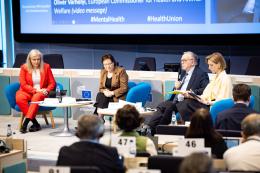
At its plenary session on 19 March, the EESC held a debate on the emotional health of young people and children in the EU. Read the key messages of the members of the EESC Civil Society Organisations’ Group.