The EESC will celebrate the cultural heritage of Cyprus with the exhibition Cypriot Nama: Commandaria, launching at 6.30 p.m. on Wednesday 17 June, in Foyer 6 (JDE building, Rue Belliard 99), and coinciding with the end of the Cyprus Presidency of the Council of the EU.
The EESC will celebrate the cultural heritage of Cyprus with the exhibition Cypriot Nama: Commandaria, launching at 6.30 p.m. onWednesday 17 June, in Foyer 6 (JDE building, Rue Belliard 99), and coinciding with the end of the Cyprus Presidency of the Council of the EU.
The exhibition, organised in collaboration with the Press and Information Office of the Republic of Cyprus, with the support of the Permanent Representation of the Republic of Cyprus to the EU, will shine a light on ‘Commandaria’, the historic Cypriot sweet wine.
Commandaria, named ‘the world’s oldest wine’, is far from a simple beverage; the wine was hailed as ‘the most precious gift granted by the Gods to mankind’ by the Greek philosopher Plato and as ‘the wine of kings and the king of wines’ by Richard the Lionheart.
Officially included on the Representative List of the Intangible Cultural Heritage of Humanity of UNESCO in 2025, it has a symbolic place in the rich cultural tapestry of Cyprus and remains a point of pride for the Cypriot people.
The exhibition’s official opening will be followed by a musical performance by the Michalis Kouloumis Quintet, which will present a unique artistic programme of melodies inspired by the distinctive musical style and traditions of Cyprus.
The exhibition will be open to visitors and runs until Tuesday 30 June.
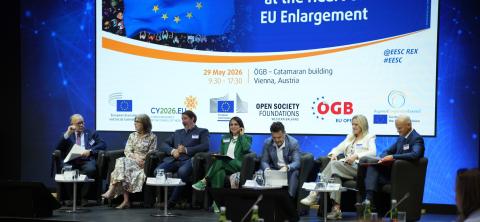
On 29 May, the European Economic and Social Committee held a conference in Vienna ─ just a few days before the EU-Balkan Summit ─ sending a clear message: civil society is key for building trust between institutions and citizens and between the European Union and the region.
On 29 May, the European Economic and Social Committee held a conference in Vienna ─ just a few days before the EU-Balkan Summit ─ sending a clear message: civil society is key for building trust between institutions and citizens and between the European Union and the region.
Under the auspices of the Cyprus Presidency of the Council of the EU, the conference brought together more than 100 participants: Western Balkan stakeholders and representatives from the EU institutions and Austria’s civil society and government. It was organised in cooperation with the European Commission, the Open Society Foundation – Western Balkans (OSF-WB) and the Regional Cooperation Council (RCC).
Speakers pointed out that it is a communication challenge, not just a political one, because according to Eurobarometer, two thirds of EU citizens say they do not feel well informed about enlargement. Ulrike Hartmann, the Special Envoy for Southeast Europe and EU Enlargement at the Federal Ministry for European and International Affairs of the Republic of Austria, emphasised the role of reciprocal communication between Member States and candidate countries as a crucial way to rebuild trust and demonstrate the benefits of enlargement both ways.
Furthermore, the Eurobarometer showed that 53% of EU citizens are in favour of further EU enlargement, with support particularly high among young people. However, the support varies significantly by country. For example, even though the political authorities in Austria strongly support enlargement, only 38% of its citizens are in favour. That is why Vienna was chosen as the host city for the conference to raise awareness of the benefits of EU enlargement among the Austrian public.
‘EU enlargement is a geopolitical imperative for a stronger, more secure and more prosperous Europe, but we can’t take the support of citizens in the EU or the Western Balkans for granted,’ said EESC President Séamus Boland. ‘Civil society must be at the heart of this process, building bridges between the EU and the Western Balkans and helping deliver the reforms and prosperity that enlargement can bring.’
Thomas Waitz, Member of the European Parliament, said: ‘Civil society is one of the most crucial pillars of the EU enlargement process and an important partner for me as a politician. Civil society must be firmly embedded in the reform process through a genuine and inclusive exchange and be trusted to hold politics accountable.’
Andi Dobrushi, Director of OSF-WB, explained that enlargement should not be seen as a charity project but as a contribution from the Western Balkans to the EU. He added that civil society organisations should be involved before the accession arrangements are finalised and not after.
The conference conclusions were sent to European Council President António Costa and the Cyprus Presidency ahead of the EU-Western Balkans Summit which took place in Montenegro on 5 June.(at)
The EESC warns that expanding supplementary pensions must not weaken public pension systems and calls for a balanced approach that strengthens both systems.
The EESC warns that expanding supplementary pensions must not weaken public pension systems and calls for a balanced approach that strengthens both systems.
In its opinion on the European Commission’s supplementary pensions package, which aims to improve retirement income while channelling more private savings into the economy, the EESC throws its support behind these goals but insists that adequacy, security and trust must come first.
‘Supplementary pensions can play an important role, but they must complement, not weaken, public systems,’ said the opinion’s rapporteur, María del Carmen Barrera Chamorro. ‘The priority must remain clear: ensuring that everyone can retire with dignity, security and an adequate income.’
The opinion was adopted and discussed at a high-level plenary debate in April, with European Commissioner for Financial Services and the Savings and Investments Union Maria Luís Albuquerque, Spain’s Minister for Inclusion, Social Security and Migration Elma Saiz Delgado and MEP Damian Boeselager.
In the opinion, the EESC calls for supplementary pensions to be easier to access and understand, especially for people who are currently not covered. It recommends clearer rules, better information for savers and stronger safeguards. This includes clearer advice when choosing pension products and stronger supervision at EU level. Financial education and simple tools are also needed to help people understand their rights and make informed decisions.
The EESC highlights major gaps in supplementary pensions, especially between men and women, with women sometimes receiving up to 40% less from private schemes. It calls for targeted measures developed through social dialogue to improve fairness and reduce poverty risks.
While recognising the role of supplementary pensions in supporting investment and economic growth, the EESC warns against excessive risk-taking with people’s savings. It also stresses that reforms must respect the diversity of national pension systems and ensure the full involvement of employers and trade unions in the design, implementation and monitoring of workplace pension schemes.
Ms Albuquerque explained that ‘supplementary pensions are the way to help people build additional security over the long term and to support them in retirement. This is the idea behind the European Commission’s supplementary pensions package. We fully respect Member States’ competences and the central role of social practices. Our objective is to support shared practices and to help create conditions or solutions that work for people.’
Ms Saiz Delgado said that ‘Any supplementary pension schemes must be based on the principle of complementarity. Under no circumstances should they replace the state pension system. A balance must be struck here so that the development of supplementary pension schemes does not replace our responsibility to ensure adequate provision for pensioners.’ (tk)
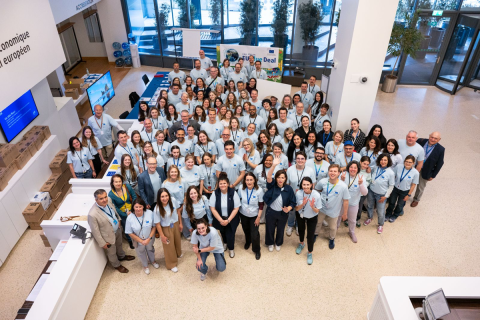
Thousands of people visited the EESC headquarters in Brussels on Saturday 9 May 2026, when the EU’s oldest consultative body opened its doors for the traditional Open Day.
Thousands of people visited the EESC headquarters in Brussels on Saturday 9 May 2026, when the EU’s oldest consultative body opened its doors for the traditional Open Day.
9 May, Europe Day, marks the 76th anniversary of the Schuman Declaration, the historic speech by French foreign minister Robert Schuman in 1950 which paved the way for European integration. Europe Day is a chance to acknowledge the achievements of the European project and celebrate the community of values that the EU represents and that we, as Europeans, protect and nourish every day.
‘Europe Day is a really important day for taking stock and celebrating the achievements of the European project, including peace, democracy and inclusion,’ Séamus Boland, the EESC President, said. ‘It was a genuine pleasure to host visitors to our open day today and celebrate this spirit of participation.’
‘I am very happy that the EESC could host an open-door and festive celebration for Europe Day,’ added Marija Hanževački, the EESC Vice-President for Communication. ‘Europe Day is a celebration of joy and unity for people of all ages to share European values and build a Europe for all. The Open Day offers a unique opportunity to experience the spirit of engagement first hand, discover the workings of the Committee and learn how complex debates are turned into opinions.’
During the EESC Open Day, visitors were able to step inside the Committee building and find out how it gives a voice to organised civil society across the EU and thus contributes to European democracy. They had the opportunity to meet the people behind the work, explore how EESC opinions are drawn up and experience personally how inclusive dialogue helps to shape Europe’s future and build a stronger Union. (mp)
The European Economic and Social Committee (EESC) calls for a renewed partnership between the European Union and southern Mediterranean countries – one that places people, sustainability and shared responsibility at its core.
The European Economic and Social Committee (EESC) calls for a renewed partnership between the European Union and southern Mediterranean countries – one that places people, sustainability and shared responsibility at its core.
At the heart of the EESC’s recommendations lies a clear message: economic cooperation must deliver for people, not just markets. Ongoing wars and instability are causing severe human suffering and damaging economies, hindering the pact’s progress. The EESC calls on the EU to support a just peace under the UN and to uphold international law. At the same time, it calls for respect for human rights, stressing the EU’s key role in promoting dialogue and peace.
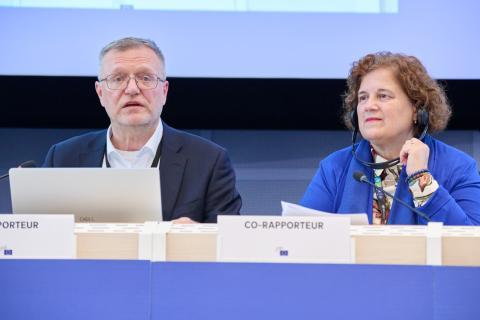
EESC member Thomas Wagnsonner, rapporteur for the opinion, emphasised: ‘The Pact for the Mediterranean will be successful only if peace and stability are guaranteed. Strengthening civil society involvement and supporting micro-, small and medium-sized enterprises, social entrepreneurs and cooperatives are crucial for the process. Innovation and social fairness need to go hand in hand’.
The structured and permanent involvement of organised civil society is central to this vision. Trade unions, employers’ organisations and civil society organisations should not be limited to occasional consultations, but formally integrated into governance, implementation and monitoring processes.
Nonetheless, environmental protection and sustainable practices must be integrated into economic development, ensuring that growth respects natural resources and contributes to long-term resilience in the region.
EESC member and co-rapporteur, Lidija Pavić-Rogošić, also underlined the importance of empowering young people and women by increasing their participation in governance structures and entrepreneurship programmes. ‘Social and solidarity economy actors, including cooperatives, are powerful engines of inclusive development. Often led by young people and women, these organisations contribute to job creation, social cohesion and local resilience. The EESC calls for dedicated funding and supportive legal frameworks to strengthen their role across the region,’ she said. (at)
Insufficient enforcement of common EU rules, threats to consumer confidence, excessive complexity for SMEs and a loss of competitiveness in the digital sector are among the greatest challenges facing the single market.
Insufficient enforcement of common EU rules, threats to consumer confidence, excessive complexity for SMEs and a loss of competitiveness in the digital sector are among the greatest challenges facing the single market
On 3 June, the European Economic and Social Committee (EESC), the Committee of the Regions (CoR) and the European Parliament jointly organised a conference entitled ‘One Europe, One Market: From Strategy to Delivery’. The event focused on how to turn the EU’s new One Europe, One Market roadmap – launched by EU leaders in April – into concrete results for citizens and businesses.
The conference brought together EESC and CoR members, MEPs, civil society stakeholders and experts to discuss the future of Europe’s single market, which, despite being one of the pillars of European integration, remains heavily fragmented, hampering Europe’s competitiveness and economic growth.
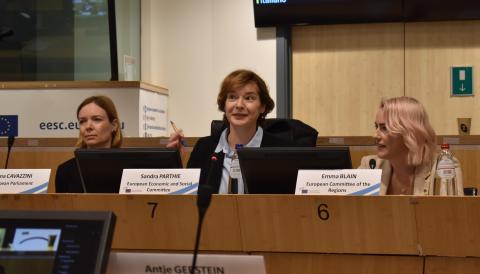
‘The single market is under pressure. We at the EESC hear the concerns directly from businesses, workers and civil society – the very people who should benefit fully from the single market, but still do not,’ said Antje Gerstein, President of the EESC’s Section for the Single Market, Production and Consumption.
‘There is no magic law that you can implement to create the single market. It is much more difficult and much more nitty-gritty. We have to take concrete examples of where things are not functioning,’ said Anna Cavazzini, chair of the Parliament’s IMCO Committee.
‘In the context of the next multiannual financial framework and future EU funding programmes, it should be recognised that cohesion policy and the single market are not competing priorities; rather, they are mutually reinforcing. One cannot succeed sustainably without the other,’ said Emma Blain, Dublin City Councillor and CoR member.
The panel on ‘Product safety and compliance: enhancing market surveillance for better products and consumer protection’ focused on unsafe or non-compliant products entering the EU market through online marketplaces, many originating from China. Panellists stressed that the current liability regime does not reflect digital commerce, undermining consumer confidence and causing significant financial losses.
The discussion on ‘Public procurement, sustainability and circular economy goals’ highlighted the need for simpler, faster and more accessible procurement rules, particularly for SMEs. Speakers noted that complex, price-driven procedures often deter small operators from bidding and can exclude citizen-led projects.
During the panel on ‘Building a smarter and simpler single market for the digital era’, speakers underlined the need for predictable rules, interoperable systems and practical support for SMEs. Businesses still face barriers linked to incompatible national systems, fragmented data rules and insufficient interoperability, while the question of more or less regulation remained open. (ll)
In a series of recent opinions, the European Economic and Social Committee has called for stronger EU action to modernise the rules underpinning the single market.
In a series of recent opinions, the European Economic and Social Committee has called for stronger EU action to modernise the rules underpinning the single market.
EUR 14 billion a year: the hidden cost of single market fragmentation
In its opinion on the Single market – tackling unjustified territorial supply constraints, the EESC urged the EU to crack down on territorial supply constraints (TSCs), which cost European consumers around EUR 14 billion annually, with identical products sometimes being sold at prices more than 100% higher in one Member State than in a neighbouring country.
'Ultimately, it is the European consumers who pay the price,' said rapporteur for the opinion Antje Gerstein. 'The EESC warns that allowing the single market to remain thus fragmented is unsustainable. As Mario Draghi has underlined, internal market fragmentation is even more damaging to the EU economy than external trade barriers.'
The TSCs are practices through which multinational manufacturers restrict where retailers and wholesalers can find and buy products within the EU, which results in higher prices, reduced product choice and distorted competition across the Member States.
The EESC is asking the Member States to avoid introducing new national barriers that further 'renationalise' sourcing markets and instead remove unjustified restrictions on cross-border trade.
A strategic rethink of European standards
Europe’s standards system must remain inclusive, transparent and firmly anchored in EU values, the EESC said in its opinion entitled Strategic standardisation for a stronger single market. This opinion is a proactive contribution ahead of the revision of the EU's standardisation framework announced by the European Commission.
European standards increasingly shape everything from industrial competitiveness and digital technologies to workplace organisation and consumer protection. In the EESC's view, the current system faces mounting challenges linked to geopolitical tensions, rapid technological development and the growing internationalisation of standards.
'Standards should support innovation, sustainability and high levels of protection for workers, consumers and the environment,' rapporteur for the opinion Angelo Pagliara said.
But small businesses, trade unions and civil society groups still struggle to participate effectively in standardisation processes due to financial and administrative barriers. To counter this, the EESC is calling for stronger support mechanisms, improved access and greater representation in technical committees.
Stronger enforcement for a changing market
The EESC is also calling for a major overhaul of EU market surveillance and enforcement systems in response to growing digital trade flows and the rise of AI-enabled products.
In its evaluation report entitled Evaluation of the Market Surveillance Regulation, the EESC has warned that EU rules designed to stop unsafe products from entering the single market are not keeping pace with the rapid growth of online shopping and direct imports from outside Europe.
The main problem is not the law itself, but weak and uneven enforcement across the Member States, the EESC said.
Online marketplaces and third-country sellers are a particular concern. Non-compliant products can be removed from websites after being flagged but often reappear quickly under new listings. This makes enforcement slow and reactive, while compliant European businesses face unfair competition from cheaper non-compliant goods. (ll)