
European Economic
and Social Committee
Public procurement: Europe must spend better, not more
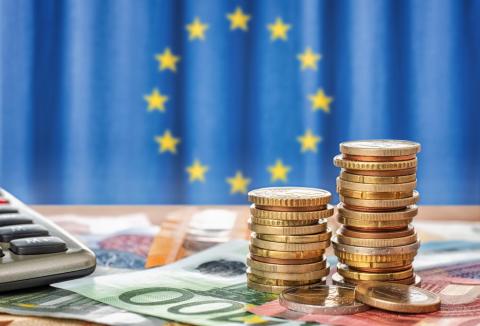
Public procurement is one of the EU’s most powerful yet underused economic instruments. Each year, governments and public authorities spend more than €2 trillion—around 14 % of EU GDP—on goods, works and services. These are taxpayer euros. How we spend them determines Europe’s competitiveness, innovation capacity and trust in the Single Market.
The reality is that procurement still falls short of its potential. According to the European Commission’s evaluation, SMEs secure 71 % of contracts by number and 55 % by value - still falling short of the economic weight of small businesses in Europe. The number of contract notices published on Tenders Electronic Daily rose by almost 70 %, and the overall value of procurement more than doubled. Yet competition remains limited, with a worrying number of tenders attracting only a single bid. This should concern all who believe in a functioning, competitive internal market.
Procurement must be treated as a strategic investment tool, not a bureaucratic exercise. When contracting authorities divide contracts into smaller lots, simplify qualification requirements and embrace full digitalisation, smaller firms can finally compete on merit. Even a modest one-percent gain in efficiency could free billions for better use elsewhere. But achieving this requires political will and a clear shift from form-filling to impact-driven decision-making.
The upcoming revision of EU procurement rules is therefore critical. We must preserve the principles that make the Single Sarket strong—transparency, equal treatment and genuine competition. Contracts must be awarded on the most economically advantageous basis, ensuring taxpayers’ money delivers the best balance of price, quality, sustainability and innovation.
Another urgent dimension is cross-border procurement. While indirect cross-border procurement—where companies participate through subsidiaries or joint ventures—accounts for around 20 % of total procurement, direct cross-border awards remain limited. If Europe is serious about its Single Market, this must change. Firms should be able to compete for contracts across borders on equal terms, without unnecessary legal or administrative barriers. That means better alignment in national interpretation, simpler access to information, and a renewed commitment to enforcement at EU level.
One area requires particular caution: in-house procurement. Allowing public authorities to award contracts directly to entities they control can make sense in limited cases. But when overused, it shuts the door to private suppliers—especially SMEs—undermining both efficiency and innovation. The in-house exception must remain what it was meant to be: an exception, not a shortcut around open markets. Europe should not use it to “fix” market failures by creating new distortions.
We must also resist turning procurement into a catch-all regulatory tool. The Commission’s evaluation found that while sustainability, social and innovation criteria are increasingly included, their uptake remains uneven and implementation complex. Overloading procurement with too many objectives risks deterring bidders and raising costs. In the end, that hurts competition and weakens trust.
The message is simple: simplify, professionalise, and focus. Reducing bureaucracy, standardising documentation and training buyers can make an immediate difference. Although digital tools have eased some burdens, the evaluation found that transaction costs per procedure actually rose. Simplification does not mean lowering standards—it means applying them intelligently so that every euro works harder. A more professional procurement culture is essential if Europe wants to deliver value consistently and transparently.
Public procurement is not just about buying. It is about building. When used well, it strengthens Europe’s industrial base, supports SMEs, drives innovation and delivers real value to citizens. The revision of the directives is an opportunity to shape a smarter, fairer system—one that restores confidence in how public money is spent and strengthens the foundations of the single market.
Europe does not need to spend more. It needs to spend better—on open, competitive, transparent and cross-border terms. That is how we build a stronger Single Market and a more resilient European economy.
Katrina Zarina, EESC Employers' Group member and member of the Study Group of Opinion INT/1092 Review of the European public procurement legal framework.
Recommended for you
The potential of Public Procurement for Social Economy enterprises
News
BackgroundIn his recent report on the single market, which was welcomed by the EESC, former Italian Prime Minister Enrico Letta called for acceleration of measures in the European Commission’s Social…
Public Procurement Act
Opinion
BackgroundIn the Commission’s 2024-2029 political guidelines, President von der Leyen announced a revision of the public procurement directives. This revision will enable preference to be given…
EESC: Circular Economy Act must make Europe more resilient, competitive and independent
News
During a plenary debate at the European Economic and Social Committee (EESC), the European Commission Executive Vice-President Teresa Ribera stressed the strategic importance of the Circular Economy…
Organised civil society must be at the heart of Europe's efforts to build a prosperous and more sustainable economy
News
Making the European economy more resilient and dynamic through growth while at the same time prioritising environmental protection are not mutually incompatible but essential to future-proofing the…
The future of housing in the EU must be greener and more inclusive
News
Reimagining the design of cities, communities and housing is essential to face the current challenges. Civil society organisations (CSOs) have a key role to play in steering this transformation.…