
European Economic
and Social Committee
COP17: EESC calls for stronger action to turn global biodiversity commitments into reality
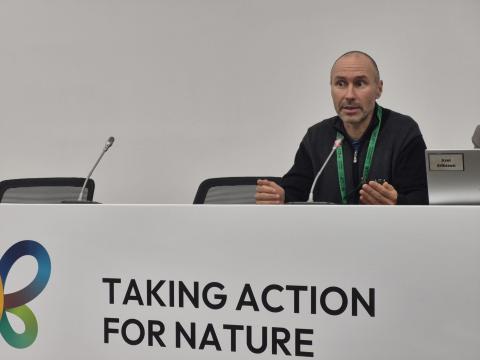
At the UN Biodiversity Conference in Yerevan, the European Economic and Social Committee (EESC) called for faster implementation of global biodiversity targets, stronger civil society participation and more effective financing to protect and restore nature.
The EESC participated in the 17th Conference of the Parties to the UN Convention on Biological Diversity (COP17), held in Yerevan, Armenia, from 19 to 30 October 2026. Represented by EESC member Arnaud Schwartz and EESC Youth Delegate Axel Eriksson, the Committee brought the perspectives of organised civil society and young people to international biodiversity discussions.
COP17 marked the first global review of collective progress in implementing the Kunming-Montreal Global Biodiversity Framework. The review confirmed that the world is not on track to meet its 2030 biodiversity targets. In response, Parties adopted the Yerevan Pathway, setting out priorities to accelerate implementation, address harmful subsidies, mobilise biodiversity financing and strengthen monitoring and accountability.
From commitments to action
The EESC stressed the need for stronger monitoring and accountability, more accessible biodiversity financing and the gradual elimination of subsidies harmful to nature. Redirecting public resources towards conservation, restoration and sustainable practices is essential to closing the biodiversity financing gap.
A central priority was strengthening the involvement of farmers, fishers and forest owners in international biodiversity governance. The EESC brought representatives of these groups together to encourage better coordination and more active participation through the Farmers' Major Group within the Convention on Biological Diversity.
Local action and youth engagement
On 26 October, the EESC and the European Committee of the Regions jointly organised a side event highlighting the role of local and regional authorities and civil society organisations in translating global biodiversity commitments into concrete action.
Axel Eriksson also contributed to discussions on the links between biodiversity, climate change and human health, highlighting the importance of youth participation in shaping sustainable solutions.
Protecting nature requires coherent policies
The EESC called for closer coordination between biodiversity and climate policies, emphasising that climate action must also support healthy ecosystems. Stronger cooperation between international environmental agreements and meaningful civil society involvement will be essential to achieving the 2030 targets.
As the world moves towards 2030, the EESC will continue to advocate for biodiversity policies that translate international commitments into measurable results, bringing grassroots expertise into decision-making and ensuring that local communities are part of the solution. (ks)
Work organisation
Recommended for you
Gender equality cannot wait: EESC calls for stronger action to turn commitments into results
News
Gender equality is not only a fundamental EU value, but also a driver of economic growth, competitiveness and democratic resilience, the European Economic and Social Committee (EESC) says in its…
The EESC at the UN Convention on Biological Diversity - COP17
Event
As in previous years, the European Economic and Social Committee (EESC) will actively participate in COP17 to the UN Convention on Biological Diversity (CBD), which will take place from 19 to 30…
COP28: President Röpke leads the EESC Delegation's call for a stronger role of civil society in climate action
News
Together with the delegation of EESC Members, President Röpke participated in this year's United Nations Framework Convention on Climate Change (COP28) for the global stocktaking of the progress made…
EESC PLENARY: After COP30 civil society urges renewed commitment to necessary global climate action
Article
<< Back to NewsletterAt its December plenary, the European Economic and Social Committee (EESC) held a debate on ‘Thirty COPs later and a decade after the Paris Agreement: assessing global…
EESC calls for a stronger European strategy to prevent wildfires
News
As wildfires become more frequent and destructive across Europe, the European Economic and Social Committee (EESC) is calling for prevention to become the cornerstone of EU wildfire policy…