
European Economic
and Social Committee
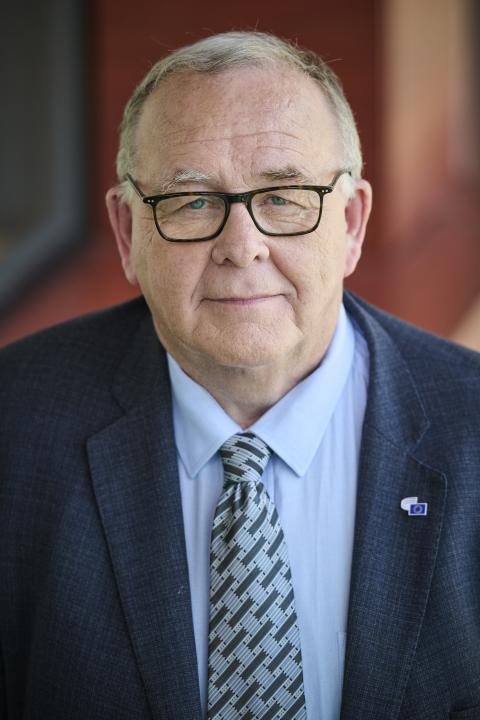
Dear readers,
I extend a warm welcome back to all of you. September always brings renewed energy and a fresh sense of purpose. While the challenges facing Europe have not diminished over the summer – indeed, arguably they have unfortunately intensified – neither has our collective determination to address them.
This month, attention across Europe was focused on the State of the Union delivered by European Commission President Ursula von der Leyen. In my response, I noted that the speech provided 'a realistic picture of the challenges Europe faces, while pointing towards a future in which our Union can be stronger, more resilient and autonomous.' The emphasis on competitiveness, completion of the single market, climate resilience and safeguarding democracy highlighted many priorities the EESC has consistently championed.
I particularly welcome the recognition that the green transition and Europe's preparedness for climate-related challenges must remain central to policymaking. At the same time, this transition must be socially fair, protect workers and provide the conditions for businesses to innovate, invest and compete.
The proposed European Water Initiative and climate resilience measures are positive steps in that direction. In this policy space, I was very pleased to launch the Water Resilience Stakeholder Platform a few days ago with Commissioner Jessika Roswall and the Committee of the Regions EPP Group Vice President Carlos Moedas. This is a key milestone in translating the EU's ambition on water into action.
Another important aspect of the State of the Union was the focus on young people and the digital environment. Protecting children online and supporting their emotional wellbeing are issues that deserve sustained attention. The Europe we build today is the Europe our children will inherit. Ensuring they can thrive safely in a rapidly changing digital world is therefore a shared responsibility.
President von der Leyen also spoke about Europe's economic security and the need to rebalance strategic dependencies, including in relation to China. This is a discussion that came up in the EU-China Round Table in Hangzhou on 14 September, where I led an EESC delegation. We engaged extensively with China's Economic and Social Council on topics including trade, artificial intelligence and poverty reduction. While differences remain, dialogue and people-to-people exchanges continue to be the most effective way to build mutual understanding and identify common interests. A more balanced EU-China relationship is essential, but civil society engagement must remain a key part of Europe's approach.
Looking ahead, I will travel to Montenegro next month to meet political leaders and, importantly, representatives of organised civil society, whose engagement is essential to a successful enlargement process. Enlargement remains one of the EU's greatest achievements, but it cannot be driven by institutions alone. Civil society must be at the heart of it.
The EESC also continues to work closely with the Irish Presidency of the Council of the EU, reflecting a shared commitment that EU policies remain connected to the realities experienced by citizens, workers and businesses. I had the opportunity to address and participate in the informal meetings of EU employment and social affairs ministers (EPSCO) in July and agriculture ministers (AGRI) in September, where discussions focused on social inclusion and the future of livestock in the EU respectively. This engagement will continue in the months ahead, on topics including housing, equality and competitiveness, and intergenerational poverty.
A key moment in our autumn calendar will be our conference on poverty in October. Despite Europe's progress, too many people continue to experience poverty, social exclusion and insecurity. Behind every statistic lies a human story, and these stories are what motivate me. As Europe debates competitiveness, strategic autonomy and technological transformation, we must not lose sight of the social dimension of our Union.
The conference will bring together policymakers, civil society organisations and stakeholders from across Europe to discuss practical solutions and reinforce our commitment to reducing poverty and exclusion.
As this new season of work gets underway, I remain optimistic about Europe's future. The challenges are significant, but so too is our capacity to respond when we work together. The EESC will continue to play its part by bringing the perspectives of organised civil society into the heart of European decision-making and by helping to build a Europe that is competitive, resilient, democratic and inclusive for all.
Séamus Boland
President of the European Economic and Social Committee