
European Economic
and Social Committee
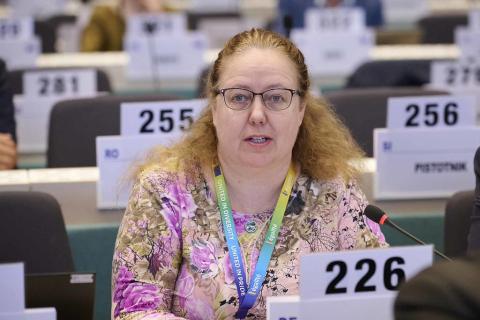
Gender equality is not only a fundamental EU value but also a driver of economic growth, competitiveness and democratic resilience, the European Economic and Social Committee (EESC) says in its opinion on the Gender Equality Strategy 2026-2030, adopted during its July plenary session.
The opinion welcomes the European Commission’s renewed commitment to advancing equality at a time of growing opposition to equality policies and fundamental rights. However, the EESC warns that the strategy’s success will depend on effective implementation, monitoring and measurable results across all Member States.
‘Europe has already made strong commitments to gender equality. The challenge now is to turn those commitments into action. Gender equality is not only a fundamental value - it is one of Europe’s greatest opportunities. It benefits everyone. When everyone has the opportunity to contribute according to their talents and potential, Europe becomes more competitive, more resilient and more democratic,’ says rapporteur Juliane Marie Neiiendam.
The EESC identifies uneven implementation as the main weakness of the previous strategy. It calls for clearer benchmarks, stronger monitoring and closer links between equality objectives and EU instruments, including the European Semester, funding programmes and rule of law monitoring. Gender equality should remain a horizontal principle in EU funding, with proportionate reporting requirements that avoid unnecessary burdens, particularly for SMEs.
Women’s economic independence is central to gender equality. Persistent gaps in employment, pay, career progression and pensions reflect structural inequalities, including the unequal distribution of care responsibilities. The Committee calls for stronger labour market participation, access to quality jobs and action against occupational segregation. It also urges full and effective implementation of the Pay Transparency Directive.
Affordable, high-quality care services, a fairer sharing of responsibilities and better conditions in the care sector are equally important. The proposed European Care Deal should therefore be developed in consultation with civil society and the social partners. Social dialogue and collective bargaining can also help create inclusive workplaces and fair working conditions.
Digitalisation and artificial intelligence offer significant opportunities, but can also reinforce discrimination through algorithmic bias and online harms. The EESC therefore calls for gender-sensitive digital policies and stronger safeguards against bias, online violence, deepfakes and disinformation, alongside support for education systems to tackle discrimination and stereotypes. It also stresses the need for effective action against gender-based violence and greater participation of women in political, economic and public life, arguing that gender equality is essential to Europe's democracy, competitiveness and resilience.(lm)