
European Economic
and Social Committee
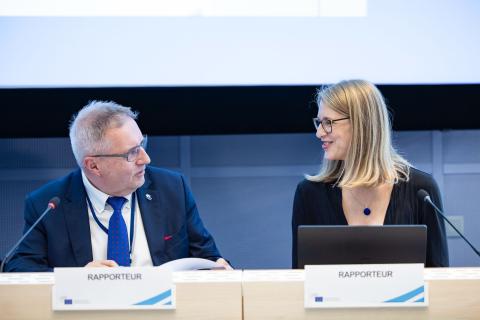
At its July 2025 plenary, the EESC adopted a landmark opinion urging the European Commission to develop a robust, rights-based EU Anti-Poverty Strategy. Poverty is framed not as an economic by-product but as a systemic injustice and a violation of fundamental rights.
The strategy calls for a multidimensional approach – addressing not only material deprivation but also social, psychological and gender-based inequalities. It proposes ambitious targets, including halving poverty by 2030 and improving measurement tools like AROPE and EU-SILC.
‘21% of people living in the richest part of the world are experiencing poverty: this is extremely unjust and a serious blow to human dignity. The aim of the EU Anti-Poverty Strategy should therefore be the eradication of poverty – here and now!’, said rapporteur Krzysztof Balon.
‘National governments need to finally take responsibility and step up measures to tackle poverty. Work should provide a solid foundation, which is why we call for active labour market policies, quality jobs and living wages. At the same time, access to services of general interest – such as water, electricity, housing and healthcare – should be guaranteed,’ co-rapporteur Sophia Reisecker stated.
The EESC supports full implementation of the Council Recommendation on Adequate Minimum Income and urges action on non-take-up of benefits due to administrative and digital barriers.
The opinion highlights growing in-work poverty and calls for fair wages, secure contracts and inclusive labour market policies. It also advocates lifelong learning and equal opportunities amid green and digital transitions.
Universal access to services is key, with support for the European Child Guarantee and an EU homelessness strategy. The EESC warns against digital exclusion and energy poverty, calling for inclusive national plans.
Intersectional vulnerabilities – linked to gender, migration, disability and age – require better data and anti-discrimination safeguards. The Committee opposes criminalising poverty and calls for equal access to justice.
To ensure impact, the EESC proposes appointing an EU Anti-Poverty Coordinator, aligning funding with progressive taxation and involving affected communities in policy-making.
With over 93 million EU citizens at risk, the EESC calls for bold, coordinated action to build a fairer, more inclusive Europe. (lm)