
European Economic
and Social Committee
The 2026 European Semester is a turning point. If the EU wants to be able to respond to new global challenges, it needs to completely redefine its economic strategy and overturn its chronic lack of investment, which undermines productivity, innovation and its strategic sovereignty.
With its opinion 2026 European Semester – Autumn Package, drawn up by Luca Jahier and adopted at the February plenary session, the EESC takes a firm stand and is ready to fully support a European Semester which is worthy of common ambitions.
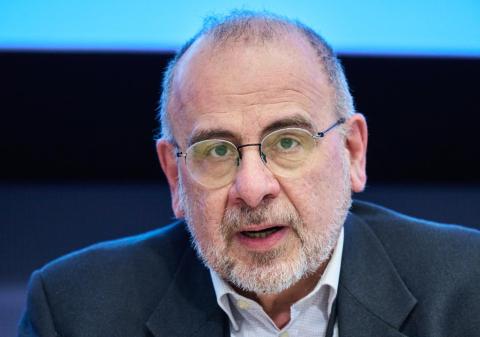
‘Europe cannot compete, innovate or protect its citizens without more investment’, said Mr Jahier, rapporteur for the EESC opinion. ‘Environmental, technological and demographic challenges are all interconnected and require a comprehensive and robust response’.
In the EESC’s view, the EU must offer a united response to the multiple challenges that it is currently facing, such as geopolitical instability, the climate crisis, the technological and digital gap and the demographic challenge.
More specifically, the Union must be ambitious and focus on competitiveness, resilience and social and territorial cohesion, all feeding into each other and working towards European sovereign sustainability.
To this end, in order to improve the 2026 European Semester Autumn Package, the Committee puts forward a set of 18 solid recommendations which can be summed up in five key political priorities: large-scale investments, integrated capital markets, strengthened economic and social governance, human capital as strategic infrastructure, and European cooperation on defence. (mp)