
European Economic
and Social Committee
After four years of war, the strategy of Ukraine’s allies has failed – but Russia is a house built on sand. As the fifth year gets under way, and solidarity among allies is beginning to crumble, Ukraine’s only realistic path may lie along the current frontline. But for that to happen, we must recognise that we are not helpless – our societies need to wake up. We must not cave in to Russian propaganda and say that this is not our war. An analysis by Polish journalist and writer Michał Olszewski.
Every day at 9 a.m., a ritual is repeated across Ukraine: from loudspeakers you can hear a clock strike, passers-by stop, men take off their hats. This is a minute of silence in honour of those killed in the war against Russia. The whole of Ukraine stops for a moment, before going back to fighting heroically again. People go to work, learning takes place face-to-face, children are taken to school, superhuman forces repair Russian-bombed power plants, the dead are taken to the cemetery.
The fifth year of the war begins. A black and white war, a war of good defending itself against evil, an unequal war, a martyr’s war. The idea that the world has not supported Ukraine during this time is not true – it has supported it, helping the country to keep going and defend itself against barbarism.
In Kyiv a legitimately elected president is in charge, not a governor from Moscow. At the same time, Ukraine is a victim of the unwritten doctrine of allied states: they provide support while also doing a lot to ensure that Russia is not defeated. Since the war broke out, Kyiv has resembled a boxer coming to the ring with one hand tied behind his back. A country fighting a heroic war of defence was not allowed to use Western arms to attack Russian targets far from the front. Russia bombed Lviv and struck areas bordering Romania and Poland, but Ukrainians were unable to respond in kind. In 2024, when US politicians were discussing aid for Ukraine, part of the country was left without air defences, with bombs, rockets and drones raining down on Ukrainian cities unimpeded. It was at that time that the Russian offensive gained momentum.
Each allied country has pursued its own interests with Russia through intermediaries. Even if these are on a much smaller scale than before 2022, they allow the Russian economy to keep going. Belgium is against using frozen Russian assets, Denmark has not closed the Øresund strait to Russian vessels, Greece has not closed its ports to the shadow fleet, and so on. Donald Trump coming to power in the US, with his absurd and inexplicable penchant for the Russian dictator, has only made Kyiv’s situation worse. After all, the US has shown no desire to use the tools that it has to stifle the Russian economy and strengthen Ukraine’s army. Instead, they have presented Ukraine with a steep bill for the aid provided so far. Adding to this complex picture are Russia’s allies in the European Union, China, which is the big winner of the past four years, and India and Türkiye – trading countries making huge profits from Russia, although officially they have distanced themselves from its criminal activities.
After four years of war, it is clear that the strategy of Ukraine’s allies has failed, but it is also clear that Russia is a house built on sand. After four years of war, one of the world’s biggest armies has been unable to defeat Ukraine.
From this perspective, Volodymyr Zelenskyy’s embittered speech in Davos should come as no surprise. A carefully staged gesture revealed a level of disappointment not seen since the start of the war. The Ukrainian delegation could see how the war with Russia was receding into the background, sidelined by the absurd displays of Donald Trump and the issue of Greenland. So only a strong intervention could bring the attention of politicians and financiers back to Ukraine, if only for a moment. Yes, Zelenskyy, lambasting Europe while treading ever so carefully with Trump, who does not want Ukraine to use Tomahawks, has behaved unfairly. But it is difficult to say he was wrong when he asked 'if Putin attacks Lithuania or Poland, who will respond?' We still believe that NATO will step in if that happens, that it will respond. But what if it doesn’t?
As the fifth year of war gets under way, it is clear that Ukraine is exhausted. Russia does not want to end the war, solidarity among allies is crumbling, and Donald Trump is more sympathetic to a criminal than to the president of a country defending itself against invasion. The only possible success for Ukraine would be to end the war along the current frontline. Even if this success were short-lived, after which Russia would move westwards once again, it would give Kyiv time to catch its breath.
How can we achieve this? Are we helpless? Nothing of the sort. The European Union is opening a new chapter with India. The US raid on Venezuela is changing the structure of the oil business and may cut into Russia’s profits, as might the fall of the regime in Iran.
However, this means that societies need to wake up. Nothing irritates me more than war fatigue among allies. People living in allied countries can sleep soundly in warm homes, they have electricity, gas and oil, and they do not need to install apps to warn them of impending strikes and seek the nearest shelter.
There is no going back to those memorable days in early 2022 when Europe opened its hearts and doors to refugees. There is no need because we are in a different place. What is important is that we do not get used to the war, that we do not just accept things as they are. That we do not toe the line of Russian propaganda and say ‘it is not our war’.
And that we do not forget that every day at 9 a.m., across all cities and villages in Ukraine, clocks strike, marking a minute of silence in honour of the victims of the war against Russia’s barbarism.
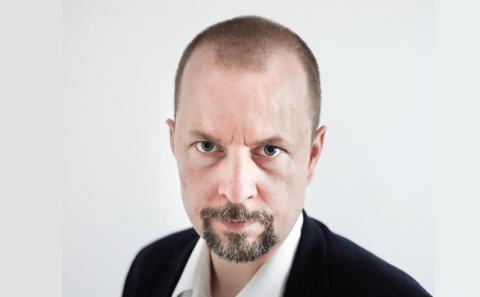
Michał Olszewski is the head of foreign affairs at the Polish newspaper Gazeta Wyborcza, writer and author. His publications include 'Ptaki krzyczą nieustannie', '#Upał' and 'Najlepszych butów na świecie'. He is involved in providing material assistance to Ukraine.