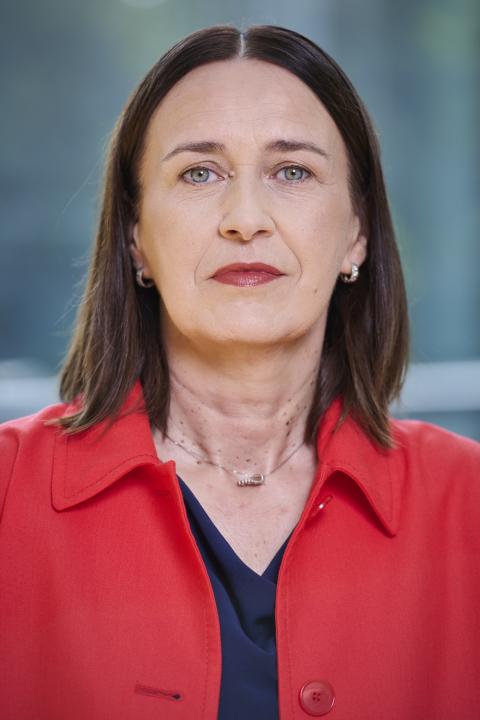
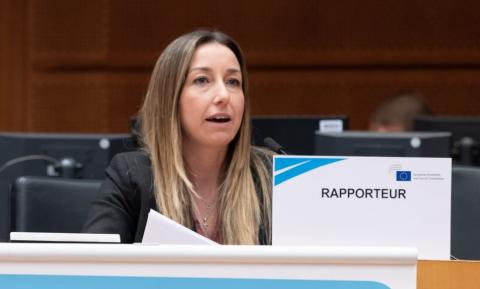
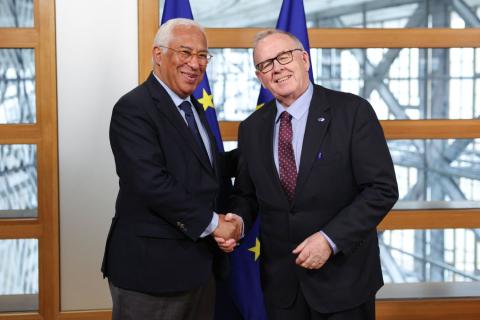
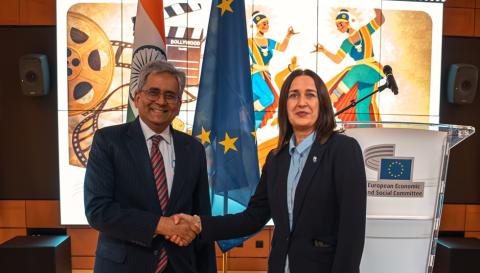
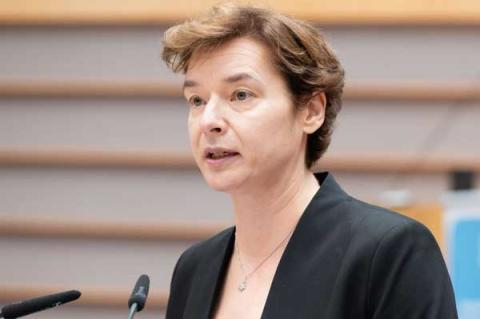
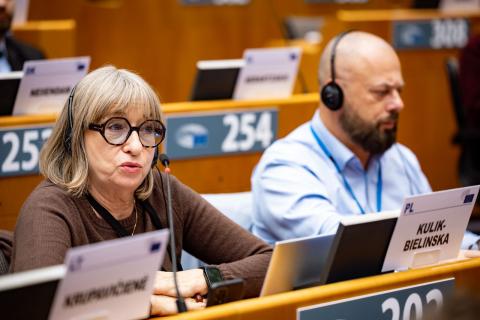
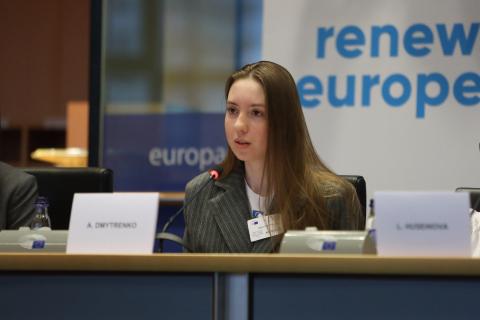
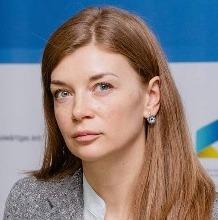
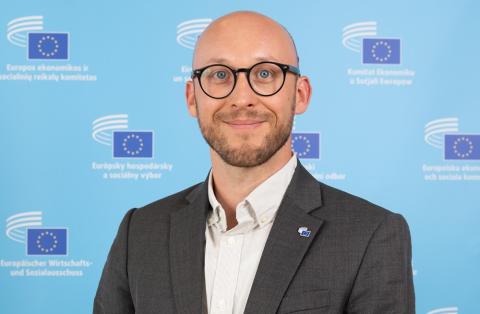
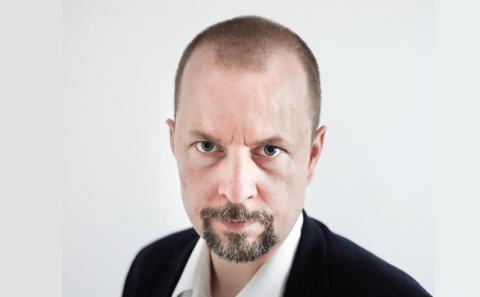
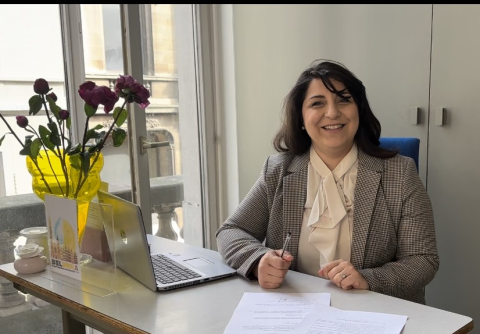
The European Economic and Social Committee’s enlargement candidate members (ECMs) initiative, launched in 2023, is the first EU‑level initiative to directly involve civil society representatives from EU candidate countries in the EU decision‑making process. Four civil society representatives from Ukraine – Yulia Goncharova, Yuriy Stepanets, Kateryna Glazkova and Olesia Briazgunova – share what the ECM initiative has meant for them and how it can support Ukraine’s civil society on the country’s path towards EU membership.
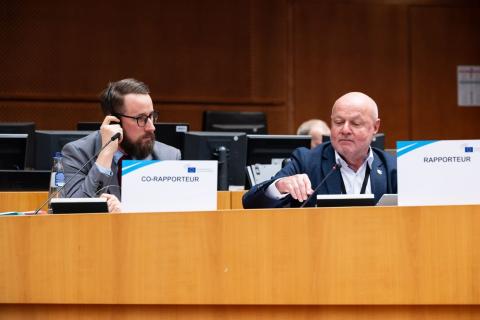
In September 2023 the EESC introduced an initiative to involve representatives from the civil society of EU candidate countries in the Committee’s advisory work by appointing ECMs. The project brought the EESC to the forefront of the EU landscape as it became the first institution to open its doors to candidate countries, facilitating their progressive and concrete integration into the EU. Representatives from 10 candidate countries help prepare EESC opinions and participate in plenary sessions that focus on enlargement.
Between 2024 and 2025, ECMs contributed to 21 EESC opinions across key policy areas, including European defence, cohesion policy, the single market and the agri-food sector. The initiative’s early success led to additional Commission funding to boost and permanently embed the project.
An evaluation report assessed the pilot phase of the ECM initiative, examining its implementation, stakeholder feedback and its political and practical impact. It highlights strong support for the initiative’s continuation, clear added value for EU policymaking, and increased visibility.
Three opinions were adopted with the contribution of civil society representatives from Ukraine:
We talked to four civil society representatives from Ukraine – Yulia Gonchareva, Yuriy Stepanets, Kateryna Glazkova and Olesia Briazgunova – about what participating in the ECM initiative has meant for them and how it can benefit Ukraine’s civil society and their country’s prospects of joining the EU.
What does the ECM initiative mean to you?
Ms Gonchareva, Federation of Employers of Ukraine: The ECM initiative represents an important platform for cooperation and stronger institutions. It serves as a bridge between social partners and civil society representatives from EU candidate countries and EU Member States, fostering constructive dialogue on shared challenges and promoting EU principles, values and best practices in candidate countries.
The initiative provides a structured framework where experience, innovation and expert knowledge in the field of social dialogue can be brought together, helping identify practical solutions to issues of critical importance for all stakeholders involved.
Furthermore, the ECM initiative facilitates a deeper and more comprehensive understanding of candidate countries, while overcoming stereotypes and building mutual trust. It helps identify complementary strengths and areas for greater cooperation, thereby supporting gradual alignment with EU standards and requirements and contributing to the broader EU integration process.
Mr Stepanets, Association of Ukrainian Civic Initiatives: For me, the ECM initiative includes two very important aspects. First, it means being heard. It gives me the opportunity to represent the voice of Ukrainian civil society organisations in discussions that directly concern the future of Ukraine. I represent regional and local NGOs that work very closely with communities. They are deeply connected to local people, but they often have little access to political decision-makers – both in Ukraine and at EU level.
For many years, local and regional organisations were almost completely excluded from important discussions about our country’s present and future. The ECM initiative gives me the opportunity to speak on behalf of hundreds of Ukrainian organisations that support communities every day and help Ukraine stay strong during the war. In many areas, NGOs are the only players who can speak openly about citizens’ real needs. It is therefore very important that these voices not be lost.
Second, the ECM initiative gives us the opportunity to observe and learn. We can see how EU mechanisms for dialogue and decision-making work in practice. This experience helps us prepare for the moment when Ukrainian representatives will become full members of the EESC and other European institutions.
Ms Glazkova, Union of Ukrainian Entrepreneurs (SUP): For the Union of Ukrainian Entrepreneurs, which represents more than 1 300 businesses from across Ukraine, participation in the EESC’s ECM initiative is strategically important.
The ECM initiative is not merely a platform for dialogue. It is a structured pre-accession scheme that allows representatives of organised civil society from candidate countries to engage directly in the EU’s advisory processes. Through participation in section meetings and plenary sessions, Ukrainian representatives can follow and contribute to the preparation of EESC opinions at an early stage.
For Ukrainian businesses, this means practical integration into the EU policy environment even before formal EU membership. The initiative provides exposure to legislative discussions, regulatory priorities and policy debates that shape the EU single market. It also creates a space where employers’ organisations, trade unions and other organised civil society players from Ukraine can engage on an equal footing with their EU counterparts.
In this sense, the ECM initiative serves as a bridge between candidate countries and the EU institutions, strengthening institutional alignment and mutual understanding.
Ms Briazgunova, Confederation of Free Trade Unions of Ukraine (KVPU): For me, this initiative was a great opportunity to learn how the Committee works and to better understand how trade unions can engage in this area in the future. It was a new and valuable experience that I will definitely use in my professional work. I greatly appreciate the opportunity to not only listen to debates, but also take part and represent the position of the KVPU.
In your opinion, how can your participation in the ECM initiative benefit Ukraine’s civil society and support your country’s aspiration to join the EU?
Ms Goncharova: Participation in the ECM initiative can benefit Ukrainian civil society in several important ways:
It can boost institutional capacity and expertise. Engagement with EU partners allows Ukrainian organisations to develop best practices from European employers’ organisations, improve their advocacy skills and align their activities with EU standards and regulatory frameworks.
It increases involvement in European integration processes. Active participation helps civil society contribute to policymaking, ensure public oversight of reforms and support the effective implementation of the EU acquis in Ukraine.
It expands international networks and partnerships. The ECM initiative provides opportunities to establish strategic partnerships, joint projects and experience-sharing, thereby increasing Ukrainian organisations’ capacity to operate effectively at both national and European level.
It builds trust and alignment with EU values. Participation demonstrates commitment to the principles of social dialogue, the rule of law, transparency and democratic governance – an important signal in the context of EU accession negotiations and Ukraine’s ongoing development as a democratic and socially inclusive state.
It involves cooperation to preserve and advance sustainable development goals in Ukraine. Russia’s war against sovereign Ukraine is undermining key and fundamental sustainable development goals necessary for normal life. Every day, Ukrainians fight for access to heat, electricity and water. Russia’s large-scale attacks are destroying companies, hospitals, schools and key infrastructure. In our view, providing European colleagues with information about these events reinforces their determination to maintain EU support for Ukraine. Only together can we defeat the aggressor!
Mr Stepanets: For me, the ECM initiative is a practical model that shows how structured civil society can work effectively. It is both an inspiration and an example of what kind of structures we need to build in Ukraine so that civil society can make a constructive contribution to the future of our country and to the European Union.
After seeing the benefits of structured civil society in practice, I am personally working to help develop similar structures in Ukraine. We need a platform similar to the EESC that allows open debate, structured dialogue and representation of civil society, based on clear democratic principles and participation.
This is especially important now. Since Ukraine cannot hold elections during wartime, we rely more on participatory democracy. For this to work properly and include different voices, we need strong and well-organised civil society structures. In the future, these structures should also be connected to EU processes.
Another important aspect is responsibility. I believe that Ukrainian civil society shares responsibility with the Ukrainian government in the EU accession process. We must help represent the needs of citizens, economic sectors, cultural communities and vulnerable groups. As we follow accession negotiations, we can already see that some social groups and sectors are not sufficiently included.
It is our duty to represent these voices in discussions about Ukraine’s future EU membership. In the end, it will not only be the Ukrainian government that joins the European Union, it will be every Ukrainian citizen. This is why we must share responsibility for both negotiations and the integration process.
Ms Glazkova: Participation in the ECM initiative boosts the institutional capacity and policy competence of Ukrainian organised civil society. By engaging in EESC procedures, Ukrainian stakeholders are gaining first-hand experience in structured social dialogue, consensus-building and advisory policymaking at EU level.
For the business community, this engagement is particularly valuable. It enables early understanding of regulatory developments related to the EU single market, sustainability standards, climate policy tools such as the carbon border adjustment mechanism, industrial policy initiatives and the implementation of the Ukraine Facility. Such early exposure allows Ukrainian companies to anticipate regulatory changes, adapt proactively and align with the EU acquis in view of Ukraine becoming a member.
At the same time, ECM participation enhances credibility and trust. The active and constructive involvement of Ukrainian employers’ organisations and other civil society players demonstrates institutional readiness and reinforces confidence in Ukraine’s EU trajectory.
Importantly, the ECM framework also ensures that the voice of Ukrainian business is reflected in European discussions on reconstruction, economic resilience and future integration into EU value chains. This two-way engagement strengthens both Ukraine’s reform process and the EU’s understanding of Ukraine’s economic realities.
Ms Briazgunova: In my opinion, participation in the ECM initiative is highly beneficial for civil society organisations, including the trade unions I represent. It provides a deeper understanding of the EESC’s work across its various sections.
We believe that Ukraine will become a member of the EU in the near future, which is why it is important for us to be prepared to work within the European institutions and effectively represent workers and their interests.
Due to the challenges caused by the war, it was not always easy to attend meetings in person, but I was able to participate in several online sessions. I would also like to express my sincere thanks to the ECM project team for their support and assistance.