
European Economic
and Social Committee
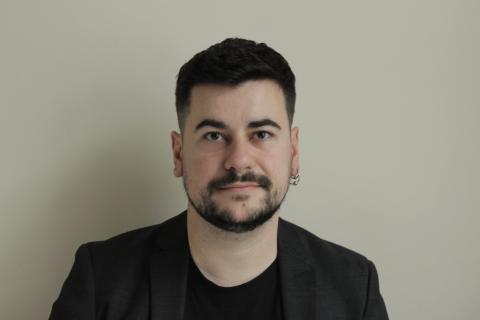
By Davide Rambaldi, Eurochild
It is not easy to talk about rights these days. Attention is elsewhere, and the news often feels more like an emotional burden than a way of staying informed. While millions go into military technologies, borders are tightened, aid is cut, and activists are being labelled foreign agents, our democracies quietly weaken from within. Divide and Conquer, the Romans said, and that still holds true today.
In recent years, I have seen anti-rights movements increasingly target civil society, and even children, while public funding for NGOs declines. The tactics vary – from smear and disinformation campaigns to direct threats against human rights defenders and independent journalists – but the consequences are the same: fear, repression of protests and growing public disengagement. How can people remain active when many no longer feel protected or represented?
I know I am privileged to live in the EU, where strong laws and welfare have protected me as of my childhood. Yet too many children and families still face poverty, exclusion and discrimination. Unequal Childhoods: Rights on paper should be rights in practice – Eurochild’s 2025 flagship report – shows this clearly through insights from 84 members across 36 countries.
Its findings confirm that children need stronger protection and consistent support to stay safe and grow up with their families. Investing in early childhood education and care, early intervention, safer digital spaces, adequate housing, reliable income and access to key services remains essential to breaking the cycle of poverty.
This is even more urgent in today’s climate of ‘us’ versus ‘them’, where people in migration and asylum procedures are amongst the most at risk. When unaccompanied children arrive in the EU, they rely on a guardian to be able to receive care and navigate complex systems. Both the 2013 EU Reception Conditions Directive and the 2024 EU Asylum Procedures Regulation set out standards and procedures. However, this may work on paper, but child protection systems differ from country to country. There is also a lack of data and budget, and many Member States rely on NGOs to perform these tasks: some are volunteers, others are paid and trained professionals.
The situation is already difficult as it is, without counting the violence, trauma and war these children may have faced before even reaching Europe. If children have disabilities or come from institutions (for example, orphanages), they are even more at risk, and they need to receive tailored support.
Imagine being a child arriving alone in a foreign place, facing bureaucratic obstacles while carrying emotional scars. Guardians who are here to help them are meant to be their safety net, yet many feel overburdened and insufficiently supported by authorities. This is what a guardian told me during an interview I filmed to better understand their experiences.
To respond to these needs, Eurochild, EASPD (European Association of Service Providers for Persons with Disabilities) and their partners have launched the GUIDE project. It supports guardians and professionals working with unaccompanied and separated children arriving in the EU, including those from Ukraine and evacuated from institutions, with a special focus on children with disabilities or developmental risks. The initiative provides workshops, listening circles, training manuals and other tools. It is being carried out in five countries: Bulgaria, Greece, Slovakia, Italy and Poland.
Short-sighted politics driven by slogans will cost us dearly. The Romans should have said, ‘divide now and pay later’. It is time to recognise that unless we choose solidarity, evidence and humanity, the challenges others face today will inevitably reach us too.
Davide Rambaldi is a communications professional with more than a decade of experience, known for bringing creativity to both his professional work and personal projects. As a musician going by the name Northern Lighthouse, he has performed across Europe, Asia and America. He serves as Communications Coordinator at Eurochild, Europe’s largest network of organisations and individuals working with and for children.