Newsletter Info

EESC info

European Economic and Social Committee A bridge between Europe and organised civil society

DECEMBER 2025 | EN

GENERATE NEWSLETTER PDF

Available Languages:

  • EN

For other languages, please click on the title of each article. Translation is provided by the European Commission's eTranslation service.

Editorial
GOODBYE 2025! NEXT YEAR, WE’RE CONTINUING AT FULL SPEED

Editorial

 As we reach the close of 2025, I feel privileged to write this final editorial. Year ends are a perfect opportunity to pause for a moment and reflect on what we have achieved together. I am not alone in believing that, for our Committee, this has been an exceptional year shaped by determination, dialogue and a deep commitment to the people of Europe.

Read more in all languages

Goodbye 2025! Next year, we’re continuing at full speed

Dear readers,

I am humbled and happy to address you for the first time since stepping into my role as vice-president for communication. As we reach the close of 2025, I also feel privileged to write this final editorial. Year ends are a perfect opportunity to pause for a moment and reflect on what we have achieved together. I am not alone in believing that, for our Committee, this has been an exceptional year shaped by determination, dialogue and a deep commitment to the people of Europe.

In 2025, in our opinions and events, we focused on issues that touch everyday lives: affordable housing, EU enlargement, the cost of living and many other topics. These are not distant policy debates — they are the concerns people talk about at their kitchen tables, on the way to work, or while trying to plan for the future. And they have guided much of our work.

This autumn also marked a new chapter for us. With our new leadership we set out a clear direction: civil society should sit at the heart of Europe’s decisions. Our new president has brought fresh energy, with a strong emphasis on fighting poverty and ensuring that no one is left behind. It is a reminder of why our Committee exists: to bring the voices of people, organisations and communities directly into EU policymaking.

End-of-year editorials are also a perfect opportunity to reflect on what still lies ahead — and I can already tell you we’re not slowing down. Next year, we will continue to work at full speed, making sure that the concerns of Europe’s citizens — social fairness, economic inclusion, democratic participation and sustainability — remain front and centre.

I am also happy to share that two of our flagship events will be back in 2026.

From 2 to 5 March 2026, we will hold our third Civil Society Week. The 2026 edition is entitled ‘People, Democracy, Resilience – Our Future!’ We will bring together civil society representatives from all over Europe to talk, exchange ideas and work together on solutions. It is a place where challenges are acknowledged and where hope and creativity often take over.

Then, on 19 and 20 March 2026, we welcome young people to Brussels for our top youth event, Your Europe, Your Say! (YEYS), under the theme ‘Giving Youth a Voice’. Taking place since 2010, it has already become the hallmark of the EESC, and it is truly special: this year it will bring together 137 students, teachers and young adults for two days of real, hands-on participation. They meet each other face-to-face, debate the issues that matter to them, and turn their ideas into recommendations that feed directly into our work and the work of the EU institutions. Watching young Europeans step into democratic life with such passion is one of the highlights of our year.

Looking back, one thing is clear: Europe is stronger when people are heard. And looking ahead, we want to make that space even wider. As we move into a new year, our Committee will remain a place where people’s voices shape policy, where different perspectives are welcomed, and where resilience is built together, step by step.

I hope you will enjoy reading the final issue of our newsletter this year. As well as bringing you news about the EESC, we are shining a spotlight on housing — a topic that has shaped so much of our work this year. To do it justice, we give the floor to those who know it best — the policy makers, experts, advocates and practitioners working on the ground. Their insights remind us of the real impact policies have on people’s daily lives.

Thank you for reading, for engaging and for being part of this community. We look forward to continuing the journey with you in the year ahead.

Marija Hanževački

EESC vice-president for communication

Diary Dates

2-4 December 2025

11th Joint Events of the EU DAG and representatives from the domestic mechanisms of Colombia, Peru and Ecuador, and Civil Society Public Session

16 January 2026

Strengthening cohesion and connectivity: Policy solutions for EU islands

21-22 January 2026

EESC plenary session

ONE QUESTION TO THE EESC YOUTH DELEGATE TO COP 30

Samira Ben Ali is the EESC’s Youth Delegate to COP for 2025 and 2026. We asked her what she had hoped for the annual UN climate summit. If she could sum up the message delivered by Europe’s civil society in Belém in one sentence, what would it be?

Read more in all languages

Samira Ben Ali is the EESC’s Youth Delegate to COP for 2025 and 2026. We asked her what she had hoped for the annual UN climate summit. If she could sum up the message delivered by Europe’s civil society in Belém in one sentence, what would it be?

OUR MESSAGE TO COP30: BE AMBITIOUS!

By Samira Ben Ali

I would have personally liked to have seen all the nationally determined contributions (NDCs) from the countries committed under the Paris Agreement by the end of this COP in Brazil, and for all these NDCs to tell us that by the end, we will have managed to stay below 1.5 degrees.

Read more in all languages

By Samira Ben Ali

I would have personally liked to have seen all the nationally determined contributions (NDCs) from the countries committed under the Paris Agreement by the end of this COP in Brazil, and for all these NDCs to tell us that by the end, we will have managed to stay below 1.5 degrees.

Another thing I would really have loved to see (especially because we went to Brazil), is for human rights to be included in all negotiation tracks as proof that this concept is truly integrated – and not only human rights, but also specifically the rights of indigenous people.

As for the message from civil society to COP 30 summarised in one single sentence, I can express it in two words: be ambitious!

ONE QUESTION TO…

Held on the tenth anniversary of the Paris Agreement, COP30 closed with a deal to triple the funding that helps vulnerable countries cope with climate impacts such as floods and heatwaves, but it failed to secure a commitment to phase out fossil fuels. Countries also endorsed a ‘Just Transition Mechanism’ to support fair and equitable shifts to a green economy, though no dedicated funding was attached. We asked Stoyan Tchoukanov, head of the EESC delegation to COP30, about the message the house of EU’s organised civil society delivered in Belém – and about its engagement at COP16 of the UN Convention on Biological Diversity.

Read more in all languages

Held on the tenth anniversary of the Paris Agreement, COP30 closed with a deal to triple the funding that helps vulnerable countries cope with climate impacts such as floods and heatwaves, but it failed to secure a commitment to phase out fossil fuels. Countries also endorsed a ‘Just Transition Mechanism’ to support fair and equitable shifts to a green economy, though no dedicated funding was attached. We asked Stoyan Tchoukanov, head of the EESC delegation to COP30, about the message the house of EU’s organised civil society delivered in Belém – and about its engagement at COP16 of the UN Convention on Biological Diversity.

IT'S HIGH TIME WE TURNED WORDS INTO REAL PROGRESS

By Stoyan Tchoukanov

The fact that COP30 took place in the Amazon, the world’s largest and most vital ecosystem, is symbolically powerful. The Amazon breathes for the planet; its destruction suffocates us all. Hosting the conference there was both a recognition of the forest’s role in global climate stability, and a reminder of the stark reality we face: healthy ecosystems are not a luxury, but the foundation of our survival.

Read more in all languages

By Stoyan Tchoukanov

The fact that COP30 took place in the Amazon, the world’s largest and most vital ecosystem, is symbolically powerful. The Amazon breathes for the planet; its destruction suffocates us all. Hosting the conference there was both a recognition of the forest’s role in global climate stability, and a reminder of the stark reality we face: healthy ecosystems are not a luxury, but the foundation of our survival.

At COP30, we put strong emphasis on implementation, on turning words into real progress. The EU did not go to COP30 empty-handed. The updated Nationally Determined Contributions (NDC), agreed on 5 November, reiterate the EU’s goal of achieving a 55% net reduction in greenhouse gas emissions by 2030. Based on this target, the NDC sets out an indicative reduction of between 66.25% and 72.5% by 2035, with the aim of achieving carbon neutrality by 2050.

The EESC, represented in the EU delegation, continued to push for science-based action and a just transition. For years, we have argued that social justice and climate justice are inseparable. The shift to a carbon-neutral world must empower communities, not marginalise them.

Climate action cannot succeed in isolation from nature. The EESC also contributed to the UN Biodiversity Conference of the Parties (COP16), calling for biodiversity to be placed at the forefront of global efforts. Biodiversity is not just about protecting wildlife; it sustains the ecosystems that provide food, water, jobs and stability. Without it, our economies crumble.

This is why the EESC advocates an integrated approach linking climate, agriculture, trade and energy, to ensure that environmental, social and economic goals advance together.

The connection between climate, nature and human well-being lies at the heart of what we call the One Health approach. It recognises that human, animal and environmental health are inseparable. As ecosystems decline, their ability to buffer disease and support livelihoods weakens. Restoring biodiversity and ecosystem health is therefore not just an environmental priority – it is essential to public health and long-term prosperity.

In that same spirit, the EESC sees regenerative agriculture as a cornerstone of this transformation. We see it as an opportunity to define a new positive narrative for European agriculture, one that is focused on what we are for: healthy soils, strong rural communities and sustainable food systems.

Regenerative agriculture is about outcomes, not ideology; it is about measurable improvements in soil health, carbon storage and rural well-being. The EESC calls for a common, results-based definition and urges the EU to recognise soil as a public good. We must equip farmers with the tools, incentives and knowledge to adopt regenerative practices and ensure they are fairly rewarded for the environmental services they provide.

But time is running out. Extreme weather, food insecurity and displacement are already here. Every delay will carry a human cost.

You can read about the EESC's conclusions about COP30 here,


THE SURPRISE GUEST

On 20 November, World Children’s Day, we celebrated the rights of all children. Yet far too many still lack the safe and happy childhoods they deserve. Many grow up in poverty or carry deep emotional and physical scars from war. In this article, our surprise guest, Davide Rambaldi, Communications Coordinator at Eurochild, reflects on these unequal childhoods and introduces GUIDE — a project carried out by his organisation, supporting guardians of unaccompanied children fleeing conflict and hardship.

Read more in all languages

On 20 November, World Children’s Day, we celebrated the rights of all children. Yet far too many still lack the safe and happy childhoods they deserve. Many grow up in poverty or carry deep emotional and physical scars from war. In this article, our surprise guest, Davide Rambaldi, Communications Coordinator at Eurochild, reflects on these unequal childhoods and introduces GUIDE — a project carried out by his organisation, supporting guardians of unaccompanied children fleeing conflict and hardship.


Davide Rambaldi is a communications professional with more than a decade of experience, known for bringing creativity to both his professional work and personal projects. As a musician going by the name Northern Lighthouse, he has performed across Europe, Asia and America. He serves as Communications Coordinator at Eurochild, Europe’s largest network of organisations and individuals working with and for children.

IMAGINE BEING A CHILD IN A FOREIGN PLACE, SCARED AND ALONE

By Davide Rambaldi, Eurochild

It is not easy to talk about rights these days. Attention is elsewhere, and the news often feels more like an emotional burden than a way of staying informed. While millions go into military technologies, borders are tightened, aid is cut, and activists are being labelled foreign agents and our democracies quietly weaken from within. Divide and Conquer, the Romans said, and that still holds true today.

Read more in all languages

By Davide Rambaldi, Eurochild

It is not easy to talk about rights these days. Attention is elsewhere, and the news often feels more like an emotional burden than a way of staying informed. While millions go into military technologies, borders are tightened, aid is cut, and activists are being labelled foreign agents, our democracies quietly weaken from within. Divide and Conquer, the Romans said, and that still holds true today.

In recent years, I have seen anti-rights movements increasingly target civil society, and even children, while public funding for NGOs declines. The tactics vary – from smear and disinformation campaigns to direct threats against human rights defenders and independent journalists – but the consequences are the same: fear, repression of protests and growing public disengagement. How can people remain active when many no longer feel protected or represented?

I know I am privileged to live in the EU, where strong laws and welfare have protected me as of my childhood. Yet too many children and families still face poverty, exclusion and discrimination.  Unequal Childhoods: Rights on paper should be rights in practice – Eurochild’s 2025 flagship report – shows this clearly through insights from 84 members across 36 countries.

Its findings confirm that children need stronger protection and consistent support to stay safe and grow up with their families. Investing in early childhood education and care, early intervention, safer digital spaces, adequate housing, reliable income and access to key services remains essential to breaking the cycle of poverty.

This is even more urgent in today’s climate of ‘us’ versus ‘them’, where people in migration and asylum procedures are amongst the most at risk. When unaccompanied children arrive in the EU, they rely on a guardian to be able to receive care and navigate complex systems. Both the 2013 EU Reception Conditions Directive and the 2024 EU Asylum Procedures Regulation set out standards and procedures. However, this may work on paper, but child protection systems differ from country to country. There is also a lack of data and budget, and many Member States rely on NGOs to perform these tasks: some are volunteers, others are paid and trained professionals. 

The situation is already difficult as it is, without counting the violence, trauma and war these children may have faced before even reaching Europe. If children have disabilities or come from institutions (for example, orphanages), they are even more at risk, and they need to receive tailored support.

Imagine being a child arriving alone in a foreign place, facing bureaucratic obstacles while carrying emotional scars. Guardians who are here to help them are meant to be their safety net, yet many feel overburdened and insufficiently supported by authorities. This is what a guardian told me during an interview I filmed to better understand their experiences.

To respond to these needs, Eurochild, EASPD (European Association of Service Providers for Persons with Disabilities) and their partners have launched the GUIDE project.  It supports guardians and professionals working with unaccompanied and separated children arriving in the EU, including those from Ukraine and evacuated from institutions, with a special focus on children with disabilities or developmental risks. The initiative provides workshops, listening circles, training manuals and other tools. It is being carried out in five countries: Bulgaria, Greece, Slovakia, Italy and Poland. 

Short-sighted politics driven by slogans will cost us dearly. The Romans should have said, ‘divide now and pay later’. It is time to recognise that unless we choose solidarity, evidence and humanity, the challenges others face today will inevitably reach us too.


Davide Rambaldi is a communications professional with more than a decade of experience, known for bringing creativity to both his professional work and personal projects. As a musician going by the name Northern Lighthouse, he has performed across Europe, Asia and America. He serves as Communications Coordinator at Eurochild, Europe’s largest network of organisations and individuals working with and for children.

TO THE POINT

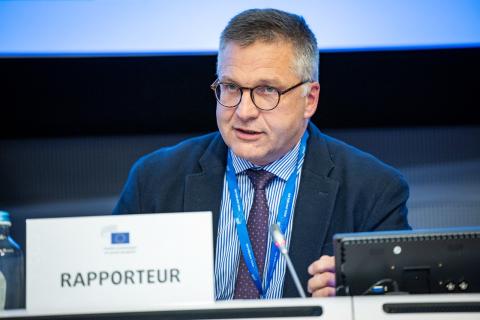
Mateusz Szymański, rapporteur of the EESC opinion  Global Europe (Multiannual Financial Framework proposal) gives the EESC's take on the European Commission's proposal for the new instrument, set to receive EUR 200.3 billion under the new MFF and aimed at strengthening the EU's role on the global stage.

Read more in all languages

Mateusz Szymański, rapporteur of the EESC opinion Global Europe (Multiannual Financial Framework proposal) gives the EESC's take on the European Commission's proposal for the new instrument, set to receive EUR 200.3 billion under the new MFF and aimed at strengthening the EU's role on the global stage.

Global Europe – a new framework for EU external policy in the face of global challenges

By Mateusz Szymański

The European Commission’s proposal for a new ‘Global Europe’ instrument is one of the elements of the EU’s future financial framework for 2028–2034. The programme’s assumptions indicate a willingness and readiness to strengthen the Union’s role on the international stage by significantly increasing the budget, thoroughly reforming decision-making mechanisms and ensuring flexibility in spending. This is happening against a backdrop of global upheaval and associated uncertainty.

Read more in all languages

By Mateusz Szymański

The European Commission’s proposal for a new ‘Global Europe’ instrument is one of the elements of the EU’s future financial framework for 2028–2034. The programme’s assumptions indicate a willingness and readiness to strengthen the Union’s role on the international stage by significantly increasing the budget, thoroughly reforming decision-making mechanisms and ensuring flexibility in spending. This is happening against a backdrop of global upheaval and associated uncertainty.

EUR 200.3 billion has been earmarked for the ‘Global Europe’ area. Although the real increase in spending is smaller once inflation is taken into account, the rise in external action spending is still significant. And no one can doubt that increased spending is necessary today. In a world of rising geopolitical tensions and the withdrawal of some countries from financing development cooperation, the EU has the opportunity to position itself as the most stable and reliable partner for peace, development and shared values.

The new instrument is intended to be a more centralised and flexible structure based on six pillars ─ five geographical and one global. This change is intended to simplify and increase responsiveness, but it also raises some questions and concerns. It is reasonable to expect that the Commission’s decisions should not lead to purely reactive measures or to the marginalisation of key priorities such as defending and promoting human rights, supporting civil society and promoting entrepreneurship.

An important element of the new strategy is Global Gateway, the EU’s flagship infrastructure and development policy. The EESC proposes that it should serve as the foundation for a broader European multilateral policy, one that can genuinely strengthen the UN system and build strategic alliances with partners worldwide. However, this will not be possible without the genuine involvement of civil society. Therefore, the functioning of the Civil Society and Local Authorities Advisory Platform should be made more effective within the framework of Global Gateway. Currently, it is inadequate and does not sufficiently involve social actors in decision-making processes.

However, it will be important for the EU to be more aware of its interests and be able to pursue them in the international arena. Therefore, the business dimension and competitiveness of the EU economy vis-à-vis other regions of the globe cannot be overlooked in policy directions. It is important, however, that strictly economic goals are balanced by the achievement of social policy objectives and the promotion of equitable development, both in the EU and in partner countries. The standards of the International Labour Organization can serve as an important compass for action in this area.

One of the biggest challenges remains ensuring coherence between external actions and EU trade policy and competitiveness. Currently, they often operate in silos, resulting in a lack of synergy between the actions taken. It is worth noting that trade policy includes important mechanisms for civil society participation which can already be used today. However, it is necessary to further strengthen the capacity of the organisations involved so they can participate even more actively in the work of these groups and cooperation platforms.

EU external policy and the resources dedicated to it cannot ignore such an important issue as that of enlargement. This process seems to be gaining new momentum. Although it will certainly not be easy, we must start building relationships and dialogue now. This is particularly important given that the integration of new countries into the community creates tensions but also opens up new opportunities. Civil society has a special role to play here, and such organisations must be supported both within the EU and in partner countries.

Global Europe can significantly strengthen the EU’s position, contribute to greater social justice and help rebuild trust in multilateralism. However, the success of the new instrument depends on full transparency, strong civil society participation, respect for fundamental values and the creation of long-term, predictable partnerships. Only in this way can the EU’s new external policy become a real tool for building a more stable, fairer and safer world. Of course, if EU leaders so decide.

EESC News

BANNING CONVERSION PRACTICES IN THE EU: TOWARDS ENSURING PROTECTION AND DIGNITY FOR ALL

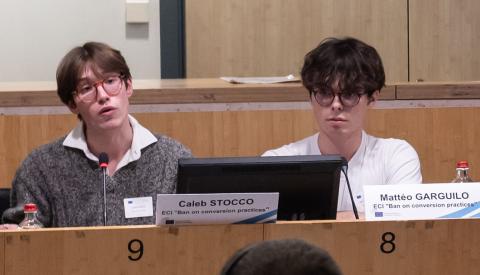
The European Citizens' Initiative (ECI) to ban conversion practices in the EU collected over 1.2 million signatures in just six days, showing widespread public backing for putting an end to attempts to change or suppress an LGBTIQ+ person's identity. During Gender Equality Week 2025, the EESC’s Section for Employment, Social Affairs and Citizenship (SOC) held a debate on the initiative, urging the EU to ban conversion practices and emphasising the need to protect the dignity and rights of all LGBTIQ+ people. 

Read more in all languages

The European Citizens' Initiative (ECI) to ban conversion practices in the EU collected over 1.2 million signatures in just six days, showing widespread public backing for putting an end to attempts to change or suppress an LGBTIQ+ person's identity. During Gender Equality Week 2025, the EESC’s Section for Employment, Social Affairs and Citizenship (SOC) held a debate on the initiative, urging the EU to ban conversion practices and emphasising the need to protect the dignity and rights of all LGBTIQ+ people.

'This is a testament to the widespread support among EU citizens for ending these harmful practices,' campaigners Mattéo Garguilo and Caleb Stocco said during the debate, which brought together EU officials, civil society and campaigners, reflecting strong support for action. The initiative will be formally submitted to the European Commission, leading to hearings and a response by May 2026.

The timing of this ECI aligns with the launch of the new EU LGBTIQ+ Equality Strategy 2026–2030, which aims to protect LGBTIQ+ people from violence and discrimination, with banning conversion practices as a key focus. However, only 8 of the 27 Member States currently have such bans, and enforcement is inconsistent. The ECI calls for a comprehensive EU-wide ban, robust enforcement and support for victims.

The reality and impact of conversion practices

Conversion practices – attempts to change or suppress an LGBTIQ+ person’s identity – are condemned internationally. They take many forms, from pseudo-psychotherapy and religious rituals to physical and psychological abuse. The 2023 LGBTIQ survey found that 24% of respondents had experienced some form of conversion practice, with trans and non-binary people affected in particular. The consequences are severe: psychological and physical harm, increased risk of addiction, depression and suicide. These practices violate fundamental human rights and dignity.

Barriers and challenges

Barriers include hidden practices, lack of awareness, and inconsistent enforcement. Vulnerable groups – young people, those with disabilities and ethnic minorities – face higher risks. Conversion practices occur across all age groups and are often perpetrated within families.

Speakers called for a multi-faceted approach: criminal bans, anti-discrimination laws, child protection, public policy initiatives and victim support. Collaboration, clear guidance for Member States and adequate funding for organisations supporting victims are essential. The EESC debate made clear that conversion practices are a present and pressing issue, violating European values and human rights. Their eradication requires concrete political choices, robust legal frameworks and sustained civil society engagement. (lm)

SAFE AND ACCESSIBLE ABORTION IN THE EU: ADVANCING RIGHTS AND SOLIDARITY FOR ALL

During Gender Equality Week 2025, the EESC’s Section for Employment, Social Affairs and Citizenship (SOC) hosted a pivotal debate on the European Citizens’ Initiative (ECI) My Voice, My Choice, which is calling for safe and accessible abortion across the EU. The debate brought together campaigners, legal experts, Members of the European Parliament, and representatives from the European Commission to discuss the urgent challenge of ensuring reproductive rights and solidarity for all women in Europe.

Read more in all languages

During Gender Equality Week 2025, the EESC’s Section for Employment, Social Affairs and Citizenship (SOC) hosted a pivotal debate on the European Citizens’ Initiative (ECI) My Voice, My Choice, which is calling for safe and accessible abortion across the EU. The debate brought together campaigners, legal experts, Members of the European Parliament, and representatives from the European Commission to discuss the urgent challenge of ensuring reproductive rights and solidarity for all women in Europe.

At the debate, organisers of the My Voice, My Choice ECI described how the initiative was born out of concern for reproductive rights in Europe, gathering over 1.1 million verified signatures and mobilising thousands of volunteers. The ECI proposes an EU fund to cover abortion costs for women and girls unable to access care in their own countries, creating a voluntary mechanism that respects national sovereignty while fostering solidarity. The campaign has become the largest feminist movement in Europe, aiming to make safe and accessible abortion a reality for every woman in the EU.

Barriers to abortion access: legal and practical realities

Speakers at the debate outlined the commitments EU Member States have made under international treaties to protect sexual and reproductive health and rights. Despite these obligations, access to abortion remains uneven, with legal restrictions, time limits, mandatory waiting periods, biased counselling, and criminalisation persisting in several countries. Malta and Poland maintain some of the most restrictive laws. These barriers force women to travel for care or face unsafe procedures and unwanted pregnancies, disproportionately affecting adolescents and marginalised groups. The ECI’s proposed mechanism would alleviate financial burdens and support women in need, without interfering in national laws.

The debate also addressed political challenges, including opposition from certain groups. MEPs stressed that abortion must be safe and legal, and told the participants that the Parliament’s FEMM Committee had passed a draft resolution supporting the ECI. The resolution calls for the right to legal and safe abortion to be included in the EU Charter of Fundamental Rights, recognising its centrality to democracy and European values.

Impact of the ECI and next steps

The European Commission confirmed at the debate that the initiative is under evaluation, with a response expected by March 2026. The proposed mechanism respects Member States’ competences and operates as an opt-in system, aiming to fill a legislative gap in cross-border healthcare. (lm)

BUILDING THE WORKFORCE OF TOMORROW: HARNESSING DIVERSITY AND INNOVATION FOR A COMPETITIVE EUROPE

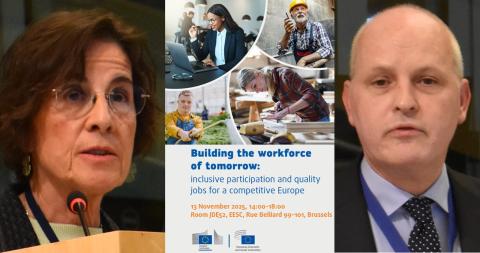
On 13 November, the EESC hosted a high-level conference on ‘Building the workforce of tomorrow: inclusive participation and quality jobs for a competitive Europe’. The debate brought together EU policymakers, social partners, researchers and civil society to address urgent challenges and opportunities in Europe’s labour market, focusing on two flagship reports.

Read more in all languages

On 13 November, the EESC hosted a high-level conference on ‘Building the workforce of tomorrow: inclusive participation and quality jobs for a competitive Europe’. The debate brought together EU policymakers, social partners, researchers and civil society to address urgent challenges and opportunities in Europe’s labour market, focusing on two flagship reports.

The conference underscored that over 50 million working-age Europeans remain outside the labour market, with women, older people, migrants and persons with disabilities particularly underrepresented. Unlocking the potential of these groups is both a social and economic imperative.

‘Labour and skills shortages threaten to slow Europe’s transition efforts, towards a greener economy and a strengthened independence. The analysis provided by the Commission underpins sound policies to bring more people into the labour market and increase productivity’, Jeroen Jutte, Director for Employment and Social Governance Analysis at the European Commission, told the conference.

‘We need to secure resources and social spending to support employment, social targets and address new challenges. Investing in skills, promoting quality jobs, as well as eradicating poverty and marginalisation remain the key objectives of our joint work with the European Commission’, stressed Cinzia Del Rio, president of the EESC Section for Employment, Social Affairs and Citizenship.

The first panel discussed the Employment and Social Developments in Europe 2025 report (ESDE 2025), exploring how inclusive participation can address labour shortages and demographic change. Education and lifelong learning, active labour market policies and social dialogue are crucial for supporting vulnerable groups.

The second panel examined the Labour Market and Wage Developments in Europe 2025 report (LMWD 2025), focusing on quality jobs and competitiveness amid structural change and technological transformation. While employment growth has been robust, productivity growth is weak. Labour shortages persist, especially in essential sectors. Boosting productivity through innovation, digitalisation and investment in human capital was emphasised, alongside fair wages and job retention schemes.(lm)

EU CIVIL SOCIETY AT THE WORLD FOOD FORUM IN ROME

A European Economic and Social Committee (EESC) delegation took part in the 2025 World Food Forum flagship event, which was held from 10 to 17 October at the headquarters of the United Nations Food and Agriculture Organization (FAO) in Rome.

Read more in all languages

A European Economic and Social Committee (EESC) delegation took part in the 2025 World Food Forum flagship event, which was held from 10 to 17 October at the headquarters of the United Nations Food and Agriculture Organization (FAO) in Rome.

The EESC stressed that resilient, sustainable food systems must guide global policy. Regenerative agriculture is central to this shift, but so too is giving young people and youth organisations a real voice in shaping the future.

On 20 October, the EESC, as an observer at the UN Committee on World Food Security (CFS) – a body hosted and supported by the FAO – brought Europe’s organised civil society directly into global debates on resilience, sustainability and youth engagement.

‘Food policies must go beyond efficiency and yields,’ said Stoyan Tchoukanov, president of the EESC’s Section for Agriculture, Rural Development and the Environment (NAT). ‘We need resilience through sustainable farming, inclusive governance and youth empowerment’.

Through bilateral meetings with FAO representatives, governments and partners, the EESC strengthened alliances to ensure Europe’s civil society priorities are heard.

The Committee also showcased its growing youth initiatives, including the EU Youth Test and its new Youth Group led by Italian EESC member, Nicoletta Merlo. ‘These platforms are about changing decision-making so that youth and civil society become co-authors of food and climate strategies,’ Ms Merlo said.

By championing regenerative agriculture, youth participation and civil society engagement, the EESC is helping reshape global food policy at a pivotal moment. (ks)

STATEMENT BY THE EESC PRESIDENT ON THE EUROPEAN COMMISSION'S DEMOCRACY SHIELD PACKAGE

The EESC looks forward to analysing the proposal in detail, engaging in discussions and cooperating closely with the European Commission in the next steps of its implementation, particularly on the Civil Society Strategy. 

Read more in all languages

I welcome the publication of the European Commission’s Democracy Shield package today, which responds to a long-awaited need to strengthen the Union’s democratic resilience, including to new challenges posed by the impact of technological advancements. This initiative is an important step to ensure that citizens and civil society can engage fully and safely in the life of the Union without fear of external interference or internal pressure.

I also underline that the protection and promotion of our shared European values — including the rule of law, free and fair elections, fundamental rights and independent media — must be at the core of this effort. Defending these values is essential to maintain the trust of citizens and their participation in the Union's democratic process, safeguarding the quality of life for millions across Europe, and projecting our model of democracy outside.

The EESC looks forward to analysing the proposal in detail, engaging in discussions and cooperating closely with the European Commission in the next steps of its implementation, particularly on the Civil Society Strategy. As the institution representing organised civil society, we will continue to bring citizens’ voices to the heart of the Union’s policymaking,  engaging closely with Member States and enlargement countries , to help ensure that democracy in Europe remains strong, inclusive, and resilient.
 

STATEMENT BY THE EESC PRESIDENT ON THE EU'S NEXT LONG-TERM BUDGET MULTIANNUAL FINANCIAL FRAMEWORK

As the newly elected President of the European Economic and Social Committee I reaffirm the Committee's previous call for a strong and ambitious Multiannual Financial Framework that serves not merely as a budgetary tool but critically also as a core driver to deliver the Union's shared objectives while safeguarding the principles of inclusiveness, partnership and democratic participation that lie at the heart of the European project.

Read more in all languages

As the newly elected President of the European Economic and Social Committee I reaffirm the Committee's previous call for a strong and ambitious Multiannual Financial Framework that serves not merely as a budgetary tool but critically also as a core driver to deliver the Union's shared objectives while safeguarding the principles of inclusiveness, partnership and democratic participation that lie at the heart of the European project.

While the Commission's proposal for a simplified and flexible budget for the Union follows the right approach to prepare and react to the multilayered challenges Europe is facing, the proposed simplification and flexibility must be matched by guarantees of inclusiveness and accountability.

The Committee warns against the centralisation of the management of key funds at national level - particularly cohesion, agricultural and fisheries funds – which risks undermining subsidiarity, trust and cohesion.

Such an approach could create fragmentation and competition among Member States, leading to "less Europe" instead of stronger cooperation and solidarity in support of long-term convergence across regions.

The effective functioning of the National and Regional Partnership Plans (NRPPs) will depend on their ability to maintain a strong link between EU governance and regional and local partners, who naturally know best the economic and social realities where investments are needed. Empowering these partners alongside social partners and organised civil society is essential to ensure that EU funding is efficient, legitimate, and democratically anchored at every level.

It is also worth noting that the pooling of funds which have separate objectives is not advisable.

All of these factors should inform our approach and suggest a need for careful re-assessment.

On the broader issue of financing, the EESC supports a balanced package of new own resources to strengthen the Union’s financial autonomy and resilience, designed transparently and in a spirit of solidarity among Member States.

I believe that only through a participatory and inclusive MFF – one that promotes the economic and social life of everybody - can we continue delivering a Union of opportunities, security and resilience for all.

Under my leadership the Committee – as the direct voice of civil society at the heart of Europe - will engage fully with the other EU institutions in the coming period to help ensure an outcome that reflects the best of what Europe can be.

PRESIDENT BOLAND VISITS ESTONIA, LATVIA AND LITHUANIA TO CONVEY MESSAGE OF SUPPORT TO FRONTLINE BALTIC STATES

President Boland held bilateral meetings with government representatives in all three countries. These included substantial discussions on key EU priorities including defence and security, competitiveness, enlargement and the EU’s next long-term budget. The President conveyed his vision of putting civil society at the heart of Europe.

Read more in all languages

'Russia's war against Ukraine has profoundly affected the Baltic countries economically, socially, and psychologically, and made them re-think their economies, education systems, civil and defence preparedness,' he said. 'The EU’s frontline states are the gate keepers of EU's security and democratic resilience in the current challenging geopolitical context.'

President Boland held bilateral meetings with government representatives in all three countries. These included substantial discussions on key EU priorities including defence and security, competitiveness, enlargement and the EU’s next long-term budget. The President conveyed his vision of putting civil society at the heart of Europe.

'A union of opportunities, security and resilience starts with people. Active participation, informed communities and a vibrant civil society are essential to Europe's future,' he said.

The Estonian Minister of Economy and Industry Erkki Keldo concurred on the importance of engaging in civil preparedness and resilience in the face of challenges posed by Russia's aggression

The Latvian Parliament Speaker Daiga Mieriņa discussed cooperation with social partners and civil society and the importance of Latvia's international commitments on gender equality.

Fighting disinformation, the importance of working with young people, and the key role of media and civic participation in building resilience were at the core of President Boland’s discussion with the Latvian Minister of Culture Agnese Lāce.

In Lithuania, during fruitful exchanges with the Vice-Minister of Foreign Affairs (Minister of Europe) Sigitas Mitkus and the Minister of Social and Labour Affairs Ms Jūratė Zailskienė, President Boland underlined the EESC’s willingness to cooperate ahead of and during the forthcoming Lithuanian Presidency of the Council (in the first half of 2027).

During exchanges with civil society across the three Baltic nations, President Boland made it clear that their voice must be stronger than ever.

'I am very impressed by the bustling civil society in the Baltics and I come back truly energised,' he said. 'The courage, unity and civic engagement in the three countries are an inspiration to all Europeans. This showcase of collective determination mirrors the very values that the EESC represents: democracy, participation and social cohesion in the face of adversity.'

President Boland also met EESC members in Estonia, Latvia and Lithuania and personally thanked them for their support and guidance in helping to make his first high-level visit a success. 

EESC HOSTED SCREENING OF AWARD-WINNING DOCUMENTARY 'FACING THE UNKNOWN', FOLLOWED BY DEBATE

On Tuesday 2 December, in the framework of the EU Blue Deal initiative, the European Economic and Social Committee hosted a screening of the documentary Facing the Unknown, directed by Dieter-Michael Grohmann.

Read more in all languages

On Tuesday 2 December, in the framework of the EU Blue Deal initiative, the European Economic and Social Committee hosted a screening of the documentary Facing the Unknown, directed by Dieter-Michael Grohmann.

This multi-award-winning documentary on how water scarcity threatens not only the environment, but also economic stability, food security and energy supply was inspired by the book Emergency Preparedness, written by EESC member Paul Rübig together with Achim Kaspar.

A discussion on the EU Blue Deal and Europe’s water resilience: Where Are We? took place before the screening, moderated by the president of the CCMI (the EESC’s Consultative Commission on Industrial Change), Alain Coheur, with the participation of the filmmaker Dieter-Michael Grohmann and the film’s protagonist Luna De Mesmaeker.

The also emphasised the EESC’s long-standing engagement on this issue and its unwavering commitment to securing an EU Blue Deal, aimed at protecting and managing our water resources for everyone’s future.


News from the Groups

WHY EUROPE'S HOUSING CRISIS IS ALSO A COMPETITIVENESS CRISIS

By Sandra Parthie, president of the EESC Employers’ Group

Across the EU, housing affordability has reached a critical point. The issue extends far beyond rent or mortgage payments – it is also about rising energy bills, renovation and maintenance costs, accessibility needs and access to essential local services.

Read more in all languages

By Sandra Parthie, president of the EESC Employers’ Group

Across the EU, housing affordability has reached a critical point. The issue extends far beyond rent or mortgage payments – it is also about rising energy bills, renovation and maintenance costs, accessibility needs and access to essential local services.

But affordable housing is not only a social concern: it has become a major economic threat to EU competitiveness. High housing costs are pushing workers out of some areas and are preventing people from moving, creating barriers to employment and exacerbating labour shortages in key sectors. When people cannot afford to live where jobs are located, regional economies lose vitality.

Rental housing remains indispensable for a large share of the population and continues to offer opportunities for owners. In many Member States, individual savers provide a substantial portion of rental homes, while institutional investors increasingly treat housing as a financial asset. This dual development highlights the need to balance the economic and social functions of housing.

Businesses are ready to be part of the solution. Some employers, for instance, even offer housing for their employees. However, construction costs, material shortages, lengthy permitting procedures and financing conditions have all turned into a challenge.

Affordability constraints are not uniform across the EU, with an urban-rural divide and varying local economic conditions, such as high tourist density and short-term rentals. Hence, there can be no one-size-fits-all solution. Place-based responses that are in line with the subsidiarity principle and the fact that housing is a Member State competence are needed.

At the same time, there are some levers the EU can pull to help address the situation, namely through competition law and its exceptions, such as social welfare law and services of general economic interest. European regulatory requirements on the energy performance of buildings are also contributing to a shortage in the supply of housing units.

With the right commitments, Member States can revitalise supply, strengthen competitiveness and secure affordable housing as a pillar of social and economic stability.

HOUSING DYSTOPIA: YOU MAY NOT HAVE A HOUSE, BUT HERE'S A SOGGY FAST-FOOD BURGER

By the EESC Workers' Group 

Housing is a basic human need. Or… housing is a commodity from which to extract wealth. This second reality is seriously undermining the first. In cities everywhere, new developments are frequently seen. In many countries, the number of housing units created easily outpaces population growth, yet for most people, owning their own home remains a distant and unlikely possibility. 

Read more in all languages

By the EESC Workers' Group

Housing is a basic human need. Or… housing is a commodity from which to extract wealth. This second reality is seriously undermining the first. In cities everywhere, new developments are frequently seen. In many countries, the number of housing units created easily outpaces population growth, yet for most people, owning their own home remains a distant and unlikely possibility.

This is not simply a question of supply and demand, although pressure on the most desired areas certainly plays a role, particularly as jobs become increasingly concentrated in large cities. With the public sector largely absent from providing social housing, and with rising construction costs, new developments are not built for working or middle-class people to live in. Instead, they are built for investors to purchase, rent, upsell, rinse and repeat the cycle.

At first glance, renting appears to be another path to securing housing, but this too has become increasingly difficult. Tourist and short-term rentals have provided landlords with an easy way to make money from their investments or family inheritances without the need to engage in long-term rental contracts. Shrinking supply and growing demand from jobseekers and people priced out of the buying market have only driven prices even higher.

With no end in sight to this speculative dynamic, many people find themselves facing a perfect storm of high living costs, rising prices for basic goods, and poor working conditions. Moreover, this situation highlights the rapidly deteriorating conditions in our countries: goods and services produced or managed under proper working conditions become unaffordable for most.

As a result, people turn to goods cheaply produced abroad through labour exploitation, while the market offers a never-ending stream of subscriptions that provide entertainment and the illusion of affluence. App-mediated, underpaid services allow the exploited and the exploiter to exchange roles depending on the time of day, while companies cash in. You might not have a house, but at least you can get a soggy fast-food burger made by minimum-wage workers, delivered to your shared apartment by a bogus self-employed ‘rider’ without insurance, for a significant portion of your limited disposable income.

The EU must lead the way in applying pressure, but it is up to Member States, which have the competences, resources and mandate, to change this situation. The alternative is not simply the continuation of the current dystopia, but a deep undermining of fundamental social achievement with potentially catastrophic effects on social cohesion, political stability and the very core of our democratic societies. This is not a prediction – it is already happening. 

FUTURE HOUSING STRATEGIES MUST BE GENDER-SENSITIVE

By Juliane Marie Neiiendam, Vice President of the Civil Society Organisations’ Group. 

In the face of climate change, urban inequality and a growing housing crisis, the future of living in Europe must be re-imagined – to be affordable, green and inclusive. 

Read more in all languages

By Juliane Marie Neiiendam, Vice President of the Civil Society Organisations’ Group

In the face of climate change, urban inequality and a growing housing crisis, the future of living in Europe must be re-imagined – to be affordable, green and inclusive. The European Union now has a unique opportunity to set a global standard for sustainable, equitable housing models, and inspiration can be drawn from pioneering countries like Denmark.

In Denmark, thanks to bold public policies, 20% of all housing is non-profit and managed by democratic housing associations. Copenhagen, for example, combines affordability with green standards in its city planning, using architecture not just to build homes, but also to create resilient, mixed communities.

Yet Europe’s housing future cannot simply be about buildings. It must also be about people, and especially women. Women are disproportionately affected by housing insecurity: they constitute nearly 85% of all one-parent families in the EU. Among these, 48% of lone mothers are at risk of poverty or social exclusion, as stated in the report on Poverty, gender and lone parents in the EU, issued by the European Institute for Gender Equality (EIGE).

Future housing strategies must incorporate gender-sensitive design, prioritise safety, accessibility and community spaces, and ensure women have leadership roles in shaping urban policies.

EESC work on affordable housing

The Danish Presidency asked the EESC to gather civil society’s input for the European Affordable Housing Plan. The EESC marked the beginning of the Danish Presidency with a conference entitled ‘Building green and inclusive – Making our communities future-proof’, in Copenhagen on 2 July. Since then, the EESC has published two opinions on the subject: Affordable Housing: Cohesion policy, Urban agenda and civil society and For a European Affordable Housing Plan – the contribution of civil society. At the EESC plenary session in September, Dan Jørgensen, the Danish Commissioner for Energy and Housing, said that housing represented a major challenge but also an opportunity to make a real, positive and lasting difference to the lives of millions of citizens across Europe.

Our three key messages are:

  • affordability must be protected as a right, not left to market forces;
  • sustainability must be built in from the outset – through circular construction, renewable energy and smart design; and
  • inclusion, especially gender inclusion, must be a foundational principle, not an afterthought.

Housing is more than shelter: it is dignity, security and opportunity. If the EU truly wants to lead the future of living, it must dare to build cities where affordability, green living and inclusivity are not dreams but daily realities.

In focus: Affordable housing

DECISIVE POLITICAL ACTION CAN SOLVE THE HOUSING CRISIS

When finding a place to live becomes a luxury, something is deeply wrong. To tackle Europe’s acute housing crisis, the EU is preparing its first plan for affordable housing. The EESC’s recent opinion on this issue – entitled For a European Affordable Housing Plan – the contribution of civil society – calls for a bold, investment-heavy and socially just approach. Its rapporteurs, John Comer and Thomas Kattnig, outline here the core ideas behind the opinion, which calls for a response that puts people, not markets, first.

Read more in all languages

When finding a place to live becomes a luxury, something is deeply wrong. To tackle Europe’s acute housing crisis, the EU is preparing its first plan for affordable housing. The EESC’s recent opinion on this issue – entitled For a European Affordable Housing Plan – the contribution of civil society – calls for a bold, investment-heavy and socially just approach. Its rapporteurs, John Comer and Thomas Kattnig, outline here the core ideas behind the opinion, which calls for a response that puts people, not markets, first.


By John Comer and Thomas Kattnig

Europe is facing one of the biggest social challenges of the decade: securing the fundamental right to adequate, accessible and affordable housing. Rising prices, increasing financialisation and growing social inequalities have led to a housing crisis that now affects more than 50 million citizens in the European Union. People with disabilities, single parents, older people and young people, who are increasingly being pushed out of cities, are particularly affected.

In response to these developments, the European Economic and Social Committee (EESC) has presented a comprehensive opinion at the request of the Danish presidency. It serves as a strategic guide for organised civil society ahead of the forthcoming publication of the European Commission’s Affordable Housing Plan.

Key challenges

We identify three structural risks that are exacerbating the crisis:

1. Speculation, and the financialisation of housing markets.

2. Insufficient long-term investment.

3. The growing gap between incomes and housing costs.

The EESC emphasises that the housing crisis is not a law of nature, but the result of political decisions. Decisive action at European, national and local level can reverse the trend. At the heart of this is the conviction that housing is not merely a commodity, but a basic social requirement for participation, economic stability and democratic trust.

Expectations for the European Plan for Affordable Housing

The opinion sets out clear expectations as regards the Commission’s plan. While responsibility for housing lies with the Member States, under the principle of subsidiarity, we stress that a European framework is necessary to address the complex challenges on the ground.

The EESC calls for the EU plan to include the following elements:

• A coherent European framework that supports local and national measures and strengthens cooperation.

• A robust investment strategy to close the estimated annual investment gap of EUR 270 billion in social and affordable housing. This requires both public and private investment.

• A strong role for the European Investment Bank, whose new pan-European platform for housing investment is intended to provide long-term, low-interest loans for social and non-profit providers.

• A pooling of existing EU funds into a specialised European instrument for affordable housing.

• An exemption from EU fiscal rules for public investment in social housing, as this must be considered strategic social infrastructure – comparable to investment in education or health.

We think the plan must be more than a signal – it must be a political turning point that matches the scale of the challenge.

Key proposals in the opinion

The opinion offers a comprehensive policy strategy to restore affordability, strengthen social justice and ensure long-term resilience.

One focus is on reforming EU State aid law. Social, non-profit and limited-profit housing serves the common good, is territorially bound and should not be considered a distortion of competition. We propose the model of non-profit and limited-profit housing associations as a European benchmark: adopting this model would involve cost-based rents, re-investment, long-term price stability and social diversity. At the same time, the overly narrow definition of social housing, focused solely on vulnerable groups, must be broadened, as the crisis has long since reached the middle class.

In order to counter speculation and financialisation, the Member States need a broad, legally compliant package of measures in line with subsidiarity: vacancy taxes, clear rules for short-term rental platforms, rent caps in tight markets and stricter transparency requirements for institutional property owners.

The opinion also calls for binding EU accessibility standards, improved support for accessible renovations and the expansion of housing assistance for people with disabilities. Accessible housing is a prerequisite for participation, self-determination and dignity.

In the fight against homelessness, the EESC clearly advocates ‘Housing First’ as the European standard.  Homelessness causes people to become alienated from society leading to major inequalities and deprivation in society. Finland has shown that stable housing conditions are a prerequisite for social integration and cost reduction in social and health care. Young people should receive special support through programmes such as ‘Housing First for Youth’.

Another key area is affordable land policy. Rising land prices have accounted for around 80% of property price increases since the 1950s. The EU should support land reserves for social housing, sustainable spatial planning and anti-speculation rules.

New technologies should also be used: digitalisation, AI, modular construction methods, harmonised standards and accelerated approval procedures can increase productivity in the construction industry, reduce costs and promote climate-friendly, energy-efficient construction methods – a decisive lever in the fight against energy poverty.

Finally, the EESC combines affordability with sustainability: future-oriented housing projects should include quotas for affordable, accessible and energy-efficient housing. EU initiatives such as the ‘Renovation Wave’ and the ‘New European Bauhaus’ provide an important framework for this.

Involvement of European stakeholders

A central part of the work is intensive dialogue with the most important European stakeholders. We held talks with the EU Commissioner for Housing, Dan Jørgensen, brought the views of civil society to the Commission’s Housing Task Force and presented the EESC’s position to the European Parliament’s Special Committee on Housing. The Danish presidency has also actively sought our expertise. These exchanges have enabled our opinion to have a direct influence on European policy-making.


A European promise

The forthcoming plan offers a historic opportunity. We want to emphasise that the EU is more than a market: it is the promise of a good, secure and inclusive life – and a home for all is the cornerstone of that promise.

EU HOUSING EXPERTS PROPOSE MEASURES TO ENSURE HOMES ARE TREATED AS PLACES TO LIVE, NOT INVESTMENT ASSETS

The European Affordable Housing Advisory Board, an independent expert body advising the European Commission, has just published 75 recommendations for the upcoming European Affordable Housing Plan — the first-ever EU-level housing strategy aimed at addressing Europe’s acute housing crisis. Advisory Board expert Ivana Katurić has detailed the recommendations that align with the EESC’s calls to stop treating housing as a commodity and to recognise affordable, decent homes as a fundamental right.

Read more in all languages

The European Affordable Housing Advisory Board, an independent expert body advising the European Commission, has just published 75 recommendations for the upcoming European Affordable Housing Plan — the first-ever EU-level housing strategy aimed at addressing Europe’s acute housing crisis. Advisory Board expert Ivana Katurić has detailed the recommendations that align with the EESC’s calls to stop treating housing as a commodity and to recognise affordable, decent homes as a fundamental right.


By Ivana Katurić

On 20 November, the European Affordable Housing Advisory Board published a report detailing its affordable housing policy recommendations for the European Commission. The Housing Advisory Board was established in June 2025 as an independent group of experts to provide recommendations for the Commission to take into account when preparing the European Affordable Housing Plan, which is scheduled to be presented before the end of this year.

The European Economic and Social Committee has worked intensively on affordable and sustainable housing in recent years, and the Board’s 75 recommendations – in areas such as housing inclusion, spatial planning and land management, environmental sustainability of housing, investment principles and multi-level governance – echo many of the priorities set by the EESC in its opinions and public hearings.

Both the Advisory Board and the EESC are calling for a paradigm shift in European housing policy, treating housing as essential social and economic infrastructure rather than a commodity, and recognising decent, affordable and accessible housing as a fundamental right.

A major shared concern is the need to address market failure in the housing sector. The Advisory Board recommends tax, investment and land policy measures to curb financialisation and speculation and to prioritise homes as places to live, not vehicles for investment. Both bodies also highlight the critical importance of securing accessible, affordable housing for vulnerable groups, including people experiencing homelessness, young people, low-income earners, and especially people with disabilities. The Board’s recommendation of promoting the Housing First approach across all Member States to end homelessness and earmarking EU funds for this purpose mirrors long-standing advocacy by the EESC for robust action to be taken on this issue.

In its recommendations on financing the expansion of the affordable housing stock, the Housing Advisory Board also aligns with the EESC in the its call for targeted investment approaches to be devised. It promotes the cost-rental model as a core pillar of the future housing system, with new homes primarily developed and managed by public, cooperative and other limited‑profit housing providers. Financing would combine grants with long-term financing from the EIB and other international financial institutions. It should be designed to crowd in patient private capital, whereby affordability would be safeguarded by requirements for capped returns, obligatory reinvestment into renovation and new supply, and clear eligibility criteria for the selection of tenants, which should include vulnerable groups.

Both the Advisory Board and the EESC are calling for the removal of fiscal barriers that currently discourage public investment in affordable housing. The Advisory Board recommends reforms to State aid rules that broaden eligibility beyond the narrowest income groups. The report also calls for clarity on balance sheet classification under ESA 2010 rules, proposing that housing providers with independent operations and financial sustainability not be counted toward public debt – a reform that would reduce disincentives for Member States to invest in long-term affordable housing.

As the European Commission prepares to present its first-ever European Affordable Housing Plan, the convergence between the Board’s report and EESC positions demonstrates that the path forward must be based on rights, participation and coordinated action at every level, with the voices of civil society and those most affected at the forefront.

Ivana Katurić is director of Urbanex, an independent Croatian think tank, research and consultancy organisation dedicated to sustainable urban development and spatial policy. She is also an associate professor at University of Rijeka. Ivana is a member of the Housing Advisory Board, appointed in June 2025 to advise the Commission on the European Affordable Housing Plan. The Advisory Board has 15 qualified members who are experts in the various relevant areas.

EUROPE IS RUNNING OUT OF AFFORDABLE HOMES AND GOVERNMENTS ARE STRUGGLING TO KEEP PACE

Housing Europe’s latest report on the state of housing in the EU paints a bleak picture: demand for decent and adequately priced homes far exceeds the limited supply. Social housing waiting lists include millions of people in Europe’s major cities, with thousands living in homes that lack basic safety, comfort or hygiene. This is a crisis that cannot be addressed by market forces alone – it is a true test of political will and social commitment, writes Diana Yordanova, Communications Director at Housing Europe.

Read more in all languages

Housing Europe’s latest report on the state of housing in the EU paints a bleak picture: demand for decent and adequately priced homes far exceeds the limited supply. Social housing waiting lists include millions of people in Europe’s major cities, with thousands living in homes that lack basic safety, comfort or hygiene. This is a crisis that cannot be addressed by market forces alone – it is a true test of political will and social commitment, writes Diana Yordanova, Communications Director at Housing Europe.


By Diana Yordanova

Demand for decent and adequately priced homes is surging, social housing waiting lists are swelling, and construction is stalling across the continent – this is the outcome of the State of Housing in Europe 2025 report, prepared by Housing Europe. Based in Brussels, the federation speaks on behalf of 43 000 public, cooperative and social housing providers that house people in 31 countries in Europe.

Thousands and thousands of homes needed

The gap between housing needs and delivery is now systemic, which highlights both social and political challenges. France requires 518 000 homes each year, including nearly 200 000 social units. Germany requires at least 400 000 annually, with 140 000 needed for social housing. The Netherlands projects a need of almost 1 million homes by 2031, and Sweden more than 500 000 by 2033. In practice, these targets are rarely met. Production often reaches only half of what is needed. Rising populations, new household formations, urbanisation and migration push demand upwards, while financing bottlenecks, rising construction costs and slow permitting stall supply. After overviewing housing systems in Europe for nearly 40 years, Housing Europe is sure that this is a crisis that cannot be addressed by market forces alone.

The human toll is visible in swelling housing waiting lists and inadequate accommodation. France has nearly 2.8 million people on social housing lists. Italy, Portugal and Germany’s major cities report hundreds of thousands more. In Czechia, 161 000 people live in substandard housing, including 45 000 who are roofless, and up to 1.3 million face energy poverty. Portugal has 130 000 families in inadequate housing, concentrated in urban areas and the Algarve. These figures point to both shortages and serious quality gaps in housing that affect our health, social cohesion and economic mobility.

Are we not already building enough?

On top of this, construction renovation and conversion rates are also faltering at a critical moment. Residential building across Europe is expected to hit a 10-year low in 2025. Escalating material costs, higher interest rates and tighter financing have forced developers to cancel or delay projects. Regulatory constraints in some countries, including caps on construction costs or restrictive rent-setting mechanisms, further limit providers’ ability to deliver new homes. Renovation, essential for climate goals, is uneven. Austria and France are advancing retrofits, while the Netherlands struggles with affordability and grid constraints. Denmark’s programme is politically secured but due for review in 2026. Germany, Ireland, Italy and Sweden face delays or scale-backs due to financial pressures.

That being said, in places where they are backed by their governments, social and cooperative housing providers are proving resilient. Dutch social housing associations delivered one third of all new housing completions in 2024. French social housing associations accounted for almost 30% of starts. Finland’s municipal companies produced one fifth of new supply. In Sweden, public and cooperative providers together build one in four homes. This counter-cyclical capacity shows that public, cooperative and social housing is not only necessary for social reasons but economic ones as well, as it stabilises markets during economic downturns and acts as a buffer against market volatility.

Homes full of … politics

Looking at policy reforms across Europe, they often seem to be a patchwork. Denmark, Ireland, Luxembourg, Portugal and Slovenia have strengthened regulatory frameworks, expanded stock or aligned programmes with climate targets. In contrast, Austria’s rent restrictions have reduced revenues for providers, Finland has dismantled long-standing institutions, France continues to cut social housing finances through rent reductions, and Italy still lacks a national housing plan. These inconsistencies highlight the political dimension of the crisis: housing delivery is closely tied to governance, policy prioritisation and public investment.

The EU plays a double role. Fiscal rules, Eurostat debt classifications and energy legislation often constrain investment, however, EU funds and European Investment Bank loans are vital for large-scale delivery. Providers of fair housing on the ground are calling for predictable long-term funding beyond 2026, conditionality and continuous support that is not impacted by elections and political tsunamis to ensure that investment produces affordable, sustainable housing rather than purely financial returns. Without such reforms, the growing financialisation of housing risks worsening inequality, pricing families out of decent homes and leaving social providers financially overextended.

The upcoming European Affordable Housing Plan in mid-December, alongside the European Parliament’s work on social and cooperative housing, is a potential turning point. To succeed, however, it will require not only funding but also political recognition of housing as essential infrastructure.

Europe’s housing crisis is a true test of political will, governance and social commitment. Millions of families are waiting, and policymakers have little room for delay.


Diana Yordanova is the Communications Director of Housing Europe, leading its external and internal policy communications work, including the organisation’s online presence, press relations and event curation. She is the go-to person when it comes to the International Social Housing Festival, streamlining the federation’s messages, journalists’ queries and the monthly newsletter and social media channels.

Housing Europe, the European Federation of Public, Cooperative, and Social Housing, has been the voice of this sector since 1988. Representing 44 national and regional federations and 16 partner organisations across 31 countries, Housing Europe oversees around 25 million homes, accounting for approximately 11% of Europe’s housing stock. Through their network of over 43 000 local housing organisations, Housing Europe is the point of reference for stable housing models, innovation and research.

AFFORDABLE, SUSTAINABLE HOUSING DEPENDS ON BLENDING PUBLIC SUPPORT AND PRIVATE CAPITAL

Luca Bertalot, Secretary General, and Eva Dervaux, Research and Data Adviser at the European Mortgage Federation and European Covered Bond Council (EMF-ECBC) dissect the reasons for the current global housing crisis and the role of housing finance in addressing local, regional and national challenges.

Read more in all languages

Luca Bertalot, Secretary General, and Eva Dervaux, Research and Data Adviser at the European Mortgage Federation and European Covered Bond Council (EMF-ECBC) dissect the reasons for the current global housing crisis and the role of housing finance in addressing local, regional and national challenges.

By Luca Bertalot and Eva Dervaux

Housing lays the foundation for freedom, dignity and opportunity, paving a solid path towards lasting peace and shared prosperity. Housing policies for their part represent a major social boost, with the potential to support each and every citizen in realising their future expectations. The housing market not only provides shelter for all but also builds communities and supports the broader goals of European integration. Europe is shaped by ongoing political and cultural changes, sustainable building requirements, increased consumer mobility and volatility.

Not only Europe but the entire world is facing a severe housing shortage, with the root of this crisis lying in a simple economic principle: demand is exceeding supply. In major cities, the cost of living has outpaced wage growth, resulting in a significant portion of the population being unable to afford adequate housing. Addressing the global housing crisis requires innovative solutions and a collaborative global approach, and housing finance is increasingly being seen as a global private sector solution to address local, regional and national challenges.

The imbalance between supply and demand has led to skyrocketing housing prices, making it increasingly difficult for many people to afford a place to live. The Hypostat 2024 House Price Index (HPI) shows how residential property prices change over time, providing valuable insights into the different rates at which HPIs are increasing across Europe and the different housing market dynamics.

The demand for new construction in Europe has largely followed a downward trend due to high mortgage rates and high construction prices. Nonetheless, during the last few years, ongoing initiatives and an increased emphasis on building sustainability, such as the Energy Performance of Buildings Directive and the Renovation Wave initiative, may have helped to prevent a more significant decline in construction volumes. As urban populations swell and economic pressures mount, the urgency to find viable solutions grows more pressing, especially in the light of the transition to a greener economy as more than 40% of pollution comes from the building sector. The housing crisis manifests itself in various ways across the globe.

The housing market is still recovering from the consequences of the 2020 pandemic which led to reduced construction activity, supply constraints and economic uncertainty. These factors lie at the heart of the affordability challenge in Europe and the long-term increase in house prices across Europe is a central focus of the current policy debate. Affordability depends on a number of factors, including wage growth, which affects purchasing power, and inflation and fiscal policy, which affect the cost of borrowing. While average house prices continue to rise, relatively low interest rates have helped keep the mortgage market somewhat affordable.

In the last few months, with a view to addressing the current challenges and to seize new opportunities, the EU has adopted a variety of initiatives. The Affordable Housing Initiative, announced in the European Commission’s Renovation Wave Strategy for Europe, aims to ensure access to adequate and affordable housing for all Europeans, while also promoting energy efficiency and environmental sustainability. At the heart of this initiative is the recently announced European Affordable Housing Plan, which will provide a roadmap to tackle the root causes of the crisis.

The challenge of delivering both affordable and sustainable housing requires vast domestic and international support, mixing public subsidies and private capital market resources, supported by a set of market products. Combined and coordinated actions from the public and private sectors will help to ensure the scaling-up of effective housing policies and broader access to capital markets, and foster the development of global opportunities for lenders and investors while benefiting consumers.

The EMF-ECBC community has fostered a housing philosophy that responds with international solutions to local needs, fostering convergency, common best practices and financial stability for mortgage and housing markets. We are ready to assist the EU institutions by sharing knowledge, advice and best practices, cooperating, and supporting the housing agenda with an ecosystem approach, bringing affordability, energy efficiency and renovation solutions over the coming years.

In particular, we believe that we can provide a tangible contribution with our expertise in developing and leading global market initiatives such as the Covered Bond Label with its specific disclosure section of the Harmonised Transparency Template for Green & Sustainable Covered Bonds, the Energy Efficient Mortgage Initiative (EEMI), the Energy Efficient Mortgage Label, the International Secondary Mortgage Market Association (ISMMA) and a global housing and finance database (HOFINET). Initiatives, in which innovation and harmonisation of best practices have already helped leverage the market to scale-up efficiencies, demonstrate both the capacity and willingness of our sector to assume and play its full role here.

Luca Bertalot is the Secretary General and Eva Dervaux is a Research and Data Adviser at the European Mortgage Federation – European Covered Bond Council (EMF-ECBC), which acts as the main voice of EU mortgage lenders and the global covered bond community. Working with European institutions to shape mortgage and housing finance policy, its goal is to ensure a sustainable housing finance system for EU citizens.

The EMF has recently released Hypostat, its latest annual statistical report on housing and mortgage market developments in Europe and beyond. The 2025 edition covers data up to the end of 2024 and includes analysis for 31 European countries plus nine non-European markets. Its other key publication, the EMF Quarterly Review, tracks short-term trends in EU mortgage and housing markets using indicators such as interest rates, outstanding residential lending, gross and net mortgage lending, and nominal house price indices.

ENDING HOMELESSNESS IN FINLAND WITH 'HOUSING FIRST' – INSIGHTS FOR EUROPEAN POLICY

Teija Ojankoski, CEO of Finland’s largest national non-profit housing provider Y-Säätiö, analyses her country’s success in reducing homelessness through the ‘Housing First’ approach – a model grounded in the belief that having a home is a matter of dignity, and that permanent housing should be the starting point – not the end point – of support. Yet despite strong results, challenges remain.

Read more in all languages

Teija Ojankoski, CEO of Finland’s largest national non-profit housing provider Y-Säätiö, analyses her country’s success in reducing homelessness through the ‘Housing First’ approach – a model grounded in the belief that having a home is a matter of dignity, and that permanent housing should be the starting point – not the end point – of support. Yet despite strong results, challenges remain.


By Teija Ojankoski

Finland’s adoption of ‘Housing First’ represents one of the most comprehensive transformations of homelessness policy in Europe. Rather than relying on shelters, hostels and staircase pathways, Finland carried out a national transition away from a shelter-based system and towards Housing First, grounded in the idea that permanent housing is the starting point – not the end point – of support.

This shift was built on the premise that housing is a matter of dignity, a constitutional right, and a foundation for equal citizenship. Since 2008, this shift has been guided by national programmes that provide dedicated funding, set measurable housing targets and develop strong municipal and NGO partnerships. Crucially, homelessness policy is tightly linked to housing policy and the wider welfare state. A large cost-based social and affordable rental sector, combined with income support and housing allowances, has meant that homelessness caused purely by income poverty has been largely prevented.

In practice, the transition has meant converting large shelters into supported housing units, phasing out dormitory accommodation and massively expanding scattered-site apartments with support. Y-Säätiö (Y-Foundation in English) has played a central role by acquiring dwellings across the country and developing permanent supported housing options aligned with key Housing First principles: housing without preconditions; harm reduction; choice and autonomy; separation of housing and treatment; and flexible, recovery-oriented support. Most importantly, the Finnish model emphasises broad principles rather than strict programme fidelity, giving room for local adaptation while maintaining the rights of residents at its core.

Finland’s outcomes are well-documented. Homelessness, particularly long-term homelessness, has steadily decreased for more than a decade after the introduction of the Housing First approach in 2008. Research shows improvements in housing stability, well-being and access to services once people obtain a permanent home. Interviews with frontline workers highlight the transformative role of having one’s own door and tenancy agreement; a home becomes not only a physical space, but also evidence of full societal membership, granting privacy, protection and self-determination.

Yet progress has not been without challenges. The success of Housing First depends heavily on accessible community services, especially mental health and substance use treatment, and on the availability of income support to pay rents. Another challenge concerns social inclusion. While housing ends homelessness, it does not automatically end loneliness or marginalisation. Some residents struggle with limited opportunities for interaction, meaningful activities or integration into neighbourhood life. In scattered housing, people may feel isolated; in supported units, ‘bubbles’ can form, limiting broader participation. Achieving social inclusion requires attention not just to individual support but to the systemic and environmental factors that shape daily life.

Looking beyond Finland, many of the cornerstones of Finland’s successful homelessness policies are now reflected in the new recommendations published by the European Commission’s Housing Advisory Board on 20 November 2025. The recommendations underline that ending homelessness should be the explicit goal of homelessness and housing policies. This goal will not be achieved without strong emphasis on permanent housing or without scaling up the Housing First approach. The Board’s recommendations were prepared to support the upcoming European Affordable Housing Plan, which the Commissioner for Energy and Housing, Dan Jørgensen, is expected to launch in mid-December.

Y-Säätiö recently published a research report as part of the EU’s Erasmus+ Adapting Housing First project, which examined the implementation of Housing-First-oriented homelessness work in Finland, Germany, Ireland and Spain. The aim of the project and the research was to explore how Housing First policies could respond better to the homelessness challenges faced across Europe and how they could be scaled up.

At the core of the Adapting Housing First project was a simple but crucial insight: Housing First has yielded good results, but it is still limited in scope. To fully realise its potential, the model needs to be expanded beyond narrow target groups and pilot projects and actively adapted to local welfare systems, housing markets and organisations. The project report shows that this can be done without losing sight of core principles such as housing as a right, choice, harm reduction and long-term support. At the same time, Europe is now in a favourable moment to move this work forward. Effective practices exist in many countries, political will is growing, and there is research to guide both the design of national strategies and their practical implementation on the ground.

Teija Ojankoski is CEO of Y-Säätiö (the Y-Foundation), Finland’s largest national non-profit housing provider and a key actor in Finland’s long-term work to end homelessness through the Housing First approach. She is a member of the European Commission’s Housing Advisory Board, chaired by Eamon Ryan, which advises Commissioner Dan Jørgensen on the European Affordable Housing Plan and policies to tackle the housing crisis across Europe.

OVER HALF OF BARCELONA RESIDENTS BLAME TOURIST APARTMENTS FOR NEIGHBOURHOOD TENSION

From ’Tourists go home’ graffiti splashed across city walls to protesters firing water pistols at visitors, Barcelona’s backlash against over-tourism has become increasingly visible. Residents say the tourism boom is pushing up rents and property prices, reshaping daily life in the city. The Observatori Metropolità de l’Habitatge de Barcelona (O-HB) – the Barcelona Metropolitan Housing Observatory – provided us with fresh data on short-term rentals and the rise of anti-tourism sentiment.

Read more in all languages

From ’Tourists go home’ graffiti splashed across city walls to protesters firing water pistols at visitors, Barcelona’s backlash against over-tourism has become increasingly visible. Residents say the tourism boom is pushing up rents and property prices, reshaping daily life in the city. The Observatori Metropolità de l’Habitatge de Barcelona (O-HB) – the Barcelona Metropolitan Housing Observatory – provided us with fresh data on short-term rentals and the rise of anti-tourism sentiment.


How have short-term and tourist rentals shaped the housing market in Barcelona in recent years? Can you share some figures about legal tourist apartments and about illegal rentals? Are there clear signs or figures that this trend is affecting rental prices or availability for residents?

To understand the situation of short-term rentals in Barcelona — and in Spain more broadly — the first thing to know is that short-term rentals fall into two categories.

Firstly, there are tourist apartment rentals, which have a duration of less than 31 days. Secondly, there are seasonal rentals. Seasonal rentals are not defined by their duration but by the reason that justifies their non-permanent nature ─ for example, work, medical assistance, or studies. However, these types of rentals typically last less than a year, so we can consider them short-term rentals.

The number of legal tourist apartments grew very rapidly in Barcelona between 2010 and 2014, increasing from 632 to 9 606 apartments. Since 2014, the city council has limited the number of licences, and there are currently 10 327 legal apartments in the city. On the other hand, the number of illegal tourist apartments has been decreasing, mainly due to the significant efforts and resources dedicated by the municipal inspection services. Nevertheless, as of February 2025, there is still a considerable number of illegal tourist apartments available on online platforms, especially on Airbnb, but also on HomeAway and Booking (see fig. 1).

As for the impact of tourist apartments on the price of primary housing, one of the few academically rigorous studies is the one carried out by García-López, Montseny, and Martinez-Mazza.  These researchers concluded that between 2012 and 2016, in neighbourhoods with a higher concentration of tourist apartments, these caused a 7% increase in residential rental prices and a 17% increase in the price of property sales transactions.


The latest figures show a decrease in the average rental price in 2024, and for the first time in a decade, a narrowing of the gap between income and rental prices. At the same time there has been a staggering 62% rise in seasonal rentals – how can this be explained?

There are two types of explanations for the rise in seasonal rentals, which we have not yet been able to verify with data. On one hand, some argue that the increase is due to the regularisation of apartments that were already being rented seasonally, but had previously been listed under permanent housing contracts. On the other hand, others argue that the rise in seasonal rentals is the result of a shift from permanent contracts to seasonal contracts, as a way to avoid rent regulation (since seasonal contracts are not subject to the same rent controls as permanent housing contracts), which would constitute a violation of the Urban Leases Act. The Government of Catalonia is currently setting up an inspection service to monitor these practices and, where necessary, sanction misconduct.


Public anger about tourism seems to be tied to housing issues in Barcelona. Based on your research, to what extent are rising rents and short-term rentals feeding into the anti-tourism sentiment we’ve seen lately? Is the growth of short-term rentals affecting neighbourhood life in the city?

The growing backlash against tourism is due to a combination of many factors, among which the increase in tourist apartments is certainly one. In this regard, Barcelona City Council carries out an annual survey on public perceptions of tourism, which confirms the increasing problems relating to co-existence in residential buildings. Thus, 57.8% of Barcelona’s population believed that tourist apartments were a source of disturbances among neighbours in 2023. Specifically, 23.5% considered that there were a lot of disturbances, and another 34.4% reported some disturbances. Notably, the proportion of people perceiving disturbances increased from 49.3% in 2016 to 57.8% in 2023.

The ‘Observatori Metropolità de l’Habitatge de Barcelona’ (O-HB) is a supra-municipal body dedicated to research and analysis with regard to housing. Its purpose is to support the design and evaluation of public policies. It was created in 2017 as an initiative of Barcelona City Council, the Metropolitan Area of Barcelona (AMB), the ‘Diputació de Barcelona’ (Barcelona Provincial Council) and the ‘Generalitat de Catalunya’ (Government of Catalonia), with the support of the Association of Social Housing Managers (GHS). Since 2018, it has been integrated into the structure of the ‘Institut Metròpoli’.

EXCESSIVE RENTS ARE PUSHING PEOPLE INTO POVERTY

Rent prices are spiralling across Europe, with tenants in some cases paying up to 125% more than they did ten years ago. We spoke with Barbara Steenbergen, head of the International Union of Tenants (IUT) Liaison Office to the EU, about which policies best protect tenants — and what concrete actions the EU should prioritise in its upcoming housing strategy. Across Europe, high-quality, inclusive and genuinely affordable housing projects already exist — some of them laureates of the European Responsible Housing Awards.

Read more in all languages

Rent prices are spiralling across Europe, with tenants in some cases paying up to 125% more than they did ten years ago. We spoke with Barbara Steenbergen, head of the International Union of Tenants (IUT) Liaison Office to the EU, about which policies best protect tenants — and what concrete actions the EU should prioritise in its upcoming housing strategy. Across Europe, high-quality, inclusive and genuinely affordable housing projects already exist — some of them laureates of the European Responsible Housing Awards.


How do you assess the current state of housing affordability in Europe?

Housing affordability is a major issue across Europe. Tenants in particular are affected by this dangerous development: rents in major cities have risen more than 45% on average, with the highest increase being 125% for a one-bedroom apartment between 2014 and 2023. This is a threat for the economy and society. We are in a state of emergency, where market shortages and excessive rent demands lead to a poverty trap for millions of people.

The EU has recognised the problem and will therefore, for the first time, present a European plan for affordable housing in December 2025 and provide funding for social and affordable housing. This is supported by the institutions: we now have the Commissioner for Energy and Housing, Dan Jørgensen from Denmark. The European Parliament has a special committee to combat the housing shortage, the European Commission has a taskforce for affordable housing, and there is a new pan-European investment platform that brings together the leaders of European institutions and financial institutions.

Is the growth of short-term rentals and private investment funds in the housing market making it harder for tenants to secure affordable homes?

There is fierce and devastating competition in the rental markets. This includes the rapid rise in rents, caused by speculation and the desire to maximise profits, leading to low and middle-income households being priced out of the markets.

On top of this, the extraction of regular rental housing through short-term and short-stay rentals aggravates the affordable housing shortage.

According to the current EU definition, households that spend more than 40 per cent of their disposable income on housing are considered overburdened. This is far too high; it should be a maximum of 25 per cent, otherwise there is a massive risk of poverty. It is not only ‘vulnerable’ households that are affected; it already extends deep into the middle classes. In booming areas where the jobs are, they already spend more than half of their income on housing costs.

Which policies have been most effective in protecting tenants and keeping housing affordable?

A successful and effective housing policy consists of a balanced mix of instruments: subsidies for social and affordable housing; public land availability for non- or limited profit supply; housing allowances; security of tenure by rent law, with open-ended rental contracts as the standard; rent stabilisation mechanisms and rent caps; public incentives to landlords for the quality and energy-efficient improvement of housing. 

Do you see positive national or local initiatives that could be replicated across Europe?

An example of implementation of the above measures in affordable, inclusive, resident-centred and high-quality housing projects can be found in the European Responsible Housing Initiative. Every two years, the European Responsible Housing Awards are presented, proving that it can be done! See the winners and shortlisted projects here!

What concrete actions should EU institutions prioritise to ensure affordable housing for all?

Social conditionalities and safeguards as well as technical assistance to cities and Member States with a focus on responsible long-term investment need to be at the centre of the new EU affordable housing plan. 

The IUT strongly advises implementing the principle of ‘housing cost neutrality’ in the funding conditions for housing renovation of the European Union. Housing cost neutrality after renovation (meaning that rent increases are at least balanced by energy savings of the same amount) combines the EU climate goals ideally with a socially just transition. It prevents residents and tenants being subject to displacement, gentrification and ‘renovictions’ (evictions by renovations) and fights energy poverty.

The European Investment Bank should reconsider their recent funding schemes for the provision of social and affordable rental housing. Loans should be preferably channelled to not-for-profit housing providers and cooperatives to ensure long-term affordability and robust stabilisation of the rental markets which are being derailed through massive price and rent increases. 

For a massive investment wave in social and affordable housing, the EU State aid rules must be revised. The current rules force Member States to limit access to social housing to ‘socially disadvantaged groups’. To overcome the crisis, it is important that large parts of the population get access to affordable housing. Moreover, public investment in social and affordable housing as key infrastructure should be exempted from the EU deficit rules.

Counteract financialisation of the housing market and sale of land and housing stock in Europe: the access of corporate finance and profit-oriented investors to European markets must be regulated. Money laundering and tax evasion by international real estate trading needs to be stopped through concerted actions at EU level. An EU transparency register on real estate transactions is the first step for de-financialisation. Europe is not for sale!


Barbara Steenbergen is a member of the Executive Committee of the International Union of Tenants (IUT) and head of the IUT Liaison Office in Brussels, where she represents the interests of the European tenant associations towards EU institutions. She is Chair of the Jury of the European Responsible Housing Awards. She also serves as Vice Chair of the Tenants’ Association of Bonn.

Founded in 1926, the IUT has been advocating for tenants’ rights at an international level for almost 100 years. It currently has 78 member organisations in 47 countries worldwide.

A ROOF OVER EVERY STUDENT'S HEAD: WHY EUROPE MUST TREAT HOUSING AS A RIGHT, NOT A COMMODITY

In major university cities across Europe, students are being priced out, pushed into low-quality housing, or left without accommodation altogether. Purpose-built student housing has become a lucrative real-estate niche dominated by luxury developments that most students cannot afford. The result is a growing divide between those who can study comfortably and those who may not be able to study at all, writes Duarte Lopes, a member of the Executive Committee of the European Students’ Union. He shared with us the ESU’s wish list for Europe’s new housing strategy — one that puts student housing at the top of the agenda.

Read more in all languages

In major university cities across Europe, students are being priced out, pushed into low-quality housing, or left without accommodation altogether. Purpose-built student housing has become a lucrative real-estate niche dominated by luxury developments that most students cannot afford. The result is a growing divide between those who can study comfortably and those who may not be able to study at all, writes Duarte Lopes, a member of the Executive Committee of the European Students’ Union. He shared with us the ESU’s wish list for Europe’s new housing strategy — one that puts student housing at the top of the agenda.

By Duarte Lopes

Across Europe, students are facing a housing emergency that threatens the very foundations of equitable higher education. In almost every major university city, students are being priced out, pushed into poor-quality accommodation, or left without a home altogether. Housing insecurity has become one of the biggest barriers to accessing and completing higher education — and a clear sign of systemic failure.

For decades, governments have treated housing as a market issue rather than a social one. Public investments in dormitories and affordable rental housing have been neglected, while speculative private investments have flourished. In many cities, student housing has become a lucrative real estate niche, dominated by luxury developments that exclude the majority of students. The result is a widening gap between those who can afford to study in comfort and those who cannot afford to study at all.

The European Students’ Union (ESU) represents over 20 million students across the continent. From our perspective, housing insecurity is now one of the most urgent social justice issues in higher education. Without a stable and affordable home, the right to education is incomplete.

We see this crisis reflected in students’ daily lives. Many spend more than half of their income on rent, juggling jobs to cover basic expenses and facing the combined pressure of rising housing costs and the broader cost-of-living crisis, creating constant financial stress. This insecurity directly impacts students’ mental health and academic performance, and is a major driver of anxiety, burnout and overall decline in mental well-being. Because affordable options are increasingly unavailable near campuses, students are frequently pushed to live far outside university areas, facing long commutes that reduce their time on campus, limit class attendance and isolate them from academic and social life. The result is an environment where students are physically present at university but excluded from fully engaging in the learning experience, which goes beyond mere class attendance.

Others live in overcrowded, unsafe or unhealthy spaces, and are sometimes without proper heating or sanitation. International students, unfamiliar with local housing markets, face scams and discrimination before they even arrive in their host countries. Hidden homelessness among students — sleeping in cars or on friends’ sofas — is no longer rare.

This is not inevitable. The housing crisis is the consequence of political choices. The ESU therefore welcomes the EU’s initiative to create a European Affordable Housing Plan and to find global solutions to the issue. Europe must restore the role of public authorities (at national, regional and local levels) and higher education institutions as active providers of affordable housing.

The ESU is calling for a European strategy that includes student housing as a key priority. This should involve:

  • large-scale investments in public and cooperative student housing, financed through EU structural and social funds;
  • rent frameworks to prevent speculation and ensure affordability;
  • minimum standards for quality and safety for all student accommodation;
  • tenant protection laws that guard against discrimination and exploitation; and
  • meaningful student participation in housing policymaking at all levels.

We also need targeted solutions for mobile students. Erasmus+ grants must be adjusted to reflect real living costs, and universities should work with municipalities to reserve housing for exchange and international students. No one should risk getting scammed or having to reject an opportunity to study because they cannot find a roof to keep over their head.

Promising examples already exist. In Vienna, social housing ensures stability for generations. In Finland, student housing foundations provide affordable, high-quality accommodation. In Portugal, we can see a broad-scale use of the recovery and resilience plan to build new public student housing and to rebuild old units.

What we need now is European coordination to scale these good practices across the continent.

The time for incremental measures has passed. Housing is a right and not a commodity. Every student deserves to live and study in dignity — without fear of eviction, exploitation or poverty.

Duarte Lopes is a Portuguese student representative and Executive Committee member of the European Students’ Union (ESU). Holding a Law degree from the University of Minho, he has served as president of the Students’ Union of the University of Minho, president of the Portuguese National Union and advisor to the Portuguese National Youth Council. He was recently elected to the Advisory Council on Youth of the Council of Europe. Within the ESU, Duarte is dedicated to strengthening the political impact of student representation, engaging member unions and advancing youth rights at the European level. He believes in the power of student-led advocacy for positive change across societies.

CITY OF BORÅS: BUILDING HOMES THAT MEET DIVERSE PHYSICAL NEEDS

The vision of the leadership of the Swedish City of Borås is to work for a city where no one is left out and where everybody has equal rights and opportunities to participate in community life. In making this bold vision a reality, accessible housing plays a crucial role. To enable its older citizens and those with disabilities to have an independent life, the city of Borås is building and renovating homes that meet diverse physical needs and remove barriers to independence. It also partners with property owners to offer properly adapted flats, writes Herawati Nowak, the city’s Disability Consultant.

Read more in all languages

The vision of the leadership of the Swedish City of Borås is to work for a city where no one is left out and where everybody has equal rights and opportunities to participate in community life. In making this bold vision a reality, accessible housing plays a crucial role. To enable its older citizens and those with disabilities to have an independent life, the city of Borås is building and renovating homes that meet diverse physical needs and remove barriers to independence. It also partners with property owners to offer properly adapted flats, writes Herawati Nowak, the city’s Disability Consultant.

By Herawati Nowak

In Borås, accessibility is a shared political priority. Regardless of party affiliation, the city’s leadership has consistently committed the resources needed to build an organisation that works both strategically and operationally to promote inclusion.

As our lead city councillor, Ylva Lengberg, says: 'In the City of Borås, it goes without saying that accessibility and inclusion should be the cornerstones of everything we do. All residents, regardless of their ability, should have equal rights and opportunities to participate in community life. There is a broad political consensus on working for a city where no one is left out; and by listening to the experiences and needs of people with disabilities, we can create a more accessible and inclusive Borås together'.

Accessible housing plays a crucial role in realising this vision. Housing is a basic right, and this right must extend fully to people with disabilities. When homes are designed to meet diverse physical needs, they remove barriers that limit participation in everyday life. Moreover, as people grow older and their mobility changes, accessible housing becomes essential for maintaining independence, safety and dignity. Ensuring that residents can continue living in their own homes strengthens well-being, reduces reliance on care services, and supports a more inclusive society as a whole.

To uphold this commitment, Borås uses the West Region Accessibility Guideline as its official accessibility standard. This guideline goes beyond the legal requirements and serves as the basis for designing and constructing group homes for older adults and people with disabilities. All facilities and premises are built to meet these high standards. However, accessibility extends beyond municipal buildings. We work actively to raise awareness and strengthen knowledge throughout the community, maintaining close dialogue with property owners and local businesses.

Design for different degrees of accessibility

Because privately owned properties fall outside the city’s direct mandate, collaboration is essential. One of our most successful collaborative efforts is Bokvämt, a concept designed to increase the availability of accessible housing. Through Bokvämt, the city partners with property owners to offer properly adapted flats that enable older adults and people with disabilities to continue living independently.

Bokvämt includes a formal certification system that evaluates and approves buildings based on detailed accessibility criteria. Property owners can request an inventory, an optional pre-inspection and a final certification carried out by the City of Borås. Certified properties receive a Bokvämt certificate and are allowed to display the Bokvämt sign at the entrance – clearly signalling that the building meets high accessibility standards.

There are three certification levels in the Bokvämt concept, each reflecting different degrees of accessibility. The 5-star certification, for instance, means that there are no thresholds inside, kitchens and bathrooms have enough space for a wheelchair, the bathroom shower has support handles, the laundry room and storage can be reached by wheelchair, and there is a disabled parking space close to the entrance. The different levels also serve as a practical guide for property owners, showing that they can improve accessibility through relatively simple measures – such as installing door openers or adding sturdy handrails – enabling people to stay in their homes longer and enjoy a higher quality of life.

Certification is valid for five years, ensuring that housing continues to align with current standards. The criteria cover outdoor areas, entrances, stairwells, flats and shared spaces, in keeping with principles of universal design such as step-free access, good lighting, generous circulation space and safe, accessible bathrooms.

Through initiatives like Bokvämt, building accessible group homes for the elderly and people with disabilities, and through the strong political unity behind these efforts, cities can build a community where more people can find suitable housing, live independently and participate fully in society.

Herawati Nowak is Disability Consultant for Borås Stad (the City of Borås), a Swedish municipality which takes an active, long-term approach to disability housing by building and maintaining supported group homes and supported living units designed for full accessibility and daily support. The city actively collaborates with disability organisations via three disability councils, and counts about 24 accessibility representatives (ombud) across administrations. 

THE POWER OF VOLUNTEERING: BUILDING HOMES IN ROMANIA

Housing conditions continue to represent a significant social and economic challenge in Romania, which has the highest rate of housing deprivation among all EU countries. Habitat for Humanity Romania has developed a range of programmes to address the country’s many needs, from affordable housing and post-disaster recovery to energy efficiency and community support. We spoke with Habitat for Humanity Romania’s National Director, Roberto Pătrășcoiu, who shared some of the organisation’s impressive results, including building 36 homes in 5 days with 1 000 volunteers, setting the record for the largest volunteer build in Europe.

Read more in all languages

Housing conditions continue to represent a significant social and economic challenge in Romania, which has the highest rate of housing deprivation among all EU countries. Habitat for Humanity Romania has developed a range of programmes to address the country’s many needs, from affordable housing and post-disaster recovery to energy efficiency and community support. We spoke with Habitat for Humanity Romania’s National Director, Roberto Pătrășcoiu, who shared some of the organisation’s impressive results, including building 36 homes in 5 days with 1 000 volunteers, setting the record for the largest volunteer build in Europe.


Habitat for Humanity Romania has been very active in recent years, from large-scale volunteer builds like Hope Build and CEO Build 2025, to renovation projects for vulnerable families. Could you tell us more about these recent initiatives, such as their goals, the impact they have had on local communities and what they reveal about the current state of housing needs in Romania?

Habitat for Humanity Romania is addressing the country’s growing housing challenges through four programmes: affordable housing, housing disaster recovery and resilience, energy resilience, and vulnerable communities.

The affordable housing programme remains our core initiative. We build homes with low-income families who cannot access the formal housing market, using transparent selection criteria: financial need (below 60% of the national average income), urgency and a 500-hour ‘sweat equity’ contribution. Over 30 years, we have built more than 5 100 homes with support from over 55 000 volunteers. Flagship builds such as Hope Build and CEO Build accelerate construction and raise visibility. In 2024 we completed 8 homes in 1 week, and in 2017 we built 36 homes in 5 days with 1 000 volunteers – the largest volunteer build ever organised in Europe.

Our housing disaster recovery and resilience programme focuses on long-term reconstruction for communities affected by disasters. We have supported thousands of Ukrainian refugees and families evacuated from Gaza, as well as Romanian communities recovering from the 2025 Suceava and 2024 Galați floods.

The energy resilience programme targets Romania’s severe energy poverty by improving insulation and reducing heating costs for vulnerable households.

Our work in vulnerable communities supports families facing extreme deprivation by renovating substandard homes and building essential infrastructure such as community centres and preparedness hubs.

Together, these programmes illustrate the scale of Romania’s housing needs – from affordability and disaster exposure to energy poverty and persistent marginalisation.

What are the main challenges you face when working with local authorities or public institutions on social housing projects? Are there particular collaboration models that you believe work best?

Two partnership models have proven most effective.

The Affordable Housing Public-Private Partnership combines Habitat’s funding, volunteer mobilisation and technical expertise with municipal land and permitting support. This simple model – land from the municipality, homes from Habitat – has improved the lives of more than 20 000 people and could be scaled nationally.

The Social Rental Agency model is particularly useful in emergencies. Habitat rents apartments from the private market and offers them free or at subsidised rates to families in need. We have applied it for Ukrainian refugees, families evacuated from Gaza and victims of the Rahova apartment block explosion. In that case, the municipality of Bucharest co-financed the intervention, demonstrating its adaptability.

The main challenges that remain are bureaucracy and slow administrative procedures, but when roles are clearly defined, these models deliver rapid and transparent results.

Habitat for Humanity Romania mobilises thousands of volunteers and corporate partners each year. What motivates this engagement, and how does it help build long-term community resilience beyond the physical construction of homes?

More than 55 000 volunteers have participated in our projects – the equivalent of a medium-sized Romanian city. Volunteering is transformative: participants gain a deeper understanding of inequality and community responsibility. Many continue engaging in civic activities, and beneficiary families often return to volunteer themselves. This cycle of involvement strengthens communities and builds long-term resilience beyond the homes constructed.

Looking to the future, what do you see as the most urgent priorities for reducing housing insecurity in Romania, and how is Habitat for Humanity Romania preparing to respond to these challenges in the coming years?

Four megatrends will shape Romania’s housing landscape: climate-related disasters, migration and displacement, energy poverty, and rising housing costs. Addressing them will require scalable, coordinated solutions such as strengthened public-private partnerships and a functional national social renting system.

Habitat for Humanity Romania’s five-year strategy aligns with these priorities. Through our four programme areas, we aim to build climate resilience, reduce energy burdens, expand access to affordable housing and support vulnerable communities. Our goal is to provide long-term stability and resilience for families across Romania.


Roberto Pătrășcoiu is National Director of Habitat for Humanity Romania. He has been at its helm since 2016, bringing strong vision and decisiveness to the organisation. His leadership stood out during critical moments, such as the rapid response to the Ukrainian and Gaza refugee crises and the severe floods in Galați and Suceava, when he successfully mobilised substantial resources to support affected families. He also played a key role in shaping and expanding major national initiatives, including the flagship CEO Build programme, helping strengthen Habitat’s impact across Romania.

Habitat for Humanity Romania is the affiliate of Habitat for Humanity, a global non-profit organisation that helps families build or improve affordable homes through volunteer labour and community partnerships. It works in more than 70 countries, offering housing support, disaster relief and advocacy for decent shelter worldwide.

Editors

Ewa Haczyk-Plumley (editor-in-chief)
Laura Lui (ll)

Contributors to this issue

Chrysanthi Kokkini (ck)
Daniela Vincenti (dv)
Flavia-Estelle Bardicea (fb)
Giorgia Battiato (gb)
Jasmin Kloetzing (jk)
Katarzyna Karcz (kk)
Katerina Serifi (ks)
Laura Lui (ll)
Leonard Mallett (lm)
Marco Pezzani (mp)
Margarita Gavanas (mg)
Margarida Reis (mr)
Millie Tsoumani (at)
Pablo Ribera Paya (prp)
Samantha Falciatori (sf)
Thomas Kersten (tk)

Coordination

Giorgia Battiato (gb)
Leonard Mallett (lm)


Address

European Economic and Social Committee
Jacques Delors Building,
99 Rue Belliard,
B-1040 Brussels, Belgium
Tel. (+32 2) 546.94.76
Email: eescinfo@eesc.europa.eu

EESC info is published nine times a year during EESC plenary sessions. EESC info is available in 24 languages
EESC info is not an official record of the EESC’s proceedings; for this, please refer to the Official Journal of the European Union or to the Committee’s other publications.
Reproduction permitted if EESC info is mentioned as the source and a link  is sent to the editor.


December 2025
09/2025

Follow us

  • Facebook
  • Twitter
  • LinkedIn
  • Instagram