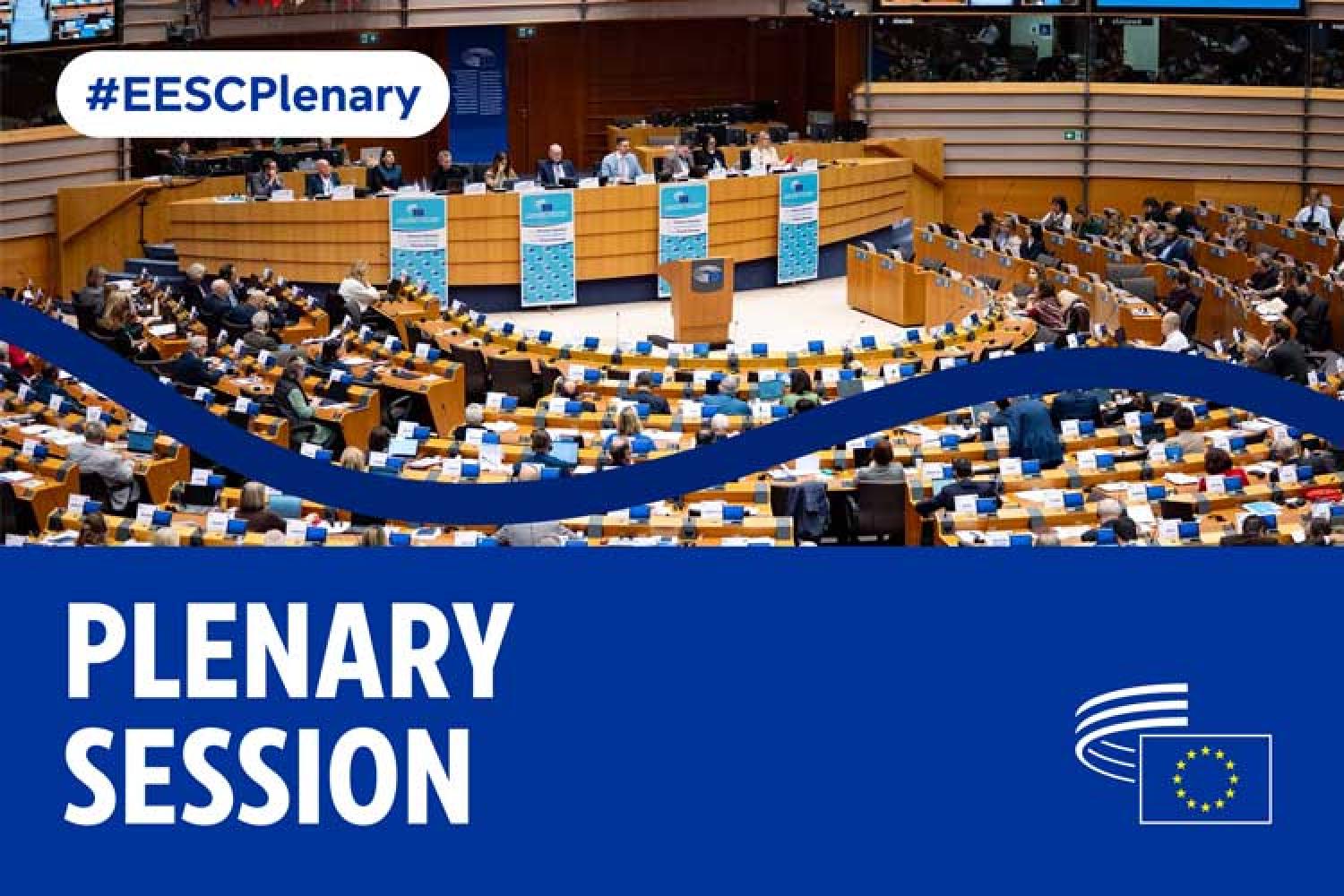
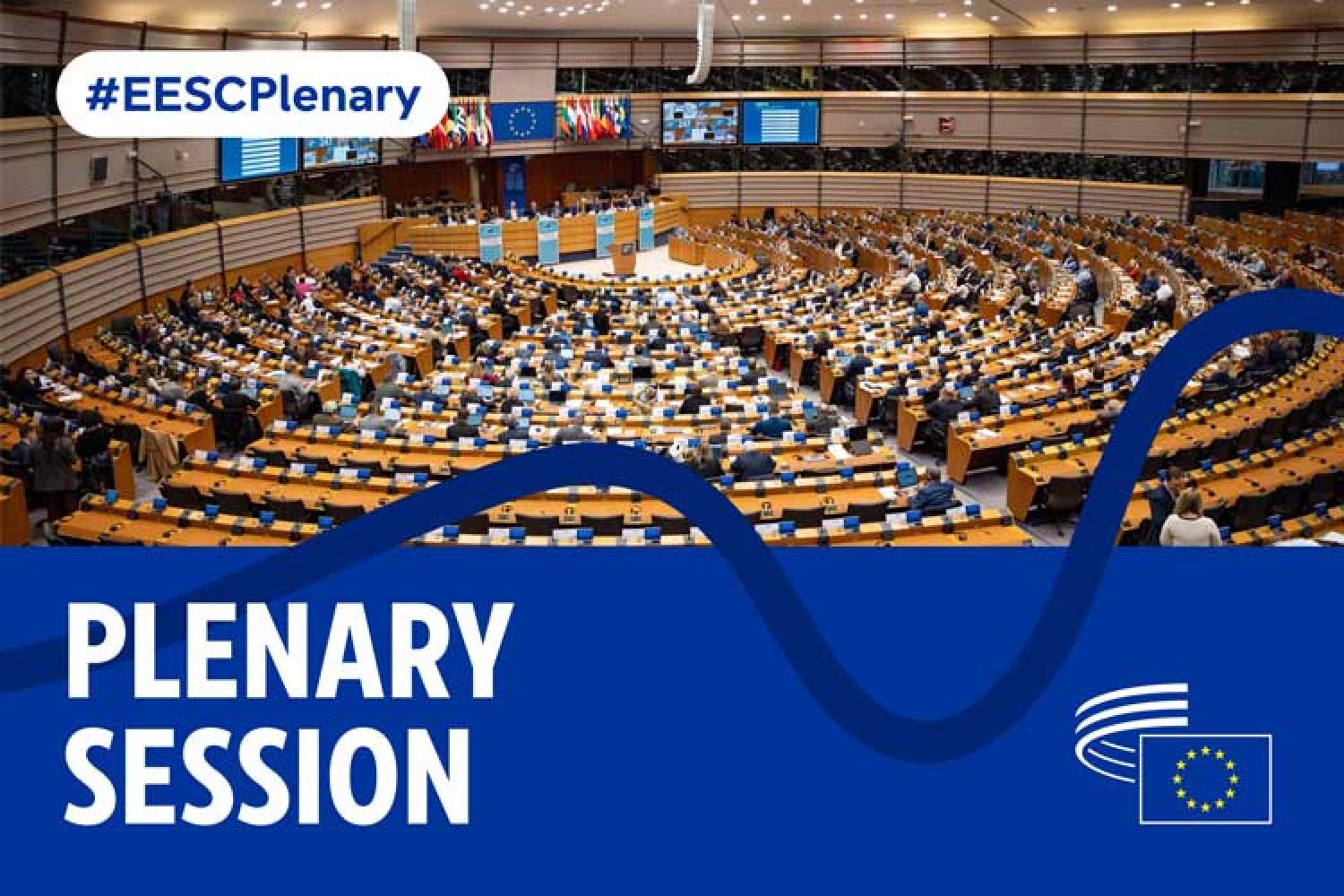
564th Plenary session of the Committee, with the following guests: Jean-Marie Paugam, Deputy Director-General of the World Trade Organisation, Janusz Wojciechowski, Commissioner for Agriculture and Padmashree Gehl Sampath, Berkman Klein Fellow, Harvard University. web streaming.
- Cohesion must be at the heart of post-pandemic Europe, say Commissioner Elisa Ferreira and EESC president Christa Schweng
- Media freedom must stay at the top of our agendas
- On the first EU "organic day", the EESC stresses the importance of more sustainable, fairer and more inclusive food systems
- AI in Europe: not all decisions can be reduced to ones and zeros
18/10/2021
Recent events caused by COVID-19, extreme weather due to climate disruption, cyber-attacks, and Brexit, demonstrate the need to rethink priorities and improve the resilience and sustainability of EU food systems, by reinforcing its autonomy. Food security is not a given for many EU citizens.
16/10/2021
With rising energy prices having an ever-increasing impact on businesses, workers and civil society at large, the European Economic and Social Committee (EESC) welcomes the European Commission's toolbox to mitigate the negative effect. EESC is also pleased that the document echoes a number of its proposals and calls for care to be taken to ensure that no one is left behind.
13/10/2021
On 12 October, the Polish Constitutional Tribunal ruling, which found that parts of EU law were "incompatible" with the Polish Constitution, entered into force. ...
14/10/2021
The European Economic and Social Committee (EESC) is contributing to the ongoing public debate with an event on the debt-equity bias; it assesses core elements such as the effects of this bias, its economic and social costs and ways of reducing it.
14/10/2021
The EESC president
More news
Featured
As set out in the Joint Declaration signed on 10 March 2021 by the European institutions, the Conference on the Future of Europe aims at connecting and engaging with citizens. The main aim of this key project - to which the EESC is fully committed – is to give a real say to citizens.
The 2021 prize will reward effective, innovative and creative initiatives carried out by civil society organisations and/or individuals on the territory of the EU which aim to promote a just transition towards a low-carbon and climate-resilient economy.
Applications are now closed. Over 50 applications from 24 Member States – all Member States but Cyprus, Sweden and the Netherlands – were received.
Upcoming events
Opinions in the spotlight
The EU is the world's biggest producer of glass with a market share of around one third of total world production. The industry is known for the quality of its products, its capacity for technological innovation and its skilled labour force. The glass industries comprise five sectors covering different glass products, applications and markets: containers, flat glass, glass fibre, special glasses and domestic glass.
The EESC strongly believes in the importance of the next Semester cycle as a key instrument for implementing the Recovery and Resilience Facility.
However, it is still concerned about the lack of clarity in most Member States as regards their National Recovery and Resilience Plan governance systems and the distribution of responsibilities for their implementation.
The EESC:
In its opinion, the EESC welcomes the proposal for a Regulation on general product safety (GPSR) as it updates and has the potential to improve the current Directive 2001/95/EC on general product safety (GPSD), especially with regard to the challenges and new developments in markets and technology.
The Communication is intended to update the previous Communication (COM (2020) 102 final) adopted on 10 March 2020 at the dawn of the COVID-19 crisis, taking into account the latest developments related in particular to the pandemic.
This opinion deals with the new Strategy for the future of Schengen issued by the European Commission last June. The Strategy is part of a broader effort to update and strengthen Schengen, which also includes a proposal to amend the regulation on the Schengen evaluation and monitoring mechanism. In this opinion, the EESC welcomes the Commission's Strategy towards a fully functioning and resilient Schengen area and reaffirms its full support for the principles underlying Schengen cooperation.
This opinion comments on the new EU strategic framework on health and safety at work for the period 2021-2027. The framework sets out the key actions needed to improve workers' health and safety over the coming years and focuses on three objectives: managing change brought by green, digital and demographic transitions as well as changes to the traditional work environment, improving prevention of accidents and illnesses, and increasing preparedness for any potential future crises.
The EESC welcomes the proposal's intention to implement the EPSR and other EU initiatives aimed at making quality and inclusive education a reality within the green and digital transitions. The EESC calls on Member States to ensure that blended learning is not detrimental to the social value of education or to the relevance of face-to-face teaching. They need to ensure that blended learning is established to support the quality and inclusion of education, in particular for children in need.


Work in progress