
European Economic
and Social Committee
CURRENT AFFAIRS: Start of the Cyprus Presidency 2026
<< Back to Newsletter
A very high bar for the Cyprus Presidency
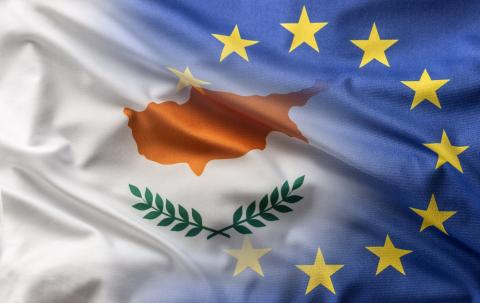
Fourteen years on, Cyprus has been called upon to assume the Presidency of the Council of European Union for the second time.
This responsibility is a national mission for all Cypriots. It is the duty of every Cypriot to contribute as fully as possible to the success of the Presidency of the Republic of Cyprus.
The bar has been set very high, encompassing not only the management of the new financial framework – essentially the EU budget for the next seven years – but also climate legislation, migration, the simplification of EU operating procedures, and much more. A wide range of issues, amounting to some 250 dossiers, will be opened for discussion.
The EESC Bureau has already convened at the Presidential Palace in Cyprus on 18-19 November 2025, in the presence of the President of the Republic of Cyprus, Nicos Christodoulides. On that occasion, the President presented the European vision of the presidency, while EESC President Séamus Boland emphasised that the EESC is fully focused on supporting it. President Christodoulides also highlighted Cyprus' role as a gateway to the Middle East, conveying strong confidence in the success of the Cyprus Presidency.
Due to its geostrategic location at the crossroads of three continents, Cyprus is well placed to play a peace-making role in a region marked by conflicts and competing interests, thereby strengthening the multidimensional role the EU can play in the region.
Among the foremost concerns of European citizens are the EU's environmental policy, the protection of natural resources, public health, and the need to address the multiple challenges arising from the climate crisis.
Cyprus is particularly affected by climate change, despite not being an industrial country. Annual rainfall is decreasing, with serious consequences for both people and the environment.
At the same time, tourism is growing rapidly, with visitor numbers reaching 5 million every year, compared with a resident population of just 965,000.
Resources are becoming increasingly scarce while demand continues to grow!
Meanwhile, the southern Mediterranean EU Member States promote the Mediterranean diet, which is so important and beneficial to people's health, as an alternative dietary option.
Respect for human rights and freedom of thought in a multicultural Europe is another pillar of European political philosophy, to be upheld on the basis of mutual respect and democracy, to which Europe gave birth.
We are facing not only the problems arising from political migration, but also the emergence of climate refugees fleeing to Europe. If we do not stop the climate crisis, these waves of migration will increase.
Europe is being called upon not only to crack down on corruption, but also to set a shining example for a new ethical policy in the EU. The Cyprus Presidency will certainly act in accordance with the basic principle of the ancient Greek philosopher Aristotle, who emphasised that politics is the science of sciences
.
Politics should be the science that provides solutions to humanity's problems. The EESC has a decisive role to play on the basis of this philosophy, because it is a European advisory body that provides opinions and advice on the formulation of EU regulations and directives.
Ensuring the food security of millions of EU citizens in the face of the climate crisis is an equally important task, to which we as the EESC are called upon to make a decisive contribution.
Around the world, major countries are already taking various measures to control food production, highlighting the well-known truth: whoever controls food controls the world.
That is why the EU must safeguard the common agricultural policy's philosophy as if it were the apple of our eye.
Reducing its budget is unacceptable, because ultimately European citizens will go hungry.
The EU must therefore pay close attention to the primary sector, ensuring not only quantity and quality but, above all, safety.
This is because, if there is one area in which the EU is far ahead of the rest of the world, it is the safety of the food that consumers have on their tables, underpinned by the EU's democratic processes, knowledge, innovation and, above all, respect for the environment.
We are confident that the EESC can propose immediate solutions to the challenges facing European citizens and beyond.
If we all unite with honesty and transparency, placing the general above the specific and the collective above the individual, then the EU can indeed recover both economically and socially.
In doing so, the Old Continent will open a window of peace and hope, offering a better tomorrow for all of humanity.
You can find more information about the priorities of the Cyprus Presidency here: Priorities

Anastasis YIAPANIS (Cyprus)
Member, EESC Civil Society Organisations' Group
Secretary-General, Panagrotikos Farmers' Union of Cyprus
© EU/EESC

Panagiotis CHAMPAS (Cyprus)
Member, EESC Civil Society Organisations' Group
General Secretary, Union of Cypriot Farmers (EKA)
© EU/EESC