
European Economic
and Social Committee
EESC Youth Test
What is the EESC Youth Test?
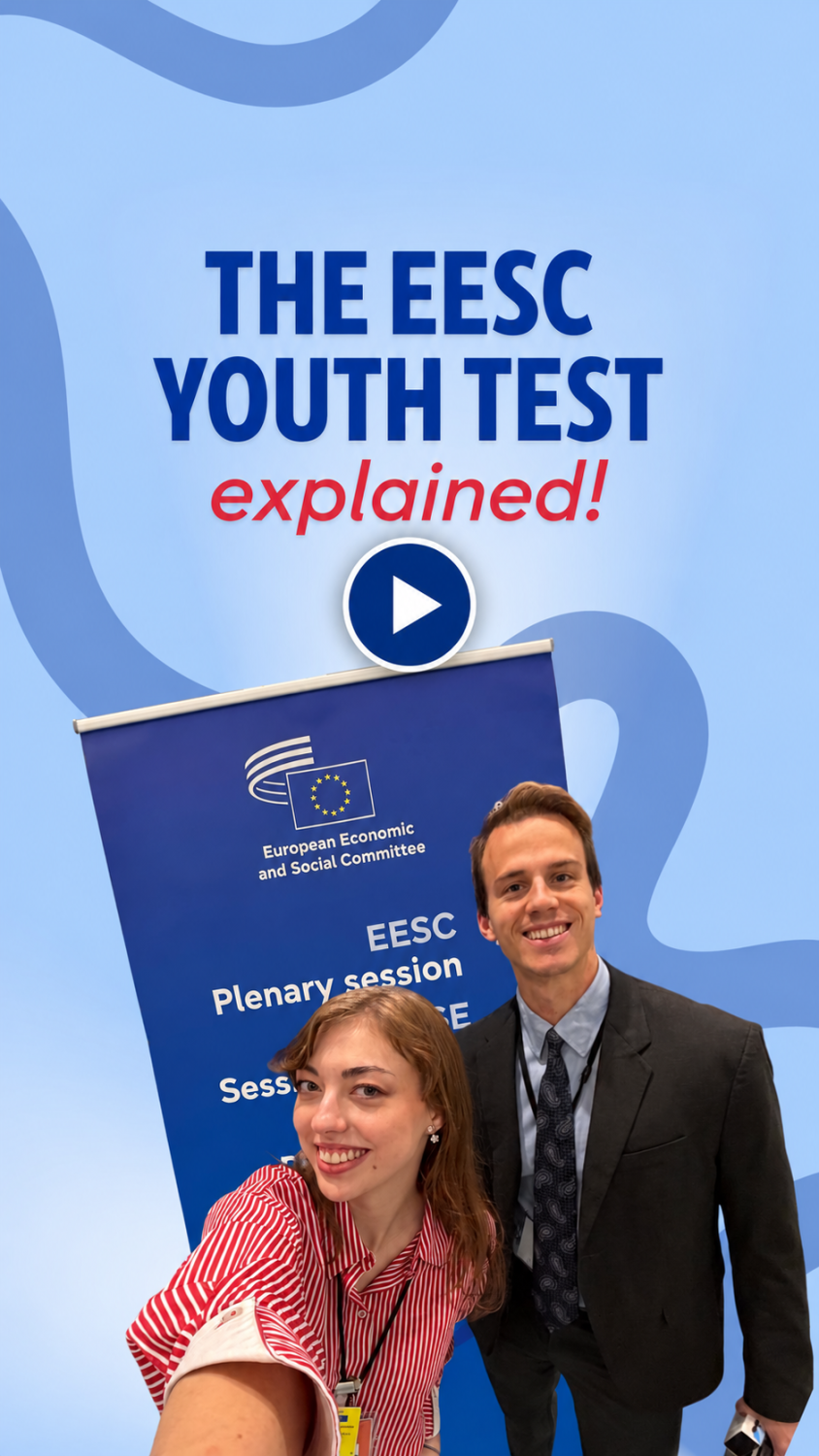
The EESC Youth Test gives young people a direct say in shaping EU policies. Through youth organisations, young people can share their views on EESC opinions before they are adopted.
Launched in 2024, it made the EESC the first EU institution to introduce a structured youth participation mechanism in its core policy work. The Youth Test is developed together with the European Youth Forum and continues to evolve based on participants' feedback.
Today, around one quarter of EESC opinions include a Youth Test.
How can my organisation get involved?
The EESC Youth Test network brings together 73 youth organisations from across Europe and beyond.
Interested organisations can apply through the "Apply here to take part!" section on the left side of this webpage, where you can also explore current and past Youth-Tested opinions.
What happens after my organisation joins the network?
Once a month, participating organisations receive a list of upcoming EESC opinions.
They can express interest in the ones they would like to contribute to. Based on this interest, EESC Members decide which opinions will go through the Youth Test.
Because only a limited number of opinions can be Youth-Tested each year, not every opinion will be selected. Organisations may still be invited to contribute through written input, meetings or other forms of consultation.
What happens when an opinion is selected for the Youth Test?
If an opinion you're interested in is selected, you will be informed by email.
When several organisations want to work on the same opinion, they are invited to agree on one youth representative who will participate in the process on behalf of all interested organisations.
The representative should have relevant knowledge of the topic and be between 18-35 years old.
What is a youth representative and what do they do?
A youth representative is the person chosen to represent participating youth organisations during the drafting of an EESC opinion.
They take part in study group meetings, share the views of young people, discuss how the proposal may affect youth, and can also submit written contributions.
They keep the other interested youth organisations informed of the discussions in the study group meetings.
What are study group meetings?
Study group meetings are where EESC opinions are discussed and drafted.
A study group usually includes:
- EESC Members responsible for drafting the opinion which include
- A study group president, who chairs the meetings
- A rapporteur (and sometimes co-rapporteurs), who prepare the text
- Advisors with expertise on the topic
- EESC secretariat staff, who support the process
There are usually 10 to 20 participants.
Most opinions have two study group meetings, typically held one to two months apart. Meetings are usually hybrid, meaning you can join in Brussels or online.
Will my costs be covered?
Online participation is unpaid.
If your physical presence is required, travel and accommodation costs can be reimbursed if you travel more than 100 km to the EESC offices in Brussels.
What language will I work in?
The main working languages are English and French.
Interpretation into other official EU languages may be available when already provided by the EESC. If so, this will be communicated before the meeting.
Where can I find out more?
To discover other youth participation opportunities at the EESC, visit the Youth Participation at the EESC webpage or contact us at youtheesc@eesc.europa.eu.
Make civil society proposals youth proof! (pdf)
Downloads
-
EESC Youth Test - Make civil society proposals youth proof!
-
List of Youth Organisations participating in the EESC Youth Test