Newsletter Info

EESC info

European Economic and Social Committee A bridge between Europe and organised civil society

APRIL 2024 | EN

GENERATE NEWSLETTER PDF

Available Languages:

  • BG
  • CS
  • DA
  • DE
  • EL
  • EN
  • ES
  • ET
  • FI
  • FR
  • HR
  • HU
  • IT
  • LT
  • LV
  • MT
  • NL
  • PL
  • PT
  • RO
  • SK
  • SL
  • SV
Our vote counts!

Editorial

Dear readers,

Our democracies are being tested by a number of factors that have been affecting Europe since Russia's aggressive war against Ukraine, with severe social, political and financial impacts on every Member State and on the Union itself. Yet I have always believed that when confronted with challenging times, European citizens stand united, together, determined to pave the way forward and shape the Europe they want for their future and for generations to come by voting to choose the new European leadership.

Read more in all languages

Dear readers,

Our democracies are being tested by a number of factors that have been affecting Europe since Russia's aggressive war against Ukraine, with severe social, political and financial impacts on every Member State and on the Union itself. Yet I have always believed that when confronted with challenging times, European citizens stand united, together, determined to pave the way forward and shape the Europe they want for their future and for generations to come by voting to choose the new European leadership.

As the upcoming European elections will greatly affect the course of the EU over the next five years, the EESC has joined forces with the European Parliament by signing a Memorandum of Understanding on Cooperation in preparation for the European elections, scheduled for 6-9 June 2024.

Experience shows that the turnout at European elections is lower than for national elections. For this reason, the EESC is going to be very active in raising awareness of the upcoming European elections. By mobilising our network of 90 million people – employers', workers' and other civil society organisations – we can help boost turnout.

A number of measures have already been put in place, starting with the Civil Society Week held on 4-7 March 2024, which saw over 800 representatives from civil society organisations and youth groups gather to discuss the upcoming elections and the future of the EU.

With the adoption of a Resolution at the March plenary, the EESC issued its call encouraging citizens to get out and vote. A dedicated webpage under the slogan #USEYOURVOTE has been set up to host activities, events and initiatives by the EESC members and staff. Members' local outreach activities will play a key role!

On 4 May, all EU institutions will open their doors to celebrate democratic engagement in the elections by marking the anniversary of the "Schuman Declaration". Meanwhile, on 26 May, our passionate "Run For Europe" team will take part in the Brussels 20K event to promote the "Use your Vote" campaign. We should not forget that the more people that vote, the stronger democracy becomes. The more people that vote, the more legitimate the decisions taken become. This time round, citizens, especially young people, need to get out and vote. By doing so, they can make a difference and give Europe a "face", a "face" they will be proud of.

As it addresses the general interest of European citizens, civil society can play a pivotal role in this campaign, particularly when it comes to raising awareness about the importance of elections and encouraging people to vote.

Let's work together, reach out to citizens and to civil society organisations, at all levels – European, national, regional – engage with them in a true dialogue, listen to their voice and tell our political leaders what the organisations of millions of citizens that we represent expect from the new MEPs and the new Commission over the next 5 years.

Our vote counts! #USEYOURVOTE

Respectfully yours,

Laurenţiu Plosceanu, Vice-President for Communication

Diary Dates

4 May 2024

Celebrate Europe Day and learn about the EESC: Open Doors Day on 4 May!

30-31 May 2024

EESC plenary session

6-9 June 2024

European elections 2024

To the Point

In this issue we give the platform to Carlos Trindade, EESC member and rapporteur of the opinion Safeguarding democracy against disinformation. On the eve of the European elections, he writes about the harmful consequences that disinformation can have on democracy, and how to fight it if we want to live in one.

Read more in all languages

In this issue we give the platform to Carlos Trindade, EESC member and rapporteur of the opinion Safeguarding democracy against disinformation. On the eve of the European elections, he writes about the harmful consequences that disinformation can have on democracy, and how to fight it if we want to live in one.

Safeguarding democracy against disinformation

Nearly two months away from the next European elections, disinformation is becoming of increasing importance in European political life because of the nefarious influence it could have on the election results.

Read more in all languages

Nearly two months away from the next European elections, disinformation is becoming of increasing importance in European political life because of the nefarious influence it could have on the election results.

For years the harmful consequences of disinformation have been a matter of concern for the public in general, and for politicians in particular. Democratic society and our cosmopolitan way of life are being called into question. The extreme right and other extremist European forces and autocratic regimes in third countries are forging alliances to carry out disinformation campaigns that are undermining the European venture, and they are using social media and algorithms to do it. They are using technology as their main tool for this malicious campaign.

A multifactor strategy is needed to protect democracy and to overcome disinformation, and existing technology can help us successfully counter it. It is crucial that the three areas of the digital combat – disinformation, hybrid threats and cybersecurity – be joined up effectively, creating synergies and enhancing security, while respecting the rule of law.

It is likewise essential to regulate the creation and operation of algorithms so that people can decide to accept or reject certain algorithmic features, and strike the right balance between people’s fundamental rights on the one hand, and companies’ intellectual property rights on the other. However, it is unacceptable for tech companies to turn manipulation and hate speech into profit. Private interests cannot override public interest.

It is essential that public, pluralistic and independent information in all the EU’s languages convey indisputable facts relating to the promotion of national, regional and local information in the Member States.

On the agenda is the creation of a European public news channel, available on different platforms, with a serious commitment to editorial independence, allowing Europeans to access the information they need in order to make informed choices. Classifying journalism as a European public good, as proposed by UNESCO, and stepping up ways to defend journalists, are steps that need to be taken.

On literacy and empowering the general public, it is essential to follow Finland’s excellent example of promoting people’s creative thinking. This requires measures that provide tools to promote media, cultural and democratic literacy at all levels of education, and addressing all age groups and minorities.

Democracy is the government of the people by the people, and the best way to protect democracy is for people to express their strong desire to live in a democracy!

The European social model – through social and regional inclusion and cohesion, equality and solidarity – is the most effective (and most rational) way for people to feel that their general well-being goes hand in hand with democracy, and for them to therefore be inclined to fight disinformation.

To protect democracy there is an urgent need for a more in-depth approach, a holistic strategy and better European regulation of the many dimensions of this phenomenon. All this is dealt with in our opinion, prepared by the EESC's section for Transport, Energy, Infrastructure and Information Society (TEN).

Carlos Trindade, EESC member

The surprise guest

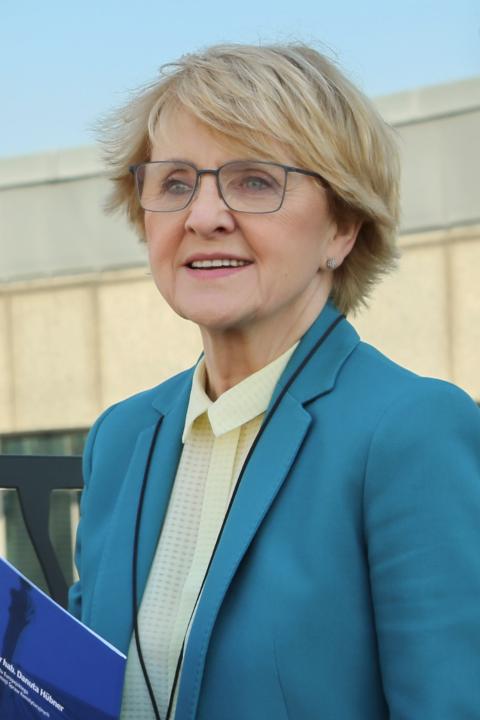
In this issue, our surprise guest is Professor Danuta Hübner, Member of the European Parliament, from the European People's Party Group. She lists all the reasons why the 2024 elections will be a battle for Europe and why political parties have a major responsibility to encourage their potential voters to go to polls. In 2024, we just cannot afford letting others decide who will represent us in European decision making - this time, too much is at stake.

Read more in all languages

In this issue, our surprise guest is Professor Danuta Hübner, Member of the European Parliament, from the European People's Party Group. She lists all the reasons why the 2024 elections will be a battle for Europe and why political parties have a major responsibility to encourage their potential voters to go to polls. In 2024, we just cannot afford letting others decide who will represent us in European decision making - this time, too much is at stake. 

Danuta Hübner: the vote matters

Every five years, European citizens go to the polls to elect their representatives to the European Parliament (EP), the only directly elected institution of the European Union. In 2024, 720 newly elected members will usher in the tenth legislature. During the five-year term, they will play a decisive role in shaping Europe, its institutions and policies, its place in the polarized global world and its commitment to common values.

Read more in all languages

Every five years, European citizens go to the polls to elect their representatives to the European Parliament (EP), the only directly elected institution of the European Union. In 2024, 720 newly elected members will usher in the tenth legislature. During the five-year term, they will play a decisive role in shaping Europe, its institutions and policies, its place in the polarized global world and its commitment to common values.

All elections are important. This is how democracy starts. But we know that democracy is much more than elections. We can see democratically elected governments who practice democracy while bending the rule of law. Elections, even if fair and free, are not the only guarantee of democracy, nor are they the only factor that determines democracy. This is why voters should be actively engaged in the elections.

The past five years have been marked by a number of almost existential challenges for the European Union. We had to deal with Brexit and its consequences. This was followed by the COVID pandemic, Russia's brutal, inhuman invasion of Ukraine, ensuing economic challenges, including the energy crisis and high levels of inflation. We coped with all these unexpected disruptions while pursuing our key strategic objectives of double transition to a green and digitally competitive economy. A changing geopolitical environment led to far reaching sanctions imposed by the EU and its democratic partners on Russia, to moving towards de-risking our dependencies on China and putting our relations with the US on an unprecedented solid foundation. The Union has also launched the first ever European defence industry programme, which will come to fruition in the years ahead.

The 2024 elections will be a battle for Europe. The electoral campaign will need to meet the expectations of citizens, respecting their role in European decision making. There is no doubt that issues like migration, climate change and support for Ukraine defending their homeland against Russian aggression concern all of us who care about freedom, democracy and peace. Elected politicians will need to spare no effort to ensure the effective rebooting of enlargement policy. When debating with candidates about their task for the next five years, they must be made aware, that if elected, they will have to take into account that the European Union is part of a crumbling world, divided between democracies and authoritarian regimes. 2024 is a year of elections taking place across the world, in countries populated by 4 billion inhabitants.

We, Europeans, will be paying close attention to the decisions of Americans going to the polls to elect their president. The transatlantic relationship will be an important issue during our European election debates. It is the duty of European politicians and political parties to spare no effort in engaging with citizens and encouraging them to make their voices heard. Geopolitical uncertainty makes it more important than ever. Political parties that present their candidates for the elections often have different opinions on issues that are of crucial importance for our lives. We can have a say and impact the future of Europe, which is our future, only if we, as citizens, engage in debating with candidates and go to the polls. Sometimes we get frustrated and angry. But that is exactly why our active participation in political electoral dialogue is of such importance.

In 2019, for the first time ever, the turnout of the European elections slightly surpassed 50 percent. It was the vote of young Europeans that helped push the participation rate. On the one hand, it is good news that half of those eligible to vote used their right to vote. But on the other hand, it means that half of us, European citizens with voting rights, did not vote. In 2024, we cannot afford to let others decide who represents us in European decision making and legislating. Low participation reduces the legitimacy of those elected and translates into their weaker role in the European Parliament. It is a major responsibility of political parties to encourage their potential voters to go to the polls.

For decades, Europeans have seen governments as their representatives in the EU. The 2024 elections offer a window of opportunity to demonstrate the real power of the EP as the voice of citizens. There will be first time voters. In five Member States, 16-year-olds will vote. Young people will have different expectations of politicians. We have seen this during the Conference on the Future of Europe, we hear it now during the follow up panels organised by the European Commission. Politicians should use the upcoming European elections as a process to build a new generation of voters and politicians, as a window of opportunity to enhance transparent political education, as well as identity and trust building.

The communication strategy of the EP for the 2024 EU elections is focusing on mobilising abstainers and first-time voters, helping others involved, including the media, NGOs, companies and individuals, supporting the non-partisan civic engagement of European citizens and organisations in promoting the importance of going to vote.

We already see foreign interference in the European elections, hybrid operations in disinformation, destroying trust in institutions and politicians and producing divisive narratives. This is happening before elections, there will be more of it during the elections and there will be post electoral pathologies. Laws against disinformation must be enforced. National and European actions will not be enough, we need meaningful funding supporting a 'whole-of-society' approach to expose disinformation and its perpetrators, as this affects peoples' daily life and their strategic choices.

With these elections, the fate of democracy, freedom and security is at stake. And the vote matters.

Danuta Hübner, Member of the European Parliament (EPP Group)

EESC Info column: I'm voting, are you?

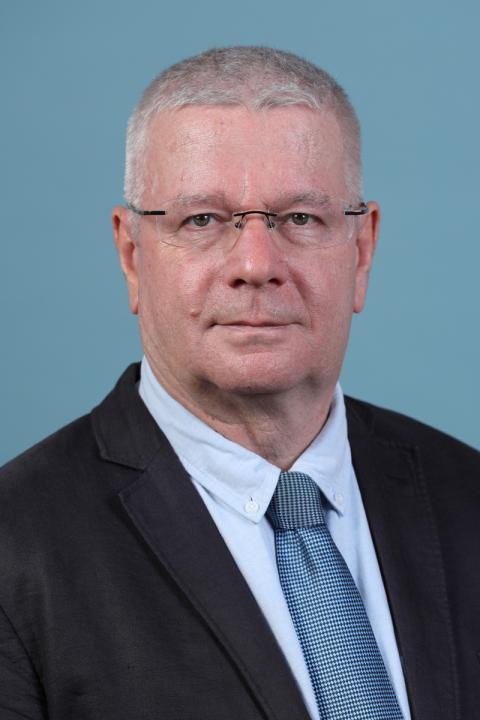
In our column 'I'm Voting. Are you?' we bring you the article by Mihály Hardy, Hungarian journalist and editor-in-chief of Klubrádió, who gives us a glimpse of the pre-election climate in Hungary. Klubrádió is the country's last major independent radio station which broadcasts 24/7 news and gives background analysis on current affairs and culture. The radio station was stripped of its frequency by the government media authority, but managed to survive due to its popularity and crowdfunding. 

Read more in all languages

In our column 'I'm Voting. Are you?', we bring you the article by Mihály Hardy, Hungarian journalist and editor-in-chief of Klubrádió, who gives us a glimpse of the pre-election climate in Hungary. Klubrádió is the country's last major independent radio station which broadcasts 24/7 news and gives background analysis on current affairs and culture. The radio station was stripped of its frequency by the government media authority, but managed to survive due to its popularity and crowdfunding. 

Mihály Hardy: Freedom at stake

'Freedom is just another word, for nothing left to lose…' -  says a very popular country music song written by Kris Kristofferson in 1969 and sampled by many performers from Janis Joplin to Kenny Rogers. However, freedom in Europe today, unlike the song 'Me and Bobby McGee', means that we have a lot lose if we do not stand up for our freedom. Especially in Hungary.

Read more in all languages

'Freedom is just another word, for nothing left to lose…' - says a very popular country music song written by Kris Kristofferson in 1969 and sampled by many performers from Janis Joplin to Kenny Rogers. However, freedom in Europe today, unlike the song 'Me and Bobby McGee', means that we have a lot lose if we do not stand up for our freedom. Especially in Hungary.

People get used to good things very fast. They do not look back to appreciate liberties like freedom of travel, freedom of the press, freedom of employment or freedom of education across Europe. People of my generation (a boomer born in the late 50s when Hungary was still in the Warsaw Pact) do remember the long road leading to present day freedom, from the fall of the Berlin wall to Hungary's accession to the EU, the family of free nations back in 2004. It took fourteen years from the fall of Communism until our country was able to join, together with Czechia, Slovakia and Poland. In my view, right now we have another fourteen years behind us, with Hungary slowly sliding backwards, falling behind, beginning with the vanguard of civil liberties and press freedom in the early nineties to today's populism, autocracy and constitutional dictatorship, which is a contradiction in itself.

The government in Budapest has almost openly declared war on common European values: its narrative calls 'Brussels' an enemy, paints the EU as the devil itself. This has been going on for almost 14 years now and demonstrates the difficulty in supporting any pro-European campaign, either from the opposition (or what is left of it) or civil society and NGOs (also what remains of them). Yet, we refuse to give up - we refuse to let European values go down the drain just because some Hungarian politicians have decided to play music composed far away, perhaps in the Kremlin.

Recent polls in Hungary still show that almost 68-70% of the voting age population supports and enjoys the benefits connected to the European Union and common European values. The big question is whether they are ready to go the polls in large numbers on 9 June 2024. In Hungary, this vote is on the same day as the municipal elections and, with discontent growing in the country, the prospects are not bad. A protest vote against the government's policies will also mean a pro-European vote.

Mihály Hardy is a Hungarian journalist, Editor-in-Chief of the Klubrádió

EESC News

The future European single market needs a new geopolitical focus

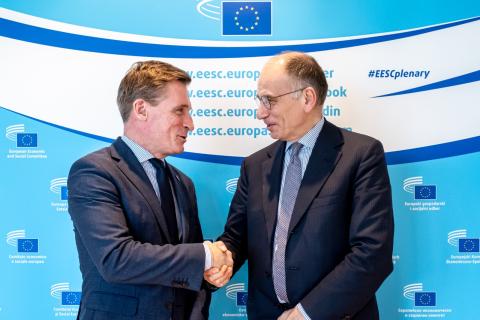
The strategic rethinking of the EU single market is now a necessity. The world is not the same as it was 30 years ago - the single market needs to be adapted to the new international landscape, former head of the Italian government Enrico Letta said at the EESC plenary session debate on 20 March 2024.

Read more in all languages

The strategic rethinking of the EU single market is now a necessity. The world is not the same as it was 30 years ago - the single market needs to be adapted to the new international landscape, former head of the Italian government Enrico Letta said at the EESC plenary session debate on 20 March 2024.

Presenting the key idea behind his High-Level Report on the Future of the Single Market, Mr Letta, the current president of the Jacques Delors Institute, stressed that the future single market needed to have a geopolitical approach and focus on Europe’s strategic autonomy and pillars such as defence, telecommunications, energy and finance.

‘The geopolitical landscape is now totally different to what it was 30 years ago. The mission today is to consider what consequences the new world scenario has for the single market and its future. We need to have a new approach and include matters such as defence and enlargement,’ he said.

EESC president Oliver Röpke stressed that the success of the single market could not just be measured in economic terms, but must also mirror European citizens’ hopes and wellbeing: ‘At the EESC, we believe that the single market is fundamentally about people - and the right to move also means the freedom to stay.’

Mr Letta pointed out that the single market was both about people and for people. Economic competitiveness had to go hand in hand with social protection, and the freedom to move and the right to stay were part of the same freedom: ‘Brain drain is having a devastating impact in some countries. We have to address the freedom to stay and freedom to come back. Today it is a one-way ticket only, and this is affecting competitiveness and creating a big problem in Europe.’ (mp)

Housing crisis – the EESC calls on the EU to act

More and more Europeans are worried about not being able to find decent accommodation they can afford. The risk is inadequate housing, financial pressure, housing insecurity and even homelessness. Unaffordable housing can affect people’s health and well-being, give rise to unequal living conditions and opportunities and result in healthcare costs, lower productivity and environmental damage.

Read more in all languages

More and more Europeans are worried about not being able to find decent accommodation they can afford. The risk is inadequate housing, financial pressure, housing insecurity and even homelessness. Unaffordable housing can affect people’s health and well-being, give rise to unequal living conditions and opportunities and result in healthcare costs, lower productivity and environmental damage.

A recent conference held by the European Economic and Social Committee (EESC) in Brussels sent a clear warning: the housing crisis in Europe is getting worse and this is bringing about a number of side effects.

According to a recent Eurofound study, the housing crisis affects young people in particular, preventing them from moving out of their family home. The age at which at least 50% of people in the EU were living outside their parental home increased from 26 to 28 between 2007 and 2019. Between 2010 and 2019, Spain, Croatia, Italy, Cyprus, Belgium, Greece and Ireland faced the largest increases in people aged 25–34 living with their parents.

Over the years, the EESC has sought to flag up housing issues across the EU. In 2020, the Committee adopted an opinion on  Universal access to housing that is decent, sustainable and affordable over the long term drafted by its members Raymond Hencks and András Edelényi and called for a European action plan on housing.

With the recommendations from this conference, the EESC intends to give political impetus to the debate and ensure that the EU housing crisis appears on the 2024-2029 agenda of the new European Parliament and Commission. The European Union must pull together the resources to fight the shortage of decent and affordable housing. (mp)

Three EU institutions urge the Commission not to delay the Water Resilience Initiative

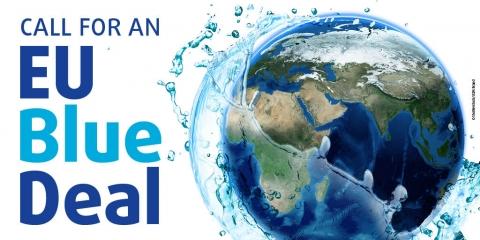
In a joint response to the European Commission's postponement of the Water Resilience Initiative, representatives of the European Economic and Social Committee (EESC), the MEP Water Group of the European Parliament (EP) and the European Committee of the Regions (CoR) sent an open letter to Executive Vice-President Maroš Šefčovič, asking the Commission to adopt a comprehensive approach to water and reiterating their call for an EU Blue Deal.

Read more in all languages

In a joint response to the European Commission's postponement of the Water Resilience Initiative, representatives of the European Economic and Social Committee (EESC), the MEP Water Group of the European Parliament (EP) and the European Committee of the Regions (CoR) sent an open letter to Executive Vice-President Maroš Šefčovič, asking the Commission to adopt a comprehensive approach to water and reiterating their call for an EU Blue Deal.

The letter reflects the shared concerns of these institutions regarding the postponement of the Water Resilience Initiative, which they view as a worrying signal regarding the EU's commitment to address Europe's escalating water challenges. The three institutions represent EU civil society, citizens and local governments, respectively.

They propose a holistic and collaborative approach that integrates water into all policies to ensure equitable social access, access for farmers, industries and infrastructure, and the social, economic and environmental aspects of water.

This shift aims to move beyond existing fragmented approaches, fostering a more comprehensive and effective standalone water strategy. This interinstitutional call urges the Commission to continue its work on the Water Resilience Initiative and make water a top EU priority in the upcoming term (2024-2029).

See the full letter here.(gb)

#RareDiseases, next step: integrating European Reference Networks into national health systems

On 8 March 2024, the European Economic and Social Committee and the European Commission held a conference on Rare Diseases in the EU: Joint Action shaping the future of ERNs (JARDIN kick off meeting) in Brussels. The goal was to launch a joint European initiative on rare diseases to integrate the European Reference Networks (ERNs) into national health systems, while building a common front among EU institutions, European countries, civil society organisations, patient associations, scientists, practitioners and hospital managers.

Read more in all languages

On 8 March 2024, the European Economic and Social Committee and the European Commission held a conference on Rare Diseases in the EU: Joint Action shaping the future of ERNs (JARDIN kick off meeting) in Brussels. The goal was to launch a joint European initiative on rare diseases to integrate the European Reference Networks (ERNs) into national health systems, while building a common front among EU institutions, European countries, civil society organisations, patient associations, scientists, practitioners and hospital managers.

EU health systems struggle to provide high-quality, cost-effective care when it comes to rare or low prevalence complex diseases that affect the daily lives of around 30 million Europeans. This is why it is important to harness the potential of the ERNs, the virtual networks of healthcare providers across Europe which facilitate discussions on complex or rare diseases and conditions that require highly specialised treatment and concentrated knowledge and resources.

The Joint Action JARDIN is a project integrating the ERNs into national health systems and working to make them sustainable. It develops national patient pathways linked to ERNs, national reference networks mirroring and complementing the ERNs, and structures for undiagnosed patients.

The project involves 27 EU Member States, Norway and Ukraine. It is coordinated by Austria and has a total funding of EUR 18.75 million (EUR 15 million from the EU and EUR 3.75 million from the Member States) for a period of three years. The results expected from JARDIN, including recommendations, blueprints and reports from concrete pilot projects, should lead to better national plans for rare diseases in EU Member States. (mp)

EESC delivers key recommendations for social unity and inclusive growth in Europe

The European Economic and Social Committee (EESC), at the request of the Belgian Presidency of the Council of the EU, has unveiled crucial recommendations intended to bolster social cohesion, manage debt and prioritise investments in healthcare and employment across Europe. The EESC expressed concern that tight budgets might slow down progress in fighting poverty and climate change.

Read more in all languages

The European Economic and Social Committee (EESC), at the request of the Belgian Presidency of the Council of the EU, has unveiled crucial recommendations intended to bolster social cohesion, manage debt and prioritise investments in healthcare and employment across Europe. The EESC expressed concern that tight budgets might slow down progress in fighting poverty and climate change.

The EESC put forward its recommendations in the opinion Boosting long-term inclusive growth through reforms and investments which was adopted and debated at its March plenary session with the Commissioner for Jobs and Social Rights, Nicolas Schmit and the Belgian Minister for Pensions and Social Integration, Karine Lalieux.

The opinion emphasised the need for alignment between existing frameworks such as the European Semester and the European Pillar of Social Rights. The speakers in the high-level debate emphasised the need to advance Social Europe and address pressing issues such as the gender pension gap and digital inclusion. The high-level conference on the European Pillar of Social Rights, to take place shortly in Belgium, indicates a commitment to furthering the implementation of this instrument.

The Committee's proposals stress the efficient utilisation of financial resources, the engagement of social partners and civil society in decision-making processes, and the importance of ensuring that the green and digital transitions are just. Inclusivity is a central theme, as is maximising the impact of social investments while fostering economic stability and social cohesion in the EU. (tk)

©UN Women

EESC represented European civil society at the UN Commission on the Status of Women for the first time

In March, the EESC took part in the 68th session of the United Nations Commission on the Status of Women (CSW68), the main international and intergovernmental body fighting for gender equality, which took place in New York.

Read more in all languages

In March, the EESC took part in the 68th session of the United Nations Commission on the Status of Women (CSW68), the main international and intergovernmental body fighting for gender equality, which took place in New York.

This was the EESC’s inaugural participation at the UN’s largest annual gathering on women’s empowerment, which this year focused on ending women’s poverty. Giving a voice to European civil society in their fight for gender equality, the EESC contributed to the theme with a declaration comprising ten action points for the economic empowerment and social protection of women.

The EESC delegation was headed by President Oliver Röpke, who has made gender equality a core priority of his work and his presidency. President Röpke said: ‘The EESC has a long history of advocating for EU and global policies to advance gender equality and address the economic and social inequalities that women and girls struggle with today. But this is the first time we take this work, under one single voice of European civil society, to the highest possible stage in this collective fight towards global gender equality. Poverty is not gender-neutral, so neither can our response to it be’.

The action points listed in the EESC’s declaration encapsulated the EESC’s positions on the CSW68 theme. They were aimed at advancing gender equality, tackling poverty and strengthening institutions through a gender perspective, in line with EU priorities. Among other things, they also included protecting women from all kinds of violence, ensuring accessible healthcare services, women’s fair representation in the labour market, championing women’s leadership and ensuring equal opportunities through education.

‘A year from now, I hope to be able to say that the EESC’s presence at the UNCSW has helped give these demands a stronger voice. We can and should be critical. We need the critical voices of civil society, stakeholders, NGOs and institutions working towards this collective and shared goal: a more equal Europe, a more equal world. We can and should point to the road ahead,’ President Röpke said. The EESC formed part of an EU delegation represented by the EU Presidency. It had an observer role, together with the European Parliament. Alongside the President, the EESC delegation comprised the following members: Christa Schweng, Mariya Mincheva, Cinzia del Rio, Maria Nikolopoulou, Chiara Corazza and Sif Holst, the President of the EESC’s Equality Group. (ll)

EU Organic Awards 2024

The call for applications for the 3rd edition of the EU Organic Awards is opening and will run until 12 May 2024.

Read more in all languages

The call for applications for the 3rd edition of the EU Organic Awards is opening and will run until 12 May 2024.

The EU Organic Awards recognise different stakeholders along the organic value chain who have created innovative, sustainable and inspiring projects that have produced real added value for organic food production and consumption.

The Awards ceremony is scheduled for 23 September 2024, which is EU Organic Day.

Apply online now until 12 May 2024 23:59:59 CEST.

Celebrate Europe & Democracy!

Join us for the EESC Open Day on 4 May!

Mark your calendars for Saturday 4 May 2024 as the European Economic and Social Committee (EESC) opens its doors for the annual interinstitutional EU Open Day. We celebrate European democracy and focus on the upcoming European elections in June. It's a chance to learn about the EU, engage with civil society, and discover how your voice and your vote can shape the future of Europe.

Read more in all languages

Join us for the EESC Open Day on 4 May!

Mark your calendars for Saturday 4 May 2024 as the European Economic and Social Committee (EESC) opens its doors for the annual interinstitutional EU Open Day. We celebrate European democracy and focus on the upcoming European elections in June. It's a chance to learn about the EU, engage with civil society, and discover how your voice and your vote can shape the future of Europe.

Why visit the EESC Open Day?

  • The Jacques Delors building: Explore the iconic EESC building on Rue Belliard, the heart of organised civil society in Europe. Witness first-hand how representatives from employers, workers, environmentalists, consumers, and more contribute to EU policymaking.
  • Interactive learning: Engage in lively discussions with EESC members on topics close to your heart. Learn how social dialogue shapes EU legislation and how your voice can be heard. 
  • Activities for all ages: Enjoy a vibrant atmosphere with top-notch live music, interactive games that test your EU knowledge, and face-painting for the little ones. Take home a commemorative gift or caricature portrait and capture the day with a fun photo booth experience.
  • In-depth discussions: Get an insider's perspective on the EESC's role in shaping a sustainable, prosperous and inclusive Europe for all. Get a chance to engage in quick, focused discussions with EESC members on specific topics that matter to you. A unique opportunity to gain valuable insights from the heart of European policymaking.
  • The power of civil society: Discover how the EESC works to bridge the gap between citizens and the EU. See how diverse voices come together to advocate for social justice, environmental protection, and much more for a stronger European Union.

A celebration on two wheels!

Adding to the excitement, a group of cyclists will be arriving at the EESC on 4 May! Some of these dedicated EESC members and other individuals are pedalling 500km from France to Brussels to raise awareness about the European elections. Join us in cheering them on as they arrive at the EESC and learn more about their inspiring mission, their journey and challenges along the way.

More than just a visit, it's an experience

The EESC Open Day is your chance to connect with Europe, celebrate democracy and discover the power of civil society. Whether you're a seasoned EU enthusiast, an EU sceptic, or a curious newcomer, we offer something for everyone. Come explore, learn, and engage in the heart of European democracy!

Stay connected for more details

No prior registration needed. We'll be sharing more information about specific activities, and exciting highlights in the coming weeks. Follow us on social media and visit our website (www.eesc.europa.eu/openday) for updates.

Don't miss this unique opportunity to experience your EU first-hand! (cg)

#EuropeDay #UseYourVote

News from the Groups

Stefano Mallia: ‘The green transition must be carried out in such a way that allows businesses to be set up and grow'

Extract of an interview by the journal of the Federation of Finnish Enterprises Yrittäjä with Employers' Group President Stefano Mallia

The European elections are knocking at the door. In June, the citizens of the EU Member States will elect their representatives to the European Parliament, who will be in power for the next five years. When Stefano Mallia, President of the EESC Employers' Group, is asked about the biggest challenge facing European entrepreneurs over the next five years, the response is quick.

Read more in all languages

Extract of an interview by the journal of the Federation of Finnish Enterprises Yrittäjä with Employers' Group President Stefano Mallia

The European elections are knocking at the door. In June, the citizens of the EU Member States will elect their representatives to the European Parliament, who will be in power for the next five years. When Stefano Mallia, President of the EESC Employers' Group, is asked about the biggest challenge facing European entrepreneurs over the next five years, the response is quick.

– The green transition, he says.

According to Mallia, it is important for the transition towards a more environmentally sustainable economy and growth to ensure that businesses can thrive.

– The green transition must be carried out in such a way that allows businesses to be set up and grow. When businesses do well, then the whole of society does well too. Businesses create jobs and generate tax revenue for society.

Cutting red tape

One of the key tasks of the EESC’s Employers’ Group in recent years has been to help reduce the administrative burden significantly for businesses. Mallia notes that it was important for the Commission to understand, among other things, that the extensive reporting obligations for SMEs should be lifted.

– Whenever new legislation is being drawn up, it is essential to take account of business competitiveness. Care must be taken to ensure that business can grow.

The importance of voting in the European elections

While acknowledging that the European Union faces its own challenges and problems, Mallia believes that the EU as a whole has accomplished a lot.

– Entrepreneurs should vote so that there are people in the Parliament who look out for businesses and entrepreneurs. If you don’t vote, you will hand the decision-making power to others. Voting in the European elections can also prevent extremists from gaining power.

Read the full interview here.

Community upwind: no generation without representation

by the EESC Workers’ Group

Energy cooperatives and communities are key to making the green transition a success. Yet the Commission fails to give them due prominence in its action plan for wind power in Europe which seems to ignore the mounting opposition to new wind farms.

Read more in all languages

by the EESC Workers’ Group

Energy cooperatives and communities are key to making the green transition a success. Yet the Commission fails to give them due prominence in its action plan for wind power in Europe which seems to ignore the mounting opposition to new wind farms.

In October, the European Commission presented the European Wind Power Action Plan (WPAP) to ensure that the clean energy transition goes hand-in-hand with industrial competitiveness and that wind power continues to be a European success story.

Generating more than a third of Europe’s renewable electricity – and over 17% of its total electricity production – wind power is a fundamental piece of net-zero electricity production for the future.

However, the Commission’s Action Plan seems to ignore the mounting opposition to new wind farms, from landscape defenders to nature conservationists, with NIMBY-like (Not in My Backyard) reactions.

Cooperatives and communities, driving a local, citizen-led process that can own the transition, are crucial for overcoming this opposition and ensuring that the benefits of this transition are widely shared. Moreover, they are also important if renewable generation is to bring a new, more decentralised system of power generation.

Instead, the Commission’s WPAP focuses only on large companies. This will harm the process, lowering acceptance and risking the transition. The Commission should reconsider the scope of its Action plan and include citizen participation as its 7th pillar.

It should ensure that bids are not exclusively price-driven and take into consideration environmental, occupational health and safety, and collective bargaining concerns, as the EESC recently recommended in its opinion on the topic.

Conference on Professional Support for the EU Blue Deal – 8th edition of the European Day of Liberal Professions

by the EESC Civil Society Organisations' Group

The European Economic and Social Committee's Liberal Professions Category will hold the 8th edition of the European Day of Liberal Professions on 7 May 2024, from 10:30 to 16:00 in Brussels.

Read more in all languages

by the EESC Civil Society Organisations' Group

The European Economic and Social Committee's Liberal Professions Category will hold the 8th edition of the European Day of Liberal Professions on 7 May 2024, from 10:30 to 16:00 in Brussels.

Join us to debate this year's theme “Professional Support for the EU Blue Deal”. Together with key policymakers from the European Commission, European Parliament and the Member States, we will seek solutions to address the growing challenges related to water.

Water is a vital but an increasingly scarce resource. As the global population grows, so does the demand for water. Almost two thirds of European citizens consider water quality and/or quantity in their country to be a serious problem. Climate change will further affect the availability, quality and quantity of water. Without action, water scarcity and poverty could concern increasingly larger parts of civil society around the world, with far-reaching implications for food security, the environment, human health and economic, social, and political stability.

At this conference, which has already positioned itself as an exciting and relevant platform for Europe's leading professionals, we will discuss the ways in which liberal professions can help find innovative solutions to put an EU Blue Deal in place and to mitigate the water-related challenges that Europe and the world will face in the years and decades to come.

Simultaneous interpretation will be available in English, German and Italian. The conference is open to the public. You can either join the conference in person or remotely. Prior registration for both is required.

Please register by 2 May 2024 on our dedicated registration page.

European Elections Special

Cast your ballots in June 2024: the EESC is calling on Europeans to vote for a united and democratic Europe

On 20 March, the EESC adopted a resolution calling on European citizens to use their democratic right to vote and to cast their ballots in the fast-approaching European elections.

Read more in all languages

On 20 March, the European Economic and Social Committee (EESC) adopted a resolution calling on European citizens to use their democratic right to vote and to cast their ballots in the fast-approaching European elections.

‘We have gone through difficult times, but no one can deny that the EU has guaranteed peace, democracy, economic prosperity and social progress for its Member States and citizens. Thanks to the Union, we have the freedom to work, study and do business in all EU countries,’ the EESC stated in the resolution.

‘Nationalism, populism and single-state solutions are not the answer. Collaboration, cooperation and convergence are,’ the EESC said, stressing that no EU country can cope with challenges like rising inflation, wars, migration or the climate emergency alone.

The resolution was adopted at the EESC March plenary session following the debate The 2024 European elections through a civil society lens, which saw the participation of civil society activists and the national economic and social councils of France and Bulgaria.

The EESC said it wanted to mobilise its network of at least 90 million people across the EU, and make sure that Europeans headed to the polls to decide who will represent them in the European Parliament over the next five years.

EESC president Oliver Röpke told the plenary that the organisations represented by EESC members have deep roots in national civil societies: ‘We can reach out to everyone, we can get people to vote, and we must do it. It is our moral duty.’

The EESC has also joined forces with the European Parliament to help boost the turnout, which is usually much lower than in national elections, particularly in some Member States.

The EESC president stressed that against the backdrop of democracy in retreat around the world and in some Member States, the stakes seemed particularly high for the 2024 elections.

‘These elections are not the silver bullet to end our troubles, resolve our fears or alleviate citizens’ worries, but they are a legitimate way of expressing our wishes, of demanding a better future, and of holding those in power to account,’ Mr Röpke said.

Speaking at the plenary, the three Resolution rapporteurs, EESC members Christa Schweng, Cinzia del Rio and Ioannis Vardakastanis, representing the EESC Employers’, Workers’ and Civil Society Organisations’ Groups respectively, were united in their calls on Europeans to use their vote and elect representatives who will stand up for a united, democratic, sustainable and social Europe.

The EESC will adopt another resolution in July, focusing on civil society’s demands for the newly elected European Parliament and the Commission.(ll)

The EESC and the European Parliament agree to close cooperation ahead of 2024 European elections

On 27 February, the presidents of the European Economic and Social Committee (EESC), Oliver Röpke and the European Parliament (EP), Roberta Metsola signed a Memorandum of Understanding on cooperation in preparation for the European elections.

Read more in all languages

On 27 February, the presidents of the European Economic and Social Committee (EESC), Oliver Röpke and the European Parliament (EP), Roberta Metsola signed a Memorandum of Understanding on cooperation in preparation for the European elections.

The partnership aims to deepen the cooperation between the two institutions to promote European elections, boost voter turnout – especially among non-voters and first-time voters – and counter information manipulation.

Among other measures, the institutions agreed to step up their cooperation in communicating about the elections, coordinate organisation of events, such as Open Doors Day or the Civil Society Week, and share information on 'together.eu' and 'What Europe does for me' platforms.

The EESC president Oliver Röpke said: 'The European elections will be a litmus test of European democracy. The EESC can be the platform for civil society to rise up for that democracy. I welcome today's Memorandum of Understanding with the European Parliament, allowing us to play a more active role in the run-up to the elections and engage with voters to increase turnout. The EESC and the European Parliament are partners and allies.'

The Memorandum outlines specific areas where cooperation between the EESC and the European Parliament should be continued and strengthened in the run-up to the 2024 European elections. (kn/ll)

One question to…

The EESC has adopted a resolution in which it calls on Europeans to vote in the European elections. The three resolution rapporteurs, EESC members Christa Schweng, Cinzia del Rio and Ioannis Vardakastanis, representing the EESC Employers', Workers' and Civil Society Organisations' Groups respectively, were united in their calls for Europeans to use their democratic right to vote and elect representatives who will stand up for a united, democratic, sustainable and social Europe. In our column One question to…, we asked each rapporteur what is at stake in this election and why everyone should use their vote this June.

Read more in all languages

The EESC has adopted a resolution in which it calls on Europeans to vote in the European elections. The three resolution rapporteurs, EESC members Christa Schweng, Cinzia del Rio and Ioannis Vardakastanis, representing the EESC Employers', Workers' and Civil Society Organisations' Groups respectively, were united in their calls for Europeans to use their democratic right to vote and elect representatives who will stand up for a united, democratic, sustainable and social Europe. In our column "One question to…", we asked each rapporteur what is at stake in this election and why everyone should use their vote this June.

Christa Schweng, former EESC president and member of the EESC Employers' Group

The European elections are the event where Europeans can decide who will lead our European Union over the next five years. This time, they will take place in a dramatically changing geopolitical context, marked by the unjustified war against Ukraine on our doorstep. Countries which were previously enemies are forming new alliances and are becoming hostile to our way of life. The state of democracy is worrying, to say the least, as backsliding of democracies can be observed globally. The rule of law and freedom of the press are in decline, to name just two of the most common indicators. Across Europe, we are witnessing increasing attacks on liberal democracies. In several Member States, core European values have been undermined, civic spaces cut off and media freedoms curtailed.

Disinformation and fake news cause divisions in our society and lead to mistrust and hate.

The EU is founded on the common values of democracy, protection of human rights, freedom of expression, the rule of law, tolerance, justice, non-discrimination, equality, solidarity, and democratic participation. These values should never be taken for granted; they need to be continuously strengthened, defended and protected.

The European elections are an opportunity to show that we care about democracy and about our fundamental values – and this is why it is important that we Europeans make use of our votes.

Cinzia Del Rio, member of EESC Workers' Group

We are asking citizens to go out to vote for Europe, for the European project, for a more integrated and solidary Europe. The European Union is based on values, principles, the rule of law, rights and participation, all of which are not negotiable, because they represent the foundations of our democracy and the key elements of our model of inclusive, sustainable growth. And we need to secure our democratic foundations.

Europe has new challenges to address today:

  • it has to cope with a fragmented and conflict-driven geopolitical context with new global economic and political players and competitors;
  • it has to support the green, digital and demographic transitions, as well as technological change, innovation, and the development of AI with a human-centred approach, while at the same time involving young people in these processes;
  • it has to build a renewed common European industrial policy together with new common financial instruments;
  • it has to ensure social investment in order to fully implement the European Pillar of Social Rights, improve social cohesion, create quality jobs and address poverty, inequalities and social exclusion.

No European country can do all this alone. We call upon citizens to use their vote to ensure stronger integration of the European Union, in order to be able to build and engage in durable peace and sustain our economic and social model.

Ioannis Vardakastanis, member of EESC Civil Society Organisations' Group

The upcoming European Parliament elections are immensely important for the future of our Union and our continent as a whole. At stake is the essence of the EU – our unity, democracy, competitiveness, sustainability and social justice. It is crucial that EU citizens exercise their right to vote, as the Parliament directly shapes the EU of tomorrow.

The EU symbolises cooperation and opportunities, ensuring peace, democracy, inclusiveness and prosperity. However, challenges faced by citizens, such as rising living and energy costs, climate change, and conflicts, have resulted in increasing insecurities among Europeans; these challenges require unified pan-European solutions.

Nationalism offers no answers. We need collaboration, solidarity and effective civil dialogue to tackle these issues and maintain our democratic values. The EU must also lead globally, promoting peace, multilateralism and environmental protection. A transition to a digital and green economy is imperative. Inclusivity is key. All citizens must be empowered to participate in shaping our future. As members of the European Economic and Social Committee, we are dedicated to these principles. Your vote is crucial in shaping our Union's future. Let's unite for a democratic, competitive, sustainable and social EU. Your vote matters – use it for a brighter European future!

The text of the resolution can be found on the EESC special web page on European elections.

Disinformation will be successful if its target is weak

We talked to the Georgian-French journalist Régis Genté about the issues that are among top concerns when it comes to the European elections: the rise of the far right, unmotivated young voters and disinformation. A political expert on the post-Soviet area, Régis Genté reports for the mainstream media at Radio France Internationale, France 24 TV and Le Figaro.

Read more in all languages

We talked to the Georgian-French journalist Régis Genté about the issues that are among top concerns when it comes to the European elections: the rise of the far right, unmotivated young voters and disinformation. A political expert on the post-Soviet area, Régis Genté reports for the mainstream media at Radio France Internationale, France 24 TV and Le Figaro.

EESC Info: Do you think the rise of the far-right parties across Europe will have an impact on the European elections result?

I’m not an expert on the far-right in Europe at all, but looking at the surveys we have now in my country (France) I have to acknowledge that the far-right is ahead. The European elections represent a political means for European citizens to say or pass on a message about their own country to their politicians. European citizens first think about the political situation in their country and only then about the situation in Europe. So yes, the far-right parties will probably have an impact on these elections, in a context where questions about sovereignty versus European integration are on the rise.

Do you believe that young people are motivated to go to the polls for the European elections?

I will answer as an ordinary citizen who has lived in a post-Soviet territory for 22 years and as someone who also often talks to young people in Europe. I see they are not highly motivated to go to the polls. I observe the same in Georgia, where I live. Young people there are politicized, but not in favour of a pro-government party or the opposition. They want to be engaged in the political life of their country, but refuse to vote because none of the parties and their leaders truly represent them. It’s an interesting position that I respect because it may open the doors to make politics different, beyond representative democracy, beyond the parties. But, in the meantime, it leaves the political field to politicians and various political forces… without young people.

How deeply can disinformation influence the voters in the upcoming European elections?

Disinformation will be successful if its target is weak – with us, Europeans, being the target in this case. Russian disinformation doesn’t create problems; it uses existing ones. And we all understand that our societies are going through a deep political and moral crisis at the moment. It means that, unfortunately, the ground is favourable for disinformation to be efficient. But I feel that, as Europeans and as citizens of the world, we are now all more educated and experienced in how to handle the news on social media. We have learned a lot during these last ten years. We know a bit better how to filter the news on social media platforms, as we are aware that they serve as the playground for manipulation and fake news. We should not be too pessimistic, because this has already been making us the victims of disinformation. Societies are not that naïve anymore, and people are aware that countries and other political players can use social networks to manipulate public opinion. On social media, I would say, it is only a minority of people that are active; the large majority of the average population, educated people, is often silent. And this significant number of people is not swallowing every crazy thing that is written on social media.

Editors

Ewa Haczyk-Plumley (editor-in-chief)
Laura Lui (ll)

Contributors to this issue

Daniela Vincenti (dv)
Ewa Haczyk-Plumley (ehp)
Giorgia Battiato (gb)
Jasmin Kloetzing (jk)
Katerina Serifi (ks)
Katharina Radler (kr)
Laura Lui (ll)
Marco Pezzani (mp)
Margarita Gavanas (mg)
Margarida Reis (mr)
Millie Tsoumani (mt)
Pablo Ribera Paya (prp)
Thomas Kersten (tk)

Coordination

Agata Berdys (ab)
Giorgia Battiato (gb)


Address

European Economic and Social Committee
Jacques Delors Building,
99 Rue Belliard,
B-1040 Brussels, Belgium
Tel. (+32 2) 546.94.76
Email: eescinfo@eesc.europa.eu

EESC info is published nine times a year during EESC plenary sessions. EESC info is available in 24 languages
EESC info is not an official record of the EESC’s proceedings; for this, please refer to the Official Journal of the European Union or to the Committee’s other publications.
Reproduction permitted if EESC info is mentioned as the source and a link  is sent to the editor.
 

April 2024
04/2024

Follow us

  • Facebook
  • Twitter
  • LinkedIn
  • Instagram