The European Economic and Social Committee (EESC)is urging the European Union to boost its investment in secure connectivity, resilient infrastructure, and supply chains to ensure it stays competitive in the rapidly evolving field of general-purpose AI (GPAI). These measures are seen as essential in maximising the benefits of generative AI in line with European values, needs, and fundamental rights.
Geothermal energy is an important source of energy, which has not yet been properly developed. While its full range of benefits remains unassessed, it is clear that it provides a reliable source of energy that can contribute to Europe’s strategic autonomy and security.
In a recent set of recommendations adopted in October, the European Economic and Social Committee (EESC) called for immediate measures to combat climate change, while highlighting the economic opportunities it also presents. By investing in sustainable practices and promoting a collaborative global approach, the EU can mitigate the risks associated with climate change.
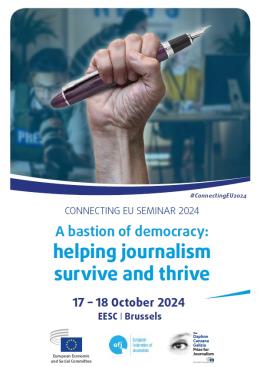
The European Economic and Social Committee will host the 2024 Connecting EU seminaron 17-18 October 2024 , which will this year address the urgent need to preserve independent and impartial journalism in the context of mounting political pressures and the rapid rise of generative AI.
From October 1-2, 2024, the President of the European Economic and Social Committee (EESC), Oliver Röpke, participated in the highly anticipated Athens Democracy Forum (ADF) 2024, an event hosted by the Democracy and Culture Foundation in association with The New York Times. This year’s theme, "A Moment of Truth," addressed pressing global challenges to democracy as more than 50 nations worldwide faced national elections.
The European Economic and Social Committee (EESC) recognises that green hydrogen is an important building block in the transition towards renewable energy sources, and says that its infrastructure, financing and remit have to be carefully planned
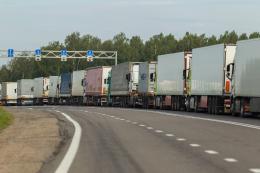
For Bulgaria and Romania, the costs of not being full members of the Schengen area are counted in billions of euros. The transport and tourism sectors of both countries are most affected and checks at land borders create huge barriers for Romanian and Bulgarian companies, restricting their competitiveness and preventing them from fully reaping the benefits of the single market
In a new set of recommendations adopted in September, the European Economic and Social Committee (EESC) called for pressing action to address the critical funding shortfall threatening the EU’s climate and digital transformation goals. By establishing an EU investment fund with a focus on strategic, future-oriented investments, Europe can secure its competitiveness, reduce external dependencies, and create a more resilient single market.
Almost five years after it was launched, the Green Deal – Europe’s blueprint for a carbon-free Europe – has seen its implementation become increasingly complex. It is high time for a review of the green transition targets and to ensure they will not be achieved at the expense of Europe’s industrial and social systems, workers’ well-being and the EU’s competitiveness.