The EESC issues between 160 and 190 opinions and information reports a year.
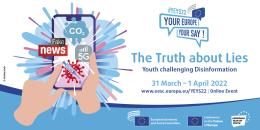
It also organises several annual initiatives and events with a focus on civil society and citizens’ participation such as the Civil Society Prize, the Civil Society Days, the Your Europe, Your Say youth plenary and the ECI Day.
Here you can find news and information about the EESC'swork, including its social media accounts, the EESC Info newsletter, photo galleries and videos.
The EESC brings together representatives from all areas of organised civil society, who give their independent advice on EU policies and legislation. The EESC's326 Members are organised into three groups: Employers, Workers and Various Interests.
The EESC has six sections, specialising in concrete topics of relevance to the citizens of the European Union, ranging from social to economic affairs, energy, environment, external relations or the internal market.
The EU-Vietnam Free Trade Agreement (FTA) envisages that DAG members of each Party meet together at a Civil Society Forum to conduct a dialogue encompassing sustainable development aspects of trade relations between the Parties.
The Workers' Group is organising an extra-ordinary meeting on 11 and 12 November in Lisbon, Portugal. The participants will debate on how we can build a more social Europe. During the first day we will take a look back to the achievements of the Portuguese presidency. We will have the chance to debate with representatives from the Portuguese government and the organised civil society. The second day will focus on what future for Europe we want. As the Conference on the Future of Europe (CoFoE) is ongoing we discuss with representatives of the Portuguese, French and Slovenia presidency alongside our colleagues from ETUC how to make the CoFoE a real success.
As in previous years, the EESC was an active participant in the United Nations Framework Convention on Climate Change – COP26, which took place in Glasgow, United Kingdom, from 31st October - 12th November 2021. The EESC delegation at COP26 included a youth delegate, Sophia Wiegand, for the first time.
The event will feature an intergenerational and international discussion on critical areas for climate and social justice: nature and sustainable business, energy transition, water management and sustainability in the global economy. Youth and high-level decision-makers will engage in a dialogue on opportunities, challenges and ways to make climate and sustainability policies participatory.
This meeting took place ahead of a possible joint meeting with the Singaporeans counterparts that might be organised by the end of this year. It also gave the EU DAG the opportunity to receive an update from DG Trade on the implementation of the TSD chapter as well as an overview of the current trade relations between the EU and Singapore.
AI made in Europe: empowering and protecting the public and businesses
Event type
Conference
Location
Rue Belliard 99-101
Brussels
Belgium
The first-ever legal framework on AI will be in the spotlight of the second edition of the AI stakeholder summit, co-organised by the Digital Transition and Single Market Observatory (EESC) and the Special Committee on Artificial Intelligence in a Digital Age (European Parliament).
Diversity Europe Group conference on the state of associations, organised in partnership with Civil Society Europe
Location
Brussels
Belgium
The conference is being organised by the Diversity Europe Group, in partnership with Civil Society Europe and with the support of the EESC's Civil Society Liaison Group and the Associational Life Category.
Registrations for external participants are open on this page until 2 November 2021.
The conference will cover developments in the EU in the area of fundamental rights and the rule of law in 2020-2021. It will offer a space for dialogue amongst stakeholders, in particular the ones which contributed to country visits led by the EESC Fundamental Rights and Rule of Law (FRRL) Group in 2020-2021 and to the first two European Commission Rule of Law Reports published in 2020 and 2021. The discussions during the day, including in parallel breakout sessions, will focus on the four key themes which structure the European Rule of Law Mechanism: Justice, Media, Corruption, Checks and balances.
GDP is the best-known measure of macro-economic activity. While it is used both by policy-makers around the world and in public debates, it was not designed to be a comprehensive measure of prosperity and well-being. Thus, other indicators are needed to assess and address the global challenges of the 21st century such as climate change, poverty, resource depletion and to promote health and a higher quality of life. Beyond GDP indicators should become instruments to not only monitor and measure, but also to inform policy development, improve communication and encourage target setting. Against this background, the Section for Economic and Monetary Union and Economic and Social Cohesion (ECO) of the European Economic and Social Committee (EESC) is currently working on an own-initiative opinion on 'Beyond GDP measures for a successful recovery and a sustainable and resilient EU economy'.