
European Economic
and Social Committee
Workers' group - Global Agenda
 A Global Agenda based on Solidarity
- Solidarity means that all Member States have to share responsibilities, and that Member States with external borders should not be left carrying the burden alone.
- Therefore, a new mechanism to determine the Member State responsible for dealing with an asylum request should be in place, which comes closer to the principle of solidarity; in that context Member States should not get the opportunity to hide behind a return sponsorship scheme.
- In the case of labour migration, realistic, legal and safe pathways are needed (modelled according to the blue card directive, which was also proposed in the Conference for the Future of Europe) in order to address the strong mismatches between demand and supply of skills, the demographic decline in Europe and to maintain growth, productivity and innovation.
- Cooperation on legal migration with countries of origin and transit.
- Need to intensify integration efforts, targeted at long-term needs of migrant communities. Employment and labour market integration are key to successful inclusion as is the involvement of social partners in the process, also as a rampart against migrant exploitation.
- Proper integration policies, with good practices exchange between local actors as integration takes place at the local level – collaboration of the EESC with partners in the framework of the European Partnership for Integration.
- Public information policy about the benefits of migration to combat hatred and xenophobia against asylum seekers, refugees and migrants in general.
- Worst practices must be sanctioned: Member States and their specialised bodies must confront the cases of abuse and exploitation.
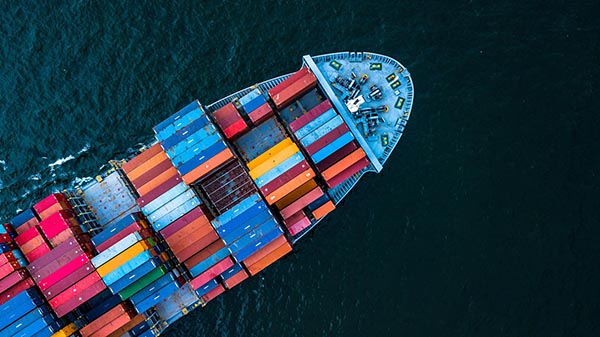 Trade - challenges of the future trade agreements
- Enforcing the labour provisions in the Trade Agreements while ensuring sanctions for violations of labour rights.
- Due Diligence requirements for investors.
- Implement the Green Deal in all Trade Agreements.
- Strengthen the dialogue with civil society.
- Reform of the global organisations, like UN and the WTO, to make them more efficient and fit for new realities.
- Need for a UN Treaty of Business and Human rights and the establishment of an ILO Convention on decent work in global supply chains.
- Inclusion of the respect for labour standards in all the policies and future multilateral trade agreements and initiatives.
 EU-UK relations
- Enforcement of the non-regression clause to the whole EU social acquis and any other EU law provision affecting working conditions.
- Application of the place of work principle. The same pay for the same work in the same place must be guaranteed.
- The UK should guarantee that no existing rights will be changed or watered down, now or in the future.
- Involvement of trade unions in trade negotiations and in monitoring the agreement.
- Reinforce the role of the DAG in enforcing and monitoring the procedures of the Agreement by submitting complaints.
- Need for level playing field particularly in the area of social standards and protection for workers’ rights, as well as in environmental protection principles.
- Public services should be protected from privatisation in any trade deal. Workers would not support further liberalisation of public services through this Agreement.
- Guarantee of financial support in the fisheries and associated industries to ensure the preservation of jobs or opportunities of alternative employment.
- Protect peace in Northern Ireland and prevent disruptions that would underpin the Good Friday Agreement.
- While careful to avoid any interference in the UK’s sovereign decision making, we are committed to continue working for maximum cooperation between the EU and the UK and to enhance links across the entire Civil Society spectrum.
- Requirement for the UK to keep pace with future improvements of the EU social and employment standards.
- Efficient implementation of Trade and Cooperation Agreement provisions on the level playing field to prevent the UK from falling behind future improvements of the EU social and employment standards.
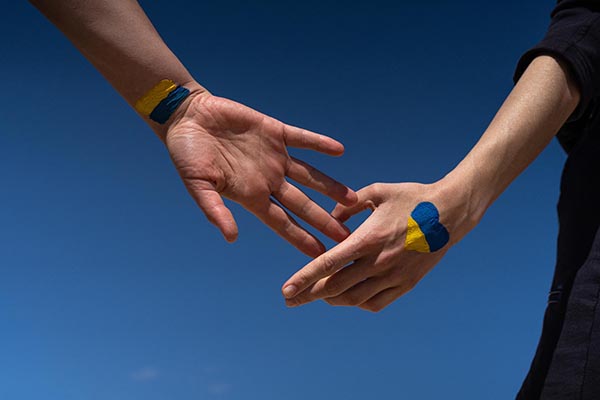 Eastern partnership
- Establish dialogue with the civil society in Belarus and provide support and cooperation in the process of democratization.
- Support Ukraine in its efforts to achieve peace, ensuring the steady integration into the EU and its formal steps once Russia retreats from Ukraine, together with the rest of candidate countries.
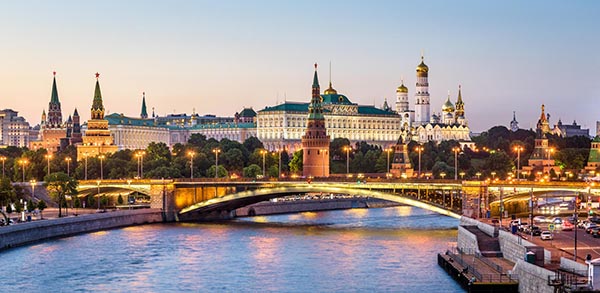 Russia
- Provide support for free civil society and Trade Unions in the country.
- Provide support for Rule of law, and protection of human rights.
- Revise and upgrade existing sanctions to ensure Russia cannot circumvent them, reducing to the maximum the dependency from Russian resources.
- Develop monitoring tools to tackle active misinformation campaigns, cybernetic warfare and other forms of aggression from Russia to the EU Member States.
- Establishing a special international tribunal on crimes of aggression against Ukraine.
- Develop an EU legal framework for designation of states as sponsors of terrorism and states which use means of terrorism.
- Breaking off cooperation with Russian companies and organisations that support Putin’s policies.
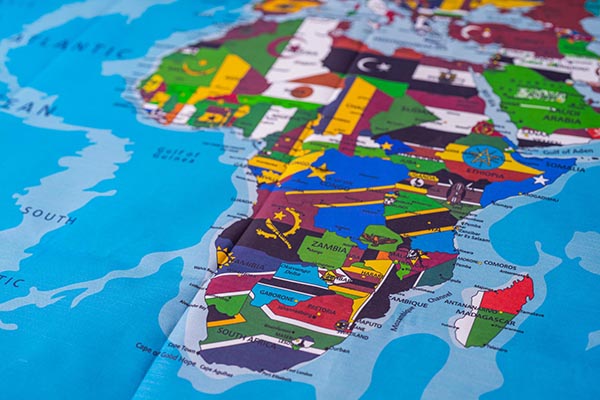 Africa
- Long-term investment in intra-African infrastructure to foster regional value chains and a sustainable local economy makes economic sense.
- Support of the agricultural and food industries in Africa to improve cultivation, reduce harvest losses and enhance quality standards
- • Support for African countries in tax policy, migration, development, the environment, education, health, and working and living conditions.
- Empowerment of women in Africa.
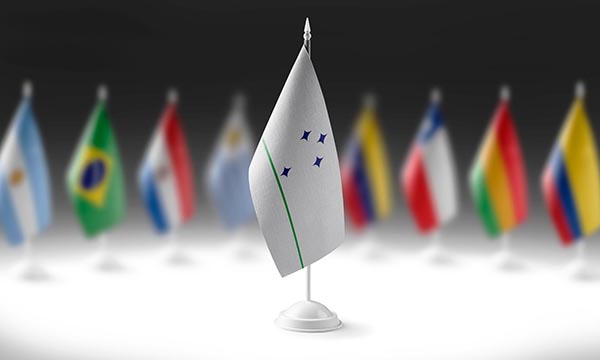 MERCOSUR
- Need for proper mechanisms in the Trade Agreement to enforce environmental and labour standards.
- Concerns about the overall working conditions in Mercosur countries and the potential impacts of the EU- Mercosur Agreement, and the lack of transparency and the opacity with which the negotiations are being conducted, particularly in the Mercosur countries.
- Need to ratify various basic ILO conventions in the region.
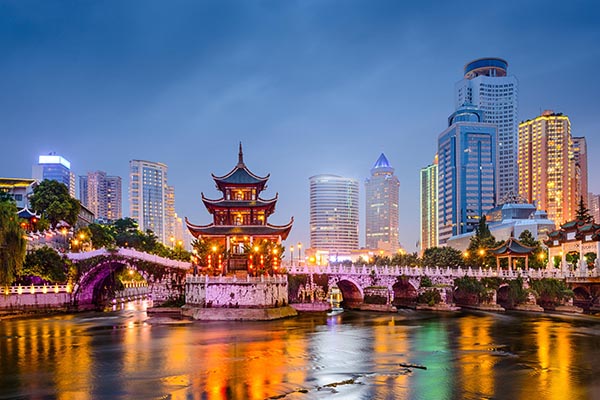 China
China
- Overall improvement of the Comprehensive Agreement on Investment (ratifying the ILO conventions, lack of human rights clause in the agreement and protection of minorities and others).
- Reflection on the influence of China in Africa and Latin America.
 Domestic Advisory Groups (DAGs)
- Strengthen the role and the impact of the DAGs.
- Common priorities for greater consistency across the DAGs.
- Better cooperation between ETUC and EESC.
- Better internal organisation and communication in the DAGs.
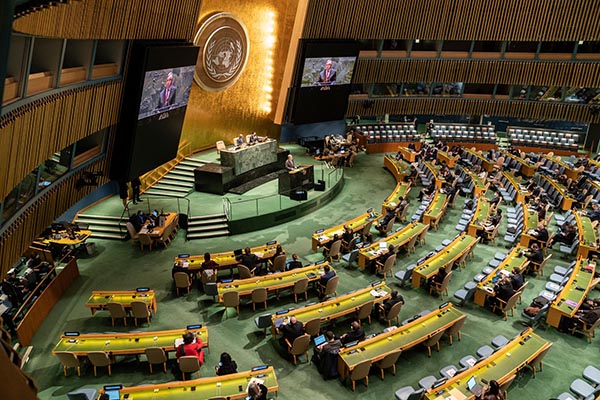 International conflicts
- Defend human rights and the importance of multilateral dialogue and peaceful settlements for conflicts arising or entrenched in time and in which there is neither a unified EU position nor always an evident and viable solution in sight, with full implementation of UN regulations and respect for international law.
- Use the UN Resolutions as a guideline and make use of the different tools the EU has with the single market and development aid to both incentivise and deter certain actions in these territories, in line with fundamental human rights, respect for decent working conditions, and democratic freedoms.
 Additional demands of European workers
- We must defend a global agenda driven by a multilateral approach and multilateral institutions, rather than protectionism and unilateralism, with respect and support of human rights and working for peace and security in the world. We must keep supporting the cause of peace in Ukraine: Russia must retreat its invasion forces.
- The neighbourhood policy must be strengthened, namely by integrating the whole of the Western Balkans and Ukraine into Euro-Atlantic structures; this must also include supporting sovereignty and reforms by providing support to countries to address security challenges and find solutions to ongoing conflicts, such as the case of Ukraine.
- Help to mobilise the richest countries to help the poorest ones to cope with the current crises.
- In late 2023, the European Commission adopted the 2023 Enlargement Package, providing a detailed assessment of the state of play and the progress made by Albania, Bosnia and Herzegovina, Kosovo, Montenegro, North Macedonia, Serbia, Türkiye, and for the first time also Ukraine, the Republic of Moldova and Georgia on their respective paths towards accession to the EU. In view of the impulse gained by the new enlargement wave, it is more urgent than ever to highlight the need for a treaty reform, to transform the decision-making structures of the EU preventing the current deadlocks, which would only increase with more member states. This should provide for a more objective and transparent accession mechanism and give back to the EU its main tool for foreign policy in its neighbourhood.
- As the enlargement countries face a series of challenges in the areas of the rule of law, including judicial independence, the fight against corruption and organised crime, and media freedom, as well as economic development, environmental protection and social cohesion, civil society organisations, and in particular trade unions, can make a significant contribution to addressing these challenges. Transparent, accountable and competent civil society organisations are essential partners in achieving long-term societal change leading to full EU membership. EU support to civil society in those countries must continue.
- During the enlargement process, the EU must make sure that candidate countries fulfil, before joining, all required social standards, be stable democracies, respect the rule of law, human rights and minorities. They must also ratify ILO core conventions, especially those on freedom of association, the right to collective bargaining and the right to equal pay