On 25th of March, the EESC Workers’ Group gathered together with a number of guest speakers from academia, trade unions and MEPs from the European Parliament, to discuss the current geopolitical situation, its impact on social and defence expenditure, its spillovers on supply chains and industry, and the consequences for the welfare states and workers’ rights.
This publication presents the Civil Society Organisations’ Group of the European Economic and Social Committee (EESC) and outlines its priorities for the term 2025-2028. Under the theme 'Striving for sustainable communities, the beating heart of civil society and democracy', the group will focus on the following priorities:
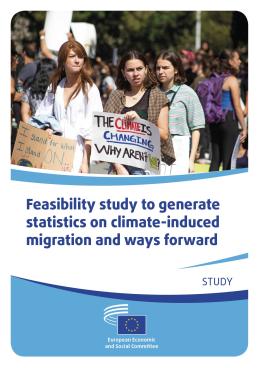
This feasibility study to generate statistics on climate-induced migration and ways forward sought to gather and review existing data on climate-induced migration, focussing on five Member States (France, Germany, Greece, Italy and Spain) and one candidate country (Türkiye), to inform an effective EU response. There is no universally agreed definition of climate-induced migration. The majority of population movements as a result of rapid onset events takes place within a country as opposed to across borders.
This resolution presents recommendations of the European Economic and Social Committee to the legislature 2024-2029. They are based on discussions with social partners and civil society organizations from all walks of life, including young people during the first EESC Civil Society Week, and contain a comprehensive set of actionable steps to strengthen and safeguard democratic principles.
Between 20-23 September, EESC President Oliver Röpke led a delegation of the European Economic and Social Committee to the United Nations Summit of the Future, which took place in New York. The event, a cornerstone in discussions about the future of multilateral cooperation, focused on urgent global challenges including sustainable development, peace, security, and digital governance.