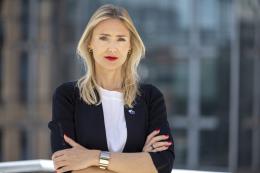
The European Economic and Social Committee (EESC) has elected Alena Mastantuono as its new Vice-President, entrusting her with steering the Committee’s financial management for the first half of the 2025–2030 mandate.
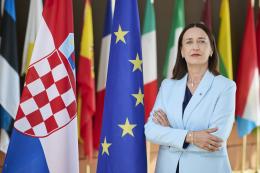
At its inaugural plenary session on 22 October, the European Economic and Social Committee (EESC) elected Marija Hanževački, General Secretary of the Independent Trade Unions of Croatia, as its new Vice President. She will head up the EESC’s communication activities for the first half of its new five-year term of office, representing the voice of civil society across Europe.
The new president of the European Economic and Social Committee (EESC) vows to put civil society at the heart of Europe through a people-centred programme that balances economic growth and social inclusion and ensures everyone has a fair chance to thrive. Topping his priorities are the eradication of poverty by providing opportunities and protecting and empowering civil society to ensure Europe stays true to its democratic and social core amid a shrinking of civic space and growing political and economic instability.
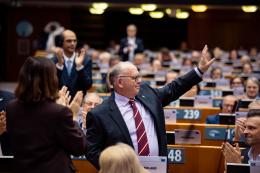
Ireland’s Séamus Boland has been elected the 35th President of the European Economic and Social Committee (EESC) for the 2025–2028 term of office. A lifelong advocate for rural communities and social inclusion, he will guide the EU body representing organised civil society for two and a half years. His programme is devoted to providing opportunities through poverty eradication, securing democracy by protecting civic space, and ensuring the transition to a more competitive and green economy in a way that doesn’t leave anyone behind.
EESC plenary session, 21-23 October 2025, European Parliament
At its October plenary session, the European Economic and Social Committee (EESC) will elect its new President and two Vice-Presidents for the 2025-2028 mandate. The new President will announce the work programme of his mandate during the inaugural ceremony, which will highlight topical issues with prominent speakers from EU institutions and Member States.
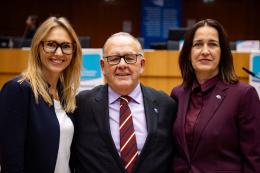
Press conference with the incoming EESC PresidentSéamus Boland and Vice-Presidents Marija Hanževački and Alena Mastantuono Wednesday 22 October 2025, at 12.30-13.15
European Parliament, Paul-Henri Spaak building, Anna Politkovskaja room, SPAAK 0A50
urges the European Commission to adopt comprehensive action plans on all forms of disability, similar to those for youth and gender equality;
recommends closer cooperation with disabled people’s organisations (DPOs) in both international cooperation and EU humanitarian work, to enhance the effectiveness of disability diplomacy;
suggests that every diplomatic delegation involved in disability-related agreements should include at least one DPO representative at UN meetings. The aim is to formally designate disability focal points in each diplomatic delegation.
highlights the essential role of social partners and civil society in supporting candidate countries’ adherence to universal values;
stresses that transparent, professional and accountable public services build trust in institutions;
emphasises investing in education and teacher training to foster democratic values and civic participation;
recommends institutionalised cooperation between public authorities and civil society in accession preparations and that EU bodies and institutions involve candidate countries in their work, following the good practice initiated by the EESC.
supports standardising the designation of safe countries, which is currently inconsistent and lacks transparency across Member States. It stresses the need for effective supranational oversight to ensure fairness and consistency;
suggests that a country should only be designated as “safe” if there are no verified human rights violations that would require international protection;
argues that accelerated procedures can lead to superficial assessments, wrongful refusals, and an increase in undocumented migrants, with negative social consequences;
recommends that every asylum application should be assessed thoroughly and individually, with adequate time and resources.