Labour and skills shortages in transport, energy, infrastructure and the digital sector (own-initiative opinion) DG EMPL – Executive Vice-President MÎNZATU
Access to social protection for the self-employed – analysis, limitations and scope for improvement (exploratory opinion requested by the Polish Presidency) DG EMPL – Executive Vice-President MÎNZATU
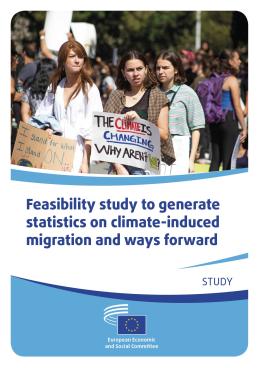
This feasibility study to generate statistics on climate-induced migration and ways forward sought to gather and review existing data on climate-induced migration, focussing on five Member States (France, Germany, Greece, Italy and Spain) and one candidate country (Türkiye), to inform an effective EU response. There is no universally agreed definition of climate-induced migration. The majority of population movements as a result of rapid onset events takes place within a country as opposed to across borders.
Alena Mastantuono is the EESC’s new Vice-President for Budget. Permanent delegate of the Czech Chamber of Commerce in Brussels and European Affairs Adviser, she has been an active member of the EESC’s Employers’ Group since 2020. We asked her about her priorities for her term in the vice-presidential post and the significance she intends to give to the issue of budget in the Committee’s work.
Alena Mastantuonois the EESC’s new Vice-President for Budget. Permanent delegate of the Czech Chamber of Commerce in Brussels and European Affairs Adviser, she has been an active member of the EESC’s Employers’ Group since 2020. We asked her about her priorities for her term in the vice-presidential post and the significance she intends to give to the issue of budget in the Committee’s work.
Marija Hanževački, a long-standing member of the European Economic and Social Committee’s (EESC) Workers’ Group, and General Secretary of Independent Trade Unions of Croatia, has dedicated her career to championing workers’ rights. Now, as she takes the helm at the EESC as Vice-President for Communication, we asked her about her priorities for the mandate ahead. She shared her vision for amplifying the voice of Europe’s civil society and strengthening the EESC’s message across the EU and beyond.
Marija Hanževački, a long-standing member of the European Economic and Social Committee’s (EESC) Workers’ Group, and General Secretary of Independent Trade Unions of Croatia, has dedicated her career to championing workers’ rights. Now, as she takes the helm at the EESC as Vice-President for Communication, we asked her about her priorities for the mandate ahead. She shared her vision for amplifying the voice of Europe’s civil society and strengthening the EESC’s message across the EU and beyond.
The implementation of EU laws and standards is central to the accession process. However, the sustainable democratic development of a country requires more than just compliance with EU law. Civil society plays a crucial role in deepening understanding and promoting the development of society in line with European values. A successful transformation into an EU Member State therefore demands initiatives that focus on citizens, civil society and social partners.
The implementation of EU laws and standards is central to the accession process. However, the sustainable democratic development of a country requires more than just compliance with EU law. Civil society plays a crucial role in deepening understanding and promoting the development of society in line with European values. A successful transformation into an EU Member State therefore demands initiatives that focus on citizens, civil society and social partners.
The public service sector plays a central role, as it profoundly affects citizens' everyday lives. Trust in public services and the political system is crucial. Education is an essential example of this. Education – both formal and informal – is one of the most critical pillars of a democratic society. It prepares the population to become democratic citizens, developing critical thinking, knowledge, skills, attitudes and values. To achieve this, professional autonomy and academic freedom are indispensable. Protecting the democratic role of education is an absolute necessity for safeguarding European values. Teachers, school leaders and local education authorities should have a voice, and play a central role for the transformation to actually happen.
Cooperation between civil society and public authorities is key to promoting transparency, accountability and public trust. By engaging in structured dialogue and contributing to policy processes, civil society organisations and social partners help strengthen democratic governance and reinforce resilience. This inclusive approach is essential for countering populism and safeguarding fundamental rights.
At the European Economic and Social Committee, we believe that supporting social partners and civil society organisations must be a strategic priority in the enlargement process. Strengthening civil society organisations' capacity through targeted EU programmes and funding, and encouraging partnerships and peer learning with counterparts in Member States, are crucial steps. Joint Consultative Committees (civil society platforms between the EESC and candidate countries) and other platforms, have already proven their value as spaces for dialogue and mutual learning. As discussions on the European Union's next multiannual financial framework have begun, we must ensure that funding instruments are used more strategically to further empower democratic actors in candidate countries.