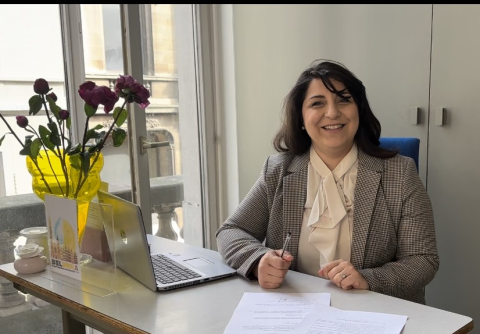
Four years into Russia’s full-scale invasion of Ukraine, civil society activist Rena Faradzeva has been at the forefront of coordinating and developing civil society initiatives in Belgium aimed at supporting Ukrainians both in the EU and back home. For EESC Info, she lists different organisations and programmes that assist Ukrainian refugees in Belgium and strengthen cooperation between EU and Ukrainian communities. Through its partnership initiatives, the EESC has played an important supporting role in organising partnership events and study visits for Ukrainian civil society organisations and young people.
Four years into Russia’s full-scale invasion of Ukraine, civil society activist Rena Faradzeva has been at the forefront of coordinating and developing civil society initiatives in Belgium aimed at supporting Ukrainians both in the EU and back home. For EESC Info, she lists different organisations and programmes that assist Ukrainian refugees in Belgium and strengthen cooperation between EU and Ukrainian communities. Through its partnership initiatives, the EESC has played an important supporting role in organising partnership events and study visits for Ukrainian civil society organisations and young people.
From the very first days of the invasion, our priority was immediate action. Together with committed partners and volunteers, we mobilised all available resources and worked to build the necessary infrastructure to provide basic needs coverage for the enormous number of Ukrainians who fled to Belgium seeking temporary protection. The scale of displacement required rapid coordination, flexibility and strong cooperation between civil society actors while local governments searched for long-term solutions.
One of the key initiatives that emerged during this period was the Family Helps Family Fund (FHFF). What began as a focused support effort quickly expanded into a large and dynamic network connecting Europeans and Ukrainians. The Fund became not only a channel for humanitarian assistance but also a platform for solidarity, coordination and trust-building between communities. Its strength lies in the direct, human-centred approach: families supporting families, individuals supporting individuals.
The second major direction of my work has been the support and education of Ukrainian young people in Belgium. What initially started as assistance to help young Ukrainians integrate into Belgian society – through educational support, mentorship and community engagement – gradually evolved into a structured and ambitious initiative. This development led to the creation of BELUKRA, an exclusive joint Belgium-based non-governmental educational project for Ukrainian young people, which further strengthened cooperation between Belgian and Ukrainian stakeholders.
As a result of this process, we successfully established the European Collaborative Institute NGO. This organisation actively utilises both existing and newly available European grants and programmes to create educational opportunities and long-term development pathways for young Ukrainians. Our goal is not only integration, but empowerment – enabling young people to become active European citizens while preserving their identity and contributing to Ukraine’s future reconstruction.
The third pillar of my work has grown from accumulated experience, partnerships and cooperation with important diplomatic and civil society actors in Europe. Through this collaboration, we recognised the need for a more responsible, structured and results-oriented approach to international youth engagement. This vision led to the development of the International Youth Academy of European Diplomacy Europe NGO, which aims to prepare a new generation of young leaders equipped with knowledge of European institutions, democratic values and diplomatic processes.
In this context, cooperation with the European Economic and Social Committee (EESC) has been particularly important. The EESC provides an opportunity to work together at both public and institutional level, highlighting the actual and pressing challenges facing Ukraine and its society at different scales. Through its infrastructure, platforms and resources, the EESC helps ensure that these urgent issues – affecting Ukraine, its people and especially its children – become an important and visible part of European discussion. This cooperation contributes not only to raising awareness, but also to advancing concrete, solution-oriented approaches to the complex problems Ukraine is facing today.
None of these efforts would have been possible without the tireless work of the many organisations and activists of Ukrainian origin who have been helping day and night, both in Ukraine and across Europe. I would like to give particular recognition to the Ukrainian Scouts in Belgium NGO, Ukrainian Voices NGO and the Association of Ukrainian Women in Belgium NGO. Their dedication, cooperation and constant support have played a vital role in assisting displaced Ukrainians and sustaining humanitarian efforts.
Four years into the full-scale invasion, our work has evolved from emergency response to long-term structural cooperation. The challenge now is to sustain this commitment, deepen partnerships and ensure that solidarity translates into lasting impact – for Ukrainians in Belgium, for Ukraine and for Europe as a whole.
Rena Faradzheva is a Belgian-based NGO leader, founder, and CEO with more than 20 years of professional experience in education, social services, and international cooperation. She serves as project manager of several civil society initiatives in Belgium, focusing on access to education, human rights protection, youth engagement, and humanitarian support for vulnerable communities. Her work combines expertise in psychology, governance, cross-border project coordination, and diplomacy, with a strong commitment to social cohesion and European civic values.
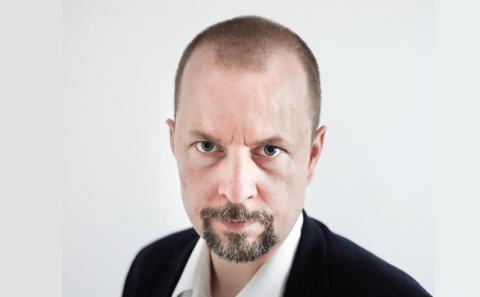
After four years of war, the strategy of Ukraine’s allies has failed – but Russia is a house built on sand. As the fifth year gets under way, and solidarity among allies is beginning to crumble, Ukraine’s only realistic path may lie along the current frontline. But for that to happen, we must recognise that we are not helpless – our societies need to wake up. We must not cave in to Russian propaganda and say that this is not our war. An analysis by Polish journalist and writer Michał Olszewski.
After four years of war, the strategy of Ukraine’s allies has failed – but Russia is a house built on sand. As the fifth year gets under way, and solidarity among allies is beginning to crumble, Ukraine’s only realistic path may lie along the current frontline. But for that to happen, we must recognise that we are not helpless – our societies need to wake up. We must not cave in to Russian propaganda and say that this is not our war. An analysis by Polish journalist and writer Michał Olszewski.
Every day at 9 a.m., a ritual is repeated across Ukraine: from loudspeakers you can hear a clock strike, passers-by stop, men take off their hats. This is a minute of silence in honour of those killed in the war against Russia. The whole of Ukraine stops for a moment, before going back to fighting heroically again. People go to work, learning takes place face-to-face, children are taken to school, superhuman forces repair Russian-bombed power plants, the dead are taken to the cemetery.
The fifth year of the war begins. A black and white war, a war of good defending itself against evil, an unequal war, a martyr’s war. The idea that the world has not supported Ukraine during this time is not true – it has supported it, helping the country to keep going and defend itself against barbarism.
In Kyiv a legitimately elected president is in charge, not a governor from Moscow. At the same time, Ukraine is a victim of the unwritten doctrine of allied states: they provide support while also doing a lot to ensure that Russia is not defeated. Since the war broke out, Kyiv has resembled a boxer coming to the ring with one hand tied behind his back. A country fighting a heroic war of defence was not allowed to use Western arms to attack Russian targets far from the front. Russia bombed Lviv and struck areas bordering Romania and Poland, but Ukrainians were unable to respond in kind. In 2024, when US politicians were discussing aid for Ukraine, part of the country was left without air defences, with bombs, rockets and drones raining down on Ukrainian cities unimpeded. It was at that time that the Russian offensive gained momentum.
Each allied country has pursued its own interests with Russia through intermediaries. Even if these are on a much smaller scale than before 2022, they allow the Russian economy to keep going. Belgium is against using frozen Russian assets, Denmark has not closed the Øresund strait to Russian vessels, Greece has not closed its ports to the shadow fleet, and so on. Donald Trump coming to power in the US, with his absurd and inexplicable penchant for the Russian dictator, has only made Kyiv’s situation worse. After all, the US has shown no desire to use the tools that it has to stifle the Russian economy and strengthen Ukraine’s army. Instead, they have presented Ukraine with a steep bill for the aid provided so far. Adding to this complex picture are Russia’s allies in the European Union, China, which is the big winner of the past four years, and India and Türkiye – trading countries making huge profits from Russia, although officially they have distanced themselves from its criminal activities.
After four years of war, it is clear that the strategy of Ukraine’s allies has failed, but it is also clear that Russia is a house built on sand. After four years of war, one of the world’s biggest armies has been unable to defeat Ukraine.
From this perspective, Volodymyr Zelenskyy’s embittered speech in Davos should come as no surprise. A carefully staged gesture revealed a level of disappointment not seen since the start of the war. The Ukrainian delegation could see how the war with Russia was receding into the background, sidelined by the absurd displays of Donald Trump and the issue of Greenland. So only a strong intervention could bring the attention of politicians and financiers back to Ukraine, if only for a moment. Yes, Zelenskyy, lambasting Europe while treading ever so carefully with Trump, who does not want Ukraine to use Tomahawks, has behaved unfairly. But it is difficult to say he was wrong when he asked 'if Putin attacks Lithuania or Poland, who will respond?' We still believe that NATO will step in if that happens, that it will respond. But what if it doesn’t?
As the fifth year of war gets under way, it is clear that Ukraine is exhausted. Russia does not want to end the war, solidarity among allies is crumbling, and Donald Trump is more sympathetic to a criminal than to the president of a country defending itself against invasion. The only possible success for Ukraine would be to end the war along the current frontline. Even if this success were short-lived, after which Russia would move westwards once again, it would give Kyiv time to catch its breath.
How can we achieve this? Are we helpless? Nothing of the sort. The European Union is opening a new chapter with India. The US raid on Venezuela is changing the structure of the oil business and may cut into Russia’s profits, as might the fall of the regime in Iran.
However, this means that societies need to wake up. Nothing irritates me more than war fatigue among allies. People living in allied countries can sleep soundly in warm homes, they have electricity, gas and oil, and they do not need to install apps to warn them of impending strikes and seek the nearest shelter.
There is no going back to those memorable days in early 2022 when Europe opened its hearts and doors to refugees. There is no need because we are in a different place. What is important is that we do not get used to the war, that we do not just accept things as they are. That we do not toe the line of Russian propaganda and say ‘it is not our war’.
And that we do not forget that every day at 9 a.m., across all cities and villages in Ukraine, clocks strike, marking a minute of silence in honour of the victims of the war against Russia’s barbarism.
Michał Olszewski is the head of foreign affairs at the Polish newspaper Gazeta Wyborcza, writer and author. His publications include 'Ptaki krzyczą nieustannie', '#Upał' and 'Najlepszych butów na świecie'. He is involved in providing material assistance to Ukraine.
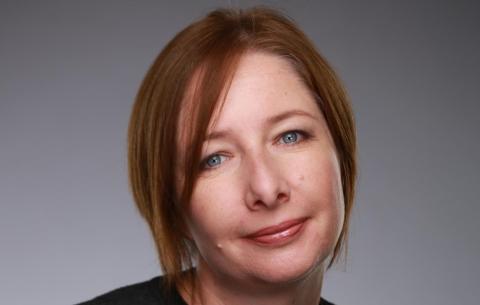
Ukrainian journalist Olga Chaiko has been following Russia’s illegal military aggression against Ukraine since day one. Four years on, she shares with us the realities of her journalistic work in Ukraine.
Ukrainian journalist Olga Chaiko has been following Russia’s illegal military aggression against Ukraine since day one. Four years on, she shares with us the realities of her journalistic work in Ukraine.
What does your everyday life in Kyiv look like in the fourth year of the war? What has changed the most in your journalistic work?
Life in Kyiv is now an everyday quest to figure out what will disappear next: heating or cold water. We have electricity for some two to seven hours per day, mainly at night. For most people, this is the time to cook, do laundry, wash their hair, turn on heaters and charge their devices. Hot water and heating are absent in around 1000 homes in Kyiv after a series of Russian bombings that sought to destroy Ukraine’s energy system.
This is why most of the articles we write these days are about the consequences of these attacks – the victims, survival strategies, cities’ emergency plans and so on.
As a channel still participating in the United News marathon, we cover news from all regions of Ukraine, including the frontline, and gather donations for the army. Many of my colleagues and friends have joined the Armed Forces of Ukraine, so we help them as well. We cooperate closely, as many of them now serve as press officers within brigades, helping ensure openness in the army.
How do you imagine Ukraine’s near future, given that the war has been going on for four years and still shows no sign of ending?
This question is the hardest one. I think the only way to survive is to shut down your imagination and continue the struggle, even though the possible scenarios are not optimistic, starting with the risk of a frozen conflict that would merely delay the next stage of the war. We are likely in the middle of the fight against an insane maniac and a country with undying imperial ambitions.
Olga Chaiko is Ukrainian journalist on the ‘Fakty’ news programme at ICTV (International Commercial Television), a Ukrainian private television channel launched in 1992. ICTV is one of the television channels participating in the United News marathon, a 24/7 joint national news broadcast launched in February 2022 to provide continuous wartime news coverage following Russia’s full-scale invasion.
You can read Olga Chaiko’s previous article for EESC Info from July 2022 here.