On 8 April, the European Anti-Poverty Network (EAPN) launched its latest Poverty Watch Report, entitled Towards a systemic approach to social protection.
On 8 April, the European Anti-Poverty Network (EAPN) launched its latest Poverty Watch Report, entitled Towards a systemic approach to social protection.
The report, presented for the first time at an event co-organised with the EESC’s Civil Society Organisations’ Group in Brussels, addresses the challenges that need to be overcome to secure strong and resilient social protection systems. This is particularly relevant in the current context, as EU welfare states grapple with growing financial constraints caused by national spending limitations and rising defence and security expenditures.
The report, drawing on findings from 19 EAPN national member organisations, demonstrates that achieving a systemic approach to comprehensive and effective social protection requires policies embedded in integrated, long-term strategies that align economic, social and environmental dimensions. These policies must be based on robust evidence, data and the meaningful participation of people experiencing poverty.
EAPN’s national networks are voicing apprehension about cuts in social spending. Additionally, indicators such as high levels of non-take-up of social benefits continue to raise concerns about the efficiency of policies that are failing to reach those who are in need of and eligible for social benefits.
According to the report, the response to a fast-changing world marked by digitalisation, war, an ageing population and climate change has been inadequate, highlighting the need to re-establish a systemic approach to social policies.
Juliana Wahlgren, EAPN’s Director, highlighted the urgency of the issue, stating: ‘The EU needs to protect the welfare state and prioritise social spending. To that end, the Poverty Watch Report provides recommendations on the minimum income, the housing crisis and the energy transition, among other things. Efficiency and adequacy are essential. Next year, the European Commission will launch the EU Anti-Poverty Strategy, but it can only succeed if Member States adopt a truly systemic approach to social protection. With more than 20% of the EU population at risk of poverty, we cannot afford to continue with fragmented policies – social protection must be strong, coordinated and effective.’
Séamus Boland, President of the Civil Society Organisations’ Group, said: ‘The eradication of poverty requires unrelenting action by all Member States. Much of the poverty experienced in the EU is intergenerational and can be particularly harsh on the lives of children and older people. In the areas of education, housing and high-cost energy, special measures that target the system’s weaknesses must be introduced. Otherwise, the EU as a political entity will struggle to retain the confidence of its citizens.’
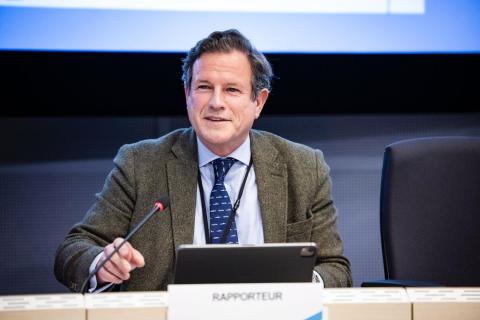
Krzysztof Balon, Vice-President of the Civil Society Organisations’ Group and rapporteur of the EESC opinion on the first-ever EU Anti-Poverty Strategy, which was announced in the Political guidelines for the European Commission 2024-2029, said: ‘An effective EU Anti-Poverty Strategy must build on the experiences of people facing poverty and address their needs. It should also support civil society organisations and involve them in designing and implementing appropriate projects and measures to combat social exclusion.’
‘It is impossible for someone to lie unless he thinks he knows the truth. Producing bullshit requires no such conviction.’ Philosopher Harry G. Frankfurt’s work On Bullshit feels particularly relevant after the recent so-called ‘Liberation Day’ in Washington.
‘It is impossible for someone to lie unless he thinks he knows the truth. Producing bullshit requires no such conviction.’ Philosopher Harry G. Frankfurt’s work On Bullshit feels particularly relevant after the recent so-called ‘Liberation Day’ in Washington.
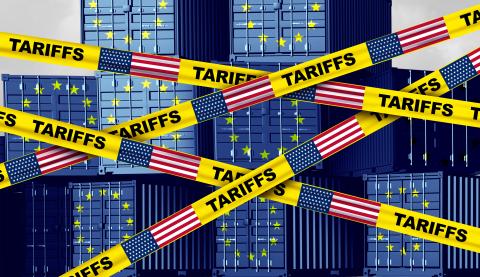
As we are entering a new trade war based on nonsense, what should people expect? Higher inflation, market uncertainty and a hit to European industries. Whether any of this will benefit US workers remains to be seen.
Beyond tariffs, the EU must protect workers and jobs at home, cushioning the initial impacts, not just because of the tariffs, but also due to the uncertainty caused by their arbitrariness. This means reactivating our internal demand and ensuring that wealth is redistributed and used effectively.
It also means protecting and investing in our key industries and sectors, diversifying energy sources, tackling the cost-of-living crisis and reforming the EU to make its decision-making effective. A strong and resilient society is the only thing that can prevent more Trumps from sprouting across the continent. Social partners are a key part of such a society. One of the sworn enemies of the Musk-Trump duo is trade unions, and with good reason.
The European Economic and Social Committee (EESC) has endorsed the European Oceans Pact, urging the European Commission to ensure it becomes a robust framework for action – not just a statement of intent.
The European Economic and Social Committee (EESC) has endorsed the European Oceans Pact, urging the European Commission to ensure it becomes a robust framework for action – not just a statement of intent.
The pact must align with existing EU policies like the Green Deal, the blue economy strategy and the Sustainable Development Goals, balancing economic growth, environmental protection and social justice.
Climate change, pollution and overfishing place oceans and coastal communities at risk. The pact aims to improve governance, boost innovation and promote a sustainable blue economy. A recent public consultation as well as input from civil society reflect growing support for bold, inclusive measures.
Javier Garat Pérez, rapporteur for the opinion, stressed: ‘Coastal communities in the EU are facing a number of interrelated economic, social and environmental challenges. To face these challenges, we need to promote a sustainable and competitive blue economy (including fisheries and aquaculture), maintain a healthy, resilient and productive ocean, and work on a comprehensive agenda for marine knowledge, research, innovation and investment.’
The EESC calls for streamlined governance among EU agencies, improved maritime planning and investment in research through programmes like Horizon Europe. It also advocates a ‘blue’ food action plan, sustainable shipbuilding and a just transition for maritime workers. Support for coastal heritage and youth engagement is essential.
For the pact to succeed, it needs strong political will, funding and accountability. Done right, it could position Europe as a global leader in ocean sustainability, delivering both ecological resilience and economic opportunity. (ks)
On 10 May, step into the heart and house of European organised civil society at the European Economic and Social Committee, at the Jacques Delors building, Rue Belliard 99, 1040 Brussels.
On 10 May, step into the heart and house of European organised civil society at the European Economic and Social Committee, at the Jacques Delors building, Rue Belliard 99, 1040 Brussels.
This year’s Europe Day is extra special as we commemorate the 75th anniversary of the Schuman Declaration – the historic foundation of European unity and cooperation. On this momentous occasion, the EESC is opening its doors for a full day of engaging, informative and entertaining activities and a discovery tour. From policy enthusiasts to curious young minds, there is something for everyone.
Stamp your way through the EESC with our Discovery Tour:
Complete fun challenges at all the thematic stands.
Collect a stamp at each one in the dedicated passport.
Return your completed passport and claim your special reward!
Don’t miss the chance to meet and chat with EESC President Oliver Röpke at a dedicated stand! He’ll be there to welcome visitors, answer your questions and share his vision for European civil society – a unique opportunity to connect directly with the EESC’s leadership.
Enjoy even more fun with:
a caricaturist to take your portrait;
a playful kids’ corner;
a funky photo booth;
a spinning Wheel of Fortune with surprises;
and a real-time voting simulation where you can step into the shoes of an EESC member!
Plus, find out how our sections and groups help shape EU policy and values.
Let’s celebrate the ideas that unite Europe. Come with your friends, family or on your own – but DON’T MISS IT!
It’s more than a visit – arrive curious, leave inspired!