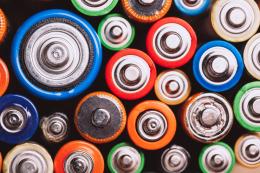
At the March Plenary, the European Economic and Social Committee (EESC) adopted an opinion on the European Commission's Battery Booster Strategy. While supporting the initiative's mission to strengthen the European battery value chain, the EESC calls for clearer prioritization, stronger implementation tools, a broader scope beyond electric vehicle batteries, and higher environmental and social standards.
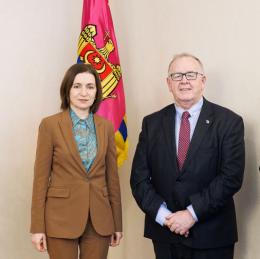
On a mission to Moldova, European Economic and Social Committee (EESC) President Séamus Boland met with Moldova’s political leadership, civil society organisations and young people to reaffirm the EESC’s strong support for the country’s European path.
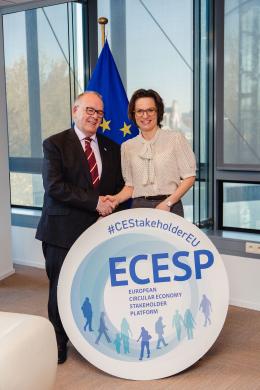
Accelerating the transition to a circular economy is not only about making Europe cleaner and more competitive, but also about achieving strategic autonomy. The European Circular Economy Stakeholders platform is set to play a crucial role in this process.
I welcome the decision by European Union Ambassadors to establish a Council Working Party tasked with drafting the Accession Treaty with Montenegro and congratulate Montenegro for this important milestone. This represents both a recognition of progress and an incentive to accelerate reforms.