Russia’s war against Ukraine has not only redrawn Europe’s security map—it has forced the European Union to rethink its own foundations. What began in 2014 with the illegal annexation of Crimea, escalated into the Donbas war, and exploded into full-scale invasion in February 2022, has shattered whatever residual trust lingered toward Moscow. Today, Russia is seen less as a strategic partner, and more as an existential threat on Europe’s doorstep.
Brussels has rolled out a new label for businesses: SMCs, or “small mid-caps.” The idea is simple: make life easier for companies that are too big to count as SMEs but too small to handle the full weight of EU rules. At first glance, this looks like a step in the right direction towards simplification. But is it real relief --- or just another layer in an already crowded regulatory landscape?
Europe has long been a hub of brilliant ideas. From AI breakthroughs in Paris to green tech innovations in Stockholm, European start-ups regularly make global headlines. Yet too often, these promising ventures hit a wall. Instead of growing into global champions, they stumble into the “valley of death”—that treacherous gap between early innovation and commercial success. Lacking capital, talent, or market access, too many relocate or sell out to foreign competitors. In short, European innovation too frequently blooms only after crossing the Atlantic or Pacific.
Europe’s retail sector is grappling with a silent but serious crisis. Every day, hundreds of thousands of parcels from third country platforms are flooding the EU Single Market, bypassing customs checks, dodging taxes, flouting EU product safety rules and undermining the regulations that European businesses rigorously follow. Competition is welcome—but it must be fair and rule-based. What we face today is outright unfairness on a massive scale, putting an entire sector at risk and exposing consumers to unsafe products without accountability. It is high time for EU-policymakers to act decisively.
The European automotive industry is entering one of the most profound transformations in its history. The shift towards cleaner, digital and more sustainable mobility is no longer optional—it is both inevitable and complex. The European Economic and Social Committee (EESC), in its recent opinion (CCMI 249), argues that this transition must not only be a technological, but also industrial, economic, social and above all human.
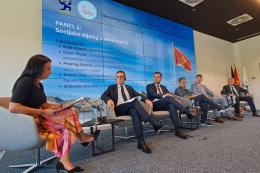
EESC President Röpke carried out a high-level mission to Montenegro on 1 September 2025, where he took part in the national conference “The State of Social Dialogue in Montenegro in the Context of European Union Accession”, organised by the Union of Free Trade Unions of Montenegro (UFTUM) with the support of the Solidarity Center.
The EESC is calling for stronger trade unions to help Europe close its productivity gap, especially with the United States. In a recently adopted opinion, it argues that productivity is not only about investment in technology and capital, but also about empowering workers, strengthening social dialogue and encouraging workplace innovation.
The EESC is calling for stronger trade unions to help Europe close its productivity gap, especially with the United States. In a recently adopted opinion, it argues that productivity is not only about investment in technology and capital, but also about empowering workers, strengthening social dialogue and encouraging workplace innovation.
The EESC emphasises that productivity and wage growth can go hand in hand. Collective bargaining, consultation and worker participation can boost business performance, with trade unions well placed to improve practices and support training.
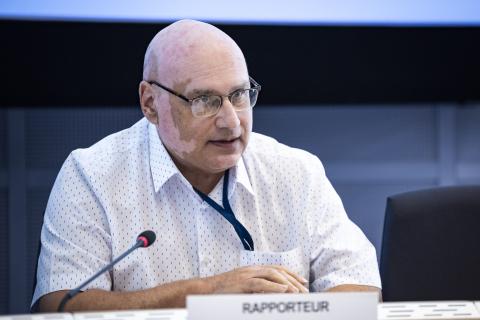
'By involving workers in shaping decisions, we are not just protecting rights, we are unlocking potential,' said rapporteur Philip von Brockdorff. 'Stronger trade unions can help businesses innovate, reduce absenteeism and retain skilled employees.'
The opinion highlights the positive role of workplace bodies such as works councils, which increase job satisfaction, raise wages and reduce staff turnover. It also calls for closer cooperation between employers, unions and governments a) to develop continuous training and upskilling programmes, particularly in sectors undergoing rapid transformation, and b) to set productivity benchmarks that reflect quality, sustainability and innovation rather than short-term cost savings.
The EESC underlines the fact that unions can contribute directly to fairer wage structures, stable employment and solutions to labour market challenges such as skills mismatches and limited mobility. Recognising their role in supporting workforce adaptation to technological change and digitalisation is vital.
The Committee concludes with a clear message: in today’s competitive global economy, workers are not a cost to be reduced, but rather a resource to be valued. Trade unions – through dialogue, participation and partnership – are essential for delivering fair wages, good jobs and sustainable growth. (tk)
Romanian non-profit organisation Ateliere Fără Frontiere (AFF) champions both social justice and the circular economy. It gives a chance to marginalised people, such as refugees, Roma or the homeless, to get into the world of work and it does so in an environmentally responsible way. Its longest standing project ‘educlick’ has been employing vulnerable people since 2008, by having them refurbish used computers and other electronic devices, which are then donated to underfunded schools. In 2021, educlick won them the EESC Civil Society Prize.
In the past four years, AFF has not stood still – educlick went on to expand and the organisation has launched three more integration workshops. AFF’s managing director, Cristina Bîcîilă, told us more about her outstanding organisation.
Romanian non-profit organisation Ateliere Fără Frontiere (AFF) champions both social justice and the circular economy. It gives a chance to marginalised people, such as refugees, Roma or the homeless, to get into the world of work and it does so in an environmentally responsible way. Its longest standing project ‘educlick’ has been employing vulnerable people since 2008, by having them refurbish used computers and other electronic devices, which are then donated to underfunded schools. In 2021, educlick won them the EESC Civil Society Prize.
In the past four years, AFF has not stood still – educlick went on to expand and the organisation has launched three more integration workshops. AFF’s managing director, Cristina Bîcîilă, told us more about her outstanding organisation.
Your project, educlick, earned you the EESC’s Civil Society Prize on climate action in 2021. Could you tell us more about the project and how it has evolved since?
educlick is the first workshop Ateliere Fara Frontiere set up back in 2008 to integrate vulnerable people into society by providing them with the professional and emotional support they need to access the labour market. Here they are part of a circular economy model that collects waste of electrical and electronic equipment (WEEE), which is then sorted and directed towards either recycling or refurbishment. The reused devices are then donated to educational institutions in disadvantaged areas.
Winning such a prestigious award has played a big role in our growth, as the EESC’s Civil Society Prize stood as a sign of recognition and value for our partners in the private and public sectors.
Since receiving the award in 2021, we have welcomed 56 new colleagues into our work-integration programme, with 26 of them already securing employment in the open labour market or enrolling in educational pathways aligned with their goals. In terms of environmental impact, we estimate that we prevented 720 tonnes of CO₂-equivalent emissions in 2024 alone, thanks to the 4000 refurbished computers we donated to underfunded schools.
As for challenges, the war in Ukraine forced us to adapt quickly. We welcomed vulnerable Ukrainian men and women into our workshops, many of whom faced language barriers. To support them, we brought in Russian and Ukrainian-speaking counsellors to provide tailored assistance.
In your workshops, you employ marginalised people. How many have been given a chance to work with you so far? How do you find them? Do you follow up with them after the project ends? Do you have information on whether working with you has helped them to better integrate into the labour market and society?
So far, more than 300 marginalised people have found support at educlick, most of whom were referred to us by partners offering social services in both the public and private sectors.
At educlick, our colleagues join a multi-step social integration programme: starting with a needs assessment interview, we design a personalised pathway that includes accommodation, stabilisation, professional development and, ultimately, employment in the open market.
After this two-year process, we continue to monitor their progress for at least six months to support their integration. Our goal is to help them become independent and confident in their abilities, ready to enter the job market or pursue education aligned with their long-term goals.
Apart from educlick, what are your other projects through which you employ people from marginalised communities, including refugees? Could you describe one you are especially proud of?
educlick is only one of our four work integration workshops, all of which are designed to offer the best available support for the employment of our vulnerable colleagues:
‘remesh’ collects meshes from advertising campaigns and repurposes them into clothing and home products. It is an upcycling model in a workshop that best suits women who are single mothers or victims of domestic violence searching for stability.
‘bio&co’ is a farm outside Bucharest where we grow organic vegetables and deliver them weekly to our urban customers to create healthy alternatives to the fast-paced life of the city (‘farm-to-fork’ model). Here our colleagues are mostly people from the local rural community where access to the job market is limited.
‘logitetic’ is our latest workshop where we respond to the increasing need companies have for logistics and packing. Here we hire people with disabilities, as the overall workplace is best suited to their needs,
Beyond our daily work in the four workshops, we are particularly proud of the projects we designed specifically for Ukrainian refugees. This was a new experience for us, and being able to act and adapt so quickly is something we're proud of, even though the very context of war goes against everything we stand for. Still, the stories and heroes we’ve met along the way have left a lasting mark on us and revealed the deeper role we can play in our community.
You are a grassroots organisation working to help vulnerable communities integrate into the labour market in a sustainable and environmentally responsible way. Given the current political climate – especially the rise of right-wing parties and declining concern for the environment – do you observe less solidarity and growing prejudice towards these communities? Has there been any impact on your work? As an organisation working on the ground, what do you think would be a successful recipe for lasting inclusion?
To put it mildly, it’s a tough time for empathy. Unfortunately, we have also observed that the most vulnerable tend to be blamed for most of contemporary society’s problems.
However, our very foundation was based on acting in times of need: to be a model of coexistence between people who come from different backgrounds, despite all the animosity communities might have towards each other.
Therefore, we continue to do what we have always done: we see ourselves simply as a launchpad helping our colleagues in difficult situations regain their self-confidence and combat the stigmatisation they face by challenging themselves and taking responsibility for their future, choosing not the easiest path, but the most fulfilling one.
Cristina Bîcîilă is managing director at Ateliere Fără Frontiere, a Romanian non-profit and social enterprise dedicated to the socio-professional integration of vulnerable people through four social businesses that combine inclusion with circular economy solutions. She is also vice-president of the European Network of Social Integration Enterprises (ENSIE).
At its July plenary session, the European Economic and Social Committee (EESC) backed new EU proposals to strengthen Europe’s defence readiness, while stressing the importance of preserving democratic values and building a long-term strategy for peace.
At its July plenary session, the European Economic and Social Committee (EESC) backed new EU proposals to strengthen Europe’s defence readiness, while stressing the importance of preserving democratic values and building a long-term strategy for peace.
In a recently adopted opinion, the EESC expresses strong support for the Security Action for Europe (SAFE) Instrument, designed to finance joint defence procurement and reinforce the European defence industry. It urges Member States to make full use of SAFE, underlining its potential to boost investment in European-made technologies, improve security of supply and enhance strategic autonomy.
‘EU initiatives on defence industry must urgently strengthen the capacity of the EU and its Member States to safeguard peace and security,’ said EESC rapporteur Maurizio Mensi.
The SAFE instrument responds to growing geopolitical instability and the urgent need to scale up Europe’s defence capabilities in a coordinated and cost-effective way. The EESC stresses that funding should address the most urgent capability gaps while also strengthening the EU’s industrial base. High-value, complex systems should be sourced from within Europe to ensure control over product design and long-term adaptability.
The Committee also supports limited third-country participation in joint procurement, restricted to partners with formal defence agreements with the EU. Currently Ukraine, Norway and the UK are explicitly welcome, while wider participation is seen as a risk to Europe’s technological independence.
In a second opinion on the Joint White Paper for European Defence Readiness 2023, the EESC calls for broader action beyond SAFE. It highlights the need for a comprehensive EU defence strategy, warning that limited flexibility in national spending rules could create trade-offs between defence investments and essential social policies. Security, it argues, must go hand in hand with democratic resilience.
The Committee therefore urges the EU to accelerate work on a common defence policy with stronger legislation, more funding and closer cooperation with global partners. It also calls for greater involvement of research institutions and more support for SMEs working in the defence sector. Defence readiness must be part of a wider strategic agenda that includes civil infrastructure, digital resilience and social cohesion.
Together, these opinions present a vision of EU defence policy that is pragmatic and forward-looking, focusing on readiness and anchored in peace, democracy and collective responsibility.
Marcin Nowacki, rapporteur for the opinion, concluded: ‘With rising threats and war on Europe’s doorstep, the EU must act now. Defence is more than weapons – it is innovation, industry and resilience. We must build our own defence technology – supporting industry and research, and cutting red tape.’ (gb)
The European Economic and Social Committee (EESC) recently adopted an opinion welcoming the European Commission’s Industrial Action Plan, designed to help Europe’s automotive industry navigate a period of profound change.The shift to cleaner and more digital vehicles must be managed in a way that protects jobs, supports businesses and ensures no worker or region is left behind.
The European Economic and Social Committee (EESC) recently adopted an opinion welcoming the European Commission’s Industrial Action Plan, designed to help Europe’s automotive industry navigate a period of profound change.The shift to cleaner and more digital vehicles must be managed in a way that protects jobs, supports businesses and ensures no worker or region is left behind.
The automotive sector employs 3.5 million people directly and another 4.5 million in related services, with a trade surplus of nearly EUR 90 billion in 2024. However, it faces rapid technological change, evolving consumer expectations and rising global competition.
‘The automotive sector is moving from hardware to software, from mechanics to electronics, and from conventional to electric powertrains. The automotive industry should seize the opportunities of the green and digital transformation of the automotive ecosystem and turn it into a competitive advantage,’ said co-rapporteur Guido Nelissen.
While the EESC supports the EU’s climate goals, it warns that the transition to zero-emission vehicles requires strong social and economic measures. It calls for a European strategy centred on skills development, innovation, infrastructure and the circular economy, with special focus on SMEs, which form the backbone of the supply chain. Large-scale reskilling, backed by EU funds such as the Social Climate Fund, will be vital to avoid disruption. The Committee proposes an EU skills passport and stronger cooperation between industry and education.
Innovation is a key strength of the automotive sector, with 15% of its value added invested in R&D, but Europe still lags behind in software and digital technologies. The EESC therefore calls for more investment in batteries, autonomous and connected vehicles, and common software standards.
It also emphasises the need for better coordination of electrification policies, including faster deployment of charging infrastructure, integration of smart grids and support for the repair and maintenance sector.
The Committee highlights trade pressures, with imports from China challenging EU competitiveness. It calls for stronger trade defence, reshoring of key parts, and sustainable new trade deals. (gb)