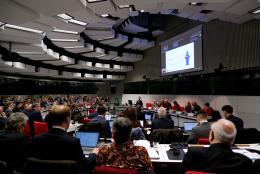
Promoting the Roma community's political participation at the local level and empowering them to become active members of society are two main aspects of the current EU Roma strategic framework. Whilst some members of the Roma community serve as mayors or deputy mayors, in most Member States the Roma are not represented in the local decision-making process, and are at times deprived by direct and indirect, legal and extralegal means from exercising their own political rights. The hearing will discuss the obstacles faced by the Roma community which hinder them from becoming active citizens, and the changes that are needed. It will also look at good practices from municipalities where actions are being taken to enhance the Roma community's representation and inclusion.
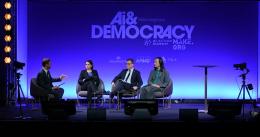
Artificial Intelligence is reshaping governance, democracy, and the workplace, bringing both vast opportunities and significant challenges. On 10 February, the European Economic and Social Committee (EESC) participated in the AI Action Summit in Paris, a global gathering of policymakers, business leaders, social partners and civil society representatives to discuss AI’s impact on fundamental rights, economic justice, and international regulatory frameworks. EESC President Oliver Röpke took centre stage to advocate for ethical AI governance, international regulatory cooperation, and a human-centric approach to AI policy.
Senior European Defence Agency (EDA) officials briefed members of the defence industry community on 11 February 2025, ahead of a new European strategy to strengthen the European Union’s defence industrial base.