The EESC emphasises that peace must remain a core EU priority and cautions against focusing solely on military threats while overlooking other serious risks to human life. It stresses the importance of diplomacy for conflict resolution and crisis prevention wherever possible.The EESC supports a comprehensive, inclusive European defence strategy that supplements military readiness with civil preparedness. It endorses the European Commission’s Joint white Paper for European Defence – Readiness 2030 and calls for a coordinated EU approach that treats defence, peace and security as shared public goods, underpinned by strong legal, institutional and financial frameworks with democratic oversight.
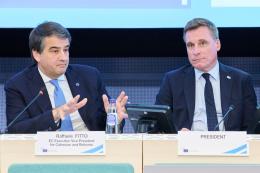
The European Economic and Social Committee (EESC) has adopted an opinion on the European Commission’s mid-term review of cohesion policy 2021–2027, urging the EU to adapt to evolving priorities while staying true to the policy’s founding aim: to reduce regional disparities. During a plenary debate with Commission Vice-President Raffaele Fitto, the EESC called for greater flexibility, more effective funding tools, fair access for all regions and a more robust EU budget to support long-term investment.
On behalf of the Workers' Group in the European Economic and Social Committee (EESC), I am writing to express our deepest solidarity and unwavering support with the 8 Turkish trade union colleagues that are on trial this week in Ankara, following their arbitrary arrests back in November 2024.
The European Economic and Social Committee (EESC) has launched work on a major package of recommendations to tackle the cost-of-living crisis, starting with four new opinions adopted at its April plenary session. This marks the first block in a series of eight opinions, each developed by a different EESC section and focused on a specific aspect of the crisis — from economic fallout to social cohesion, employment, sustainability, and more.
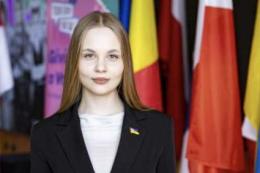
Your Europe, Your Say! 2025 (YEYS) brought together around 90 students from the EU, candidate countries and the UK. Valeriia Makarenko came all the way from war-torn Kharkiv in Ukraine to represent her country at the event. She told us why participating in YEYS was very important for young Ukrainians and shared her hopes that her generation, shaped by resilience and unity forged during the war, would lead Ukraine towards a brighter future.
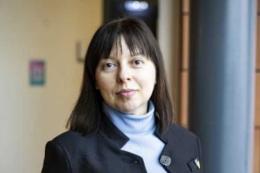
Tatiana Povalyaevarepresented Ukraine at this year's Your Europe, Your Say! (YEYS)alongside her students. A teacher at a secondary school in Kharkiv, she last stood in front of her class in February 2022 and has been teaching online ever since. She describes the challenges of being an educator in a town just 40 kilometres from the Russian border, which has endured relentless strikes since the start of the war.
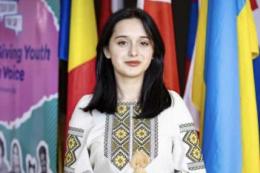
Under daily bombardments, when their main goal is to stay alive, young Ukrainians cannot afford to think about the distant future, says 18-year-old Yevheniia Senyk, YEYS 2025 participant and youth activist from Ukraine. She shares how the war has affected youth organisations in her country and why it is important to give them a voice on the European stage.