The European Economic and Social Committee (EESC) has adopted a comprehensive Opinion on the proposed revision of the Common Market Organisation (CMO) Regulation. While the EESC generally welcomes the Commission's efforts to simplify the regulatory framework and enhance the situation for farmers, it raises critical concerns regarding the balance between political ambition and the financial resources available.
The EU Commission has proposed to eliminate barriers to integration of asset management, trading and post-trading services, to improve supervision and to further integrate capital markets. This proposal is a core part of the Savings and Investments Union and a long-awaited reform that the EESC has long called for. The proposal includes measures the EESC has repeatedly recommended in different Opinions, such as the central supervision by the European Securities and Markets Authority (ESMA) of capital markets infrastructure operators with significant cross-border activity. We also welcomethe efforts to facilitate innovation and remove regulatory obstacles to the use of Distributed Ledger Technology (DLT), which are decentralised digital system for sharing and synchronising asset transactions without the need for a central authority.
There is no doubt that Europe needs to shift power generation towards secure, low-cost clean energy sources. The continent must strengthen its homegrown energy capacity so it can respond to the increasing appetite for electrification and to the urgent need for decarbonisation, while gradually weaning itself away from longstanding external dependencies. Energy sovereignty is no longer just an environmental aspiration; it is a cornerstone of economic resilience, industrial competitiveness, and strategic autonomy.
The European Union has promised to "cut red tape" and make environmental laws easier to follow. However, for most economic sectors and ordinary citizens, these improvements remain invisible. While the intentions behind new environmental rules are positive, the practical experience on the ground is often one of growing paperwork and confusing requirements. The European Economic and Social Committee (EESC) recently highlighted that despite various "simplification" initiatives, many sectors—particularly the agri-food industry—are still waiting for changes that actually make their daily work easier.
The Digital Omnibus, proposed by the European Commission in November 2025, aims to streamline and simplify the digital rulebook to boost competitiveness and ease Artificial Intelligence (AI) development in Europe. It is a package of two regulations introducing amendments to several existing laws on Artificial Intelligence (the “AI Omnibus”) and on data (“Digital Omnibus” or “Data Omnibus”).
The European Economic and Social Committee (EESC) believes that the challenges faced by EU islands are not adequately addressed by the EU's sectoral policies. Instead of being treated as peripheral territories, islands should be recognised as frontline regions for Europe.
The European Economic and Social Committee (EESC) believes that the challenges faced by EU islands are not adequately addressed by the EU's sectoral policies. Instead of being treated as peripheral territories, islands should be recognised as frontline regions for Europe.
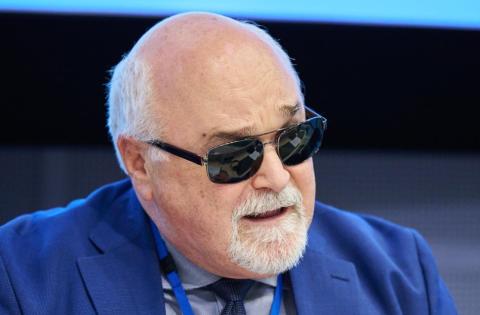
The Islands Pact should be supported by a clear legislative framework (the Islands Act) containing an 'insularity clause'. This clause would systematically incorporate the specific needs and constraints of islands into EU policies on cohesion, transport, energy, State aid, the environment, and maritime affairs, said the rapporteur for the opinion Ioannis Vardakastanis.
The opinion is seeking to feed into a new strategy for islands and coastal communities, which the European Commission is expected to unveil in 2026.
The EU comprises a variety of island regions spanning the Mediterranean Sea, the Atlantic Ocean, the North Sea and the Baltic Sea. It also encompasses outermost regions in the Caribbean and the Indian Ocean. Finland's Lakeland region, with its thousands of forested islands, is the largest lake region in Europe.
These island and lake regions play a key role in ensuring Europe’s strategic autonomy with regard to defence, energy security, and access to critical resources. They are vital for the EU’s blue economy and climate resilience.
However, they continue to be impacted by persistent structural disadvantages, leading to a range of challenges, including isolation, melting ice, high transport and energy costs, housing shortages, labour shortages and excessive dependence on tourism.
Improving connectivity and infrastructure in island territories is essential for territorial cohesion. This means better transport, mobility, digital links and energy grids supporting decarbonisation and autonomy.
Island regions must also diversify through a blue economy based on marine resources, renewable energy, tourism, heritage and the creative industries.
The 'insularity clause' should apply to the National and Regional Partnership Plans under the Multiannual Financial Framework 2028-2034, with measures on housing, transport, water and waste, climate adaptation, healthcare and economic opportunities, the EESC concluded. (mp/ll)
The European Economic and Social Committee (EESC) recognises the need to adapt the excise duty framework for tobacco products in line with market developments. However, it urges caution regarding excessive increases in excise duties, as these could lead to an increase in illicit trade.
The European Economic and Social Committee (EESC) recognises the need to adapt the excise duty framework for tobacco products in line with market developments. However, it urges caution regarding excessive increases in excise duties, as these could lead to an increase in illicit trade.
Any increase in tobacco excise duties must be proportionate, economically viable and beneficial to businesses, workers and society as a whole, said EESC member Mariya Mincheva, standing in for Matteo Carlo Borsani, rapporteur for the EESC opinion on the revision of the Tobacco Taxation Directive. Speaking at the EESC plenary session in February, Ms Mincheva warned against sharp increases in excise duties, which could have adverse effects, such as fuelling illicit trade, undermining tax revenues and weakening public health outcomes.
For this reason, the EESC recommended gradual adjustments to excise duties, accompanied by strengthened enforcement, customs cooperation and cross-border anti-smuggling measures. Policy-makers should involve the social partners, through sharing of clear and transparent information on any policy measures and draft legislation and consultation before proposing any future policies or legislation.
The EESC called for sufficient flexibility for the Member States in their excise structures, including the option to apply unit-based or weight-based taxation for heated tobacco products. This would allow national market conditions to be taken into account while respecting EU minimum rates. In line with subsidiarity and the Member States’ fiscal sovereignty, the Commission’s use of delegated acts should be limited to technical adjustments linked to inflation.
While supporting efforts to reduce tobacco consumption, the EESC noted that taxation alone cannot achieve this objective. It called for risk-proportionate taxation so that non-combustible and reduced-risk products are not taxed at the same rate as combustible tobacco, in line with the 'less harm, less tax' principle and the goals of Europe’s Beating Cancer Plan.
Proposed by the European Commission in 2025, the revised directive aims to reflect developments in the tobacco market by extending its scope to products such as e-cigarettes, heated tobacco and nicotine pouches. These would be subject to new minimum taxes adjusted to Member States’ economic conditions. The proposal also seeks stronger controls on raw tobacco to prevent diversion into the illicit supply chain. Under the special legislative procedure, the Council must adopt the proposal unanimously after consulting the European Parliament. (mp/ll)
calls for proper funding for companies of all sizes and the involvement of a range of actors in collaborative and cross-border research and innovation partnerships, thereby enhancing the competitiveness of European industrial ecosystems and the EU’s economic security;