
European Economic
and Social Committee
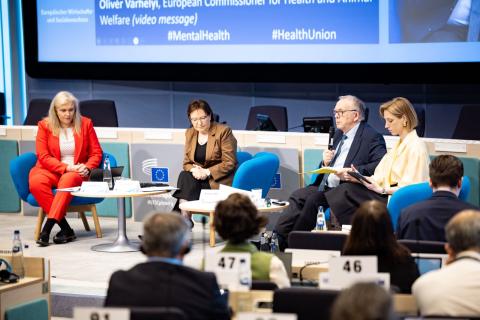
Emotional health is becoming one of the defining challenges for Europe’s next generation. Rising levels of anxiety, depression and suicide among young people reflect mounting pressures linked to social media, cyberbullying, loneliness, economic insecurity and the lasting effects of recent crises, it was highlighted at a high-level debate held by the European Economic and Social Committee (EESC) at its March plenary session.
The emotional well-being of children and young people was in the focus of the three-part flagship debate that brought together EU institutions, international organisations, civil society and youth representatives. The discussions underlined the growing urgency of protecting emotional health through prevention, safer digital environments and stronger community-based support. While health policy remains a national competence, the EU plays an increasingly important role through prevention, digital regulation and cross-sector cooperation.
Opening the debate, EESC President Séamus Boland stressed the need to confront stigma and silence surrounding mental health: ‘For me, what is crucial is that this debate helps to bring the topic of emotional health and suicide out of the shadows; it is imperative that we destigmatise and demystify issues surrounding mental health. Communities, families and civil society organisations play a key role in those efforts.’
Discussions highlighted the scale of emotional distress across Europe, alongside significant inequalities in access to support. Long waiting times, limited child‑specific services and weak early‑intervention systems disproportionately affect vulnerable groups, including LGBTQI+ young people, migrant children and those in rural or low‑income communities. The World Health Organization and UNICEF have repeatedly warned that mental‑health conditions are rising fastest among young people.
Institutional speakers acknowledged growing awareness but uneven implementation across Member States. Calls focused on stronger prevention, improved digital literacy and child‑centred services, while recognising the links between emotional health, education, inclusion and culture. Cultural initiatives were highlighted as effective tools to strengthen resilience, alongside EU‑level actions such as the comprehensive mental‑health approach and new measures against cyberbullying.
Participants also addressed emerging digital risks, warning of escalating online harms, including deepfake abuse that overwhelmingly targets young women and girls. Several speakers cautioned against re‑institutionalisation, calling instead for community‑based, person‑centred care, early identification and school‑based support. Investment in psycho‑education, safer online environments and better regulation featured prominently.
In closing, the EESC called for closer cooperation between EU institutions, Member States and civil society. Emotional health spans education, social policy, labour markets and digital regulation, requiring coordinated and sustained action. Members reaffirmed that safeguarding the emotional well-being of Europe’s young people must remain a political priority. (lm)