Civic education looks very different when it is led by young people themselves. In this interview with EESC Info, European Youth Parliament’s Ali‑Maeve FitzGerald explains how the EYP approaches civic education differently, focusing on participation, practice and peer‑to‑peer learning rather than theory alone.
As a youth-led organisation, you see firsthand how young people's relationship with politics is evolving. What major shifts have you noticed recently, particularly in the level of interest and in the methods that spark meaningful engagement?
I believe that we are seeing a resurgence of young people who want to be involved and actively participate in politics. However, we are also seeing division and polarisation growing amongst young people and political ideologies.
Social media has made it increasingly easy to mobilise large groups of people, particularly the younger generation, with issues they are deeply passionate about, giving them access to political information beyond your traditional school textbooks. However, we can also see how the echo chambers of polarising opinions on social media can further sow division amongst young people, and the risks of misinformation and disinformation in the growing age of generative AI.
Because of our representation in 40 countries across Europe, our events bring together a huge diversity of young people, opinions, and backgrounds. We are seeing that engagement is increasingly issue-driven, with the youth wanting their actions to have tangible impact, no longer satisfied with just being a part of the conversation.
Because of this, civic spaces like the European Youth Parliament are increasingly vital. We are a non-partisan platform for civic education, intercultural encounters, and the exchange of ideas – run by young people, for young people. Our mission is to inspire and empower a young generation of informed, open-minded, responsible, and active citizens who shape society and drive impact.
Annually, we bring together over 25,000 young people, creating a space where bridges across divides can be built, young people can become informed about the world around them, and how they can take a real seat at the table, and not just be heard.
The approach by the European Youth Parliament goes beyond traditional school curricula by using non-formal learning methods. In your experience, is there a specific 'missing piece' in standard school civic education, and do you have an idea how this could be changed?
I think that the major ‘missing piece’ in standard school civic education is that it remains largely theoretical. Young people learn about political systems, but not how they can play a role in these systems, or, indeed, change them. The model of a classroom, where students sit and listen to a lecture, leaves them disengaged and passive in shaping civic society.
This is what sets us, the European Youth Parliament, apart. We operate in committees of young people, at each of our 400+ events a year, assigned a key topic or issue in the world today, and are tasked with consensus-building to prepare a resolution of solutions that can be presented to decision makers as the young people's voice for change.
What is often missing in civic education is practical skill-building: how to have constructive debate, how to build consensus with opposing views, and how to navigate complex disagreements and deliberate. These stand as core democratic skills, but not something that can be taught from a textbook.
Young people need skill-based learning, and this is what we aim to develop at our events. We focus on giving young people the platform they need to develop skills in critical thinking, media literacy, public speaking, and much more. We aim to fill the gap in traditional civic education curricula, by taking the knowledge and skills gained in the classroom into the real world, and equip young people with the skills and tools they need to be active citizens.
Peer-to-peer learning is a core strength of the European Youth Parliament. Why do you think young people connect so strongly with learning from their peers? And how can this approach best complement, rather than replace, formal civic education in schools and universities?
Peer-to-peer education is successful because it creates a genuine, relatable, and engaging environment. When you are learning from people your own age, it feels accessible, and the traditional hierarchy of teacher and student is broken down. It allows you to be honest, open, and question your own opinions. It shifts the role: young people are no longer passive, sitting in the back of a classroom, but being active contributors to discussions and decision making, giving them a powerful sense of ownership.
It also is a hugely successful model of integrating intercultural learning. It is no longer theory, but practical: what better way to learn about the history of Europe than to find yourself in a room with young people from every country in Europe, what better way to learn geography than travelling to our events, held in every corner of Europe, in regions you might never otherwise dream of seeing? It brings culture, history, geography, and civic education to life. We are truly by young people, for young people.
Yet, we don’t aim to replace formal civic education, but believe we perfectly complement it. Inside the classroom, you learn foundational knowledge, and we build the bridge by offering an open forum for youth to develop soft skills like leadership, adaptability, communication, and teamwork. We rely on schools and Universities to support our aims by giving young people the fundamental knowledge, helping us in hosting our events, and pushing their students to take part actively in our events in order to translate their knowledge into action.
Looking five to ten years ahead, what would 'success' in political and civic education look like to you? Are there specific gaps you'd like to see addressed, whether in school curricula, funding, or how the public perceives these issues?
In the future, I believe that success would be seeing civic education recognised as essential, and not optional, for development. This doesn’t necessarily mean a fundamental restructuring of our education systems, nor do I see that as feasible, but we do need stronger support for organisations like the European Youth Parliament that are already effectively doing this work in non-formal peer-to-peer civic education. We are volunteer-driven, so what we need most of all is stable, long-term funding to achieve our mission, not just short-term, project-based support, so that we can continue to grow and make our work accessible to young people from all backgrounds and corners of Europe.
Accessibility is key. Success in ten years would mean that participation in civic society and active citizenship initiatives like ours would be available to everyone, not limited by geography or socioeconomic status. It would also mean a shift in public perception, when youth engagement can be seen as valuable and constructive, and where young people, in turn, feel heard and represented at all levels.
Importantly, success would mean stronger partnerships with European institutions, such as the EESC. We see the European Youth Parliament as a bridge, and a platform to connect young people with policymaking spaces. Success for me would be when this bridge is fully recognised and supported, and when young people can not only understand how to influence policy that will shape their futures, but are uplifted and actively given the opportunity to do so.
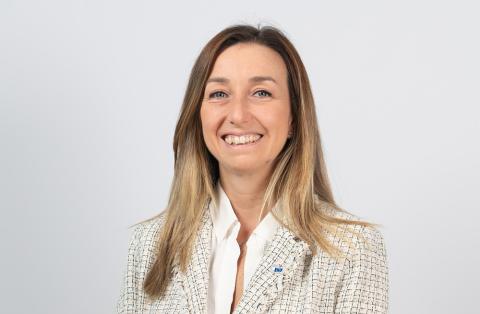
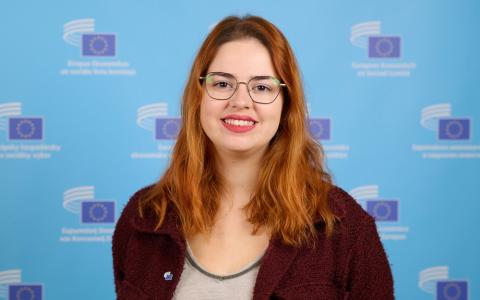
Ali-Maeve FitzGerald is a member of the European Youth Parliament’s (EYP) International Youth Board of Volunteers, and holds the portfolio for the promotion of sustainability in the EYP network. Ali joined the EYP in Ireland in 2018 and since then she has been volunteering at various events, contributing to youth engagement, policy dialogue, and sustainability initiatives across Europe. Alongside her work in the EYP, she is a research scientist with a focus on women's health and cancer. Ali-Maeve is passionate about empowering young people to engage with scientific, environmental, and societal challenges.